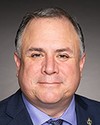
Mr. Speaker, it is always an honour and a privilege to rise in the House of Commons and speak on behalf of the great people of southwest and west-central Saskatchewan. It was a nice weekend back home, but it looks as though, this week, winter is going to be settling in for the long haul. Unfortunately, there is some snow on the forecast, so I just want to wish everyone well back home as we get ready for winter to settle in.
I want to start by saying what the national debt was during question period. It was $1,281,213,600,467. I am ballparking those last six figures because the debt clock moves really fast, and I cannot even see what the numbers are because it is reeling at such a great speed. Since then, the national debt has increased by over $15 million on just the interest that has accrued. Right now, we are sitting at $1,281,228,741,000, now 42,000, now 43,000. Again, I cannot even read the hundreds column because it is going way too fast.
I wanted to bring that up for people so that they can understand what we are talking about when we say that the government needs to exercise fiscal constraint and that it needs to be responsible with the budget. What does it mean when those numbers go high? When government spends way more money than it brings in, that leads to inflation in what people pay for goods. When we talk about many of the issues we face as a country, particularly the next generation of youngsters, the government sets the tone with its own finances. Youngsters are looking to figure out how they are going to build a home and how they will afford groceries or go to university, things like that. The current budget is a terrible example for the next generation of how to set a budget, follow a budget and stick to a goal in terms of what one is going to do.
The Prime Minister said that he was never going to go higher than Justin Trudeau's debt number. That was $42.2 billion. We are at $78.3 billion. In fact, the member of Parliament for University—Rosedale was the finance minister. She actually resigned her position because of what Justin Trudeau was doing with the budget, which precipitated the whole process through which the current Prime Minister became the leader of the Liberal Party and, therefore, the Prime Minister of Canada.
Why does all this matter? I was comparing the budget to the 2024 budget, which had “fairness for every generation”. The projections the Liberals had for the 2024 budget and in relation to the fall economic statement were that the projected deficit for this fiscal year was going to be only $38.9 billion. When we look at the budget, right now, we are sitting at $78.3 billion, so there is a discrepancy of almost $40 billion.
The Liberals are probably going to get up, and someone is going to say that it is Donald Trump's fault and so on and so forth. There is a bit of blame that can maybe go there, but there is another promise that was broken. The Prime Minister said that he was the man who was fit to deal with a crisis and that he knew how to manage a crisis. As we saw in the media today, “whatever, so what?” was his whole response to how things have been going with Donald Trump.
We know that the Prime Minister has been a failure on trade and with the current budget. Something else that caught my attention, and I do not think that it caught the attention of too many other people, is that the debt ceiling for Canada was also increased. It has actually increased three times in the last four years. Most people do not know that. It is another small fact that slides on through without anybody really talking about it. Let us compare and contrast that with how things go in the United States: If the government has to increase the debt ceiling, it is a big process that gets national attention and makes the news. It even makes it on to CBC, which is supposed to be the Canadian Broadcasting Corporation, but it spends more time covering American than Canadian politics.
Anyway, the debt ceiling has increased three times in the last four years. It has been increased to somewhere around $2.3 trillion. It makes one wonder what the government's plan and projection is going forward if it is already increasing the debt ceiling that high above what the current debt already is.
Going forward, let us go out the next four or five years, because the budget actually does that. It forecasts what the year-over-year deficit is going to be, and it also projects what the cost to service the debt is going to be. It is going to cost about $76 billion to $78 billion just to pay the interest on the national debt three or four years from now.
Why is that significant? I am going to give people back home a specific example. Everybody in Saskatchewan remembers when, in the 1990s, the federal government's debt got out of control. Jean Chrétien tried to borrow more money and was told that he could not. He ended up rolling back health care transfers to the Province of Saskatchewan. In Saskatchewan, 52 hospitals that had eight beds or less were closed or were repurposed and had their service delivery changed. That was the impact that this had all across Saskatchewan. I am sure other provinces went through the same thing.
In Saskatchewan, that was devastating. Our health care services have now become so heavily centralized. In some cases we have to drive three or four hours just to be able to see a doctor, when there used to be a hospital or a health clinic only half an hour or even 20 minutes down the road. That is no longer the case. For example, someone living on a farm or in a rural community who wants to start a young family has to go two hours to get to the hospital to be able to deliver their child.
Things like that have had a dramatic impact and have been a change over the years. With the Liberal government's budget running such a massive deficit, people in Saskatchewan always remember what the ripple effect of that was and how it happened.
Pierre Elliott Trudeau had done exactly what Justin Trudeau did. Interest rates were low, so they locked in crazy spending. Pierre Elliott Trudeau, in the 1970s, ran a deficit of an equivalent of, I think, $72 billion when we factor in the value of today's dollars. The way that the borrowing happened at that point in time, when that all came to be renewed in the late 1980s and into the 1990s, interest rate percentages were in the high teens and into the 20s. There is a reason why the government could no longer borrow more money.
That was why, when Jean Chrétien tried to borrow more money and he could not, he had to massively slash government spending, which meant that he slashed the transfers to the provinces. That is what took one of the biggest hits.
That is the track record of out-of-control Liberal spending. Canadians do not want those results again.
Let us talk about the fiscal anchors. The fiscal anchors from the previous budget have all been completely abandoned. Those included not spending over $42 billion, and also making sure that the debt-to-GDP ratio did not go over a certain level. We have blown way past that level. The government has now switched to a declining deficit-to-GDP ratio and also to the balancing of the operating budget. The Parliamentary Budget Officer, the independent PBO, did a fantastic study. He said that there is only a 7.5% chance that the deficit-to-GDP ratio will decline. There is a 92.5% chance that the government is going to fail on that fiscal anchor as well.
Let us talk about a few other things. There are a couple of things the government has said that we will give it credit for. It wanted to repeal the carbon tax. The Conservatives opposed the tax for a very long time, and the Liberals repealed it. We opposed the emissions cap, which they are repealing because, they cited, it would have marginal value on actually accomplishing any emissions reduction. We all know that it was actually a production cap all along.
There is a section in the budget that I was looking at earlier, called “Improving the Efficiency of the Tax System”. It does not even get half a page. All it does is remove the luxury tax from airplanes and yachts. It also repeals the underused housing tax. That is it for improving the tax system.
During tax season, so many people came in to talk about their issues with CRA, how the tax system was unfair and how it needed to be massively overhauled and reformed. The government could have chosen to, for example, change how the livestock tax deferral works for our ranchers when they go through drought. It would have had a massive impact if that livestock tax deferral were to have been extended. That would have been a positive measure and a step in the right direction, but no.
The gun buyback program is in the budget: $742 million to take property away from law-abiding Canadians. That is shameful.
They are spending $362 million on farmers overseas, not on farmers here in Canada or in Saskatchewan. With the trade issues that we are seeing going on, I can think of lots of great places where that money could have been used instead.
Maybe in questions, we will get to that.