A motion to adjourn the House under Standing Order 38 deemed to have been moved.
House of Commons Hansard #59 of the 45th Parliament, 1st session. (The original version is on Parliament's site.) The word of the day was investments.

House of Commons Hansard #59 of the 45th Parliament, 1st session. (The original version is on Parliament's site.) The word of the day was investments.

This summary is computer-generated. Usually it’s accurate, but every now and then it’ll contain inaccuracies or total fabrications.
Canada's International Development Assistance Members debate a motion to strengthen Canada's international development assistance by improving accountability and effectiveness. The motion proposes integrating reciprocal economic benefits for Canadian small businesses and innovators, establishing a dedicated economic partnerships window leveraging Canadian strengths like agriculture and digital technology, and requiring annual reports to Parliament on aid effectiveness and Canadian participation. The Bloc Québécois emphasizes ensuring regional organizations outside major urban centers can access federal funding. 6800 words, 1 hour.
Budget 2025 Implementation Act, No. 1 Second reading of Bill C-15. The bill implements Budget 2025, which the Liberal government calls an "investment budget" making "historic investments" in productivity, housing, defence, and clean energy. Opposition parties criticize it as the "costliest budget" leading to "generational debt" and higher inflation. Concerns include "creative accounting," "arbitrary firearms policy," and the "Prime Minister's nonchalance" on trade, while the Bloc highlights insufficient funding for provinces. 42800 words, 5 hours in 2 segments: 1 2.
A motion to adjourn the House under Standing Order 38 deemed to have been moved.
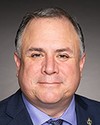
Gord Johns NDP Courtenay—Alberni, BC
Mr. Speaker, first, I want to begin tonight by honouring the courageous teachers and students from the Nuxalk Nation in Bella Coola who put themselves directly in harm's way to protect school children during a terrifying grizzly bear attack. This act of heroism reminds us of the strength and resilience of coastal communities. Our hearts are with the Nuxalk Nation and the people of Bella Coola at this difficult time.
I also offer deep gratitude to the Heiltsuk coastal guardians, who were first on the scene when a loaded commercial barge began taking on water off B.C.'s central coast, and who continued working relentlessly to prevent an environmental and economic catastrophe. This barge is loaded with containers that represent huge commercial value, and the efforts are saving businesses millions of dollars. Their dedication reflects a level of responsibility and vigilance the Liberal government should aspire to meet. Once again, the first nations on the west coast are demonstrating extraordinary leadership in safeguarding their lands, waters, economies and future generations. I urge the Liberal government to learn from their example and listen to it.
Today media reports suggest closed-door discussions about granting exceptions to the oil tanker moratorium and advancing a crude oil pipeline and tanker corridor through the Great Bear Rainforest and Sea are under way. According to the news, the federal government has gone directly to Alberta and Saskatchewan without speaking to British Columbia or the coastal first nations who have cared for these lands and waters since time immemorial.
If accurate, it means the government is attempting to alter protections for the coast without including the people most affected. If so, the government is creating unnecessary and irresponsible risk. British Columbia has been clear that it does not support weakening the safeguards coastal communities rely on today. The Prime Minister has said that he would not use Bill C-5 to override a provincial government, and those words must be honoured, not quietly set aside under a cloak of secrecy accompanied by media leaks.
The Great Bear Rainforest is no place for crude oil pipelines or tankers. It is Canada's last stronghold of wild Pacific salmon, home to ancient temperate rainforests found almost nowhere else and surrounded by some of the most productive marine waters on the planet. Rather than undermining it, Canada must uphold free, prior and informed consent, and stand with coastal first nations who are unequivocally defending this irreplaceable place.
The economic impacts are equally significant. Coastal first nations have built a multi-billion dollar conservation-based economy that supports cultural tourism, sustainable fisheries, habitat restoration, renewable energy projects and long-term local employment. This is an economic model rooted in stewardship, not extraction. A crude oil tanker route threatens those existing sustainable jobs. Canada should strengthen this proven economic foundation, not destabilize it through closed negotiations driven by outside pressure.
After long-term consequences cannot be ignored, the global shift to renewable energy is accelerating. Canada cannot afford to be left behind by clinging to 20th century infrastructure. A new crude pipeline today is not a path to prosperity; it is a costly detour from the opportunities emerging in the clean energy transition. Canada must do better. Coastal first nations continue to lead with clarity, courage and unwavering commitment to their territories and to the well-being of all Canadians.
Instead of excluding indigenous governments, sidelining British Columbia and pursuing backroom deals with oil patch lobbyists, the Prime Minister must meet directly with first nations in a spirit of true partnership and transparency. They have been clear: a moratorium with exceptions is no moratorium at all, and the Great Bear Rainforest and Sea is not a sacrifice zone.

Claude Guay LiberalParliamentary Secretary to the Minister of Energy and Natural Resources
Mr. Speaker, I rise today in the House of Commons, located on the traditional unceded territory of the Algonquin Anishinabe people, land that reminds us daily of our duty to honour indigenous rights and reconciliation.
We are committed to making Canada an energy superpower while protecting our environment, including the northern B.C. coast. It is important to clearly state that the federal government has not received a proposal to build the project the member has referenced, and it has not been referred to the Major Projects Office for consideration.
If, at any time, this pipeline or any similar project is to be considered, our government is committed to meaningful consultation with indigenous people. Upholding indigenous rights is non-negotiable. Our approach is rooted in partnership, respect and reconciliation.
It is clear that many projects before the Major Projects Office feature indigenous communities as key stakeholders and leaders with real ownership stakes. Take the Red Chris mine expansion in northwest British Columbia, for example. Working in close partnership with the Tahltan Nation, this project will extend the mine's lifespan by more than a decade and boost Canada's annual copper production by 15%. It will employ 1,500 workers during operations and up to 1,800 during construction.
We should be proud that when operational, this mine will reduce greenhouse gas emissions by over 70%. As part of the proposed northwest critical conservation corridor, this project illustrates how indigenous leadership, critical minerals development, clean power transmission and conservation can work hand in hand.
From Nunavut, the Iqaluit hydroelectric project stands out as Nunavut's first 100% Inuit-owned renewable energy developer. This 15- to 30-megawatt hydro facility will replace Iqaluit's dependence on imported diesel, which is close to 15 million litres per year, producing roughly 130,000 tonnes of greenhouse gas.
The project is a powerful example of Inuit self-determination and economic growth, while making it easier to stabilize local electricity rates. I can assure the House that every significant decision in this project, and others like it, involves direct engagement with rights holders and affected groups, showing true indigenous-led leadership for clean energy and a sustainable future.
Another potential project of national interest I would like to mention is Canada Nickel's Crawford project. Based in the world's second-largest nickel reserve, this initiative will anchor Canada's leadership in green industry.
Agreements have been signed with the Mattagami, Matachewan and Flying Post first nations, ensuring not only early business and employment opportunities, but also firm commitments on contracting and long-term economic benefits for the communities. In a landmark partnership, the Taykwa Tagamou Nation is investing $20 million in the project, securing a meaningful equity stake. This partnership demonstrates that indigenous participation is not just possible but essential to the project's long-term success.
On the northwest coast of British Columbia, within the modern treaty territory of the Nisga'a Nation, the Ksi Lisims LNG facility, partnered by the Nisga'a Nation, Western LNG and Rockies LNG, is designed to be among the world's lowest-emission LNG operations. Federally and provincially approved, it will bring thousands of skilled jobs and nearly $30 billion in investment—
Natural ResourcesAdjournment Proceedings
Gord Johns NDP Courtenay—Alberni, BC
Mr. Speaker, the Liberals might try to dismiss these concerns, but the facts are clear: Coastal first nations have repeatedly warned that any move to weaken the oil tanker moratorium puts communities, ecosystems and sustainable local economies at risk.
If the government is engaging in closed-door talks about crude oil tanker traffic through the Great Bear Rainforest and Great Bear Sea without British Columbia or affected first nations at the table, it is a failure of transparency and reconciliation. This is not about partisanship; it is about safety, respect and responsible governance.
The teachers in Bella Coola and the Heiltsuk guardians show what true leadership looks like: protecting people and the environment before disaster strikes. Ottawa should follow that example, uphold its commitments and meet directly with British Columbia and coastal first nations rather than trying to negotiate exceptions behind closed doors.
Claude Guay Liberal LaSalle—Émard—Verdun, QC
Mr. Speaker, I would like to remind the member that there are plenty of examples. I have another one, the north coast transmission line, which has been referred to the Major Projects Office for further consideration, twinning existing transmission lines from Prince George to Terrace and up to Bob Quinn substation, enabling clean growth for critical minerals and LNG while also improving telecom and electricity access for remote northwestern B.C. communities. Once operational, it would create thousands of careers, generate substantial public revenue, help prevent up to three million tonnes of annual carbon emissions, and anchor a clean energy corridor for generations.
When it comes to projects of national importance, the government will always work with indigenous people to find the right way forward.

Warren Steinley Conservative Regina—Lewvan, SK
Mr. Speaker, I am happy to be here this evening to maybe get a little bit better answer to a question I asked in October. I talked about the fact that 86,000 jobs were lost in October and that 1,000 jobs were lost in Calgary, and about how that actually leads to more households' being food-insecure.
Since that time, the Canadian food sentiment index report came out last week. It said that 80.6% of Canadians say food is their top expense pressure, that 28% of Canadians needed to use savings or borrow money to buy food and that 25.5% of Canadians are experiencing food insecurity. The average family of four will spend $800 more on groceries this year than last year.
That is an indictment of the 10 years of failed Liberal policies we have had in this country. I have been in the House long enough to remember when the current Minister of Finance was minister of trade and announced that grocery prices would go down by Thanksgiving, but that was Thanksgiving 2023, and grocery prices have continued to increase.
Then the Liberals tried to make food prices a global phenomenon, saying that they were going up this fast everywhere. However, we have heard time after time that food price increases in Canada are outpacing those in the United States by 48%, so this is a made-in-Canada problem, and it started with the out-of-control and reckless spending by the Liberal government.
Meet the new guy, the same as the old guy. Justin Trudeau never met a tax dollar he did not want to spend, and the Prime Minister is blowing past even the deficits of Justin Trudeau. It would make him blush. It was actually so cold outside today that I saw Liberals with their hands in their own pockets. That almost never happens.
After 10 years of failed Liberal policies, and this is the data, food insecurity is increasing time and time again, and food lines at the food bank continue to grow; more people are using the food bank than ever before. The Liberal plan has failed miserably. My question, to whoever is going to answer on the other side, is this: When will the Liberals get it together, stop their out-of-control spending and get budgets under control so families can afford to put food on their own table?

Annie Koutrakis LiberalParliamentary Secretary to the Minister of Jobs and Families
Mr. Speaker, the member opposite is attempting to spread disinformation about a so-called hidden carbon tax. Let me be clear: There is no carbon tax applied to groceries.
Industrial carbon pricing applies to the largest polluters in Canada, not to families or small businesses. These measures drive investment to reduce emissions and build the competitiveness of Canadian businesses. Importantly, independent studies from the Canadian Climate Institute show that pricing industrial pollution is one of the lowest-cost ways to cut emissions while having a minimal impact on families.
Canada's output-based pricing system gives companies flexibility. They can invest in cleaner processes, buy credits from innovators or develop new technologies to cut emissions. This approach reduces pollution at the lowest cost and encourages innovation, helping Canadian businesses grow and protect jobs.
On the issue of food prices, the federal fuel charge was removed on April 1 of this year, and farmers continue to receive relief under the Greenhouse Gas Pollution Pricing Act. Independent analysis shows that inflationary pressures on groceries are being driven by global supply chain disruptions, the war in Ukraine and energy price volatility, not federal climate policies.
The clean fuel regulations, sometimes referred to as the hidden carbon tax, are designed to cut greenhouse gas pollution by up to 26 million tonnes by 2030. These regulations also support major Canadian projects that create jobs across the country, renewable diesel and hydrogen facilities in Alberta, renewable natural gas and green hydrogen projects in Ontario and Quebec, and clean fuel projects in Newfoundland and Labrador. These initiatives not only reduce pollution but also strengthen local economies and maintain high-skilled employment.
Repealing these measures, which the member opposite suggests, would put jobs at risk, increase pollution and isolate Canadian businesses from global markets. Climate action is economic action. The policies in place protect workers, support families and position Canada for long-term competitiveness. Canadians deserve solutions based on facts, not slogans.
Warren Steinley Conservative Regina—Lewvan, SK
Mr. Speaker, I am very happy that the parliamentary secretary can sit there and read a speech that was written for her by someone behind the curtain, but I did not say any of that stuff. Actually, my speech did not even mention the carbon tax. The unhealthy obsession over the carbon tax coming from that side is a bit weird.
I talked about out-of-control spending, food inflation and families finding it harder each and every year to make ends meet because there is much more month at the end of their paycheque, and it just does not go far enough, and how the Liberals could actually help families.
With respect to the Liberals' continued obsession over slogans and the carbon tax, we know that they were wrong, because they repealed the consumer carbon tax after they fought tooth and nail for eight years, saying that it was the best thing for the environment. They then flip-flopped just to get re-elected, because they realized how unpopular it was.
Now I know how regular Canadians feel. I sat here and talked about real problems, and the parliamentary secretary just read a speech and did not listen to a single word I said. It makes these adjournment debates almost as disappointing as question period.
Annie Koutrakis Liberal Vimy, QC
Mr. Speaker, there is no carbon tax on groceries.
Industrial carbon pricing and the clean fuel regulations are targeted policies that reduce pollution while supporting Canadian jobs and investment. They give businesses flexibility to innovate, cut emissions efficiently and remain competitive. These measures create jobs in renewable energy, hydrogen and clean-fuel projects across the country while protecting the economy from the growing costs of climate change. Repealing these policies would harm employment, increase pollution and weaken Canada's economic standing. Canadians deserve fact-based solutions, and these measures are delivering just that.

Alex Ruff Conservative Bruce—Grey—Owen Sound, ON
Mr. Speaker, I am glad and proud to be here tonight, not just on behalf of the constituents of Bruce—Grey—Owen Sound but also on behalf of all veterans across Canada and their families.
I asked a question a while back with respect to the Liberal government's policy. I will read the actual policy that my question was about, which said, “Veterans Affairs Canada is pleased to supply, upon request, two commemorative wreaths to members of Parliament who will be representing the Government of Canada at Remembrance Day ceremonies”.
I am sorry, Mr. Speaker. That was not this year's Liberal government policy; that was the Liberal government policy for October 2017. Therefore, needless to say, I was shocked that, after the Liberals backtracked and did the right thing back in 2017, in 2025, they basically brought back the same policy again. Therefore, I questioned the minister on October 3 and asked why, with many ridings having dozens of cenotaphs, the Liberals are telling Canadians and telling members of Parliament that the government will now pay for only two. The minister responded as such, and I am grateful for the response, to a point. She said:
Proposed changes for the Wreaths for Parliamentarians program were made with the understanding that MPs would work directly with the Royal Canadian Legion, with proceeds supporting their local branches. I am learning that the changes could be significantly disruptive to Remembrance Day.
I have instructed my department to revert to the previous format for this year.
I have been a member of the Royal Canadian Legion since 1993. I have 25 cenotaphs in my riding. I have never had a single Legion member ever approach me asking me to purchase a wreath through the Legion. In fact, Legion members come to me asking to get a wreath from the government in order to recognize the over 100,000 Canadians who have made the supreme sacrifice in service to this nation.
My question on this issue to the Liberal government is pretty straightforward: Does the Liberal government think that having Veterans Affairs Canada provide a wreath at every single cenotaph for the over 100,000 Canadians who have made the supreme sacrifice in service to Canada is too much to ask of the government?
As a follow-up question, considering that the Liberal policy of trying to limit the number of wreaths provided by VAC keeps being brought forward every few years, will the government confirm that it will not try to have this limiting policy ever again?
I am now going to go on to something else. I know the Parliamentary Secretary to the Minister of Veterans Affairs is very up to speed on stuff with this year's budget and the impact it would have on Veterans Affairs. Considering that the second-largest cut in this Liberal budget, of $4.4 billion, is to Veterans Affairs Canada and that the government is claiming that spending less on cannabis will somehow result in these savings, but last year only spent $245 million, how is the government going to do that?
People at the Royal Canadian Legion and veterans right across this country are confused. Even today, the Legion spokespeople just put out a press release that they are “hearing concerns and confusion.... Without clear details and simple explanations, many Veterans are in the dark...about what it all means for their benefits”.
Could the parliamentary secretary please clarify the impact this would have on the backlog in disability benefit applications; cannabis access and research; calculation of long-term care costs, which is more about a lawsuit than actually taking care of our veterans; confusion over the index of pension calculations; and any legislative amendments that would have an impact on the RCMP?

Sean Casey LiberalParliamentary Secretary to the Minister of Veterans Affairs and Associate Minister of National Defence
Mr. Speaker, there was an awful lot packed into those four minutes. The question on notice was in connection with the wreath program. I am happy to shed some light on that. As much as time will allow, I will try to get into the half a dozen questions on the budget.
I want to thank the member for Bruce—Grey—Owen Sound for bringing to the attention of the House and of veterans their service and sacrifice. It is also important to clarify an important commemorative program for the benefit of the hon. member and the House.
Veterans Affairs Canada began the wreaths for parliamentarians program in 1986. It provided one publicly funded wreath for each member of Parliament to lay at a Remembrance Day ceremony organized by the Royal Canadian Legion in their constituency. Made in Canada, the wreaths represent the government's commitment to publicly acknowledging our continuing debt to our veterans for their achievements and sacrifice in the fight for peace.
Each wreath is shipped to parliamentarians in its own protective box and can be ordered by October 24 to arrive in time for Remembrance Day, November 11, each year. Since its inception, the program has evolved. At first, each member of Parliament was issued one wreath. Additional wreaths could be ordered by parliamentarians participating in more than one ceremony. Over time, the program evolved in a way that led to inconsistencies in the number of wreaths provided.
After hearing the hon. member, I think it is obvious that those inconsistencies continue, because the practice in the office of the member of Parliament for Charlottetown has always been to gladly accept the two wreaths that are allocated by Veterans Affairs Canada and then to call the Legion and purchase any additional wreaths that are necessary. I am quite surprised to hear that there is an expectation that that is not the norm. Maybe what I am doing is different, but I know that is the standard in my part of the country.
To distribute wreaths more equitably across the regions, the program now supplies two wreaths to each MP. They can be used by parliamentarians or their delegates at any commemorative event during Veterans' Week, not only those organized by the Royal Canadian Legion. If a member of Parliament or senator needs more wreaths, all they need to do is ask Veterans Affairs Canada, which will procure as many wreaths as the parliamentarian needs. This can be, for example, for more events or to commemorate another veteran or a fallen Canadian Armed Forces member.
Far from forgetting Canada's brave veterans, the government is committed to honouring their memory in ceremonial events organized by Veterans Affairs, the Royal Canadian Legion or other organizations. Rather than limiting wreaths, the department actively supports parliamentarians and others in laying as many wreaths as they need.
The member's question was whether this program is about to come to an end. What I can say is that the program will not come to an end in such a manner that we fail to live up to our obligation to honour the fallen, and it will not come to an end without full consultation and discussion with everyone involved, including parliamentarians.
Let me touch briefly on the half a dozen questions in connection with the budget.
The first one relates to the difference between accrual and cash accounting. The cannabis for veterans program represents a future obligation to veterans to continue to provide medical cannabis. A decision has been made to change the reimbursement rate from $8.50 per gram to the market rate of six dollars. In making this change, there will be less money dispensed going forward. The net present value of the future reduction is reflected in the budget.
Veterans AffairsAdjournment Proceedings

The Assistant Deputy Speaker John Nater
I will just give a gentle reminder that the questions should relate to the original question asked. I understand there is some good nature here, but in theory, it should relate to the original question asked.
The member for Bruce—Grey—Owen Sound.
Alex Ruff Conservative Bruce—Grey—Owen Sound, ON
Mr. Speaker, the question very much related to Veterans Affairs Canada and the support for our veterans.
I want to acknowledge that the parliamentary secretary provided some greater clarity on the wreath program. I appreciate having that history. He did not really answer my two questions, so I am going to leave the final minute of speaking to them.
This is not about where the money is coming from. I will easily pay for all 25 wreaths that go to the 25 cenotaphs in my riding. I represent a big riding that has more than done its share of supplying veterans across the country.
Does the parliamentary secretary not think Veterans Affairs Canada can at least put one wreath at every cenotaph across Canada? Will he commit to the program staying open so that Veterans Affairs can provide as many wreaths as every MP needs across this country, regardless of whether it is inconsistent or different from riding to riding?
Sean Casey Liberal Charlottetown, PE
Mr. Speaker, part of the mandate of Veterans Affairs is to honour and commemorate our veterans, not only on Remembrance Day, but also throughout the year, across the country and around the world.
The wreaths for parliamentarians program distributes two wreaths to each member of Parliament for use in commemorative ceremonies on Remembrance Day. If anyone needs more than two, they simply need to contact Veterans Affairs Canada. It will then purchase the wreaths through the Royal Canadian Legion.
We encourage all Canadians to honour our veterans and to remember the service of the Canadian Armed Forces every day of the year.
Veterans AffairsAdjournment Proceedings
The Assistant Deputy Speaker John Nater
The motion to adjourn the House is now deemed to have been adopted. Accordingly, the House stands adjourned until tomorrow at 10 a.m., pursuant to Standing Order 24(1).
(The House adjourned at 6:58 p.m.)