House of Commons Hansard #59 of the 45th Parliament, 1st session. (The original version is on Parliament's site.) The word of the day was investments.

Topics

line drawing of robot

This summary is computer-generated. Usually it’s accurate, but every now and then it’ll contain inaccuracies or total fabrications.

Canada's International Development Assistance Members debate a motion to strengthen Canada's international development assistance by improving accountability and effectiveness. The motion proposes integrating reciprocal economic benefits for Canadian small businesses and innovators, establishing a dedicated economic partnerships window leveraging Canadian strengths like agriculture and digital technology, and requiring annual reports to Parliament on aid effectiveness and Canadian participation. The Bloc Québécois emphasizes ensuring regional organizations outside major urban centers can access federal funding. 6800 words, 1 hour.

Budget 2025 Implementation Act, No. 1 Second reading of Bill C-15. The bill implements Budget 2025, which the Liberal government calls an "investment budget" making "historic investments" in productivity, housing, defence, and clean energy. Opposition parties criticize it as the "costliest budget" leading to "generational debt" and higher inflation. Concerns include "creative accounting," "arbitrary firearms policy," and the "Prime Minister's nonchalance" on trade, while the Bloc highlights insufficient funding for provinces. 42800 words, 5 hours in 2 segments: 1 2.

Statements by Members

Question Period

The Conservatives criticize the Prime Minister's "Who cares?" attitude towards failed U.S. trade negotiations and tariffs on aluminum, steel, and forestry, impacting Canadian workers. They condemn the government's reckless spending and high inflation, which force families to rely on food banks and make baby formula unaffordable. They also raise concerns about deals with Brookfield.
The Liberals defend their ambitious budget and Canada's strong fiscal position within the G7, highlighting investments in child care, food security, and transportation infrastructure. They criticize the opposition for anti-immigrant rhetoric and voting against measures supporting Canadian workers and industries impacted by US tariffs. They emphasize trade diversification and feminist foreign policy.
The Bloc criticizes the Prime Minister for abandoning feminist diplomacy and gender equality when seeking funds from the UAE. They also raise concerns about the Prime Minister's Brookfield assets and decisions that could have cost the public purse.
The Greens advocate for trade diversification only with democracies respecting human rights, questioning deals with countries like China, Saudi Arabia, and the UAE.

Petitions

Adjournment Debates

Great Bear Rainforest protection Gord Johns raises concerns about potential oil tanker traffic in the Great Bear Rainforest. He says the government is engaging in closed-door talks without consulting First Nations. Claude Guay insists the government is committed to meaningful consultation with Indigenous people, citing examples of projects with Indigenous partnerships.
Grocery costs and inflation Warren Steinley blames Liberal spending for rising food insecurity, citing an increase in food bank usage. Annie Koutrakis denies a carbon tax on groceries, attributing inflation to global issues and defending climate policies as beneficial for jobs and the economy. Steinley complains she didn't address his points.
Veterans Affairs wreath program Alex Ruff questions the Liberal government's policy of limiting the number of wreaths provided by Veterans Affairs Canada (VAC) and budget cuts to VAC. Sean Casey defends the wreath program, stating additional wreaths are available upon request. He also explains the budgetary changes concerning medical cannabis reimbursement.
Was this summary helpful and accurate?

International TradeOral Questions

2:25 p.m.

Saint-Maurice—Champlain Québec

Liberal

François-Philippe Champagne LiberalMinister of Finance and National Revenue

Mr. Speaker, it is only Monday and look how excited they are. They know there is good news in the budget. That is what I see.

There is enough good news to go to Regina, to go to Winnipeg and to go to Moose Jaw. The people in Winnipeg understand that we need to invest in infrastructure. The people in Moose Jaw understand that we need to invest in our military. The people in Regina understand that we need to invest in housing. Canadians understand that we need to invest in this country.

On this side of this House, we will always fight for Canadians, because every day is a good day to fight for Canadians.

Foreign AffairsOral Questions

2:25 p.m.

Bloc

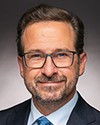
Yves-François Blanchet Bloc Beloeil—Chambly, QC

Mr. Speaker, I was shocked to learn that, following his visit to the United Arab Emirates, the Prime Minister of Canada is abandoning Canada's feminist approach to diplomacy and international relations.

Can the government confirm today that gender equality is no longer a value promoted by Canada? I can assure the House that gender equality is a Quebec value.

Foreign AffairsOral Questions

2:25 p.m.

Ottawa—Vanier—Gloucester Ontario

Liberal

Mona Fortier LiberalParliamentary Secretary to the Minister of Foreign Affairs

Mr. Speaker, give me a break. I want to be clear. Canada's commitment to empowering women and girls, achieving gender equality, condemning all forms of discrimination and eliminating gender-based violence is unwavering and will never change. As the minister pointed out in her speech to the United Nations, Canada's foreign policy will be guided by three principles: defence and security, economic sovereignty and our values. Speaking of values, feminism is a core value of our government and an important part of our foreign policy.

Foreign AffairsOral Questions

2:30 p.m.

Bloc

Yves-François Blanchet Bloc Beloeil—Chambly, QC

Mr. Speaker, the discomfort on that side is palpable. It is like the entire team is skating backwards to make up for the Prime Minister's diplomatic blunder.

We are talking about the values of the free world, the efforts to build a better world and the powerful message being sent on the world stage. Is this not instead about pandering to the United Arab Emirates' sexist regime?

Foreign AffairsOral Questions

2:30 p.m.

Ottawa—Vanier—Gloucester Ontario

Liberal

Mona Fortier LiberalParliamentary Secretary to the Minister of Foreign Affairs

Mr. Speaker, I just talked about values. Feminism is a core value of our government and an important part of our foreign policy. As we work to diversify our trade relationships and create opportunities for our workers, the Prime Minister has also been clear that Canada is strengthening its commitment to addressing gender-based violence and inequality at home and abroad.

Foreign AffairsOral Questions

2:30 p.m.

Bloc

Yves-François Blanchet Bloc Beloeil—Chambly, QC

Mr. Speaker, that is a perfect example of someone speaking out of both sides of their mouth. The government reels off bits of feminist rhetoric when, in fact, the message they are sending on the international stage is that Canada is no longer a country that promotes gender equality.

Coincidentally, this comes at a time when the Prime Minister is looking for tens of billions of dollars from the United Arab Emirates. Someone please explain this to me.

Foreign AffairsOral Questions

2:30 p.m.

Ottawa—Vanier—Gloucester Ontario

Liberal

Mona Fortier LiberalParliamentary Secretary to the Minister of Foreign Affairs

Mr. Speaker, I am really trying to be clear. I want to be clear. Canada has an unwavering commitment to empowering women and girls, achieving gender equality, condemning all forms of discrimination and eliminating gender-based violence. That will never change.

The minister emphasized that point at the United Nations, and I mentioned it earlier: Canada's foreign policy will be guided by three principles, including values. Speaking of values, as I said, feminism is a fundamental value of this foreign policy.

Automotive IndustryOral Questions

2:30 p.m.

Conservative

Arpan Khanna Conservative Oxford, ON

Mr. Speaker, the Prime Minister said he was a master negotiator, and he looked our auto workers in the eye and promised a deal with the U.S., but now that he is failing, he is shrugging it off, saying that it does not matter. He said, “Who cares?”, and that it is not a “burning” issue. He is wrong, because it is a burning issue for Denise, an auto worker in Oxford who is losing her job, and for thousands of others who do not know how they will make ends meet.

Why does the Prime Minister not care about the same jobs he promised he would protect?

Automotive IndustryOral Questions

2:30 p.m.

Beauséjour New Brunswick

Liberal

Dominic LeBlanc LiberalPresident of the King’s Privy Council for Canada and Minister responsible for Canada-U.S. Trade

Mr. Speaker, the government is actively involved with the sectors of the economy that are facing the most pressure from the unjustified 232 tariffs. This includes, obviously, auto workers. It includes workers in the steel and aluminum industries and in the softwood lumber industry.

We have already taken steps to support those workers and those businesses. My colleague should be excited that there is more good news coming in our government's effort to support those industries as we navigate through a trade circumstance Canada did not create. We are not going to sign any deal like the Leader of the Opposition

Automotive IndustryOral Questions

2:30 p.m.

The Speaker Francis Scarpaleggia

The hon. member for Oxford.

Automotive IndustryOral Questions

2:30 p.m.

Conservative

Arpan Khanna Conservative Oxford, ON

Mr. Speaker, the Prime Minister is actively doing absolutely nothing for our workers. He literally campaigned on getting a deal with the U.S., but now, since he is failing, he is brushing it off. He says, "Who cares?” The thousands of auto workers who are losing their jobs care. The tens of thousands of spinoff workers who will not be able to pay their bills, pay their mortgage or feed their families care.

Canadians do care, so how can the Prime Minister look workers in the eye and tell them that their livelihoods are not a burning issue?

Automotive IndustryOral Questions

2:30 p.m.

Thunder Bay—Superior North Ontario

Liberal

Patty Hajdu LiberalMinister of Jobs and Families and Minister responsible for the Federal Economic Development Agency for Northern Ontario

Mr. Speaker, it is pretty rich for the member opposite to say that he cares about people like Denise, workers who are benefiting from work-sharing, which is supporting the very auto employers he speaks about to retain a skilled workforce.

Guess what. The Conservatives voted against Denise. They voted against Canadians who are benefiting not only from the measures in budget 2025 but also from measures we have put into place since the attack on our economy. Let me be clear: We will be with workers like Denise. The Conservatives are voting against them every day.

Automotive IndustryOral Questions

2:35 p.m.

Conservative

Harb Gill Conservative Windsor West, ON

Mr. Speaker, the Prime Minister promised a U.S. trade deal by July 21. He called himself a master negotiator. He failed, and now he says he does not have a burning issue to talk to the U.S. President about. Meanwhile, Windsor auto workers at Stellantis, Ford and the small businesses that supply them have a real, burning issue with layoffs, shifts being cut and a Christmas full of worry.

Will the Prime Minister look these workers in the eye and tell them their jobs and their kids' futures are not a burning issue for him?

Automotive IndustryOral Questions

2:35 p.m.

Taiaiako'n—Parkdale—High Park Ontario

Liberal

Karim Bardeesy LiberalParliamentary Secretary to the Minister of Industry

Mr. Speaker, as the hon. member knows, the government, the Minister of Industry and all of us on this side are fighting every day for those jobs in Windsor and across southwestern Ontario.

I want to read a quote from the Mayor of St. Thomas, Joe Preston. He said, “The mayor hasn’t stopped smiling” and “Generations in the future can stay here, have a job that pays well enough to buy a home in St. Thomas and become part of a really vibrant community.” That is thanks to new investments being made in this sector in St. Thomas and across southwestern Ontario.

Automotive IndustryOral Questions

2:35 p.m.

Conservative

Harb Gill Conservative Windsor West, ON

Mr. Speaker, Canadians are sick of waiting. Windsor has one of the highest unemployment rates in the country. Families are worried about bills, factories' being idle and a real trade war, but the Prime Minister said, “Who cares?” Conservatives care. Windsorites care.

When will the Prime Minister treat Windsor workers as if their jobs mattered, and take urgent action to protect their paycheques and their families, for once and—

Automotive IndustryOral Questions

2:35 p.m.

The Speaker Francis Scarpaleggia

The hon. parliamentary secretary.

Automotive IndustryOral Questions

2:35 p.m.

Taiaiako'n—Parkdale—High Park Ontario

Liberal

Karim Bardeesy LiberalParliamentary Secretary to the Minister of Industry

Mr. Speaker, the urgent action comes from actually building the kinds of vehicles, the kinds of batteries and the kinds of equipment that Canadians are increasingly investing in. That is why we have the gigafactory in southwestern Ontario and we have the NextStar plant, which is manufacturing, as we speak, batteries for the very vibrant economy in this sector. We look forward to the hon. member's coming on board with that.

Forestry IndustryOral Questions

2:35 p.m.

Conservative

Todd Doherty Conservative Cariboo—Prince George, BC

Mr. Speaker, the Prime Minister was asked when he had last spoken with President Trump over the ongoing trade negotiations. He literally looked at the camera and said, “Who cares?” He said that it does not matter and that it is not a burning issue.

Let me tell the House who cares: the over 3,000 forestry workers in Cariboo—Prince George who are out of work and the communities that are being crushed by the softwood tariffs, communities where jobs are disappearing and mills are closing. Families are paying the price for the Prime Minister's failure, and he says, “Who cares?”

When will the Prime Minister start fighting for the workers he has abandoned?

Forestry IndustryOral Questions

2:35 p.m.

Markham—Thornhill Ontario

Liberal

Tim Hodgson LiberalMinister of Energy and Natural Resources

Mr. Speaker, I have good news: We will be announcing additional supports for the forestry sector in the coming days. We have already announced $1.2 billion in supports for the industry. We are working hard. We are talking with industry members every day. I will be speaking with the leaders of the industry again tonight. We will have a new set of supports by the end of the week.

Forestry IndustryOral Questions

2:35 p.m.

Conservative

Todd Doherty Conservative Cariboo—Prince George, BC

Mr. Speaker, the minister mentions more and more supports. People do not want charity; they want their jobs. The Prime Minister clearly said he does not care and that it does not matter. Is he kidding me? Over 30 mills have closed in the province of British Columbia, including 14 in my riding.

Does the Prime Minister know who cares and who matters? Little Lucas does. He is 10 years old and is a student at 100 Mile Elementary school. He could not hold back tears when he was talking about his family members who lost their jobs.

Why does the Prime Minister not fly to my riding, look Lucas's family members in the eye and tell them they do not matter?

Forestry IndustryOral Questions

2:35 p.m.

Markham—Thornhill Ontario

Liberal

Tim Hodgson LiberalMinister of Energy and Natural Resources

Mr. Speaker, like Lucas, I lived in a forestry town. I know what it feels like. I know how important the workers are. That is why we have announced $1.2 billion in support, that is why we are meeting with the leaders of the industry today and that is why we will be announcing another set of supports for the industry later this week.

We have a trade war. The member should wake up.

Forestry IndustryOral Questions

2:35 p.m.

Conservative

Richard Bragdon Conservative Tobique—Mactaquac, NB

Mr. Speaker, the Prime Minister once said that he was a master negotiator who could secure a deal with President Trump by July. He failed, and now he shrugs it off, saying, “Who cares?” and that he does not have a burning issue to speak with the President about.

I can help the Prime Minister. New Brunswickers care, because 93% of our exports go to the U.S. The longer this issue goes unresolved, the more uncertainty there is for New Brunswick's forestry workers. Say “Who cares?” to the people who live in Florenceville-Bristol, in Plaster Rock or in Nackawic. They certainly do care, and they want a government that responds.

When will the Prime Minister secure a resolution and meet with our closest neighbour and customer?

Forestry IndustryOral Questions

2:40 p.m.

Beauséjour New Brunswick

Liberal

Dominic LeBlanc LiberalPresident of the King’s Privy Council for Canada and Minister responsible for Canada-U.S. Trade

Mr. Speaker, it might be useful to remind our colleague from New Brunswick that the government had been engaged in constructive and extensive negotiations with the American administration and that we were pursuing a deal we believed would be in the interests of Canadian workers and the Canadian economy, and the Americans as well.

President Trump decided to suspend those negotiations, and while he did that, is my colleague suggesting that the government do nothing to support the very workers he talked about? There is good news: We are not going to do that. We are going to support those workers and stand up for those industries.

EthicsOral Questions

2:40 p.m.

Bloc

Luc Thériault Bloc Montcalm, QC

Mr. Speaker, let us talk about the Brookfield company assets still owned by the Prime Minister, which he placed into a blind trust. The Ethics Commissioner set up a conflict of interest screen for the Prime Minister. This screen is administered by two of his advisors, including Michael Sabia.

However, Mr. Sabia also owned shares in Brookfield. He sold them to protect his Prime Minister. If Mr. Sabia sold his shares to protect the Prime Minister from any appearance of conflict of interest, why will the Prime Minister not do the same?

EthicsOral Questions

2:40 p.m.

Gatineau Québec

Liberal

Steven MacKinnon LiberalMinister of Transport and Leader of the Government in the House of Commons

Mr. Speaker, as the member is well aware, parliamentarians, and even senior public servants, are subject to one of the strictest codes of ethics in the world. Like the rest of us, the Prime Minister has always followed all the rules and, incidentally, will continue to do so.