Mr. Speaker, I ask that it be carried on division.
(Motion agreed to)

House of Commons Hansard #69 of the 45th Parliament, 1st session. (The original version is on Parliament's site.) The word of the day was meeting.

This summary is computer-generated. Usually it’s accurate, but every now and then it’ll contain inaccuracies or total fabrications.
Youth Criminal Justice Act Second reading of Bill C-231. The bill amends the Youth Criminal Justice Act to allow courts to refer young people struggling with addiction to treatment programs. It aims to prioritize rehabilitation over punishment for youth facing drug-related charges, enabling judges to delay sentencing pending treatment completion. Luc Berthold advocates this approach, seeing addiction as a mental health issue to be treated early. 8000 words, 1 hour.
Budget 2025 Implementation Act, No. 1 Second reading of Bill C-15. The bill implements budget provisions, drawing Conservative criticism as a "credit card budget" that increases debt and the cost of living. Conservatives also raise concerns about a provision allowing ministers to grant "regulatory exemptions" and the lack of support for small businesses. Liberals argue the budget "strikes a balance" by investing in social programs and "creating jobs", while accusing the opposition of "filibustering legislation". Bloc members question the lack of "cell coverage" investment and the absence of a "digital services tax". 15600 words, 2 hours in 2 segments: 1 2.
Liaison Members debate the systematic obstruction of parliamentary committees by the Liberal government, citing examples of cancelled meetings, ministerial absences, filibustering of government bills, and the failure to advance key legislation like bail reform. Liberals counter that Conservatives are also obstructing the budget implementation bill and other legislation, accusing them of political theatre and a lack of co-operation. 20300 words, 2 hours.
Liaison Members debate the Liberal government's alleged obstruction of parliamentary committees, with Conservatives citing frequent cancellation of meetings and ministers refusing to appear or provide information. Conservatives accuse the government of lacking accountability and transparency, while Liberals argue the opposition is filibustering important budget legislation. The role of committee chairs and ministerial responsibility are key points of contention. 6100 words, 45 minutes.

Jeremy Patzer Conservative Swift Current—Grasslands—Kindersley, SK
Mr. Speaker, I ask that it be carried on division.
(Motion agreed to)

Elizabeth May Green Saanich—Gulf Islands, BC
Mr. Speaker, I was not certain we would get to petitions today, so I am pleased to rise to present a petition on behalf of constituents who are very concerned, as we all should be, about the ongoing opioid crisis. We know that where we have seen success, it is in recognizing that this is a health crisis and not a crisis under criminal law, and that we need to do far more to ensure that the services are there.
We hear from all sides on this. In particular, these petitioners ask us to cease incarceration for those who suffer from a medical condition and focus on the rehabilitation of people, to bring them back into society with better treatment programs that are run as part of our public health care system.

Jacob Mantle Conservative York—Durham, ON
Mr. Speaker, I am rising this evening to present a petition on behalf of residents in the town of Georgina, specifically in Keswick, on a new invasive aquatic species that was discovered in Lake Simcoe, in Cooks Bay, last year.
This invasive species is known as water soldier, and the petitioners point out that it is a threat to both the aquatic and plant life in Lake Simcoe, as well as to our agricultural work in the area, because of its proximity to the Holland River.
There are remediation efforts available. Therefore, the residents of my constituency are asking three things of the government. First is to list or identify the water soldier as an invasive species. Second is to nominate a single federal department or agency to take ownership of this issue. Third is to allocate sufficient financial and technical support to advance remediation efforts.

Garnett Genuis Conservative Sherwood Park—Fort Saskatchewan, AB
Mr. Speaker, I will present a number of petitions today.
The first petition draws the attention of the House to the worsening situation of human rights in North Korea, as documented by various commissions. These violations of human rights include prioritization of food distribution to those considered useful to the survival of the current political system; a vast security apparatus that suppresses dissent through surveillance, coercion, fear and punishment; public executions; putting citizens in political prison camps; terrorizing the population; and the state-sponsored abduction of citizens of other nations.
The petitioners are also concerned about how the People's Republic of China has disregarded or ignored recommendations from the UN commission of inquiry regarding North Korean defectors and other issues. They have concerns about refugees from North Korea being sent back to North Korea by the Government of China despite the human rights abuses those defectors will certainly face.
The petitioners call on the Government of Canada to take the following steps in response to this worsening human rights situation. They want the government to table regular reports in Parliament on these issues, including highlighting concerns about political prison camps, Camp Kwan-li-so and Kyo-hwa-so. They want the Government of Canada to also report on the situation of North Korean defectors and Canadian policy toward North Korean defectors. They want the Government of Canada to engage actively with international organizations and foreign governments to press the Government of China to allow the safe passage of North Korean refugees to South Korea, where they are recognized as citizens, and to establish initiatives to support the promotion of human rights in North Korea and aid defectors.
Measures proposed include monitoring and reporting on the human rights situation and addressing the challenges facing North Korean defectors in China and other regions, developing strategies for Canada to assist in protecting North Korean citizens from crimes against humanity and supporting their human rights and freedoms, supporting international efforts to safeguard the people of North Korea from crimes against humanity and supporting political freedoms, including through dialogue with relevant organizations and governments.
I thank, in particular, the Korean community for bringing this petition to the House through their hard work, solidarity and concern for those suffering right now in North Korea.
Garnett Genuis Conservative Sherwood Park—Fort Saskatchewan, AB
Mr. Speaker, the next petition I would like to present to the House deals with the issue of MAID or euthanasia. The petitioners are concerned, in particular, about so-called track 2 MAID that makes people living with disabilities the only group eligible for medical assistance in dying when they are not dying.
The petitioners argue that allowing so-called MAID for those with disabilities or chronic illnesses who are not dying devalues their lives, tacitly endorsing the notion that life with a disability is optional and, by extension, dispensable. They are concerned about the ableist trajectory of our health care system, with euthanasia being proposed to those who are seeking other services. They are concerned about how people with disabilities are increasingly limiting their exposure to the health care system for fear of facing pressure from the system to consider euthanasia in cases where they do not want it and have their lives, dignity and well-being challenged and devalued by the system that is supposed to protect them.
The petitioners are, therefore, in this case, calling for the end of so-called track 2 MAID. They want the government to protect all Canadians whose natural death is not reasonably foreseeable by prohibiting euthanasia for those whose prognosis for natural death is more than six months.
Garnett Genuis Conservative Sherwood Park—Fort Saskatchewan, AB
Mr. Speaker, the next petition I will table today highlights the condition of the Hazara people in Afghanistan. The Hazaras are an ethnic minority, indigenous people of Afghanistan, generally also a religious minority. They come from the Shia Muslim community. They faced significant challenges even prior to the Taliban takeover, but their situation is that much more dire now.
The petitioners also want to draw the attention of the House to some of the history around past genocides that Hazaras have faced over the last 150 years. They identify the significant Canadian contribution and, therefore, connection to Afghanistan, the significant level of assistance that was given and the loss of over 150 brave men and women in uniform in the fight against the Taliban. The petitioners, therefore, would like the House to recognize the 1891-93 ethnic cleansing perpetuated against the Hazaras as a genocide and to designate September 25 as Hazara genocide memorial day. They also expressed support for Bill C-287. This was a bill in a previous Parliament. It is not a bill in the current Parliament, as far as I know.
Garnett Genuis Conservative Sherwood Park—Fort Saskatchewan, AB
Mr. Speaker, the next petition I am tabling draws the attention of the House to the persecution of Falun Gong practitioners.
The petitioners highlight that Falun Gong is a traditional Chinese spiritual discipline that consists of meditation, exercises and moral teachings based on the principles of truthfulness, compassion and tolerance. They describe, in some detail in this petition, the persecution that Falun Gong practitioners have faced and continue to face, including, among other things, forced organ harvesting.
The petitioners ask the House to pass a resolution to establish measures to stop the Chinese Communist regime's crime of systematically murdering Falun Gong practitioners for their organs. They want to see the government more forcefully call for an end to the persecution of Falun Gong practitioners.
Garnett Genuis Conservative Sherwood Park—Fort Saskatchewan, AB
Mr. Speaker, the next petition I will table draws the attention of the House to many Ukrainians who have come here under a CUAET visa and have questions about the government's policy with respect to next steps for them. They want to see the government provide Ukrainians who are currently in Canada temporary emergency measures with—
Immigration, Refugees and CitizenshipPetitionsRoutine Proceedings
A motion to adjourn the House under Standing Order 38 deemed to have been moved.
Elizabeth May Green Saanich—Gulf Islands, BC
Mr. Speaker, I am pursuing a question I originally asked on November 5. The budget was tabled November 4, and I asked the Liberals if they were prepared to consider amendments or changes to the budget. As we know, they did change the budget, but not in any normal way that we have seen in the past. I will get back to the question and the matter that I hope to take up tonight.
Just to recap, on November 4, the budget included, on page 348, a commitment that fossil fuel subsidies would not be available for something called “enhanced oil recovery”. That was a part of the budget I actually liked and did not want changed, but within 10 days, it was reversed in agreement with Madam Smith of Alberta, and they are now available. It was not what I was trying to get to in my question to the government about changing a budget. In the first few days after it was tabled, there were changes made that I thought would move us closer to consensus.
The answer from the hon. leader of the government in the House, who also happens to be Minister of Transport, is what I wanted to take up further this evening. In his response, he said that the government was making historical investments in climate competitiveness and that it would get Canada to net zero by 2050. He said, “compare us to any country around the world”. He said it is a historic effort and historic budget. We have heard the platitudes.
In the time I have tonight, I just want to make a couple of quick points. Other than the aforementioned betrayal on the budget from page 348, which was reversed in the MOU with Alberta, there is a lot of misunderstanding about this notion of net zero by 2050. As someone who has worked on climate issues for quite a long time, it is important that every member of Parliament understand that, what we committed to as a country in the Paris Agreement, which is a legally binding commitment, is to stay as far below 2°C as possible.
Now that becomes impossible if we focus on something not in the Paris Agreement, which is this notion of a deadline in the year 2050 of being at net zero. It is very clear from the Intergovernmental Panel on Climate Change that we must rapidly reduce emissions by 2030, or 2035 at the latest, to have any hope of staying below 2°C at all, much less as far below 2°C as possible.
It is also the case that when the hon. leader of the government in the House asked me to compare our record to any other country around the world, we compare very poorly. Of all the G7 countries, we are the only country that has such a high level. Emissions have grown more rapidly in Canada since 1990 than in any other G7 country. Our emissions are far above our 1990 levels, whereas all the countries in the European Union, as a block, are 40% below their 1990 levels of emissions. We can look at some of the other countries around the world, smaller developing countries such as Costa Rica, that have done an enormous amount to reduce emissions. Canada does not look good compared to many countries around the world.
When we look at our budget and recognize that a budget is the single most important environmental statement made by a government, this budget, unfortunately, despite promises on the floor of this place, has come in at an F, and we are failing. I hope, in the time we have for debate, we can take up these matters based on facts and science.

Corey Hogan LiberalParliamentary Secretary to the Minister of Energy and Natural Resources
Mr. Speaker, I thank the hon. member for her question.
Of course, our government is always ready to listen to Canadians, and of course, budgets are always moment-in-time documents. We did engage with Canadians in our pre-budget consultation, and the insights gathered through these consultations and online submissions played a vital role in shaping the budget. This is a plan to build major infrastructure, homes and industries. We need to grow our economy and create lasting prosperity.
It also supports durable climate action and understands that climate action is an economic necessity. As we know, the world's economy is undergoing a historic transformation towards low-carbon energy and clean technology. In 2024, global investments in clean energy reached $2 trillion U.S., nearly double the level of investment in fossil fuels, and the global clean technology market is expected to triple by 2035.
At the same time, the Canadian Climate Institute estimates that climate disruption, if left unchecked, could cut median Canadian household income by nearly 20% by the end of the century from where it would otherwise have been, impacting many segments of our economy, from food supply chains to financial markets. This means that to compete internationally, Canada will need to reduce its carbon intensity to meet the growing demand from global markets for products with low associated greenhouse gas emissions. Buyers of Canadian resources are increasingly looking for low-carbon sourcing.
Canada is well positioned to take advantage of growth opportunities. For example, our electricity grid, which is one of the cleanest in the world, guarantees access to clean power that businesses around the world are looking for in sectors ranging from aluminum and steel to AI. In conventional energy, too, Canada is one of very few large-scale suppliers committed to strong environmental, social and governance standards. We have reduced emissions intensity, but more importantly, we have reduced emissions by 6% over the last 10 years, and that was while Canada's population grew by 15%. It is not enough, but it is a significant start, and it is turning the curve in a way that other oil-producing jurisdictions simply have not been able to wrap their heads around.
We know that Canada's natural resources, workforce and commitment to climate change adaptation will position us to surpass economies that fail to adapt, and we are moving forward on that understanding. We will build new infrastructure and capitalize on projects that further Canada's standing as a clean energy superpower. We will explore initiatives such as nuclear energy, electricity, grid interties and investments in low-carbon fuels. With the federal tax supports being delivered through our suite of clean economy investment tax credits, Canada will get the investment that will be absolutely necessary in order to build the economy that will take us to net zero. It is much more than just a slogan; it is something that is essential for ourselves, our children and our children's children.
Improving the effectiveness of industrial carbon pricing will ensure that every dollar spent delivers maximum impact, because industrial carbon pricing rewards innovation and spurs investment in cleaner technologies, helping Canada's industrial sectors to grow and compete. This means that as our government moves decisively to build major nation-building projects and millions more homes, we will be doing so while reducing emissions and growing our economy.
We must get to net zero. I believe budget 2025 supports durable climate action that will withstand the changing of governments and the turmoil we have in the world right now. It also identifies that it will require massive investment to get to net zero, and the old tools can only get us so far. Budget 2025 provides new investment tools that will allow us to capitalize on those investments to build the green economy of tomorrow.
Elizabeth May Green Saanich—Gulf Islands, BC
Mr. Speaker, I want to start by thanking the hon. parliamentary secretary. I know he has a personal depth of concern on climate, which is welcome in this place.
However, the harsh reality is that, to quote Greta Thunberg, net zero by 2050 is a fraud. The only thing we do with net zero by 2050 is ignore the immediate need to cut emissions quickly and globally. We have cut our emissions very slightly in this country, but the tools that the government was using in the previous cabinet under a different prime minister have been eliminated, and nothing has been put in its place. We are now at 8.5% below our 2005 level of emissions, which is woefully inadequate if we are to get to 35% below by the year 2035.
In my 10 seconds that remain, I will plead with everyone in the Liberal caucus: It is time to be serious. Cut emissions before the window closes on any hope to stay below 2°C.
Corey Hogan Liberal Calgary Confederation, AB
Mr. Speaker, I personally believe that more is required. It is not enough, and we are going to need to figure out new ways to address emissions as we move forward. Some of those technologies are in infancy, and some do not exist yet, but it will require significant investment to get us to where we need to be and, in fact, push beyond that to start taking carbon out of the air to allow us to undo the damage that we have done here.
However, I believe that with an effective industrial carbon pricing system, transparent long-term price trajectories and our clean economy investment tax credits, we can supercharge affordable net-zero energy projects that turn our natural wealth into lasting prosperity while protecting this planet. That is why I believe budget 2025 deserves our support.
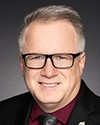
Marc Dalton Conservative Pitt Meadows—Maple Ridge, BC
Mr. Speaker, recently, in question period, I called out the Prime Minister for being a flip-flopper. He says one thing about pipelines to Premier Danielle Smith in an MOU and gives quite another story to Premier David Eby of British Columbia, which I represent as a member of Parliament.
He says that even though he was against oil pipelines, he is now for them. He was for a tanker ban, but he is now against it. We just have to scratch our heads because he told a different story to David Eby, who is adamantly opposed to pipelines. It is wink, wink, nudge, nudge; they are for a pipeline but it will not happen anytime soon. How is that happening? It is through debate, regulations, excessive red tape and endless consultations.
Does it seem that he is speaking out of both sides of his mouth and that he is being two-faced? I think so. It is not only oil pipelines. At the end of the summer, the B.C. caucus visited several mills in southern Vancouver Island. We were hearing from the mills that they were happy that, as far as what the Prime Minister was saying, he was going to get things done for them. Guess what. They were also very concerned that this was just words. We just recently, and I believe it was last week, heard that one of the mills that we saw in Crofton is closing permanently, 350 jobs gone in a small community. This is happening throughout Canada. It is catastrophic for a small community.
The Prime Minister won the election in large part because he would be a master negotiator with Donald Trump. What a terrible joke that has become. Tariffs have actually gone up three times. They have tripled under the Prime Minister, let alone on our other industries. Our automobile sector is packing up and leaving.
Can I say it in black and white, plain and simple? I do not trust the Prime Minister and I do not trust the Liberals to get this pipeline project done, despite what they say. Make no mistake. I want the MOU to proceed. Conservatives want it to proceed. Canadians need it to proceed. We are an exporting nation. Our standard of living and our health care are based on our exports.
Millions of Canadians do not have access to a doctor. Food bank lineups have doubled under the Liberals. What is our number one export? The Deputy Speaker is from Alberta. He knows. It is oil. We are being hobbled by the Liberals. We have the fourth-largest reserves in the world after Venezuela, Saudi Arabia and Iran, three times more than the U.S.
Guess what. The U.S. is now the biggest producer in the world at 20 million barrels a day. Canada has just one-quarter of that production. Nations have come to us and asked if we would give them our energy and sell them our energy. What do the Liberals do? They yawn. They say that they will see if there is a business case.
My question to the parliamentary secretary is whether he can confirm that the Prime Minister will uphold his constitutional right to get a pipeline built expeditiously and regardless of Premier David Eby's stated opposition or the rejection of it by different first nations.
Corey Hogan LiberalParliamentary Secretary to the Minister of Energy and Natural Resources
Mr. Speaker, it was heartening to hear the member opposite say he wants the MOU to proceed. I hope he does realize that includes strong industrial carbon pricing, moving the effective price of carbon in Alberta from approximately $25 a tonne to $130 a tonne. I welcome that kind of environmental commitment, but it is very inconsistent with what I have heard in the House before.
However, this gets us into the story. It is a story of balance. The Prime Minister has been very clear that we can, we should and we must develop our energy resources, but we must do it in a responsible fashion. That responsible fashion includes an industrial price on carbon, action on methane and investments in the Pathways project, which would take carbon out of the industry in a way that has just not been considered by other oil-producing jurisdictions.
On the question of British Columbia and Alberta, as we move forward, one of our next steps in implementing the MOU is for the federal government to engage, immediately, in trilateral discussions with B.C. and Alberta. This action is, of course, not just reasonable; it is laid out in the memorandum itself, the one agreed to by Alberta. The MOU also includes conditions that are necessary for the projects to be considered, but not sufficient for them to proceed as projects of national interest.
To be clear, the MOU does not bind British Columbia into any predetermined outcome; rather, the MOU establishes how to coordinate regulatory and economic decisions more efficiently while ensuring environmental integrity. Any project that is brought forward will continue to undergo rigorous project-specific assessments, including environmental and economic due diligence, as well as rigorous consultations with indigenous peoples. That is the approach Canadians expect. They expect a balanced approach that looks at the economy and the environment and sees how we can develop them both in harmony.
The potential pipeline project is still very much in its infancy, with a formal proposal expected to come from Alberta next spring. The government's objective is always to work in partnership with provinces, territories and indigenous peoples. That is the very fabric of our Confederation, a collaborative approach. Again, the MOU establishes the necessary conditions for a project to even be considered, but they are considered in a broader context. Any interprovincial pipeline will require Alberta and B.C. to work closely together towards reaching a substantial agreement, grounded in the promise of shared economic benefits.
Equally crucial is the need to meet commitments to indigenous peoples, including ensuring meaningful consultation on project decisions that could affect their rights and interests, while also advancing opportunities for indigenous economic participation and partnerships. There have already been several constructive conversations with B.C., recognizing that there is a pressing need for significant and sustained effort to build substantial support from both British Columbians and the indigenous peoples whose lands and livelihoods would be affected. Premier Eby has publicly stated there may be scenarios under which his government could be supportive of a pipeline to the west coast should those conditions be met.
While it is true that ultimate jurisdiction for approving interprovincial pipelines lies with the federal government, it remains our wish to achieve a conclusion built on consensus with B.C., Alberta and first nations. This path of working together in partnership and respect, striving to achieve consensus, is the Canadian way, and it is the right way to do it.
Marc Dalton Conservative Pitt Meadows—Maple Ridge, BC
Mr. Speaker, all I am hearing from the parliamentary secretary is “nope”. It is a long time, and Canadians cannot wait this long.
We have a lot of problems. Our businesses and factories are moving down south. As a matter of fact, I am surprised that the Prime Minister does not wear a MAGA hat, a “make America great again” hat. His company moved down to New York City, where investments are moving. Liberals are giving away billions of dollars in taxpayers' money, and Stellantis is taking it and moving it down south.
The Liberal government is making America great again. How about putting Canada first, not the United States? It is time to put Canadians first. We need to see the change. We need to get this oil pipeline in and build up our revenues and jobs. Young people need it. Seniors need it. All Canadians need it, because of health care and all the other needs. It is time to get our country going again.
Corey Hogan Liberal Calgary Confederation, AB
Mr. Speaker, I worry that the follow-up betrays a bit ignorance of Canadian jurisprudence and the operating of the oil sector. I have worked on many pipeline projects in my career, and it is not just building a pipeline; it is building the product to get into that pipeline. That is going to take some time. Those things need to be aligned.
Now, Alberta will not even submit a case until the spring. It is only at that point that the federal government can respond to specifics. I will also note that in the meantime one of the things the MOU talks about is optimization of the Trans Mountain expansion, which could increase, by hundreds of thousands of barrels, our ability to get product to the coast, which is something that can be used to take up the production that is currently envisioned to be constructed.
These things need to be in alignment. These things take careful thought. That is what the government is going to provide.
Jacob Mantle Conservative York—Durham, ON
Mr. Speaker, I am following up this evening on a question I asked earlier in the month in question period on the economy.
One of the most important parts of our economy is our two-way trade with the United States. We know that there are significant difficulties there right now and that, unfortunately, our negotiations are stalled. The Liberals have not really gotten very far, unfortunately, with our American counterparts there.
I want to specifically ask the parliamentary secretary if the government is following the ongoing Supreme Court case that is taking place and is expected to release a judgment shortly. I believe it has to do with VOS Selections and a challenge to President Trump's imposition of tariffs under the IEEPA legislation.
Could the parliamentary secretary advise the House if the government is following this case and, if it is, if it has a view on what the outcome of that case would mean for Canada, whether the court strikes down those laws or whether it upholds the President's authority?
Corey Hogan LiberalParliamentary Secretary to the Minister of Energy and Natural Resources
Mr. Speaker, of course, this is a case that we are following very carefully. I will note that this is probably a question better targeted toward the justice minister, but I will say that in terms of the view of the case, one of the things that we are aware of is that while this is a lever that the President has used in the United States, there are other levers, so we should not assume, just based on that case, that our problems will go away.
The reality is that the Americans have decided they want to change their trade relationship with the world, and we need to manage that situation. We need to do it in order to make sure we are protecting the various businesses that are being deeply affected, such as softwood lumber and steel. There is also the reality that we are somewhat supported at this point, with the fact that we have the best trade deal with the United States, with 85% of our products being essentially tariff-free.
Yes, it is a complicated situation. It is something we have to watch closely. There are many opinions, I am sure, in the justice department. I have opinions myself. I am sure International Affairs has opinions. However, we cannot assume that any resolution to a court case in the United States would resolve our particular challenges here, north of the border. It is incumbent on us to go out and build our own destiny. That includes diversifying trade relationships with the world, as the Prime Minister has done; that includes building the infrastructure to make us self-sufficient, which we are doing right now through the Building Canada Act; and that includes thinking of ourselves differently as Canadians and making sure that we are doing what is necessary to protect Canada during these trying times.
Jacob Mantle Conservative York—Durham, ON
Mr. Speaker, I am actually very encouraged by the member opposite's response, because I think I agree with him. My own view is that this case is dealing with tariffs that were imposed under the IEEPA legislation. In fact, the industries that are most hard hit, which as the member mentioned are steel, aluminum, lumber and autos, have nothing to do with IEEPA. With steel, aluminum and autos, those are section 232 tariffs, and on lumber, of course, there are also anti-dumping and countervailing duties.
As such, I am glad to hear the member agrees. Maybe he could just confirm his view that even if the court strikes down the President's authority under the IEEPA legislation, that would do nothing and provide no relief for our hardest-hit industries.
Corey Hogan Liberal Calgary Confederation, AB
Mr. Speaker, I completely agree. That is just the simple reality of it. However, I do think it would put additional pressure on the United States to potentially come to the table. Hopefully that is something that could be leveraged by our negotiators to get strong deals for our affected sectors. It is just very painful to see, and of course, the government needs to be there for them as those sectors are dealing with pain.
I am proud to be part of a government that has invested significantly in supports for affected industries, not just in the short term, and is also helping them reorient toward the rest of the world and find new Canadian markets. I would like to just end on the same note, that I am glad we are in agreement. I welcome the member opposite to work with me. We are here to support Canada, all of us.
The EconomyAdjournment Proceedings

The Deputy Speaker Tom Kmiec
The motion that the House do now adjourn is deemed to have been adopted. Accordingly, the House stands adjourned until tomorrow at 10 a.m. pursuant to Standing Order 24(1).
(The House adjourned at 7:05 p.m.)