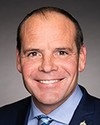
House of Commons Hansard #69 of the 45th Parliament, 1st session. (The original version is on Parliament's site.) The word of the day was meeting.

Topics

line drawing of robot

This summary is computer-generated. Usually it’s accurate, but every now and then it’ll contain inaccuracies or total fabrications.

Youth Criminal Justice Act Second reading of Bill C-231. The bill amends the Youth Criminal Justice Act to allow courts to refer young people struggling with addiction to treatment programs. It aims to prioritize rehabilitation over punishment for youth facing drug-related charges, enabling judges to delay sentencing pending treatment completion. Luc Berthold advocates this approach, seeing addiction as a mental health issue to be treated early. 8000 words, 1 hour.

Budget 2025 Implementation Act, No. 1 Second reading of Bill C-15. The bill implements budget provisions, drawing Conservative criticism as a "credit card budget" that increases debt and the cost of living. Conservatives also raise concerns about a provision allowing ministers to grant "regulatory exemptions" and the lack of support for small businesses. Liberals argue the budget "strikes a balance" by investing in social programs and "creating jobs", while accusing the opposition of "filibustering legislation". Bloc members question the lack of "cell coverage" investment and the absence of a "digital services tax". 15600 words, 2 hours in 2 segments: 1 2.

Statements by Members

Question Period

The Conservatives condemn the Liberal government for soaring grocery prices, citing an expected $1,000 increase and widespread food insecurity. They attribute this to inflationary taxes and spending. The party also criticizes Liberals for blocking pipelines to the Pacific and the tanker ban, urging support for a motion to approve a pipeline.
The Liberals highlight Budget 2025's tax cuts for 22 million Canadians, emphasizing investments in jobs, housing, and infrastructure to grow the economy. They defend the Canada child benefit and the national school food program, while also promoting measures like open banking for affordability. They support the entire MOU on energy, accusing Conservatives of division. The party also prioritizes combating hate crimes and protecting seniors from fraud.
The Bloc criticizes the government for sabotaging Bill C-9 and failing to abolish the religious exemption for hate speech, accusing Liberals of cancelling committee meetings. They also demand more action against Driver Inc. truckers and the exploitation of drivers.
The NDP urges the Liberals to treat Inuit as partners and develop Nunavut's underdeveloped fishery.

Liaison Members debate the systematic obstruction of parliamentary committees by the Liberal government, citing examples of cancelled meetings, ministerial absences, filibustering of government bills, and the failure to advance key legislation like bail reform. Liberals counter that Conservatives are also obstructing the budget implementation bill and other legislation, accusing them of political theatre and a lack of co-operation. 20300 words, 2 hours.

Liaison Members debate the Liberal government's alleged obstruction of parliamentary committees, with Conservatives citing frequent cancellation of meetings and ministers refusing to appear or provide information. Conservatives accuse the government of lacking accountability and transparency, while Liberals argue the opposition is filibustering important budget legislation. The role of committee chairs and ministerial responsibility are key points of contention. 6100 words, 45 minutes.

Petitions

Adjournment Debates

Canada's Net-zero targets Elizabeth May criticizes the government's climate record, calling net-zero by 2050 a fraud that ignores the need for rapid emissions cuts. Corey Hogan acknowledges more needs to be done, emphasizing the importance of investment and technology to achieve net-zero and reverse climate damage, defending budget 2025.
Trans Mountain pipeline project Marc Dalton accuses the Prime Minister of flip-flopping on pipelines and failing to support Canadian energy exports. Corey Hogan defends the government's balanced approach to resource development, emphasizing environmental responsibility, indigenous consultation, and collaboration with provinces. Dalton insists Canadians cannot wait any longer.
U.S. Trade Relations Jacob Mantle questions the government's strategy concerning U.S. tariffs, specifically regarding the VOS Selections case. Corey Hogan agrees the case's outcome won't solve trade issues, as other measures are in place. Mantle and Hogan concur that striking down IEEPA wouldn't provide relief but could increase pressure for negotiation.
Was this summary helpful and accurate?

LiaisonCommittees of the HouseRoutine Proceedings

4:55 p.m.

Bloc

Yves Perron Bloc Berthier—Maskinongé, QC

Mr. Speaker, the message this sends is that we put him in his place and gave him a chance this time. He will not get a second chance. Let us get the message across. Beyond that, it was the perfect example of how not to behave. I much prefer the questions from the member for Winnipeg North. We do not often agree either, but at least he does not hurl insults every three words.

LiaisonCommittees of the HouseRoutine Proceedings

4:55 p.m.

Winnipeg North Manitoba

Liberal

Kevin Lamoureux LiberalParliamentary Secretary to the Leader of the Government in the House of Commons

Mr. Speaker, I appreciate that the member recognizes the makeup of a committee can determine the productivity of that committee. In committees that work well together, we see a higher sense of co-operation. However, in some committees, and I am sure he would admit this, there is a high sense of politicization that takes place. That is where we will often see filibusters occurring.

As a specific example, the motion for one of the committees is that the committee be granted the power to travel throughout Canada to hear testimony from interested parties and that the necessary staff accompany that committee. I perceive that particular motion as a way in which the taxpayer would pay to facilitate something that was not in the best interests of Canadians, and I am trying to be gentle with my comments on this.

Would the member not agree that, at times, committees can be a challenge because the personalities around the table can make it very challenging?

LiaisonCommittees of the HouseRoutine Proceedings

4:55 p.m.

Bloc

Yves Perron Bloc Berthier—Maskinongé, QC

Mr. Speaker, I am pleased that the member for Winnipeg North answered my call and asked me a question; it lowers the temperature of our debate.

Of course the composition of a committee plays a role, but that is only part of it. To be honest, calls get made, missions get organized. Earlier on, I held the Standing Committee on Agriculture and Agri-Food up as an exemplary committee, but something really unpleasant once happened to me. I once asked a colleague a question only to be told in response that we all have a job to do. What did that mean? It meant that a call came in from on high. In political parties, I think that the will has to come from the top, and I think that could be improved a lot. That is obvious.

In answer to my colleague's example about the motion, I would tell him that it depends on the study. It is like when another colleague told me earlier about a time that witnesses were not heard, but he gave me no context. There may have been a specific context involved. To answer the question from the member for Winnipeg North, a motion like that could be a valid part of a study if it were necessary to travel to see people, but it might also not be valid. It depends on the interpretation, and that is part of the work done by committee members. If they are diligent, they will ask themselves serious questions and make the right decisions.

LiaisonCommittees of the HouseRoutine Proceedings

5 p.m.

Conservative

John Brassard Conservative Barrie South—Innisfil, ON

Mr. Speaker, I am very interested in my colleague's comments. I am the chair of the Standing Committee on Access to Information, Privacy and Ethics. In this Parliament, as in all Parliaments, there are committees responsible for government oversight. My job is to closely monitor the work of these four oversight committees, as well as the committees chaired by Liberal members.

Could my colleague comment on how oversight committees function in comparison to committees chaired by Liberals? In my opinion, the latter seem to function less effectively than the former.

LiaisonCommittees of the HouseRoutine Proceedings

5 p.m.

Bloc

Yves Perron Bloc Berthier—Maskinongé, QC

Mr. Speaker, I thank my colleague for his question and congratulate him on his French. Frankly, if everyone tried as hard as he does, we might end up being truly bilingual.

To answer his question, and based on what I have observed during my short time as whip, I have to say that he is right. I could give several examples of chairs from the governing party who seem to be biased more often than they are impartial, who make decisions that appear to be skewed or who try to squelch certain debates.

I think the example that was mentioned earlier about the Standing Committee on Citizenship and Immigration is quite telling. I know that debate is frustrating, but that is what democracy is all about. It means that sometimes we have to bring information to light and, if it is not good news, try to change it for the future.

I think we owe it to the public to be transparent. These oversight committees are extremely important. It is part of democracy, and we must remain vigilant in this regard. My colleague raises a very good point.

LiaisonCommittees of the HouseRoutine Proceedings

5 p.m.

Brampton North—Caledon Ontario

Liberal

Ruby Sahota LiberalSecretary of State (Combatting Crime)

Mr. Speaker, this is an interesting conversation we are having. I think the Conservatives are attempting to try to turn the tables, since I think that the message is getting out to Canadians that there have been delay tactics by the Conservatives to obstruct and stall legislation for some time in many committees. We have been talking about that for some time, so it is good that they are upset about some committees being cancelled this week. I would argue that this was due to the obstruction that the Conservatives have been leading for weeks and weeks.

I will give us an example. After weeks of blocking work that would have made our communities safer, the Conservatives were demanding that the justice committee pack up and hit the road to embark on an expensive, credit-card budget, cross-country tour with a fully staffed entourage that would burn through taxpayer dollars while accomplishing absolutely none of the urgent work that Canadians are expecting of our government right now. Conservatives moved two motions to paralyze the justice committee. It was nothing but bad-faith obstruction.

We were not going to let them hijack another committee meeting and that is why, when a new chair was appointed to that committee, he had to cancel one meeting in order to sort things out. For the previous several meetings, all that had happened was obstruction. I will give exact examples of how that was done.

Instead of hijacking the meetings and accomplishing nothing, it is better, at times, to pause. The committee chair in the House had also explained why that pause was needed: to gather parties together and come to a path forward so that we could work together more productively.

I would like to point out that in the justice committee, two major public safety bills, the combatting hate act and the bail and sentencing reform act, are both being stalled, even as provinces and territories, municipalities, police chiefs, police associations and victims groups have been pleading with parliamentarians for swift action. Blocking these reforms is really irresponsible. It is an affront to the public safety of Canadians.

Under the Conservative leader, what we have seen is that the Conservatives would rather stage political theatre on the taxpayer's dime than do the job that Canadians have sent them here to do as an official opposition. They are not serious about public safety. They are not serious about governing, that is for sure. Hopefully, they are not given the opportunity one day, because they are showing clearly where their interests lie. It is in gaining political power and not in what the opposition is sent here to do, which is to make constructive amendments, to make our legislation stronger and to make Canadians safer. That is exactly what they have not been doing.

In fact, I would argue that what they are doing is trying to make sure that the government is not able to accomplish its agenda and pass these reforms and pieces of legislation, so that Canadians would be upset, so that these community groups would be upset, and so that the Conservatives can continue with the rage bait that they do online. What would they do if we were to solve all of these problems with our legislation? What rage bait would they be able to carry on about at that point?

We have seen, in fact, that every time there is some type of impasse, the Conservative Party of Canada gets online and raises money at the expense of the serious issues that affect Canadians and the incidents that victims suffer from. They have no qualms or feelings about fundraising off those issues. That is why I would say that the Conservatives are absolutely not serious, not genuinely serious, about public safety. They are certainly not serious about listening to the people who are most affected by crime.

Communities across Canada have been calling for stronger protections in the face of rising hate and rising anti-Semitism. We had many community associations call upon the House to make changes in legislation, to make changes to the Criminal Code of Canada, and we are doing exactly that. Every Conservative delay means that those protections are also delayed in getting to Canadians.

The proposed combatting hate act could not be reviewed at the committee, and the amendments that were put forward were not considered. There is a lot of conversation happening right now as to whether the Liberals agree with the Bloc amendment its members were going to be putting forward, but that amendment was not even put forward and was not moved at committee. However, somebody leaked that information, which is a serious matter of procedure and a failure of the member who made that leak.

It is important to give committee members the opportunity in committee to debate these issues and come up with a sincere decision on those issues, but what we saw were complete delay tactics. For example, on Thursday, November 27, the committee's work was completely derailed when the Conservative member for Elgin—St. Thomas—London South filibustered for two hours. All confidential amendments had already been submitted on November 24, and the Bloc amendment was scheduled to be introduced that day, but the filibuster prevented that from happening. In fact, the amendment was never debated at all, and so no consideration was given to that matter.

In the meantime, what the Conservatives have been busy doing is demonizing this piece of legislation and coming up with what-ifs, hypothetical scenarios that are not even in the bill. The Conservative leader is going to events and telling people they will not be able to read the Torah, the Quran or the Bible without being charged. These are complete falsehoods. It is not true. These are hypothetical scenarios that have been created, and I would argue that even with potential amendments, that would not be the case. Once again, it is all rage bait.

Like I said, after weeks of filibusters, procedural games and attempts to drag us backwards, the Conservatives have now moved two motions at committee to stop clause by clause and to send the committee on a national tour. This is after the bill has already been debated. Witnesses have come before committee, and I can let members know how many witnesses; I have a list right here. The work the committee was able to do has been impressive, but I just wish it was given the opportunity to continue this work to completion. Instead, the Conservatives are holding up two very important bills in that committee.

The committee had eight hours of time on this bill. It should have been 11 hours, in terms of the time that was scheduled, but due to the Conservative filibustering, those hours were not allowed for committee work. We were left with eight hours. In terms of the number of witnesses, the committee saw 23 witnesses on this hate crime legislation, but it should have seen 33 had the Conservatives not started filibustering the committee. It is quite clear that it is the Conservatives who do not want to hear from witnesses and experts who come to give their testimony as to the pros and cons of different aspects of the legislation, which is really important in a democracy. It is the work that committees are given to do, and it is incredibly important.

What shocks me is that the other day in this House, the co-deputy leader of the Conservative Party stood up, and she was referring to Bill C-9. Maybe she was referring to all Criminal Code changes; I do not know. I will say that when the issue was Bill C-9, she stood up in the House and said, “We do not have a law problem in this country. We have an enforcement problem”.

I am wondering, is the deputy leader saying the police do not know what they are doing? What we have heard from police agencies across this country is that hate crime charges have not been laid. What we have heard from Jewish communities across this country is that they are not seeing the law being applied, due to the lack of clarity that had existed, and so consultations had been done to create this legislation so communities could be better protected through our code.

Every time the Conservatives get up in the House, they want Criminal Code changes. All their private members' bills ask for Criminal Code changes. Every time they get up in question period to talk about crime, they ask for Criminal Code changes. We are doing all of the things the Conservatives have asked for, all the things that law enforcement, the communities and victims have asked for, and all of of a sudden, we are seeing this pattern. The Conservatives are trying to stop us and obstruct us from doing the work that is necessary.

The pattern we have been seeing is a very clear one. What we have been seeing is that the Conservatives are incredibly weak on crime this Parliament, and they are blocking bail reform. The proof is in their actions, and not in what they get up and say, because we cannot trust what they are going to say. One day they are asking for changes in the law, and the next day their deputy leader is getting up in the House and saying we do not have a law problem; it is an enforcement problem. If that was the case, then why are they asking for all these law changes?

There are changes that are necessary. We have implemented them in legislation. However, the pattern we are seeing is that the Conservatives are opposing all those changes. Therefore, they are blocking bail reform. People are being released today because of the Conservatives' failure to work with the government. They are blocking protections for peaceful protesters and peaceful worshippers. One thing we have seen that is very clear is that the Conservatives definitely will not allow the police more of the investigative powers they have been asking for so they can actually catch extortionists and pedophiles.

The second bill we tabled in this House was Bill C-2, the stronger borders act. In that piece of legislation, we had a lawful access regime, which is something that, once upon a time, the Conservatives agreed with. However, all of a sudden, once again it is their way to fundraise and rage farm. Clickbait and rage farming is the stuff the Conservatives are famous for doing.


LiaisonCommittees of the HouseRoutine Proceedings

5:10 p.m.

Some hon. members

Oh, oh!

LiaisonCommittees of the HouseRoutine Proceedings

5:10 p.m.

Liberal

Ruby Sahota Liberal Brampton North—Caledon, ON

The Conservatives are angry, Mr. Speaker, because of the tactics I am pointing at and the clear pattern we have been seeing.

The powers in lawful access would help provide police the powers and the tools they need to catch extortionists, things the Conservatives bring up in the House every single day. They complain about a problem, but they do not want a solution. Also, it would help catch pedophiles.

Right now, even if the police know the IP addresses all across the country where people are downloading child pornography, they are unable to act on that information quickly because they need to go through procedural court orders, which takes a very long time. In many of these extortion cases, we are seeing the criminals go free and commit more and more extortions. Child predators are continuing their work because it takes up to six months at times to get judicial authorization. It is so important to give these modern tools to police.

Our Five Eyes allies all have these types of modern tools, but the Conservatives will not allow us to be able to give that to our police agencies. I think they are listening to an extreme base that they have right now and bending to its wishes.

Another pattern I have seen is really interesting, because the Conservatives used to be pro-police. However, we have heard the Conservative leader calling the RCMP “despicable” and then the co-deputy leader getting up in the House and saying enforcement is the problem in this country. Meanwhile, our law enforcement officers have been working incredibly hard, giving us the proper recommendations we need so we can put them into our legislation.

We presented this legislation, we have debated it in the House, but all we have seen from the Conservatives are stall tactics and misleading information being spread to Canadians about how the government is going to go after their data. That is absolutely false. That is not true. There is no interest in going after anyone's data. However, it is important for police to be able to narrow down the suspects they have, to rule out suspects they have in cases, so that they can act quickly and so criminals do not go on to commit other crimes. This is the important work that is being held up in the justice committee.

Like I said, for Bill C-9, there has been three hours and 30 minutes of debate in the House already, and eight hours in the committee that could have been 11, but the Conservatives filibustered. They heard from 23 witnesses, which should have been 33, but the Conservatives filibustered. Now they are saying the work is not done and we should let them take a fancy tour across the country, pack it all up, spend and waste taxpayer dollars to go and continue to spread disinformation across the country.

We have done it before in the House, where all parliamentarians from all sides have gotten together to do what is right, to work in the best interests of Canadians, not in the best interests of themselves or their fundraising campaigns. Let us pass these crucial bills, these urgent bills that victims are calling for and police are calling for.

That is why this work is so important. It is actually life or death right now. I would plead with the Conservatives to help us pass this—

LiaisonCommittees of the HouseRoutine Proceedings

5:20 p.m.

The Deputy Speaker Tom Kmiec

I have a point of order from the member for Kitchener South—Hespeler.

LiaisonCommittees of the HouseRoutine Proceedings

5:20 p.m.

Conservative

Matt Strauss Conservative Kitchener South—Hespeler, ON

Mr. Speaker, it is my understanding that the definition of disinformation includes purpose or intent, that it would be equivalent to intentionally misleading or lying. I just wonder if you would rule that it is unparliamentary to accuse the opposition of doing that.

LiaisonCommittees of the HouseRoutine Proceedings

5:20 p.m.

The Deputy Speaker Tom Kmiec

I thank the member for that point of order on the use of that particular word. That word has been used in the House before. I would say that without it being preceded by words like “wilful”, “deliberate” or “intentional”, in this particular case, no individual member was singled out or mentioned in the House as having engaged in that behaviour. Therefore, I did not rise to call the minister to order.

The secretary of state may continue.

LiaisonCommittees of the HouseRoutine Proceedings

5:20 p.m.

Liberal

Ruby Sahota Liberal Brampton North—Caledon, ON

Mr. Speaker, I cited an example of a time when the Conservative leader went to an event. At that event, he said that Bill C-9, currently, in the form that it is right now, would criminalize religions in this country. That is misleading. That is misinformation that is spreading online. It is, obviously, causing concern. I would be concerned too, if that was the truth.

It is our job as parliamentarians to set the record straight, to be responsible, to debate bills on their merits, on the facts of what is in a bill, and if a motion is put forward, then to debate that motion on its merits. We can also, of course, vote against those types of motions. Instead, what is happening is that a lot of fear is being spread into our communities, and then bills are being held up based on that narrative, which is irresponsible. I think Canadians do not appreciate that.

Canadians are being extorted. I was at a town hall this weekend. People asked me, “What is going on in Parliament? Why can't you get this done, when it's so important to us to be able to get the laws in place that would help give harsher penalties to criminals and make bail harder for them to get? What do the Conservatives have against that?” I am just flabbergasted. I am really shocked that those are measures the Conservatives are, all of a sudden, not supporting any more. I feel like things have been flipped upside down a bit. I do not know what's going on, but it is confusing.

I just ask that we work more productively together. It is great that the justice committee is going to be meeting. I encourage all the members of the justice committee to meet and to sort these issues out, to pass Bill C-9 and pass Bill C-14.

Also, at the the public safety committee, let us bring back Bill C-2. Let us bring back the provisions that were left behind by the Conservatives: lawful access provisions and being able to fill the gap of vulnerability we have through our mailing system right now. As it stands, even with a judicial warrant, we cannot search mail for fentanyl and—

LiaisonCommittees of the HouseRoutine Proceedings

5:20 p.m.

The Deputy Speaker Tom Kmiec

The hon. member for Northumberland—Clarke.

LiaisonCommittees of the HouseRoutine Proceedings

5:20 p.m.

Conservative

Philip Lawrence Conservative Northumberland—Clarke, ON

Mr. Speaker, I just wanted to read into the record what has happened at the transport committee. The record is as follows: November 18, meeting cancelled by Chair; November 20, meeting cancelled by Chair; November 25, Liberal filibuster; November 27, meeting cancelled by Chair; and December 2, Liberal filibuster. Then the Chair got up and said the committee was going to suspend for 30 minutes and ran out the back door. December 4 was a Liberal filibuster. We are scheduled for another filibuster tomorrow.

Is this the Liberals' definition of “productivity”?

LiaisonCommittees of the HouseRoutine Proceedings

5:20 p.m.

Liberal

Ruby Sahota Liberal Brampton North—Caledon, ON

Mr. Speaker, I think I would give precedence and priority to legislation, and committees do too. Committees give priority to legislative work.

The example I have been giving is that there are two very important and urgent pieces of legislation at the justice committee that need to be passed in order to change the Criminal Code. There are up to 80 different changes in one piece, the bail and sentencing piece, of the Criminal Code of Canada. It would make sentences harder for criminals and getting bail a lot tougher. That is really important. Canadians have been asking for that. In the face of rising hate, they have also been asking for us to act on that issue. Let us give legislation the priority it deserves and pass those pieces.

LiaisonCommittees of the HouseRoutine Proceedings

5:25 p.m.

Bloc

Rhéal Fortin Bloc Rivière-du-Nord, QC

Mr. Speaker, I have heard rumours about dissent among the Liberals regarding the religious exemption in Bill C-9. I would like my colleague to tell me how many members of her caucus believe that we must protect the religious exemption defence for the offence of promoting hatred and the offence of promoting anti-Semitism.

LiaisonCommittees of the HouseRoutine Proceedings

5:25 p.m.

Liberal

Ruby Sahota Liberal Brampton North—Caledon, ON

Mr. Speaker, it would be very important for the justice committee to resume its work so the member can get an answer to that question. That question might eventually be before the committee. Members can debate that issue as they are supposed to be able to debate it in the committee process. We will then know what their views are when there is a vote on that issue. We will know where the issue lies. Let us get back to doing the work that is necessary, rather than debating hypotheticals. All we have been doing the last several weeks is talking about hypotheticals, filibustering about what may be, who may be thinking what or what is happening in which caucus meeting. That is not the work of Parliament. That is the work of gossip rags.

I would say the committee should get back to work, should have that discussion around the committee table and should have the important vote there.

LiaisonCommittees of the HouseRoutine Proceedings

5:25 p.m.

Winnipeg North Manitoba

Liberal

Kevin Lamoureux LiberalParliamentary Secretary to the Leader of the Government in the House of Commons

Mr. Speaker, the secretary has been a very powerful advocate in the area of bail reform. If we do a flashback to the last federal election a number of months ago, the Prime Minister made a commitment to Canadians to bring forward bail reform legislation and to work with the provinces, law enforcement and many different stakeholders to have bail reform legislation. As a minister, I know full well she wants to see that legislation passed, as I do and as the entire Liberal caucus does. This is delivering for Canadians.

Would she not agree the only barrier to Canadians receiving bail reform legislation is the Conservative Party of Canada? If the committee wanted to, it could deal with this. We could have the legislation back here and passed.

LiaisonCommittees of the HouseRoutine Proceedings

5:25 p.m.

Liberal

Ruby Sahota Liberal Brampton North—Caledon, ON

Mr. Speaker, I completely agree with the member. Right now, we have a comprehensive piece of legislation before the justice committee. I have been promising constituents that we will get this bill to the finish line with the help of the Conservative Party and with the help of all parliamentarians in the House. Who wants to see criminals go free? Who does not want to improve our judicial system? We are delivering that.

I would hope that the Conservatives would partner with us in that, but to my surprise, they have been obstructing every chance they get. They have been obstructing at committee. They have been obstructing in the House. They have been obstructing out at community events.

LiaisonCommittees of the HouseRoutine Proceedings

5:25 p.m.

Green

Elizabeth May Green Saanich—Gulf Islands, BC

Mr. Speaker, it grieves me to make this comment to my friend, the secretary. We are debating much in this place, but I am the lone representative of the Green Party and I was the lone representative of the Green Party in 2011. This current session of Parliament represents the time that I have felt the least respect, had the least opportunity to participate and seen the most anti-democratic measures to push things through.

In the case of Bill C-9, I did not get to speak to it at all before it went to a vote at second reading, and the vote at second reading passed on division. There are seven New Democrat MPs and me. In the past, the old days, we had rules that said five MPs could stand and force a recorded vote. That is no longer. The Bloc, the Conservatives and the Liberals decide when our constituents get to see how we would vote on a bill. Now we do not even get to do that.

I ask my hon. colleague to give us a chance to debate these bills in this place, in the House.

LiaisonCommittees of the HouseRoutine Proceedings

December 8th, 2025 / 5:25 p.m.

Liberal

Ruby Sahota Liberal Brampton North—Caledon, ON

Mr. Speaker, I have a lot of respect for that member, and I know that in the past there have been many opportunities provided to debate pieces of legislation in the House. If a member would like to appear before a committee, they have to work with that committee and it depends on the members and the consensus that is built at that committee. I hope that this member is given an opportunity because she always brings value to any debate that we have in the House.

LiaisonCommittees of the HouseRoutine Proceedings

5:30 p.m.

Conservative

Chris Lewis Conservative Essex, ON

Mr. Speaker, I just want to say quickly that I do substitute in at the transportation committee, and I have had many hours of listening to the Liberals filibuster this committee. One thing that really stood out to me was that my hon. colleague had mentioned that this is about life and death. All Conservatives have been trying to do, where we are studying Driver Inc., is to call witnesses to tell their stories about the victims and the lives that are lost.

Would the hon. colleague not agree with me that the Liberals need to get out of the way and allow us to do this study so their stories can be told?

LiaisonCommittees of the HouseRoutine Proceedings

5:30 p.m.

Liberal

Ruby Sahota Liberal Brampton North—Caledon, ON

Mr. Speaker, my comment in terms of life was in relation to the work that is being done at the justice committee with respect to Bill C-9 and with respect to the bail and sentencing bill, Bill C-14. It is what I have been hearing from law enforcement and what I have been hearing from victims, so it was in reference to that. It is not to make light of anything. I take this issue very seriously.

In terms of what is being studied at the transportation committee, I think that is very important too. Safety on our roads is incredibly important. To a large extent, that issue is provincial. Provincial authorities can decide whom they license, whom they do not license and whether they want to license temporary visitors. I know Ontario is taking measures with respect to that. I would encourage all provinces to look into their safety measures for their roads because it is incredibly important.

LiaisonCommittees of the HouseRoutine Proceedings

5:30 p.m.

Bloc

Gabriel Ste-Marie Bloc Joliette—Manawan, QC

Mr. Speaker, I would like to pick up where my colleague from Rivière-du-Nord left off. He said that we proposed an amendment to Bill C-9 so that the religious exemption could no longer be invoked for hate speech. The Liberal Party was in favour of that amendment at one point, but that no longer seems to be the case.

My colleague therefore asked the government representative a question, and she replied that it was up to the Standing Committee on Justice and Human Rights to look into this. However, as I understand it, the Liberal chair has decided to stop convening the justice committee for the time being, hence the report we are discussing today. I would like my hon. colleague to comment on that.

LiaisonCommittees of the HouseRoutine Proceedings

5:30 p.m.

Liberal

Ruby Sahota Liberal Brampton North—Caledon, ON

Mr. Speaker, I will look into it, but I just heard as I was here in the House, and I do not have the ability to confer with anybody right now, that a meeting has been scheduled. I hope, for the sake of these important measures, that a meeting is scheduled. It is something that I would advocate for as well.

All the committees should be doing the work that is necessary, but I will also say that when studies are done, this is the time of year, during the last week of the parliamentary sitting, when committees will decide themselves whether they want to wind up the issue they are studying right now or they want to continue. That is not anything abnormal. In the last 10 years that I have been here, that has always been customary.

However, once again, I will go back to the point about prioritizing legislation. I think it is really important that we prioritize legislation because we also need to give the other place time to review that legislation.