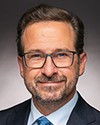
House of Commons Hansard #74 of the 45th Parliament, 1st session. (The original version is on Parliament's site.) The word of the day was conservatives.

Topics

line drawing of robot

This summary is computer-generated. Usually it’s accurate, but every now and then it’ll contain inaccuracies or total fabrications.

Fair Representation Act First reading of Bill C-259. The bill amends the Canada Labour Code to protect workers' rights to organize freely and ensure representation by independent, democratic unions, addressing concerns about "company unions" and their accountability to members. 100 words.

Opposition Motion—Canadian Economic Sovereignty Members debate the Conservative's proposed Canada Sovereignty Act, which aims to restore economic sovereignty. It calls for repealing federal measures like the Impact Assessment Act, industrial carbon tax, and oil tanker moratorium to unblock resource development. While Conservatives argue this will spur jobs and make Canada more affordable, Liberals contend it's a rehash of a rejected platform, emphasizing their government's focus on trade diversification and major projects. Bloc MPs question if supporting foreign-owned oil companies truly enhances Canadian sovereignty. 49900 words, 6 hours in 2 segments: 1 2.

Statements by Members

Question Period

The Conservatives heavily criticize the government's failure to address the highest food inflation in the G7, attributing it to Liberal taxes and deficits. They demand action on major projects and advocate for a Canadian sovereignty act to boost the economy, while also highlighting rising housing costs and the escalating extortion crisis.
The Liberals highlight efforts to combat the cost of living through a new $1,890 groceries and essentials benefit and tax cuts. They emphasize economic growth, significant job creation, and major project investments achieved through collaboration with provinces. The party also addresses public safety concerns like auto theft and extortion.
The Bloc focuses on US trade negotiations, seeking a new agreement and removal of pork tariffs to protect jobs. They also condemn the IT fiasco causing major issues with seniors' pensions.
The NDP highlights challenges in the North including housing and extreme food prices, urging investment to address poverty and Arctic security.

National Framework for Food Price Transparency Act Second reading of Bill C-226. The bill aims to establish a national framework to improve food price transparency, including standardized unit pricing, to help Canadians compare grocery costs. Supporters say it promotes fairness and empowers consumers. Conservatives argue it adds bureaucracy and won't lower food prices. The Bloc Québécois views it as federal overreach into provincial jurisdiction given Quebec's existing regulations. 8100 words, 1 hour.

Adjournment Debates

Food affordability for Canadians Andrew Lawton describes how rising food costs are impacting families in his riding. Patricia Lattanzio cites the Canada groceries and essentials benefit, a boost to the GST credit. Lawton asks why the government won't remove hidden taxes, and Lattanzio insists that bringing down costs for Canadians remains a top priority.
Liberal crime legislation Colin Reynolds criticizes the Liberal government's crime policies, citing rising crime rates and calling for the repeal of Bill C-5 and Bill C-75. Patricia Lattanzio defends the government's actions, highlighting Bill C-14 and other crime bills. Reynolds also criticizes the government's focus on law-abiding gun owners.
Was this summary helpful and accurate?

Food InflationStatements by Members

2:10 p.m.

Conservative

Laila Goodridge Conservative Fort McMurray—Cold Lake, AB

Mr. Speaker, every Canadian knows the feeling of standing in the grocery aisle, looking at the total and wondering how it got this expensive. Canada is number one in the G7 for food inflation and our food inflation is double what it is in the U.S. This is in large part due to the industrial carbon tax and the Liberal fuel standards tax, which both drive up taxes for farmers, truckers and everyone who brings food to the table. Families see the impact at the grocery store. Beef is up nearly 17%, apples up 10%, coffee up 41% and baby formula up 6%.

Groceries are projected to cost families an extra $1,000 compared to last year, and Canadian families just cannot keep up. Conservatives are ready to fast-track real solutions and lower food prices by eliminating the industrial carbon tax, scrapping the fuel standards tax, boosting competition in grocery chains and cutting red tape for farmers.

Will the Liberal government act now, or will it keep asking Canadian families to absorb these costs?

Canadian Contributions to NATOStatements by Members

2:15 p.m.

Liberal

Julie Dzerowicz Liberal Davenport, ON

Mr. Speaker, in my riding of Davenport, I have veterans who served in Afghanistan. When I ask them about their service, the answer is simple. They are proud to have served. They are proud Canadians. Let the record be clear. Canada is a founding member of NATO. We have participated in nearly every mission since 1949. More than 40,000 Canadians served in Afghanistan, and 158 made the ultimate sacrifice.

Our soldiers did not stand back. They led allied combat operations in Kandahar, one of the most dangerous provinces in the country. Today, Canada leads NATO's largest forward presence in Latvia, with 2,200 troops standing firm against Russian aggression. Our sailors, soldiers and aviators are second to none. Canada shows up. Canada leads. Canada keeps its word.

As the Prime Minister reminded the world last week, Canada thrives because we are Canadian. Our veterans' sacrifice will never be forgotten.

The EconomyStatements by Members

2:15 p.m.

Conservative

Tamara Kronis Conservative Nanaimo—Ladysmith, BC

Mr. Speaker, Conservatives worked with the government to pass Bill C-5, giving the Prime Minister extraordinary power to approve major projects quickly.

The same spirit of co-operation should bring the House together to support a Canadian sovereignty act, which would cut delays for everyone and put Canadians back in control of our destiny. The Major Projects Office is supposed to be a workaround for government delay and a fast pass for anointed projects, but the Prime Minister's words are moving faster than the work, turning the MPO into another bottleneck to prosperity. This is where our proposed sovereignty act comes in. Productivity is inseparable from affordability. When we build more and export more, productivity rises. Higher productivity drives higher incomes, making life more affordable. Canadians should not be forced to choose between moving major projects forward and getting government out of the way.

This is why we are putting forward a sovereignty act. We call on all parties to support it.

Hon. Kirsty DuncanStatements by Members

2:15 p.m.

Liberal

Rob Oliphant Liberal Don Valley West, ON

Mr. Speaker, yesterday's news of the passing of Kirsty Duncan, the former member for Etobicoke North, reverberated throughout the offices and corridors of the Canadian Parliament. We are all grieving the loss of a thoughtful, vibrant, intelligent, strong and kind person who served Canadians with grace and kindness.

Kirsty Duncan stood out in our small class of new Liberal MPs in 2008. While she was kind, we learned to never mistake her kindness for her strength, her feistiness and her principled nature. She brought academic rigour, curiosity and science to everything she did. She was a fierce defender of multiculturalism and a voice for those who face economic challenges. She called for respect, dignity and accountability for athletes and artists so they could work and play without fear or exploitation. She loved highland dancing and roared with laughter when she saw me trying to do it. She was, as always, encouraging, despite my limitations.

To Sven, her husband and partner in life, our hearts are broken along with his, but our resolve to live each day a little more the way Kirsty lived her own is even stronger now.

To young women who saw in her a model for sports, dance, academics, politics and public service, let us all commit to being just a little more noble and a little kinder.

Godspeed to my friend Kirsty.

The EconomyOral Questions

2:20 p.m.

Battle River—Crowfoot Alberta

Conservative

Pierre Poilievre ConservativeLeader of the Opposition

Mr. Speaker, the Prime Minister held a photo op yesterday at a grocery store, but something was missing. There were no price tags. He ordered his PMO staff to remove the price tags so he could hide from Canadians how much it costs to buy groceries after a year, since he has doubled food inflation, which is the highest in the G7. His inflationary taxes and deficits are a hidden cost in food prices.

Instead of hiding prices, why not lower them?

The EconomyOral Questions

2:20 p.m.

Nepean Ontario

Liberal

Mark Carney LiberalPrime Minister

Mr. Speaker, that is obviously the new spirit of collaboration here in the House.

The meeting I had yesterday with the Premier of Ontario was an example of collaboration. We worked together for the auto sector and to build affordable homes.

I can introduce the Premier of Ontario to the member opposite.

The EconomyOral Questions

2:20 p.m.

Battle River—Crowfoot Alberta

Conservative

Pierre Poilievre ConservativeLeader of the Opposition

Mr. Speaker, this is a clear example of this Prime Minister's delusion. He holds meetings instead of delivering results. Results are what we need. He promised that food would be more affordable, but a year later, food inflation has doubled. It is twice as high as in the United States. It is the worst food inflation in the G7. Yesterday, he tried to hide that by taking away the price tags.

If prices are so outrageous that he wanted to hide them from Canadians, does that mean his record is terrible too?

The EconomyOral Questions

2:20 p.m.

Nepean Ontario

Liberal

Mark Carney LiberalPrime Minister

Mr. Speaker, over the past few months, our government has accomplished a great deal. We are working on making the school food program permanent. We need the opposition's votes to do that.

We cut taxes for 22 million Canadians. Yesterday, we proposed a new measure that will increase benefits for a family of four to $1,800 a year.

The EconomyOral Questions

2:20 p.m.

Battle River—Crowfoot Alberta

Conservative

Pierre Poilievre ConservativeLeader of the Opposition

Mr. Speaker, yesterday, the Prime Minister held a photo op at a grocery store in front of food, but there was just one thing missing: the price tags. He ordered his PMO staff to literally show up early at the grocery store and remove the price tags. They are back up today. We went and checked, and they are really high. In fact, grocery prices are rising faster in Canada than in any other G7 country, twice as fast as in the States and twice as fast as when he took office. The hidden costs the Prime Minister imposes on inflation will not go away just because he tries to take down the price tags.

Why will he not take down the price?

The EconomyOral Questions

2:20 p.m.

Nepean Ontario

Liberal

Mark Carney LiberalPrime Minister

Mr. Speaker, yesterday, before I had lunch with the Premier of Ontario, I had a long meeting with the Premier of Ontario. I would like to introduce the Leader of the Opposition to the Premier of Ontario so he can learn something about co-operation on housing, co-operation on building the best auto sector in the world, co-operation on good jobs for Ontarians and Canadians, and co-operation on rising wages, which have risen faster than inflation every single month of this—

The EconomyOral Questions

2:20 p.m.

The Speaker Francis Scarpaleggia

The hon. Leader of the Opposition.

The EconomyOral Questions

2:20 p.m.

Battle River—Crowfoot Alberta

Conservative

Pierre Poilievre ConservativeLeader of the Opposition

Mr. Speaker, if Canadians could eat the Prime Minister's photo op, there would not be an empty stomach in the country. He has had lots of meetings. He has had signing ceremonies. He has had grand announcements and new bureaucracies, but what he has not delivered are real results. His biggest promise was that he was going to make food prices affordable. Since that time, food inflation has doubled. It is the worst in the G7. It is the result of his hidden taxes, the inflation tax from his deficits, and the fuel taxes on farmers, fertilizers and farm equipment.

Instead of trying to hide the price tag, why will he not get rid of the cost?

The EconomyOral Questions

2:25 p.m.

Nepean Ontario

Liberal

Mark Carney LiberalPrime Minister

Mr. Speaker, here is something we do not hide, and here is something we are proud of: over 140,000 new jobs net created since the summer. That is more than in the United States.

Here is something else: wages rising every single month of this government, faster than the rate of inflation.

Here is something else: We cut taxes for 22 million Canadians. We put in place a national food program for 400,000 kids, and we are making it permanent. Yesterday, we announced a benefit for 12 million Canadians of $1,800—

The EconomyOral Questions

2:25 p.m.

The Speaker Francis Scarpaleggia

The hon. Leader of the Opposition.

The EconomyOral Questions

2:25 p.m.

Battle River—Crowfoot Alberta

Conservative

Pierre Poilievre ConservativeLeader of the Opposition

Mr. Speaker, Canadians have never had it so good that 2.2 million of them are lined up at food banks.

One of the reasons is that we cannot get our resources to market. We worked in collaboration to give the Prime Minister exceptional powers to get things done. Instead, he spent the time on photo ops, signing ceremonies and reannouncing projects that were long ago approved. The Prime Minister's new bureaucracy, the projects office, has not approved a single new project.

Why will the Prime Minister not get out of the way and accept our plan by passing a Canadian sovereignty act today?

The EconomyOral Questions

2:25 p.m.

Nepean Ontario

Liberal

Mark Carney LiberalPrime Minister

Mr. Speaker, part of how we move this country forward is by collaborating with provinces and territories, like the great territory of Nunavut. I would like to welcome the Premier of Nunavut, who is here.

One thing we have done in six months is agree on the Grays Bay port, which is going to open up Arctic sovereignty, open up the future of this country and make Canada strong.

The EconomyOral Questions

2:25 p.m.

The Speaker Francis Scarpaleggia

I assume the Prime Minister meant that the Premier of Nunavut is in the area, not in the House.

The EconomyOral Questions

2:25 p.m.

Battle River—Crowfoot Alberta

Conservative

Pierre Poilievre ConservativeLeader of the Opposition

Mr. Speaker, of course we love the Premier of Nunavut, but all the Prime Minister has are meetings, announcements and signing ceremonies, never shovels in the ground and never results that matter to people. Not a single pipeline has been approved. His projects office has not approved a single new project. In fact, he has not removed a single pre-existing Liberal bureaucracy or a single pre-existing antidevelopment law.

All he has to do is get out of the way and adopt a Canadian sovereignty act so we can get building and become self-reliant and strong.

The EconomyOral Questions

2:25 p.m.

Nepean Ontario

Liberal

Mark Carney LiberalPrime Minister

Mr. Speaker, the last time we were in the House, the member opposite stood up and gave us a semblance or a reduction of the MOU with Alberta. The Alberta MOU is not consistent with a sovereignty act. The Alberta MOU will build a pipeline to tidewater. The Alberta MOU will build carbon capture and storage, will build nuclear and will build data centres. It will build our future. A sovereignty act would destroy it.

International TradeOral Questions

2:25 p.m.

Bloc

Yves-François Blanchet Bloc Beloeil—Chambly, QC

Mr. Speaker, please allow me to extend my best wishes for 2026 to you and all my colleagues.

I would also like to share some of the very real concerns I have for Quebec and Canadian businesses and for jobs in Quebec and Canada. A speech, in and of itself, does not generate money. It does not create jobs, nor does it protect jobs. I gather that there are no negotiations happening with the Americans on trade or on the tariffs, even though President Trump is the cause of our worst concerns.

Can the Prime Minister guarantee that normal, cordial negotiations are happening with Washington?

International TradeOral Questions

2:25 p.m.

Nepean Ontario

Liberal

Mark Carney LiberalPrime Minister

Mr. Speaker, the world has changed. Washington has changed. Almost nothing is normal in the United States at the moment. That is the truth.

Nevertheless, we are continuing discussions with the Americans. I spent approximately 30 minutes speaking with the President of the United States last night, and that included a discussion on trade.

International TradeOral Questions

2:25 p.m.

Bloc

Yves-François Blanchet Bloc Beloeil—Chambly, QC

Mr. Speaker, I understand that the United States has changed, and I am just as concerned as the Prime Minister. We support market diversification. We have been suggesting that for the past year.

However, we do not want to turn our backs on Quebec values, which, I hope, are similar to Canadian values in some respects. The United States will still account for more than three-quarters of our trade for the foreseeable future. Jobs and businesses are at stake.

Can the Prime Minister assure us that a new trade agreement will be in place by July 2026?

International TradeOral Questions

2:30 p.m.

Nepean Ontario

Liberal

Mark Carney LiberalPrime Minister

Mr. Speaker, that is the intention of the United States, Mexico and Canada. The formal negotiations will begin in a few weeks.

International TradeOral Questions

2:30 p.m.

Bloc

Yves-François Blanchet Bloc Beloeil—Chambly, QC

Mr. Speaker, from what I understand, and this is meant to be reassuring, beyond certain controversies that may be relevant in many respects, most Quebec and Canadian export jobs depend on American businesses at least as much as on the U.S. President, and something serious is happening. That is what we are asking for.

If the Prime Minister is more familiar with economics than he is with Quebec history—because he is not very good at history—then why did he not remove the tariffs on Quebec pork while he was negotiating diversification with China?

International TradeOral Questions

2:30 p.m.

Nepean Ontario

Liberal

Mark Carney LiberalPrime Minister

Mr. Speaker, first, the Chinese government has committed to reducing the tariffs on pork, beef and other Canadian foods.

Second, the agreement with China reduces tariffs on canola, which is an over $7-billion market for our farmers and agricultural producers.