House of Commons Hansard #93 of the 45th Parliament, 1st session. (The original version is on Parliament's site.) The word of the day was c-9.

Topics

line drawing of robot

This summary is computer-generated. Usually it’s accurate, but every now and then it’ll contain inaccuracies or total fabrications.

Silver Alert National Framework Act First reading of Bill C-263. The bill creates a national framework for “silver alerts” to help locate missing seniors with dementia, requiring federal cooperation with provincial and law enforcement authorities to improve rapid response times during critical emergency situations. 200 words.

Jury Duty Appreciation Week Act First reading of Bill S-226. The bill establishes the second week of May as Jury Duty Appreciation Week in Canada, aiming to raise awareness, honor jurors, and address concerns regarding their mental health support and financial compensation. 200 words.

Petitions

Motion That Debate Be Not Further Adjourned Members debate the Liberal motion to end the adjournment of debate on Bill C-9, which aims to address hate crimes. Conservatives accuse the government of overly broad legislation that threatens religious freedom and express concern over the removal of religious exemptions. The Minister of Justice defends the bill, pledging to add clarifying amendments protecting faith practices and arguing that Conservatives are obstructing proceedings for political gain. 5300 words, 35 minutes.

Consideration of Government Business No.6 Members debate Bill C-9, the Combatting Hate Act, as the Liberal government pushes to pass legislation addressing rising hate crimes, arguing it provides necessary tools to stop harassment and intimidation at places of worship. Conservative MPs contend that existing Criminal Code provisions are sufficient, arguing that the bill’s removal of the religious defence creates a chilling effect on free expression. The Bloc Québécois supports the bill, emphasizing the need to close legal loopholes currently hindering the prosecution of hate speech. 19100 words, 2 hours.

Statements by Members

Question Period

The Conservatives demand action on rising food prices and inflationary taxes. They blame Liberal policies for the shrinking economy, criticize the failure to deport IRGC agents, and decry violence on streets. They also call for a public inquiry into the Tumbler Ridge tragedy and the removal of interprovincial trade barriers.
The Liberals emphasize actions against the IRGC and protecting places of worship. They defend affordability measures and argue the industrial carbon price has no impact on food costs. The government highlights LNG project expansion, modernizing senior benefits, and efforts toward Middle East de-escalation. They also focus on men’s mental health and Indigenous child welfare reform.
The Bloc questions the government's Middle East strategy and coordination with allies. They demand relief for inflation and housing costs and criticize the Cúram system failures that have impacted 85,000 seniors' pensions.
The NDP accuses the Prime Minister of betraying his commitment to the UN Charter by supporting illegal warfare. They also condemn the closure of a Quebec agricultural research centre and its impact on food security.

Government Business No. 6—Proceedings on Bill C-9 Members debate a programming motion to accelerate the passage of Bill C-9, the *Combatting Hate Act*. Liberals argue the legislation is essential for protecting communities from rising hate crimes and intimidation. Conservatives express strong opposition, particularly to the removal of the good-faith religious defence, warning it could criminalize sacred texts and infringes on civil liberties. The House passes the motion, which restricts further committee debate and sets timelines for a final vote. 26200 words, 4 hours in 2 segments: 1 2.

Corrections and Conditional Release Act Second reading of Bill C-232. The bill, proposed by the Conservative Party, seeks to modify the Corrections and Conditional Release Act by mandating maximum-security confinement for dangerous offenders and serial murderers. While Conservative members argue the change restores balance for victimized families, opposing Liberals and Bloc MPs maintain that judicial independence and rehabilitative goals are essential, expressing concern that the legislation is overly rigid and potentially unconstitutional. 7500 words, 1 hour.

Food and Drugs Act Second reading of Bill C-224. The bill proposes amending the Food and Drugs Act to remove natural health products from the "therapeutic products" category, reversing 2023 budget legislation that Conservatives term regulatory overreach. While debate highlights concerns regarding freedom of choice and industry viability, proponents and opposing parties emphasize the necessity of maintaining consumer safety standards. The motion passed, referring the legislation to the Standing Committee on Health. 6100 words, 45 minutes.

Was this summary helpful and accurate?

Public SafetyOral Questions

2:20 p.m.

Battle River—Crowfoot Alberta

Conservative

Pierre Poilievre ConservativeLeader of the Opposition

Mr. Speaker, there have always been wars in the Middle East, but never before did those wars spill onto our streets here in Canada. After 10 years of Liberal immigration and Liberal open borders, they have allowed criminals, terrorists and illegal guns to enter our country. After 10 years of Liberal catch-and-release laws that the Prime Minister has not changed one word on, we have criminals released on our streets, and now our synagogues are being shot at, Iranian dissidents are killed on our streets and there are 700 IRGC terrorist agents on our streets.

What will the Prime Minister do to restore the safety that Canadians had before his Liberal government took office?


Public SafetyOral Questions

2:20 p.m.

Nepean Ontario

Liberal

Mark Carney LiberalPrime Minister

Mr. Speaker, I have to go quickly.

Bill C-14 would change the bail laws. The member might want to read it and definitely wants to support it. The member opposite has voted against every single gun control measure ever put before the House.

The government has banned the Islamic guard. The government has sanctioned over 200 Iranian entities. The government is investigating over 17,000 individual cases. We are protecting this country with 1,000 more RCMP—

Public SafetyOral Questions

2:20 p.m.

The Speaker Francis Scarpaleggia

The hon. Leader of the Opposition.

Public SafetyOral Questions

2:20 p.m.

Battle River—Crowfoot Alberta

Conservative

Pierre Poilievre ConservativeLeader of the Opposition

Mr. Speaker, what I voted against was a Liberal approach that has doubled gun crime by wasting billions of dollars going after duck hunters, farmers and legal sport shooters. The Prime Minister is more worried about protecting turkeys from hunters than he is about protecting synagogues from terrorists. That is the real problem.

We have 700 IRGC terrorists in this country. It does not matter if they are banned. If they are on our streets, they are a danger. They are shooting up synagogues, killing dissidents and threatening our people.

Will the Prime Minister reverse the Liberal agenda that unleashed this violence on our streets?

Public SafetyOral Questions

2:20 p.m.

Nepean Ontario

Liberal

Mark Carney LiberalPrime Minister

Mr. Speaker, on this side of the House, we want to protect synagogues, we want to protect community centres and we want to protect places of worship, which is why Bill C-9 is before the House today.

I challenge the member opposite to put his votes behind his words to protect the Jewish community and to protect communities of faith across this country.

TaxationOral Questions

2:20 p.m.

Battle River—Crowfoot Alberta

Conservative

Pierre Poilievre ConservativeLeader of the Opposition

Mr. Speaker, his solution to synagogues being shot up is to ban sections of the Jewish Torah. That is not our solution on this side of the House. That is according to his own immigration minister and his own heritage minister.

We need to be safe at home. We need to be affordable at home. Even before this war broke out and raised gas prices, the Prime Minister doubled food price inflation and gave us the worst grocery price increases in all of the G7, so excuses about global impacts are not going to work.

Will the Prime Minister reverse his new taxes on food, fuel, farmers and fertilizer so Canadians can afford to eat?

TaxationOral Questions

2:25 p.m.

Nepean Ontario

Liberal

Mark Carney LiberalPrime Minister

Mr. Speaker, I would suggest that the member opposite read the Canadian Charter of Rights and Freedoms, which protects the Torah, which protects the Bible and which protects freedom of expression. The House should not be otherwise informed by possible misrepresentation. We should follow the true word that protects all Canadians.

TaxationOral Questions

2:25 p.m.

Battle River—Crowfoot Alberta

Conservative

Pierre Poilievre ConservativeLeader of the Opposition

Mr. Speaker, the question was about food prices. The Prime Minister said he could be judged by the prices at the grocery store. Since he took office, food price inflation has doubled, and the Prime Minister has introduced new taxes that increase the fuel prices for the farmers who feed us. Now, 2.2 million people are lined up at food banks and faced with even worse fuel costs today.

Will the Liberal Prime Minister reverse his latest Liberal tax so that Canadians can afford to eat?

TaxationOral Questions

2:25 p.m.

Nepean Ontario

Liberal

Mark Carney LiberalPrime Minister

Mr. Speaker, it feels like Groundhog Day. I am once again required to remind the member opposite that the impact of the industrial carbon tax on fuel prices is approximately zero.

The impact, though, of our trade deals on the farmers in his constituency is absolutely enormous. It is almost planting season, and the farmers of Alberta, including in Battle River—Crowfoot, can plant canola.

Foreign AffairsOral Questions

2:25 p.m.

Bloc

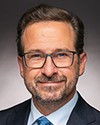
Yves-François Blanchet Bloc Beloeil—Chambly, QC

Mr. Speaker, bring out the good china; we have visitors in Parliament. Judging by the Prime Minister's inclination to travel the world like Marco Polo, he is his own foreign affairs minister. Unfortunately, this foreign affairs minister is not known for his clarity, and by not accepting his own invitation yesterday, he missed a tremendous opportunity to explain his policies in Parliament.

When will he explain his strategic vision for the Middle East?

Foreign AffairsOral Questions

2:25 p.m.

Nepean Ontario

Liberal

Mark Carney LiberalPrime Minister

Mr. Speaker, Canada's policy is clear: Canada supports the need to prevent Iran's nuclear program and the export of terrorism.

Canada is not taking part in offensive operations by the United States and Israel, and it never will.

Foreign AffairsOral Questions

2:25 p.m.

Bloc

Yves-François Blanchet Bloc Beloeil—Chambly, QC

Mr. Speaker, if I could call that clear, that would be news.

In military terms, Canada is clearly the smallest of the major players. Among the mid-level players, it is clearly the most isolated and no one seems to have understood its position so far.

Has the Prime Minister spoken with our allies in Europe? What have they agreed on in terms of a common position?

Foreign AffairsOral Questions

2:25 p.m.

Nepean Ontario

Liberal

Mark Carney LiberalPrime Minister

Mr. Speaker, I just had a conversation with the chair of the G7, Mr. Macron. I had a meeting with the Prime Minister of Japan. I had a conversation with the President of the United States. That is three members of the G7. I am the fourth member. I will be meeting with Mr. Starmer, who is a fifth member of the G7 and with Ms. Meloni.

Yes, we will find common ground within the G7. We will do that and there will be de-escalation.

Foreign AffairsOral Questions

2:30 p.m.

Bloc

Yves-François Blanchet Bloc Beloeil—Chambly, QC

Mr. Speaker, I should have been more specific in my question and asked whether he spoke with all of our allies in Europe together. Also, it will take a lot more continental drift for the United States to end up in Europe.

Does the Prime Minister intend to propose any short-term measures to help people who are suffering and who will continue to suffer as a direct result of this war?

I am talking about purchasing power, inflation, pensioners and home ownership for young families. I am talking about all of these issues that cannot be resolved in Norway over a five-year period but that must be addressed now for the people of Quebec and Canada.

Foreign AffairsOral Questions

2:30 p.m.

Nepean Ontario

Liberal

Mark Carney LiberalPrime Minister

Mr. Speaker, the best option is de-escalation and peace. That is why I am having conversations with other members of the G7 and with leaders of Middle Eastern countries, such as Qatar, Oman, the United Arab Emirates and Lebanon. We also need to use the G7's oil reserves.

The EconomyOral Questions

2:30 p.m.

Conservative

Mark Strahl Conservative Chilliwack—Hope, BC

Mr. Speaker, Canadians are struggling to make ends meet. Record food bank usage, personal bankruptcy rates and an increasing number of Canadians borrowing money to buy food are proof of that. While there are some things that are outside of our control, there are things that the government does control, like its new fuel tax, which is already raising the price of gas by seven cents a litre and is set to climb up to 17¢ a litre, raising the cost of everything that Canadians buy.

When will the Liberals finally take responsibility for their reckless policies and stop making life more expensive for Canadians?

The EconomyOral Questions

2:30 p.m.

Toronto—Danforth Ontario

Liberal

Julie Dabrusin LiberalMinister of the Environment

Mr. Speaker, let us be clear. Studies show that the impact of the industrial carbon price on food is zero. The clean fuel regulations do not impose a price at the pump, but they do create an impressive economy for our canola farmers. He should speak to the leader of his Conservative Party. There is a canola crush plant in his constituency, and Canada's largest renewable diesel facility is right on the edge of that riding. Canola farmers will see their price go up by $1.09 a bushel, according to Advanced Biofuels Canada.

The EconomyOral Questions

2:30 p.m.

Conservative

Mark Strahl Conservative Chilliwack—Hope, BC

Mr. Speaker, every country in the G7 is facing external pressures, but this government stands alone in having created the worst food price inflation and the only shrinking economy in the G7. Instead of making life more affordable, the Liberals are making it worse with their higher fuel and carbon taxes, which are raising the costs for farmers, fishers and truckers, driving up the cost of everything for cash-strapped Canadians.

Why do the Liberals not finally focus on what they can control and get rid of these harmful policies that are punishing Canadians?

The EconomyOral Questions

2:30 p.m.

Markham—Thornhill Ontario

Liberal

Tim Hodgson LiberalMinister of Energy and Natural Resources

Mr. Speaker, let us talk about what we can control: building Cedar LNG, building Woodfibre LNG, expanding Tilbury LNG, approving LNG Canada phase two, approving Ksi Lisims and approving the PRGT pipeline to the west coast.

The EconomyOral Questions

2:30 p.m.

Conservative

Richard Bragdon Conservative Tobique—Mactaquac, NB

Mr. Speaker, Canadians know we cannot control what happens abroad, but the government controls the policies here at home. Under the Liberal government, Canada now has the worst food price inflation in the G7 and the only shrinking economy in the G7. Our families, seniors, workers and those who transport our food have no alternative but to use fuel. These costs are imposed here at home, not abroad.

When will the Liberals end the era of self-sabotage and remove the policies that are driving up costs here at home?

The EconomyOral Questions

2:30 p.m.

Toronto—Danforth Ontario

Liberal

Julie Dabrusin LiberalMinister of the Environment

Mr. Speaker, they seem to like to repeat their questions, so let me repeat the answer.

Studies have shown the industrial carbon price does not increase the cost of food. The clean fuel regulations do not impose a price right at the pump, and if they want me to be really clear, it creates an economic opportunity. I would think they would like to see that. In fact, according to the Advanced Biofuels Canada, it will create or preserve an average farm revenue by $60,000. That should mean something to the members opposite.

The EconomyOral Questions

2:30 p.m.

Conservative

Richard Bragdon Conservative Tobique—Mactaquac, NB

Mr. Speaker, tell that to the producers and farmers in Victoria, Carleton and York counties in New Brunswick, who are being hit by the Liberals' newly renamed carbon tax, the clean fuel standard, which adds seven cents a litre. At the same time, the Liberals have raised the industrial carbon tax on steel, aluminum and farm equipment. All this is driving up costs for dairy, beef and poultry producers in my region and throughout the country. These costs are imposed here at home.

I will ask again. When will the Liberals end their era of self-sabotage and remove the policies that are making life more expensive for all Canadians?

The EconomyOral Questions

2:35 p.m.

Ahuntsic-Cartierville Québec

Liberal

Mélanie Joly LiberalMinister of Industry and Minister responsible for Canada Economic Development for Quebec Regions

Mr. Speaker, there are a lot of things we cannot control in the world, but there are many things we can control. What we definitely can control is how we build one Canadian economy.

There is good news on our manufacturing PMI, which basically monitors new business activity. My colleague referred to steel, aluminum, auto, etc., and we are at a 13-month high. That means that businesses are now receiving more orders, and more jobs are being created. The tariffs have impacted us, but we have a good plan, we are bouncing back, and we will fight for jobs.

Carbon PricingOral Questions

2:35 p.m.

Conservative

Bernard Généreux Conservative Côte-du-Sud—Rivière-du-Loup—Kataskomiq—Témiscouata, QC

Mr. Speaker, I spoke to farmers in my riding recently and they have had enough. They are paying more and more for inputs like gas, fertilizer and farm equipment all because of the Liberal carbon and clean fuel taxes, for example.

Meanwhile, grocery prices continue to rise and everyone is paying more and more, which is really hard on families.

When will this Liberal government finally stop going after those who help our communities survive and eliminate these inflationary taxes?

Carbon PricingOral Questions

2:35 p.m.

Louis-Hébert Québec

Liberal

Joël Lightbound LiberalMinister of Government Transformation

Mr. Speaker, I would like set the record straight in terms of what we are hearing from the other side. Repeating something day after day in question period does not make it true. To keep it simple for my colleague, according to all of the serious and rigorous analyses that have been conducted, the impact of the industrial carbon tax is virtually zero.

The Conservatives are telling us that there are things that we cannot control and things that we can. One of the things that they should control is how they vote. They voted against a tax cut for 22 million Canadians. They voted against the Canada child benefit, which has reduced child poverty by 40% in Canada. They voted against the grocery benefit, which will give families about $1,800 a year this year.

They should change their approach and support this government's affordability measures.