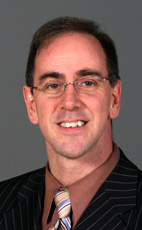
House of Commons photo

Crucial Fact

  • His favourite word was quebec.

Last in Parliament November 2009, as Bloc MP for Hochelaga (Québec)

Won his last election, in 2008, with 50% of the vote.

Statements in the House

Immigration April 21st, 1998

Mr. Speaker, on March 24, Ramon Mercedes, aged 23, of Dominica, who traveled to Canada on board the cargo ship Eclipper , had to have both his feet amputated because of frostbite and lack of adequate medical care.

How can the Minister of Citizenship and Immigration explain the inhumane treatment inflicted upon Ramon Mercedes, who was deported without treatment immediately after his feet were amputated?

Chilean Refugees March 13th, 1998

Mr. Speaker, my question is for the Minister of Citizenship and Immigration.

For 22 days now, 16 political refugee claimants from Chile have been on a hunger strike. These claimants say that irregularities occurred during the review of their files by the Immigration and Refugee Board.

Can the minister assure this House that all documents made available to board members during the review of the files of these Chilean claimants are reliable and credible?

Drug Licensing March 11th, 1998

Mr. Speaker, my question is for the Minister of Health.

There are 50,000 people living with HIV or AIDS in Canada. However, six drugs, whose efficiency in the treatment of HIV and AIDS has been proven, have yet to be approved by the Health Protection Branch, and this after more than 14 months.

What does the Minister of Health have to say to people with HIV or AIDS who need these drugs but have to do without because of the inefficiency of the drug licensing process in Canada?

The Economy March 10th, 1998

Mr. Speaker, like you and everybody else in the House, I am really eager to wrap up this debate, which is of concern to all our fellow citizens, since we are talking about the budget.

I am extremely disappointed by the budget brought down by the finance minister. He is known to be somewhat undemonstrative, with a lack of vision and imagination, as shown in previous budgets. What we did not know, however, was how little concern the Minister of Finance and his government had for social issues.

Mr. Speaker, you who are concerned with social justice, can you understand how this government, in a context of budget surplus, the first in a number of years, can give no thought to those people who are our society's most disadvantaged and who need the government's help?

I would have hoped to see much greater concern in this budget over the social role of the banks. I would like to give you an example of the situation in the United States since 1977, when the Democrats passed a certain bill. It certainly cannot be said that the United States does not foster freedom of enterprise. Well, since 1977, they have legislation that requires banks to become involved in underprivileged communities.

This legislation annually reviews a public report, which obviously receives a lot of attention from consumers. The report, released in June, evaluates the social behaviour of banks.

Is there one good reason why such legislation would not be well received in Canada? There is one: we need a government that has some backbone, that has vision and that can stand up to the financial world. We know that we are not talking about this kind of government.

Like you, Mr. Speaker, I am a great traveller and, undaunted by a challenge, I went to Washington three months ago. There I met members of the American Banking Association, businessmen and consumer groups and I was told about all the good this sort of legislation brought about.

I got the list of investments. If members want to obtain a copy, I would be delighted to circulate this list. Since 1977, American banks have invested $356 billion in local communities?

What did Canadian banks do? Throughout the world, conventional wisdom has it that Canada is the easiest country of all for banking. It is a well-known fact that Canada is a very well protected market for bankers.

What has happened in Canada? We have four major chartered banks which have made record profits. In 1994, profits stood at $4 billion, but they reached $7 billion last year, and there is no reason to believe this trend will abate. In this context of banks getting richer and richer, with our Canadian borders closed to foreign competitors, banks have resorted to the most drastic streamlining ever.

I remind the House that since 1991, banks have laid off one way or another 10,000 employees. In the next ten years, they are expected to lay off 35,000 more. All of this, when profits are at a record level and the return on common equity has never been so high.

Why should this Parliament remain indifferent and silent, callously silent, about the social role banks could play? In many communities experiencing a great deal of poverty and unemployment, where it would be important for the banks to get involved in the development of the local economy, banks are conspicuously absent.

Let us take the riding of Hochelaga—Maisonneuve, for example, which I believe you had the chance to visit recently, Mr. Speaker. The number of underprivileged people there is quite high. But I hasten to add that there is also an intense community involvement, so that for each of the existing problems, we have community resources to help individuals through their particular situations.

Seniors in my riding tell me that 20 years ago, we had about ten branches of the various chartered banks. Believe it or not, no more than two are still there. They tell me that there are no banks in Saint-Henri any more. If it were not for institutions like the caisses populaires, it would be impossible for people to access basic financial services.

How can a Minister of Finance responsible for preparing a budget, one with any feelings, remain cruelly silent on the question of financial institutions? Are members aware that, across Canada, there are 600,000 Canadians who have no bank account, because the existing rules demand identity documents, and some branches even require them to have a job, and they therefore do not have access to basic financial services.

I believe that it must be made perfectly clear that the banks have acted like highwaymen, like Shylocks, like thieves, without any respect for consumers. In major cities, there are voices asking that we, the law makers, regardless of political affiliation, take action to get the banks to shape up.

I think that in the next few days, we could adopt a community investment bill, as they call it in the United States. We could give the Superintendent of Financial Institutions the mandate of assessing them on the basis of widely known and accepted criteria; this could be done in co-operation with community groups, representatives from the banking community and the private sector. Banks should have to account every year, in a report which would be made public, for their actions, investments and community involvement.

You know what I am like. I am certainly not someone who shrinks from political life. Faced with the problem of the banks, I introduced a private member's bill that, as luck would have it, is now before the House and should be debated in the coming days, probably in early April.

I call on the solidarity of all my colleagues. Can it be that, for once and for all in the House, we are going to ask the banks to behave like true corporate citizens with a stake in their community? It requires a certain amount of political courage. It requires that we work together.

I have not given up the hope of creating a coalition with a number of members to pressure this government to provide legislation such as they have in the United States.

Mr. Speaker, I need only your support now. I know you support such action, and I am sure that legislation of this kind ensuring social justice will, in the end, be passed in Canada.

Poverty February 26th, 1998

Mr. Speaker, since taking office in 1993, the Liberal government has never stopped implementing policies that have a negative effect on the poor.

In this regard, the National Anti-Poverty Organization released a report on the impact, on low income Canadians, of government spending cuts and other changes affecting health care and post-secondary education.

This report, sponsored by one of the most respected organizations active in the fight against poverty, includes two findings that are disturbing to say the least. First, the actual per capita value of federal cash transfers for social programs dropped by more than 40% between 1993 and 1997. Second, access to health care services is becoming increasingly dependent on one's ability to pay, rather than on the need for medical treatment.

When will the Liberals realize that the fight is against poverty, not against the poor?

Drug Licensing February 13th, 1998

Mr. Speaker, in September 1996, a parliamentary committee clearly recommended that the minister radically reform the Canadian drug licensing system, which is notoriously inefficient. Why has no action been taken since?

Drug Licensing February 13th, 1998

Mr. Speaker, my question is for the Minister of Health.

Several drugs used in the treatment of HIV and AIDS have been available in the United States, Europe and South America for more than a year already. But the Health Protection Branch has yet to authorize the marketing of these new drugs, thereby penalizing thousands of infected individuals.

Does the minister realize that, due to the particular inefficiency of the drug licensing process in Canada, thousands of people living with HIV or AIDS are seeing their treatment threatened?

Black History Month February 11th, 1998

Mr. Speaker, on the occasion of Black History Month, the Bloc Quebecois wishes to pay tribute to a community which has made an invaluable contribution to the development of Quebec.

Since the creation of Black History Month by American historian Carter G. Woodson in 1925, a variety of events throughout America have marked the contribution of the black community.

A number of names spring immediately to mind when one thinks of the black community in Quebec: Dr. Yvette Benny, the first Quebec physician to perform a pediatric bone marrow transplant; Oliver Jones, the world-famous pianist; businessman Christopher A. Ross; musician Charles Biddle; last but not least, the Olympic medallist Bruny Surin. These, and many others, are a source of tremendous pride to the black community, and to all Quebeckers, for their excellent accomplishments.

It is my hope that we may all work together to enhance the quality of life of a community to which all in Quebec owe a considerable debt.

Supply February 10th, 1998

Madam Speaker, I know the parliamentary secretary was sincere in what he said, but I think he abandoned originality and emphasized sincerity, because it was a speech straight from the Privy Council, prepared by speech writers obviously hired for that very purpose.

I have three comments and one question. When our colleague, the parliamentary secretary, says that we do not know the consequences of sovereignty, if he says something like that at this point, then he has not followed the debate, because all Quebeckers know that, on the day Quebec becomes sovereign, through democratic means, no other means having ever been considered, there will be three consequences: Quebec will keep all its taxes; Quebec will decide on its international politics, and there will be a single parliament, the National Assembly, that will pass laws having force over its territory. So, the next time the parliamentary secretary is asked about the consequences of sovereignty, he can give as a reply what all Quebeckers know.

What is at issue in the parliamentary secretary's discourse is whether he admits that, unlike Prince Edward Island, Manitoba and Saskatchewan, Quebeckers form a nation and that, because they form a nation, they have the right to decide their future democratically. And does he admit that that is basically what the last two referendums were about? Once his government took part, it recognized Quebeckers as a nation.

I would like to hear what my hon. colleague has to say about this.

Supply February 10th, 1998

Madam Speaker, I have both a favour and a question to ask the minister.

I cannot conceive of a minister rising in this House to question the quality of democratic life in Quebec. You will agree with me that it takes some nerve to tell the Quebec people, who, not just once but twice already have overwhelmingly expressed their willingness to be involved, by reaching a consensus in a referendum process, in the process their government was asking them to participate in. I will not stand idly by while the minister rises in this House and questions the democratic quality of the consultations that have taken place in Quebec.

One thing is crystal clear to the Quebec people and that is that the minister is isolated, a lone wolf. His yearning for attacking the deep-rooted democracy in Quebec is doomed to failure because the likes of Claude Ryan and Claude Corbo, the former rector of UQAM, have stood up to him. They contend that the Supreme Court cannot be the one to decide because what this is about is the right of the Quebec people to freely make an informed decision the only way it can be done and that is through a referendum process initiated by the Quebec National Assembly.

All members of this House, and government members in particular, who do not recognize this process violate Quebeckers' cherished right to democracy.

I would like to know if the minister will have the honesty to recognize that he is alone and isolated in his position and that the dynamic forces of Quebec, everyone who took part in the various referendum processes these past few years, said no, it is not up to the Supreme Court to decide. Will this minister now rise in this House and admit that he stands alone, that he was wrong and that Quebeckers have the right to come to a decision through a referendum? That is what democracy is all about.