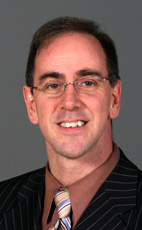
House of Commons photo

Crucial Fact

  • His favourite word was quebec.

Last in Parliament November 2009, as Bloc MP for Hochelaga (Québec)

Won his last election, in 2008, with 50% of the vote.

Statements in the House

Equal Treatment For Persons Cohabiting In A Relationship Similar To A Conjugal Relationship Act February 6th, 1998

moved for leave to introduce Bill C-309, an act providing for equal treatment for persons cohabiting in a relationship similar to a conjugal relationship.

Mr. Speaker, I am proud to introduce this bill, the purpose of which is to guarantee common law homosexual and lesbian couples the same rights as those granted under federal legislation to common law heterosexual couples. I expect to have the support of all colleagues in the House.

(Motions deemed adopted, bill read the first time and printed)

Ice Storm 1998 February 4th, 1998

Mr. Speaker, I want to thank my colleague who described the situation in his riding with all of his well-known sensitivity and eloquence.

The months of January and February will be forever remembered in our history as times of almost exceptional solidarity.

To really understand the true nature of Quebeckers, the way they ract as one and their natural generosity, one should thoroughly analyze this crisis.

The public shelters set up by the emergency preparedness organization, often with the help of municipalities, were not where most people in trouble gathered. It is interesting to see that, when Quebeckers realized they needed help, their first reaction was to go to their neighbours, their friends and relatives, to seek shelter in their basements or houses and some sense of solidarity.

The solidarity shown at the height of this rather unique and remarkable crisis that is the worst disaster our seniors can remember is quite extraordinary. It is also interesting to note that Quebeckers never lost heart. They rolled up their sleeves and showed an almost unprecedented level of solidarity.

Of course, everyone was called in to help. I want to tell you what happened in Hochelaga—Maisonneuve. As we know, Montreal was not the worst hit area, but several of our fellow citizens were without power for several days.

This is what happened. Michel Allen mobilized his employees and volunteers, who have been extremely helpful, at the Pierre-Charbonneau Centre, a city facility. For a few days, people who could not be taken in by neighbours, relatives or friends stayed at the Pierre-Charbonneau Centre and the Olympic Stadium, in the riding of Hochelaga—Maisonneuve.

Another very moving initiative in Montreal is what Mr. Duchesneau, the chief of police of the Urban Community of Montreal, asked of all his police officers. All the police officers in Montreal, together with volunteers, systematically did what members of Parliament are used to, that is go door-to-door.

It is very comforting to think that in an emergency situation such as the one we experienced in January, all Montreal homes were visited. Police officers and volunteers knocked on every door to make sure people were not having problems, suffering from the cold or in need of food. If they did, the relevant services would be called in. What a nice speedy and generous collective response.

I would also like to talk about another very moving story that is worth mentioning. It is about a youth centre at the corner of Adam and Saint-Clément, right in my neighbourhood. This institution called Escale Notre-Dame welcomes people who have had drug problems in the past, and it is run by the Christian Brothers. These young people gave their time. They took turns, day and night, to provide entertainment and support in the Pierre- Charbonneau Centre.

I want to thank them because they have their own problems and are undergoing rehabilitation so they can reintegrate society. Through this experience, they could realize how great and generous they can be through involvement and dedication.

I would like to name these ten or so young people, and I hope my colleagues will join me in expressing their thanks and appreciation to them for their dedication and involvement. I am thinking of André Larose, Florian Lebreton, Steve Gravelle, Rahid Amlabid, Sylvain Décosse, Philippe Paradis, Robert Desrochers, Réjean Hogue, Roger Boucher and Stéphane Lessard, who are all 20 to 25 years old and who put on a show at the Centre Pierre-Charbonneau and did it of course with all the generosity, serenity and courage required in the circumstances.

It is because a series of factors that we all came out of this the better for it. First, of course, we were able to fall back on the community networks. Also, as my colleague, the member for Frontenac—Mégantic, mentioned, we were able to rely on the strength of the public sector. In a city like Montreal, needless to say that the CLSC was called into service. I am thinking of the CLSC Hochelaga—Maisonneuve and its manager, Mr. Leguerrier as well as the CLSC Olivier-Guimond, in the east of my riding, that rapidly organized reliefs efforts and took especially good care of our seniors.

It is well known that everyone cannot react with the same speed in an emergency when we must mobilize. I must say that the authorities in my community, particularly the health care system which must be the closest to the people, and our frontline health services, the CLSC, took specially good care of the elderly.

We know it was important to do it. Often times, the elderly tend to be afraid of bothering other people, of asking for services, and to wish to take care of themselves in their natural environment. We were afraid seniors would put their safety in danger by not asking for help even if they needed it.

The worst was avoided because public authorities did the right thing, because the CLSC and its staff got involved.

I would also like to mention the recreation organizations which are very important resources in a community like mine. I particularly want to underline the work done by Jeunes Sportifs d'Hochelaga. That social club sent volunteers to help police go door to door in my neighbourhood and to make sure that all the people likely to need help were reached. Furthermore, a telephone network was set up in three days. Three times in three days, the network was used to reach everybody. The fact that it could be set up—and you can imagine the tremendous effort involved—and that all our people were reached is due in large part to the volunteer work done by Jeunes Sportifs d'Hochelaga-Maisonneuve, along with Pierrette Demers with her husband Robert Demers, who have run this association for over 15 years.

I close by thanking the Canadian Armed Forces as well. You know I have always felt and have argued in my party that in a sovereign Quebec we should have a civilian protection force. If there is something which was eloquently demonstrated, it is that all societies need organizations to protect people. I think we need a civilian rescue organization made up of people who are absolutely dedicated and whose role is not questioned so that they can reach out and be of service to people.

We express our gratitude to the Canadian army because it was not an issue of partisanship. When people do some good within a community, no partisanship scenario can stand and I know I speak on behalf of my fellow citizens when I rise in this House to pay tribute to the Quebec military and reserve forces who did a truly extraordinary job.

To conclude, I want to thank all those who transformed an ordeal into a great moment of solidarity. I believe we can truly say that we have all come out of this crisis better persons, different in some ways. I know we are equipped for the future, ready to face not only any danger but any possible scenario of general mobilization.

To all the volunteers, to all my colleagues in the House, I say thank you. I believe we have all been changed greatly by this crisis.

Mackenzie-Papineau Battalion December 11th, 1997

Madam Speaker, on November 17, I asked the Minister of Citizenship and Immigration about the measures she intended to take to fight the extremely serious problem of the arrival in Canada of a number of war criminals, people who are guilty of crimes in their country and who have applied under Canadian law for refugee status.

The issue is of concern, because according to an internal study by Randy Gordon in the Department of Citizenship and Immigration, we learned that, since his first report in February 1997, the total number of cases of all kinds had increased. He reported that the total was now over 300 cases, and including the new files to be considered soon for refugee status, the total would no doubt increase significantly in 1997-98. According to Mr. Gordon, if only 1% of the 38,000 new claims pending processing involved war crimes, the total number of files to process would almost double in very short order.

You must know that in Canada there are nearly 300 people who are guilty or could be considered guilty by the war crimes refugee status commission. There is one thing of considerable concern. Internationally, Canada has the reputation of giving a special welcome to war criminals. In saying that, I know the government is just as concerned as I am about this situation.

I know the Minister of Immigration and Citizenship is not pleased to discover that we are a preferred haven for war criminals. However, for more than 20 years we have known that all sorts of mechanisms have permitted war criminals to come to Canada. Despite all, we must acknowledge that little has been done.

You will recall that, in 1985, there was a commission of inquiry, the Deschênes commission, which looked particularly at Nazi war criminals. It suggested a number of courses of action, including amending the Criminal Code, passing tighter measures on extradition and, of course, the main measure of ensuring that, when someone applied, it would be possible to identify whether they were guilty of war crimes. The moment an individual was identified as a war criminal, without the need for an exhaustive investigation as is presently the case, expulsion and deportation measures were to be taken.

What I hope in raising this question is to offer the government and the Minister of Immigration and Immigration my full support, my participation and my energy so that we may work together, outside party lines, because we all know there can be no justice. We will be able to send a clear message around the world that Canada will not tolerate war criminals on its soil. A clear message will thoroughly discourage regimes guilty of such crimes.

I close by saying that currently under the Immigration Act, specifically subsection 19(1)—

Division No. 68 December 9th, 1997

Mr. Speaker, a few days ago, I asked the health minister what he intended to do to help sports and cultural events, which are facing a transition period that is way too short. As we know, I was alluding to the harmful and undesirable effects of Bill C-71.

We supported the objectives pursued in the fight against tobacco consumption through this legislation. However, we think the means used to achieve these goals are not appropriate.

The three major producers concerned by the issue of sponsorship invest $31 million annually, which is nothing to sneeze at, and are facing an extremely sensitive situation. First, because the act is very coercive.

The European Union decided to grant a seven-year transition period. Perhaps tobacco producers must stop sponsoring events. I agree that the issue must be considered, but it is not true that sports and cultural events should disappear, and I am referring to major events that have a very significant impact for large cities such as Montreal, Toronto and Vancouver.

Under the current wording of the act, which we were urged to pass in the last Parliament, sponsorship by tobacco producers will be prohibited as of next October.

This is an extremely thoughtless move fraught with consequences, because you can understand that it is not possible for the Jazz Festival, the Grand Prix in Trois-Rivières and the open golf championship to find partners who will invest several million dollars in sponsorhsip on a notice as short as a few months.

Let me tell you that, compared to what was done elsewhere in terms of the planning period provided, other countries had concerns similar to the ones the Minister of Health has about tobacco use and the bad influence publicity may have on young people. Yesterday, in a press conference, and again today, we were reminded that the European Union, which is confronted with a rather similar problem, has given sponsors seven years to withdraw.

Why is this period so important? Because tobacco companies are the main sponsors. When $5 million, $6 million or $7 million are invested to support a sports or cultural event, this has a significant impact and taking away this support without first finding new sponsors is not an alternative, and I hope the government will reconsider.

Amendment To The Constitution Of Canada (Newfoundland) December 8th, 1997

Mr. Speaker, I understand my colleague's point of view. It is a testament to his sensitivity.

I want to remind him that, when his leader spoke, not so long ago, about Quebec's section 93 amendment, one of the pre-conditions he set for parliamentary approval of a constitutional amendment was that a referendum be held, that there be extensive public consultations. I believe that these conditions have been met in the case before us.

Finally, I have trouble seeing how the Reform Party's logic will allow it to vote in favour of a constitutional amendment since, even in very extreme cases, less ambiguous cases where there was public debate, where two referendums were held, where 73% of people voted in favour, and there are not many democracies that can lay claim to that high a percentage of voters in favour of any subject, they are not persuaded.

So I ask my Reform colleague what will be the standard, the criterion that will satisfy these people constitutionally that they may approve an amendment requested by a province if, when 73% of the public has voted in favour, they rise in the House and say nay?

Amendment To The Constitution Of Canada (Newfoundland) December 8th, 1997

Mr. Speaker, I am aware of the hon. member's interest in these matters, and I thank him.

The Pentecostals make up 7% of the population of Newfoundland. It could no doubt be recalled that, where constitutional law is concerned, a minority cannot be subordinated to a majority. I am prepared to admit, with the hon. member, that there is an obligation in a civilized society to ensure that minorities are adequately protected.

What is involved here, however, is the right of a government to modernize its educational system, because this is first and foremost an amendment to ensure that the Newfoundland school system will enter the 21st century as more modern, more efficient, more responsive to the needs of the labour market.

I am tempted to answer my colleague's question with another question. Does he believe that constitutions are immutable? I myself believe that they must adjust to society, that constitutions must adjust to individuals. There is no reason to believe that a constitution or a constitutional amendment is immutable. Such logic would tie our hands and preclude any possibility of change.

What has to be taken into consideration, what we must ask ourselves as parliamentarians, is the following: Did the Pentecostals have the opportunity to make their points of view known? Are there sufficient guarantees that minorities were consulted and are in favour of the constitutional amendment?

I would remind the hon. member that the two Pentecostal MLAs in Newfoundland voted in favour of the government resolution. I believe that this is the best guarantee available to us to conclude that a democratic debate has taken place and that all minorities had a chance to make their views heard.

Amendment To The Constitution Of Canada (Newfoundland) December 8th, 1997

Mr. Speaker, it will come as no great surprise when I tell you that, like my colleagues in the Bloc Quebecois and other parties in the House, I will be enthusiastically supporting the constitutional amendment before us.

I wish to emphasize that this is a constitutional amendment. It would obviously be misleading to those listening if the full significance of the debate today, and for a number of days now, were not made clear. When we speak about a constitutional amendment, the first thing that should be said is that a constitution is the supreme law of a nation. There are two kinds of constitution. Canada has what is described as a written constitution. There are basically five ways of amending it. The constitutional amendment before us is made possible through section 43.

Section 43, the constitutional amendment we are debating, is a bilateral constitutional amendment. This means that it is possible for a province, in an area under its jurisdiction, therefore in an area mentioned in section 92 or section 93, to amend the text of the Constitution with the consent of both Houses.

I think it is also worth pointing out that federalism has three main features. A system is described as federal when there is a constitution and a division of powers between lower and higher levels. The third feature is obviously a court of justice that arbitrates disputes or challenges that may arise between partners in the Constitution. This gives us some idea of the system in which we live.

The Government of Newfoundland, headed by the former Minister of Fisheries and Oceans of this government, is asking to be allowed, for all intents and purposes, to establish a public school system. Some people might be tempted to do certain things, but not you, Mr. Speaker, because I know you are a sensible and informed person. I remind our viewers that, throughout your childhood, not that long ago, you took great pleasure in reading constitutional law treaties. This kept you away from the more “in” crowd, but turned you into a well-informed legal expert.

This having been said, the issue here is really to establish a public, non-denominational school system in Newfoundland, the last province to join Confederation, in 1949, under the leadership of Joey Smallwood.

When we consider these issues, we have to keep two things in mind. Confederation was initially made up of four provinces. All the provinces that joined afterwards had clauses protecting minority rights regarding schools. The provinces can be divided in two large groups: those that adhered to section 93, and those that obtained other specific rights. In the case of Newfoundland, it is not section 93 that applies, but term 17.

It should also be mentioned that, as regards term 17, which is the clause governing the terms of the union of Newfoundland with the Dominion of Canada—as our country was called back then—there are three major aspects. First, as we mentioned, term 17 refers to an exclusively denominational school system. Just think of what Quebec did in the sixties—this incredible period of change called the quiet revolution, after an English speaking journalist coined the phrase. Quebec asked the clergy to withdraw from the school system, which is what is now happening in Newfoundland. Indeed, the idea is not only to create non-denominational structures, but to establish a public school system. In other words, linguistic rights are not the issue here. These are not religious rights. We will come back to this later, but these are indeed rights related to access to education and the organization of a public system.

First, this was a province that did not have a public education system when it signed the treaty in 1867. Second, there were seven major denominations representing 90% of the population. I can name them to show the extent of the denominations involved.

There was, of course, the Anglicans, the Presbyterians, the Salvation Army, the United Church, the Pentecostals, the Roman Catholics and the Seventh-Day Adventists. You can easily imagine how this kind of religious mosaic resulted in a rather fragmented school system. In this respect, one of the forms this fragmentation took, which may seem unimportant but can be extremely important in relation to the students' quality of life, was described by parents in the evidence they presented, which I would now like to share with you.

This evidence can be found in the report tabled by the joint committee. I will repeat for the benefit of our viewers that there are two kinds of parliamentary committees: the standing committees such as the justice committee, the agriculture committee and the environment committee, which are mandated to review certain bills, and the joint committees made up of representatives of this House and the other place, better known as the Senate.

Let me read the testimony of a parent reminding us of one of the problems posed, if only from a transportation point of view, by maintaining a system with seven different denominations, in which there are essentially no neighbourhood schools. The fact that you live next to a school does not mean that your child can enrol in that particular school, since enrolment is based on the religion declared by the parents.

One of the parents in the Education First group told of the case of a child who could walk to primary school. Now that she is in seventh grade, however, she has to leave home at 7.30 a.m. and take the bus. Within ten minutes she passes a Catholic school. After 20 minutes, she goes past another school. Both offer seventh grade. Finally she goes past a third school, which offers grades seven to nine, before she reaches her school an hour after leaving home.

So one of the striking elements in the organization of the Newfoundland system is the distances children face in registering not at a neighbourhood school, but at one that provides religious education in the faith of their parents. This is what they are going to put an end to.

Those who would be tempted to think this is a recent debate in Newfoundland should remember that it has gone on since 1990. It is not recent. Its roots warrant mentioning.

In 1990, a commission of inquiry was set up to consider the future of the Newfoundland education system. You know, Mr. Speaker, how important education is to a society. You know, because your education is not lacking, you have a higher education. I have been told in fact that you were always at the top of your class. I have not checked personally, but you are sufficiently talented for me to believe it. Education is important. It is important because it helps socialize, but it inculcates values. When we want to find out a society's most commonly held values, we must look to the schools. Not only do they teach values, but they foster learning. And generally, not just any sort of learning, but learning that provides a competitive edge on the job market and that provides access to the labour force.

It is vital to a society. I think the Government of Newfoundland, for partisan considerations, is right to be concerned about the efficiency of its school system. That is what the commission of inquiry said. In the early 1990s, it concluded that it was important for the future, for the future of the young students of Newfoundland, for there to be an integrated system with shared schools.

After that came a lengthy process. First of all, in 1995-96, there was a first referendum. You know what aphrodisiac powers that word has in this House, it is a word that gets the government all excited. Governments get excited any chance they get, and we are dealing now with one that gets really hot and bothered at the mere mention of the word referendum.

So, there was a first one, to be followed by a second in which Mr. Tobin's government attempted to strike a compromise between a system of education I would qualify as a hybrid, a combination of separate schools and the right of certain religious denominations to be heard. In that referendum, 54% supported the government resolution.

Why do I feel obliged to specify this? First of all, because I am reminding you that this is a debate that has been discussed in Newfoundland since the early 1990s. Second, because there have been consultations of all sorts. There were public hearings, two referendums, not one but two. The first was in 1995, at which time 54% of Newfoundlanders voted yes.

It is interesting, strictly from the constitutional point of view, because I would remind you that what we are dealing with here is a constitutional amendment. It is therefore an amendment that will change the most important document of a country, its supreme law, its constitution. The government of the time, the same one as today, responded favourably to this constitutional amendment.

But it is interesting to recall that it was not two-thirds, not 70% of Newfoundlanders, who voted yes, but 54% at the outside. The government, led by the same Prime Minister guiding our destinies today, followed up on this resolution. It wrote to the Premier of Newfoundland to tell him that, in January 1996, it would introduce a resolution asking parliamentarians in the House of Commons and the Senate to approve the resolution.

I want to remind you that this therefore means that the figure of 50% is acceptable in a referendum because, in a democracy, whatever is said and done, it is the majority that rules. When the Minister of Intergovernmental Affairs ventures to tell us, in his sometimes high and mighty way, that 50% is not enough in the case of Quebec, of national unity, I think we must remind him, in all fairness, that there is a precedent.

There was a referendum in 1995. Naturally, there was a debate in the House in 1996, and we went along, both in the House of Commons and in the Senate, with the resolution introduced by the government. This was followed by a court challenge by two religious denominations in Newfoundland. They challenged not stricto sensu the constitutional amendment, but the new public education act.

There was an injunction. We know how radical a process that is, with its immediate impact. The supreme court of Newfoundland ruled in their favour. This had the result of halting the process of reform in which the Newfoundland government of Brian Tobin was intensely involved.

In this context, the premier then and now, the former Minister of Fisheries and Oceans, whom you remember fondly, I believe, Mr. Speaker, decided to hold a referendum on September 2.

The referendum was on a clear question, a question such as we like them, that is a question which is immediately understandable when you read it, a question which is unequivocal. So, allow me to read it for the benefit of those who may not have done so. The provincial government complied with the conditions of the injunction. It announced on July 31, 1997, through its most important citizen, the premier of the province, that a referendum would be held on September 2, and that the question would be: “Do you support a single school system where all children, regardless of their religious affiliation, attend the same schools where opportunities for religious education and observances are provided?” The question was clear.

Of course, the question triggered a debate. The debate was not like the one in Quebec, since there is no requirement under Newfoundland's referendum act, which is in fact an election act, because there is no specific referendum act. So, a debate took place, thus giving the public an opportunity to discuss what was at stake.

When the referendum was over—and I hope this will happen to us some day—73% of voters had said yes. So, 73% of them authorized the Tobin government to conduct an in-depth review of the school system with a view to establishing amalgamated, non-denominational schools where religious education will be permitted as requested by parents. That is where we are at.

Following this referendum, as required by procedure, another resolution was tabled by the executive, which had to be debated by both Parliaments. This debate led to the establishment of a joint committee and, today, as parliamentarians, we must vote either in favour of or against this resolution. It is interesting because the Newfoundland situation reminds us of the need to modernize the school system, of course, but also of minority rights. It does not deal substantially with linguistic rights, section 23 of the Constitution Act, 1867, or even religious rights. It deals with the right to reorganize the school system.

In spite of the fact that consultations, two referendums, were held and that this debate had been going on since 1990, the Minister of Intergovernmental Affairs, with his stubbornness that borders on neurosis at times, nevertheless insisted on consultations being conducted. We went along with this little game and were represented in the process by the dynamic Bloc Quebecois member for Témiscamingue.

We will support this amendment because we believe that, in a democracy, the voice of reason is always that of the majority. In this case, we are talking about an indisputable majority, since 73% approved the government resolution. I know that, in a not so distant future, when we consider other referendum results, we will remember the precedents created on this occasion.

Employment Insurance Act December 8th, 1997

moved for leave to introduce Bill C-300, an act to amend the Employment Insurance Act (refund).

Mr. Speaker, following on the initiative of a generous man, and I am obviously referring to the member for Kamouraska—Rivière-du-Loup—Témiscouata—Les Basques, I am pleased to introduce a bill to amend the refund level. The purpose of my bill is to allow those with insurable earnings under $5,000 to obtain a refund of their EI premiums.

The purpose of this bill is to extend this refund to all persons whose insurable earnings are less than $5,000 so that this measure applies to the majority of those who pay premiums without qualifying for benefits.

This is a generous bill. It is a bill with a social conscience. I think that is what sets us apart from the members opposite.

(Motions deemed adopted, bill read the first time and printed)

Division No. 48 December 2nd, 1997

I have a point of order.

Division No. 48 December 2nd, 1997

Shame.