Mr. Speaker, the same legislation stipulates that Air Canada must respect the Official Languages Act.
Can the Minister of Transport guarantee that any airline taking its place will be bound by this same obligation?

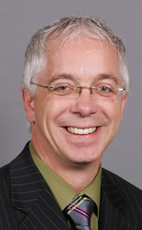 House of Commons photo
Won his last election, in 2006, with 62% of the vote.
Airline Industry April 2nd, 2003
Mr. Speaker, the same legislation stipulates that Air Canada must respect the Official Languages Act.
Can the Minister of Transport guarantee that any airline taking its place will be bound by this same obligation?
Geneva Convention March 24th, 2003
Mr. Speaker, over the weekend, strikingly horrific pictures were broadcast by most major television networks. We saw footage of American prisoners of war being interviewed and pictures of bodies of dead soldiers. The night before, it was footage of Iraqi prisoners that was broadcast. Such are the horrors of war, and none of us wants to witness anything like that again.
I trust, therefore, that all the players in this conflict will abide by the 1949 Geneva Convention relative to the Treatment of Prisoners of War, of which the two warring nations are signatories; it provides that prisoners of war must at all times be protected, particularly against acts of violence or intimidation and against insults and public curiosity.
Yesterday, the International Committee of the Red Cross, the depositary of the Geneva conventions, denounced the broadcast of pictures of American and Iraqi prisoners, pictures which are in violation of the convention.
We therefore urge the government to do everything in its power to ensure that both parties to the conflict apply and abide by the convention.
International Day of La Francophonie March 20th, 2003
Mr. Speaker, today, we are celebrating the Journée Internationale de la Francophonie. United by their shared desire to promote the development and expansion of French and continue the dialogue of cultures within the Francophonie, 56 states and governments are members of the Organisation internationale de la Francophonie. They have adopted a shared policy framework aimed at establishing cooperation between member states.
On March 13, the Secretary General of the OIF described the Francophonie as a force for good.
Today, let us celebrate this and not lose sight of the urgency of showing the political will to use our solidarity as francophone states as a means of continuing the Francophonie's efforts to, among other things, defend human rights, oppose threats to democracy and ensure respect for cultural diversity.
Iraq February 28th, 2003
Mr. Speaker, the Minister of Foreign Affairs says that he is proposing the same thing as the Franco-German memorandum.
Will he rise and say clearly that he supports the Franco-German memorandum as proposed?
Iraq February 28th, 2003
Mr. Speaker, as the minister said, we still do not know who is supporting it, but the Franco-German memorandum proposes three things: a clear action program for inspectors; increased inspections; and a timetable for inspections and assessment.
Can the Minister of Foreign Affairs tell us what exactly Canada does not like about this proposal?
Iraq February 21st, 2003
Mr. Speaker, that is what we are seeking here, greater clarity. The Minister of Foreign Affairs himself recognizes that setting a deadline, as suggested by the Prime Minister, can be tantamount to setting a date for war.
I would like the minister to tell us what the international community is to make of Canada's position. Which is it: the Prime Minister's message or his message, when he expressed concern about a deadline heralding the beginning of war?
Iraq February 21st, 2003
Mr. Speaker, yesterday, speaking of Iraq, the Prime Minister stated:
The situation cannot continue indefinitely; therefore, we believe a deadline should be set.
As for the Minister of Foreign Affairs, he said that Canada was talking about a reasonable timeframe, and not a deadline. Clearly, Canada's position remains ambiguous.
Could the Minister of Foreign Affairs tell us which is Canada's official position, his or the Prime Minister's?
Haiti February 19th, 2003
Mr. Speaker, yesterday, the Secretary of State for the Francophonie really got his foot in it when he said that the values of democracy, human rights and good governance were Canadian values that did not seem to be part of the Haitian vocabulary.
I would like to remind the Secretary of State that Haitians were among the first emancipated people on this continent. In the 18th century, the Haitians abolished slavery, while in Canada in the following century, we hanged Louis Riel.
While Canada was still just a colony, Haiti was already a republic. The Haitian people are as passionate about democracy and human rights as Canadians are.
Each and every day, Haitians battle relentlessly to achieve their goals, which are no less noble for coming up against such arrogant attitudes.
The Bloc Quebecois feels that Haitians have nothing to learn from the Liberal Government of Canada, whose vocabulary abounds in smugness.
Jean-Baptiste Meilleur February 14th, 2003
Mr. Speaker, I note with great pleasure that Jean-Baptiste Meilleur has been designated a significant national historic figure.
Jean-Baptiste Meilleur, a doctor by profession and father of ten, was the first superintendent of public instruction in Lower Canada and is seen as the main founder of Quebec's public education system. He helped found the Collège de l'Assomption in 1833 and was a member of parliament for the riding of the same name from 1834 to1838.
As I have had the privilege of teaching at Jean-Baptiste Meilleur school in Repentigny and at the Collège de l'Assomption, it is with great pride that I make this announcement, an important one for our entire community.
It is said that the institutions Jean-Baptiste Meilleur established laid the foundations for the education system that has existed in Quebec for more than a century.
Canada Health Act February 11th, 2003
Madame Speaker, I am torn—strong words maybe—by this speech, but at least I understand the reasons behind the bill presented by my friend and colleague, the member for Ottawa—Vanier, with whom I had the pleasure and honour to sit on the Standing Committee on Official Languages, along with other colleagues here.
I do not object to the messenger or the message per se, but I will go a little further. When the member for Ottawa—Vanier asks us to amend the Canada Health Act by adding a sixth principle, namely linguistic duality, the goal is noble. My colleague's purpose in introducing this bill is also justified and justifiable.
Where I have a slight problem is with the desired results. We want to offer communities that live in a minority situation—let us call a spade a spade—offer Francophone communities in Canada services in their language, where numbers warrant.
Is the member for Ottawa—Vanier's approach of amending the Canada Health Act to meet this objective of offering services in French to Francophones the right one? The bill would add the following after section 12:
12.1 In order to satisfy the criterion respecting linguistic duality,
(a) as soon as possible, the province shall, in co-operation with the facilities of the province that offer insured health services, develop a program ensuring access to health services for members of the province's anglophone or francophone minority and, in so doing, shall take account of the human, material and financial resources of each facility—
Already we have a problem and this is the reason for the Bloc Quebecois' main objection to this bill. It says “as soon as possible, the province shall, in co-operation with the facilities of the province—”
In fact, it is right. It is the province that must establish the priorities. It is the province which, under the Constitution, under the Health Act, provides services to clients, patients, individuals, and the public. It is up to the provinces to define this.
The bill says “—the province shall, in co-operation with the facilities of the province that offer insured health services—”. In fact, this is a provincial jurisdiction.
Even if we circumvented that, which would cause us no end of pangs, but if we did decided to go ahead anyway, supporting Bill C-202 even if this is a provincial area of jurisdiction, the excuses we used are also available to the provinces. They could tell us, “We are taking into account human, material and financial resources, in not providing access to services as stipulated in clause 12.1”.
I know that it would be fallacious, a misuse of the bill as presented to us, but unfortunately I think these would be the excuses the provinces would come up with. When there is reference to sufficient financial resources and we know that there is a problem everywhere in Canada with health care funding, it seems to me that they will throw the argument of insufficient financial resources back at us.
If I may, I will point out that this bill would be hard to implement in Quebec, not because we are any better than anyone else, nicer, better looking or whatever, but because we have already given some thought to this. I would have liked to have heard some comments on this.
We in Quebec enacted Bill 142 back in 1986—when, I believe, the hon. member for Lac-Saint-Louis was in cabinet—guaranteeing access to health services in English throughout Quebec.
Here is what I would propose to my colleague from Ottawa—Vanier: why do we not work together to promote interprovincial reciprocity agreements based on the principle of Bill 142, which Quebec enacted back in 1986, thereby respecting provincial jurisdictions and saying we merely want the reciprocity of what is the practice in Quebec?
If I wanted to make political hay with this—which I don't—I could draw a parallel with the Young Offenders Act and its implementation in Quebec. The desire was to make blanket changes, and this went over like a lead balloon in Quebec. It is not that we were opposed to preventing youth crime, that we had anything against virtue, or against young offenders, but merely that we had a different approach.
This bill affects me when it states that there will be blanket coverage. If we agree to that, first of all we would be recognizing the first five principles, which are not recognized in Quebec, although applied. If we are to recognize a sixth, we will have to recognize the first five. But what if a seventh, eighth or ninth were to appear later, what would we hear? “You agree with the first six, but not with the other three”. It is a sensitive issue.
In ten years, education might be a serious issue in Canada, it might be such a serious issue that the federal government may want to interfere in the area of education. If we accept it for health, because the situation is so serious, then we might accept it for the environment because it is also experiencing serious problems, just as we accepted for education. What jurisdictions will be left to the provinces? Will they have any areas of responsibility?
The goal my colleague, the member for Ottawa—Vanier, wants to attain is legitimate and worthwhile. We too want to attain this objective, which would allow French speaking communities to be served in their language.
What is Quebec doing, in concrete terms, to help? My colleague from New Brunswick is here. The University of Sherbrooke offers medical courses—he is a doctor, to boot—to students from New Brunswick so that francophones in that province can be served in their language.
There are interprovincial agreements. There is a willingness on Quebec's part. However, I do not think that the way to reach the objective of providing francophones with French language services is by adding a sixth principle. I think this approach sidesteps the problem.
It is perfectly legitimate to raise this for debate in order to propose another approach in the end, and I would like to invite my colleague to consider another approach.
For example, let me give him another suggestion. I was reading in his speech that he has waited five years to introduce his bill. It gives me no pleasure to tell him that we are against the bill, even though we espouse the principle that francophones should have more services in French.
However, I would propose another suggestion: Bill 142. There may be a few others that could apply here, but Bill 142 recognizes provincial jurisdiction. It recognizes that each province must provide, across its territory, services to minorities, in this case, in French.
It is important to remember that the Canada Health Act, created in 1984, has never been recognized. It is applied, but it has never been recognized in Quebec, because it intrudes into areas of provincial jurisdiction.
It is unfortunate to talk in political terms about an issue as sensitive as health, but we have to. I will remind the House that when the last two reports of the Commissioner of Official Languages were tabled, a journalist by the name of Elizabeth Thompson asked me the same question, “Do you want to subject transfers for health to the Official Languages Act?”
I can easily see a province like Saskatchewan, Manitoba or Alberta having its transfer payments in health cut, having problems with hospital waiting lists and so forth, even resulting in some deaths, and then being told that it is because they did not respect the Official Languages Act.
I think this is, I repeat, a sensitive subject, and simplistic solutions should not be provided for complex problems.
The committee is already looking at Part VII of the Official Languages Act. It could be very interesting to see how, in respecting provincial jurisdiction, francophone communities could be encouraged to obtain services.
If there is meddling in this area, I fear that, next, there will be meddling in the environment or education. It is unfortunately for this reason that we want to work to provide services, but in a different way that will, I hope, be as effective for those communities that are truly in dire straits as a result of the government's inaction.