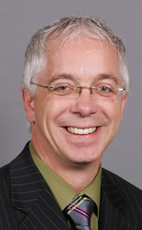
House of Commons photo

Crucial Fact

  • His favourite word was quebec.

Last in Parliament November 2006, as Bloc MP for Repentigny (Québec)

Won his last election, in 2006, with 62% of the vote.

Statements in the House

Asbestos Industry May 5th, 1998

Mr. Speaker, on April 22, the plenary session of the Council of Europe adopted the highly regrettable recommendation that asbestos be banned.

Canada did not do enough to convince the European parliamentarians that crysotile asbestos can be used in a controlled manner. Canadian parliamentarians were, in fact, absent when the report was adopted on January 7, 1998 at the commission on social affairs, the family and health.

It is important that energetic efforts continue in order to allay the fears of the European parliamentarians concerning asbestos. This fibre, which is responsible for the economic health of an entire region of Quebec, is completely safe when used in accordance with the appropriate rules.

It is high time for the Canadian government to finally shoulder its responsibilities by filing an official complaint with the WTO.

Asbestos Industry May 4th, 1998

Mr. Speaker, my question is for the Minister of International Trade, or the parliamentary secretary, if he will deign to answer one of our questions for once.

The Council of Europe has just recommended a total ban on asbestos throughout its territory. This impacts seriously on this important sector of the Quebec economy.

Will the minister or the parliamentary secretary tell us whether this matter of an asbestos ban was raised when the minister met with France's minister of foreign trade last week in Paris?

Multilateral Agreement On Investment April 29th, 1998

Mr. Speaker, the parliamentary secretary has just told us that negotiations will continue behind closed doors.

Canada was calling for negotiations to continue in the future under the aegis of the WTO so that developing countries could take part.

Since the other members of the OECD do not seem to agree with this, what will the Government of Canada do?

Multilateral Agreement On Investment April 29th, 1998

Mr. Speaker, officially the negotiations on the multilateral agreement on investment have been suspended for six months. However, we have learned that technical negotiations, as they are called, will continue in the meantime within the OECD.

Can the Prime Minister tell us whether or not negotiations have indeed been suspended for six months?

Supply April 28th, 1998

Mr. Speaker, I thank the member for Pierrefonds—Dollard for his reply to my question as to why he was opposed to our motion. When he said that the Liberals had solved all the problems, I was somewhat satisfied but nevertheless surprised.

If I am not mistaken, the Liberals have been in office for five years. This is not a question for the hon. member, because I have the answer. Statistics show that since 1993, when the Liberals took office, the number of children living in poverty rose by 100,000, from 1.4 million to 1.5 million.

Given the hon. member's reply, are we to understand that, during the first four years, the Liberals merely looked at the situation and only took action last year? Were they inactive during four years and active during one year?

Also, does this mean we no longer have to raise this issue because it is solved? What we are saying is if the issue is not solved, we simply want to discuss it with representatives from the various parties and with Canadians and Quebeckers.

Supply April 28th, 1998

Mr. Speaker, it is particularly nice to hear a Liberal making sense, after what we heard earlier, and I would like to congratulate the member.

We cannot agree with everything that was said because, for one thing, it was a bit general. At least it made sense. There was a beginning, an end and a middle to this speech. I would like to congratulate the member. There are perhaps other Liberal colleagues who could take lessons on speech-making, or at least read this one to learn a few things. It might be instructive.

Now that we have listened to our colleague, the member for Pierrefonds—Dollard, expressing his agreement with the Multilateral Agreement on Investment, the rate of growth, our Canadian businesses, which are flourishing all over the place, and telling us how everything is just peachy and how everyone is so nice and so wonderful, I think we have to be honest and admit that there are a few problems somewhere.

Since the Liberals have been in office, the figures show that child poverty, and the poverty of families by extension, has increased.

The question is not who are the bad guys and who are the good. The question is whether there is not some way to create a special parliamentary committee to discuss in as non-partisan a way as possible, even if it is difficult—my colleague said so—the problem of the gap between rich and poor.

I have a question for my colleague, the member for Pierrefonds-Dollard, if I can be heard over the inanities of the member for Abitibi, whom it is my misfortune to also have to call a colleague, and who may have learned to read when he was young, but picked up nothing in the manners department.

You would have had trouble learning to do two things at the same time, at the rate you are going. One day, maybe.

My question to the member for Pierrefonds-Dollard is this. Why are you opposed to the Bloc Quebecois motion? And I ask you to put it in your own words. What is it you do not agree with?

Supply April 28th, 1998

Mr. Speaker, I rise on a point of order. If the member for Abitibi is a conscientious and honest man, he should stand up and repeat the derogatory comments he made to my colleague from Laurentides.

Supply April 28th, 1998

Mr. Speaker, in his answer to a question put by the hon. member for Laurentides, we got a slight hint that the hon. member for Bellechasse—Etchemins—Montmagny—L'Islet was beginning to understand what we are talking about.

I will gladly read to him the motion before the House, because he has not read it. He talked about a lot of things, but forgot the subject of our debate today. The motion is as follows:

That this House reiterate the 1989 commitment to eliminating child poverty by the year 2000, urge the government to act, and strike an all-party Special Parliamentary Committee—

We are not blaming anyone here. We just wanted to address this issue and we did not need the Liberal budget to do so. Is the member in favour of striking an all-party committee to discuss the gap between the rich and the poor in this era of globalization?

Supply April 28th, 1998

Mr. Speaker, I am pleased to direct my question and comments to the hon. member who recycles speeches on the budget.

I will first remind him of a few statistics, then I will have a very simple question to ask him.

According to the National Council of Welfare, there were 900,000 children living in poverty in 1989. When the Liberals took office in 1993, there were 1.4 million of them. In 1996, after three years of Liberal government, the number had risen to 1.5 million.

I need not read today's motion over, but I listened carefully to what the hon. member said and I do not think he got the point. So, my simple question is the following. What should we be discussing in this House today?

Supply April 28th, 1998

Mr. Speaker, I have a question for the Reform member who spoke to the motion and refused to make it votable.

In view of the lack of compassion shown by Liberal members who have turned us down four or five times today and their lack of compassion with regard to compensation for victims of hepatitis C, I would like to ask a question of my Reform colleague who is telling us how to raise our children after his colleague told us there were too many divorces.

Are these sterile, senseless, pointless discussions not proof enough it is necessary and urgent to set up a parliamentary committee to discuss the gap between rich and poor in the context of globalization, in a less partisan and more thoughtful manner?