Mr. Speaker, there were discussions during question period and I would now ask for unanimous consent to have this motion made votable.

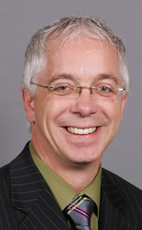 House of Commons photo
Won his last election, in 2006, with 62% of the vote.
Supply April 28th, 1998
Mr. Speaker, there were discussions during question period and I would now ask for unanimous consent to have this motion made votable.
Supply April 28th, 1998
Mr. Speaker, I listened carefully to the speeches by the member for Laval West and by the minister. I think anyone who defends themself for 20 minutes when no criticism has been leveled at them must have something to hide. We have not accused them of anything, but they defended themselves for 20 minutes. Something is not quite clear.
The minister said the Bloc Quebecois motion was all over the place and all muddled. I will help her out with a reminder. We want to create a special committee to examine the disparity between the rich and the poor. That is not so very complicated.
I have two very simple questions for the minister. First, has the number of poor children increased or decreased since the Liberals have been in government? Second, why is she opposed to creating an all party special committee to consider the problem of the gap between the rich and the poor?
Supply April 28th, 1998
A $9 billion surplus is very attractive to them.
His speech made us aware of the importance, the relevance and the rightness of the motion and the debate put forward by the hon. member for Lac-Saint-Jean. How can anyone remain insensitive to so much nonsense, inconsistency and madness in a 10-minute speech? Perhaps this would deserve a mention in the Guinness Book of World Records. I don't know, but I never heard such thing.
First, about eliminating child poverty, Canada signed an agreement in New York on the elimination of poverty. They were there in New York.
Second, in their red book, they talked about eliminating child poverty. He is a member of the Liberal Party.
Third, I would like to ask him if the number of poor children has risen or fallen since he has been sitting here. Why is he shying away from his role as a parliamentarian and refusing to let a parliamentary committee be set up to deal specifically with these matters?
Supply April 28th, 1998
Mr. Speaker, the hon. member for Mississauga West did say there was a $9 billion surplus. I have not checked the figures, but surely they will want to keep those billions once Quebec becomes sovereign—
Supply April 28th, 1998
Mr. Speaker, I congratulate my colleague from Rimouski—Mitis for her excellent speech and the point she made concerning the cultural exception clause in the Multilateral Agreement on Investment as well as in the other agreements. As she reminded her Liberal and “Canadian” colleagues in her conclusion, it is very important that we think not only of us but also of their future.
I want to put a question to my colleague from Rimouski—Mitis about something that is a surprise to me this morning, the inconsistency in the speeches and positions of my colleagues from the Liberal Party.
I would like to have her opinion on what we heard in the House, because she also listened very carefully to the speeches, as we do. How can the Liberals—who wrote in their red book that they wanted to eliminate child and family poverty in general by the year 2000—oppose today a motion reiterating the 1989 commitment to eliminate poverty by the year 2000?
I would also like to know what she thinks of the position held by Liberal members about our demand to strike a committee made up of Reform, Liberal and Bloc members. A majority of committee members would be Liberals since, as everybody knows, they hold the majority in the House and form the government. But Liberals are opposed to the creation of such a committee.
What, in her opinion, are the Liberals thinking, if such a thing is possible, in opposing a motion for the elimination of child poverty by the year 2000 and the striking of a parliamentary committee to take position on this matter? I would like to hear her opinion on this.
Supply April 28th, 1998
Mr. Speaker, I thank my colleague for his question. It gives me an opportunity to clarify parts of the motion before the House today.
I would first point out, with respect to the role of parliamentarians, that, when the Liberals were in opposition, they demanded a special debate on the free trade agreement with the United States. They did not insist on an opposition day, as the Reformers did, they called for a special debate.
The 1988 election campaign focused primarily on the free trade agreement with the United States. What is happening today? The free trade agreement with Chile was negotiated under wraps by unelected negotiators and officials. What was the role of parliamentarians? They passed the bill implementing the agreement. Not one comma of the agreement was debated.
Members would surely agree that the free trade agreement with Israel and Palestine is likely to have some fairly special provisions. And what was the role of parliamentarians in this agreement? They passed the bill to implement it. The agreement and its conditions were negotiated by unelected officials. Canadians today are facing a fait accompli and are obliged to live with these agreements.
We are requesting initially, as my colleague mentioned, to be increasingly involved in these multilateral agreements. Parliamentarians must have a role to play. They must first look to see how their role as representatives of the public may be expanded in the proliferation of such agreements. That is what must be done.
I would like to ask the Liberals why they refuse to fulfill their parliamentary duties. Why are they not meeting the commitment they made in black and white in the red book? Why do they refuse to strike a committee or, at the very least, why do they not say something?
If they do not want the role of parliamentarians—and there are a number of them here who have been re-elected—why are they here? They are here to serve as parliamentarians, as representatives of the people, but they do not honour their commitments. They do not fulfill their parliamentary responsibilities. They hide and refuse to speak.
I would like them to answer certain questions in their speeches. It is indeed vital to keep a close eye on all the agreements, often negotiated on the sly by officials who have not been elected and often presented to parliamentarians as a fait accompli.
Supply April 28th, 1998
Mr. Speaker, I believe that at this point in the debate it is very important and opportune to read the motion again because we have heard all kinds of things even if there was not much in way of a debate, except from one or two speakers from each party.
The answer given by my colleague from the Reform Party confirms why we should support the motion moved by the Bloc Quebecois leader. I support the motion and I am going to read it again to prevent the debate from going further off course. After only a few speeches, it is already off course.
The motion reads as follows:
That this House reiterate the 1989 commitment to eliminating child poverty by the year 2000, urge the government to act, and strike an all-party Special Parliamentary Committee with the main objective of considering Canadian parliamentarians' ability to narrow the gap between rich and poor in the new context created by the globalization of markets—
This motion does not indicate we are against liberalizing trade or that we are against the Multilateral Agreement on Investment, quite the opposite. The motion does not indicate anything of the sort.
This motion suggests that parliamentarians from all parties look into a problem which is very real. In their first red book the Liberals said they would eliminate child poverty before the year 2000. What we are asking is to strike a committee to see whether this deadline is realistic, to see if we can reach this commendable goal which is desirable for all.
I would like speakers from the Liberal Party to tell us why they are now opposed to something they had espoused before. It is rather odd. When the Liberals, the New Democrats and members from other parties say: “Therefore the Bloc Quebecois is against liberalizing trade, against the MAI”, it becomes necessary to remind them of the spirit and the wording of the Bloc Quebecois' motion.
The third point in the motion says: “globalization and the international agreements that frame it, particularly the Multilateral Agreement on Investment as now written—”. I believe this is underscored by what the international trade minister just said in Paris. We are not against the MAI, but the Bloc Quebecois would never give its support to a government's signing such an agreement as it is currently written, because there is a risk of limiting certain powers of states and hence of the representatives elected to this House—we are not saying it does so, but there is that risk.
What we want is a committee of parliamentarians. I would be very surprised if MPs wanted to shirk their responsibilities. That is why I am surprised the Liberals are unwilling to agree to discussing the MAI among other things in a committee setting.
I would point out that I am going to split my 20 minutes with my colleague for Rimouski—Mitis.
I wish to focus on the Multilateral Agreement on Investment. As my colleague from Lac-Saint-Jean has demonstrated with his speeches and with his exit from the House, many in Quebec, in Canada, and everywhere else in the world, are intrigued and greatly concerned by the gap between rich and poor due to globalization. What exactly is this agreement? Where does it come from? What is its intent? What are this agreement's objectives?
We have heard many legitimate fears expressed. Many concerns have been raised about the signing of an agreement such as the MAI. Negotiations or discussions on it date back to 1995 under the auspices of the OECD. It is worth repeating here that we call the OECD the rich countries club. The NGOs often use that same term. It is a group of 29 countries that make up the OECD.
There were some consultations, it is true, but for the most part negotiations were held in secret.
When 29 rich countries negotiate behind closed doors agreements that are designed to promote investments, it is only normal for the populations of these 29 wealthy countries—and of those other countries interested in joining them—to wonder about these agreements and to even question them.
It is also important for Canadians to remember that the Multilateral Agreement on Investment includes about 90% of Chapter 11 of NAFTA, dealing with investments. Therefore, it is not completely new stuff, since 90% of the MAI is found in Chapter 11 of NAFTA.
Why were discussions held on such an agreement? There are two main reasons. First, the purpose of the agreement is to set rules and to regulate—I know this is somewhat redundant—the investment sector, since there are currently over 1,300 bilateral investment accords, of which 50 were signed by Canada, including NAFTA.
The idea was to promote, regulate and facilitate exports and investments from Canada to other countries, and conversely.
The purpose of the agreement is also to benefit from globalization. There are disadvantages, but there are also some advantages, such as increased investments. Also, if the agreement is amended as we wish, it should promote economic development.
These are the two reasons why we supported the principle of the agreement. But again, in its current form, we cannot support the ratification of the MAI.
As our party leader mentioned earlier, the Bloc Quebecois has been supportive of the free trade agreement with the United States, since the beginning, and we also supported its extension into NAFTA.
We even supported in principle the continuation of the negotiations, but we object to the signing of the agreement in its present form. We are not like the Liberals who, in 1988, were opposed to multilateral agreements and saying that they were the worst possible things for Canadians, but turned around after the election and started signing all kinds of such accords. We are consistent in our position and we will continue to be.
Those who have been following us are aware of the very serious reservations that the Bloc had regarding this issue. Among other things, and the member for Rimouski—Mitis will elaborate on that later on, we want a general exception clause for cultural industries, which we did not have as of this morning, and that is why we would oppose the signing of the agreement in its present form.
The Bloc Quebecois wants countries to retain the right to take or maintain measures to protect the environment and labour standards. We would not sign or support the signing of any multilateral agreement that would not include a clause to protect the environment and labour standards.
We also want such an agreement to specify that countries cannot lower their national standards with regard to health, environmental safety and occupational safety in order to attract foreign investors.
We also want legislation such as the Helms-Burton Bill to be deemed ineffective and non enforceable under such an agreement because it goes against the principle of trade. We also want immigration laws, regulations and national procedures to be given precedence. And, of course, we want provincial jurisdictions to be fully recognized in an agreement such as the multilateral agreement on investment and other agreements. Without that, we will never sign or support the signing of such an agreement.
Regarding the lowering of health and occupational safety standards, particular attention must be paid to the text of the agreement in these two areas. There are two versions of that part of the agreement. One says that a party “should not” lower its health, safety and environmental standards. The other version says that a party “shall not” lower these standards. There is a world of difference between “should not” and “shall not”. If we ended up with a version that said “should not” or “it would be desirable”, again we would not support such an agreement.
The exception for cultural industries is also a precondition that must be met before we sign or support such an agreement, as well as a clearer definition of “expropriation” and “expropriation requiring compensation”.
We also have to ensure that the role of the provinces will be respected before we give our support.
The Bloc Quebecois, the Liberals and the Reformers signed a report in which they asked that the agreement be submitted to parliamentarians before it was signed, as requested by the hon. member for Lac-Saint-Jean, so that parliamentarians can fulfil their duties as auditors and as the people's representatives.
We ask, we demand that the text of the agreement be submitted to the subcommittee before it is signed, which hopefully will not be until all the issues are resolved. Now that the OECD is no longer considered the forum for negotiating such an agreement, we also ask that the agreement be referred to the WTO, so that all the countries in the world can take part in its development.
Supply April 28th, 1998
Mr. Speaker, I think there would be unanimous consent to declare the motion votable.
Supply April 28th, 1998
Mr. Speaker, first of all, I am disappointed in the direction the debate is going and in the way Reform members are diverting the debate. Liberals are jumping on the bandwagon and saying: “We are the best in the world; we are beautiful, good and nice”.
My colleague from Lac-Saint-Jean tried to start a non partisan debate on a world issue that is very real and is simply redefined in our motion.
The Reform member started his speech by saying: “We do not know exactly what Bloc members want”. We can therefore deduce that he does not agree with what we want, but he does not know what we want. If we listen to his speech, we realize it is rather inconsistent.
Secondly, I will explain to him what we want and I will ask him if he agrees. The motion is relatively simple: That this House reiterate the 1989 commitment to eliminating child poverty by the year 2000 and urge the government to act by quickly striking an all-party Special Parliamentary Committee that will consider the matter.
The Liberals had made this commitment in their first red book and have said they were in favour of it. What we want is to eliminate poverty. We want to strike a parliamentary committee to study this matter. I ask my Reform colleague if he agrees with this.
Asbestos Industry April 27th, 1998
Mr. Speaker, the question was simple and called for a straight answer. When does the government intend to file a complaint with the WTO?