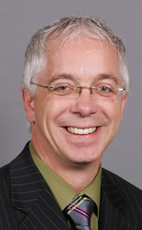
House of Commons photo

Crucial Fact

  • His favourite word was quebec.

Last in Parliament November 2006, as Bloc MP for Repentigny (Québec)

Won his last election, in 2006, with 62% of the vote.

Statements in the House

Supply June 13th, 1996

I am asked "since when".

Even though this is not the time for questions and comments, I will answer this question by asking one: To what did the Liberal Party commit itself in the red book in order to defend francophones outside Quebec? And if not a line can be found on this subject, I will myself ask the following question: Since when has it been defending them?

Supply June 13th, 1996

Mr. Speaker, to start with, since the House is soon going to adjourn for the summer and given what the Reform member who spoke earlier said I wish to officially invite him to come and visit my riding in Quebec during the summer vacation, so he can see for himself that anglophones in Quebec do not have such a tragic life, that the nasty separatists are not waiting for them at each street corner, and that their life is not in danger. So that he can change his perception of Quebec people whom he sees as oppressors, I invite him to come and visit us.

I will also recall, for the information of the Reform Party, the motion which is debated today. The Bloc Quebecois moved: "That the House encourage the federal government to acknowledge the urgency of the situation of francophones in minority situations in Canada, and take the exceptional steps required in order to counter their assimilation and allow their development".

My colleague, the member for St. Boniface, said earlier that there is indeed an assimilation process. From what he said, what else can we conclude-and I am going to give the House figures to prove it-but that francophones outside Quebec are going through difficult times? We are asking the federal government, and therefore the Liberal Party, to take measures to help them improve their situation.

That is why I have a hard time understanding why we are accused of being nasty separatists, of wanting to tear down everything, and so on. We will talk about that when time comes.

Let us set the record straight. Today, we are debating a motion in which the Bloc Quebecois is asking the government to recognize and affirm that francophones outside Quebec are in a difficult situation and that we must join forces to help them. If the fact that such a declaration comes from a democratically elected majority party in Quebec does not please some members, even certain French speaking Liberals like the member for Glengarry-Prescott-Russell, it is just too bad. It is too bad if he does not want to recognize there is a problem and if he resents the fact Quebecers of another affiliation say it is so.

We are asking if francophones outside Quebec have a problem. The answer is yes. Should federal and provincial governments get together to help these communities instead of cutting their budgets? I think the answer is yes again. That is what we are debating.

If Liberals and Reformers want to keep on accusing us of being separatists, we have news for them because, as long as we are here, we will be separatists. If we want to talk about the Prince Edward Island bridge or Pacific salmon and they object to our topic because we are separatists, we have a problem. We were democratically elected by the Quebec people.

Today's topic is not Quebec sovereignty but francophones outside Quebec who are having a hard time according to statistics. It must be absolutely clear that we are not talking against French communities outside Quebec. Basically we want to help them.

Supply June 13th, 1996

Mr. Speaker, I would first like to tell my colleague for Saint-Boniface that I will not talk to him about the lack of French newspapers in Saint-Boniface, because I know he does not like that. However, when he was asking where things were before 1994 because no policy had been established, I would remind him that the elections were held in October 1993, near the end of the year.

I remind him as well that, early in 1994, we developed a policy. If he were to read the red book from beginning to end, I would like him to tell me just where the Liberal Party's policy on francophones is to be found, because there is no reference anywhere. Given that the Liberal Party has existed a bit longer than the Bloc Quebecois, perhaps the member could tell me the Liberals' policy on francophones outside Quebec? The Bloc Quebecois has such a policy, I would remind you.

In terms of statistics, on the question he was asked about the language young people speak in Manitoba, I would ask him if he disagrees totally with Statistics Canada, and, if so, he can change their statistics because it could be done in the name of democracy. However, the figures say that, in 1971, 4 per cent of Manitobans spoke French, whereas today the figure is only 2.3 per cent. Do we abolish Statistics Canada or acknowledge its statistics?

Cuba June 5th, 1996

Mr. Speaker, that is all very well, but time is of the essence. There are only two months left.

When will the Prime Minister implement a realistic strategy to prevent Canadian business from feeling the effects of this legislation?

Cuba June 5th, 1996

Mr. Speaker, the Helms-Burton legislation is having considerable impact. This August, a provision will come into effect that may lead to thousands of cases of prosecution against businesses with interests in Cuba. We are talking about nearly 6,000 legal claims including a number involving Canadian businesses.

My question is for the Prime Minister. How does he intend helping businesses that will be prosecuted under this legislation?

Supply May 16th, 1996

Mr. Speaker, I first want to say that I am outraged at the lack of respect shown by the

Minister of Intergovernmental Affairs to 49.4 per cent of Quebecers who voted yes, when he said that it would not make anyone cry.

To exercise a democratic right is not to try to make people cry.

But to try to sell an idea such as that of secession is more serious. Still, I should thank the minister for his excellent "Politics 101" lecture and for referring to three great classics: Tocqueville, Rousseau and Montesquieu. His speech took me back to my university years. I want to quote someone whom the minister probably considers to be a great classic too, the current Prime Minister.

Let us put things in their proper context with this more recent statement from the Prime Minister: "I am a democrat. I said it in 1980 in many speeches to that effect. If we had not recognized that Quebec could make the decision to separate, we would have acted differently. We could have used some powers. We did not use them". This is from the Bélanger-Campeau report, December 17, 1990, page 1515.

I have a question for the Minister of Intergovernmental Affairs. Is he now telling us, after two referendums, after saying twice that the rules were fair and legal, after recognizing that we were democrats, that this is no longer the case and that the federal government will use the other powers alluded to in 1990? If so, what are these powers?

Free Trade Agreement May 14th, 1996

The industries are still waiting, Mr. Speaker. Since the U.S. keeps harassing our industries, and the steel industry in particular, to settle the dispute over trade remedies relating to countervailing and antidumping duties, is the minister contemplating taking an industry-by-industry approach any time soon?

Free Trade Agreement May 14th, 1996

Mr. Speaker, page 24 of the red book states, and I quote: "A Liberal government will renegotiate both the FTA and NAFTA to obtain: a subsidies code; an anti-dumping code; a more effective dispute resolution mechanism-"

More than two and a half years into his mandate and in spite of the fact that the deadline for coming to an agreement with the Americans was December 31 of last year, how does the Prime Minister explain that no tangible progress has been made on this issue, when what is at stake is so important?

Cuba May 9th, 1996

Mr. Speaker, last week, American, Canadian and Mexican officials met in Washington to discuss the Helms-Burton bill, a bill to toughen American economic sanctions imposed on Cuba. On that occasion, the minister hinted at possible retaliatory measures.

My question is directed to the Minister for International Trade. Could he tell this House whether he intends to introduce legislation providing for retaliatory measures designed to counter the effects of the Helms-Burton bill?

Antipersonnel Mines May 8th, 1996

Mr. Speaker, I wish to draw the attention of the House to the agreement reached at the international congress on antipersonnel mines in Geneva last week.

Rather than completely prohibit the use of antipersonnel mines, the new protocol proposes that the 57 signatory governments make future mines detectible or self-destructible. These governments will even have nine years to implement it, and no verification process was established.

This absurd agreement completely sidesteps the present situation caused by existing mines.

The Bloc Quebecois would like to express its profound disappointment at this agreement, because, between now and the next review of the agreement, five years from now, 50,000 more people will be killed and another 80,000 will be wounded or mutilated. It is just shameful.