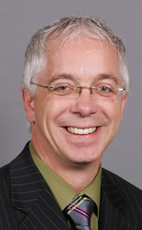
House of Commons photo

Crucial Fact

  • His favourite word was quebec.

Last in Parliament November 2006, as Bloc MP for Repentigny (Québec)

Won his last election, in 2006, with 62% of the vote.

Statements in the House

Department Of Public Works And Government Services Act March 25th, 1996

Madam Speaker, on a point of order. I think the hon. parliamentary secretary has just woken up from a long sleep, and before he goes back in time to the throne speech or his election in 1993, we should remind him that this is the question and comment period following the speech of the member for Témiscamingue.

Privilege March 14th, 1996

Bill 101 has nothing to do with it. Come to Quebec and you will see that we respect our minorities. I can guarantee that, in front of everybody in this House.

Bill 101? To all those people who have never been to Quebec, to those who present motions accusing us of sedition, to those who are investigated because they did not abide by the rules on official languages, to those who do not even bother to have a French newspaper in their province, I will say that this is much more outrageous than Bill 101. That is another thing that should be said in this House.

The Quebec government said, in a document published on April 7, 1995, and I quote: "April 7, 1995"-it would have been more clever if you had presented your motion a year ago.-"It is not necessary to form a very large army, but Quebec could at least adopt a coherent defence policy, suited to its needs". It is clear that the question is not new. It was in our draft bill on Quebec sovereignty, it was in a working paper published in April 1995, and if you want to accuse people of sedition I will give you another name.

He was professor of strategic studies at the former military college in Saint-Jean and he tabled a report before the Montreal commission on Quebec's future. We are talking here about a professor who was working for the Canadian Armed Forces and was paid by the Canadian government. I can tell you that he was being quite seditious.

The title of his report was: "The future for a defence policy in a sovereign Quebec". He works for the Canadian Armed Forces. Is he also going to be hanged at Pied-du-Courant on June 24?

"Should sovereignty occur, it would be necessary for Quebec to consider defining and implementing a defence policy". What would such a policy be like? "The mandate of a Quebec armed force, whether independent or associated with the rest of Canada, could be geared to two secondary responsibilities: first, territorial surveillance and public order; second, peacekeeping and peace enforcement operations.

A professor of strategic studies at the Collège militaire de Saint-Jean dares to write a document alluding to the possibility of a sovereign Quebec. Wow! That guy was going rather far, was he not? Anything is possible, right? Yet, that gentleman was not accused of treason, sedition, lese-majesty or anything else.

He was referring to a distinct possibility in Quebec. Quebecers did not suddenly wake up on October 28; they were aware long before of the real possibility that Quebec might become a sovereign state. Are people told about that reality? Are they simply told, as Reformers said: "If you respect democracy, we will send in the army"? No. We are civilized and we say: "Listen, should Quebec become sovereign, here is what will happen". Just like we told federal public servants: "We will sign an agreement to have you integrated into the new Quebec public service".

We also told old age pensioners: "We will continue to pay you those pensions". We said the same thing to retired federal public servants. Not because we are richer, but because the money is in funds which exist and which belong to those who made contributions. This is not a mortal sin. I am warning you now: there will be another referendum, so you had better prepare yourself psychologically.

I will conclude by saying that if Reformers are interested in working for the Cirque du Soleil, I will be happy to get them job application forms and then take the forms to the circus.

Privilege March 14th, 1996

Mr. Speaker, I welcome this opportunity to speak on the motion put forward by the Reform Party.

To begin with, I would like to quote from a book that is very well known in Quebec, and probably in English Canada as well. My hon. colleague must be familiar with it, unlike the Reform Party; I am talking about the dictionary. This dictionary contains the following definition, which I will be pleased to read my hon. colleague. Dictionaries are organized like telephone books; it is all very simple: under sedition, one finds: "The stirring up of rebellion against the government in power".

The motion before us is a motion on sedition. Could you tell me, hon. colleagues, through you, Mr. Speaker, when any "stirring up of rebellion against the government in power" took place? As our leader indicated, perhaps sharing one's plans with the national media by fax is not the best thing to do if one is contemplating treason. It is not the best way of keeping a state secret.

Another very important word is defined in this dictionary: democracy. We have been asked to provide a definition of democracy. According to the Reformers, the big, bad separatists were democratically elected by the people, but what does the word "democracy" mean? Are we expected, in this House, to make up a definition for the word "democracy"? I have news for them, a definition already exists, and it reads as follows: "A political doctrine whereby sovereignty is exercised by the people as a whole; a system of government (often a republic) in which people exercise such sovereignty. And they exercise it by choosing their representatives".

The fact that people of Quebec chose to elect 54 sovereignist members back then, members whose primary task was to defend sovereignty for Quebec, was no secret either. It could be, as my colleagues told me quite frankly yesterday, during question period, that all of the 53 current Bloc members should be accused of sedition, of treason, because that is what they really think.

The tabling of this motion was a gimmick to waste the time of the House and to make a point. What point is that? The point that, as far as the Reformers are concerned, the 53 Bloc members are not democratically elected members. To prove their point, they thought it was simple, that all they had to do was redefine the words "sedition" and "democracy", redefine the rules governing the official opposition, redefine the business of the House. They want to redefine all that. Is that democratic in your books, my hon. friends from the Reform Party? I submit that there might be a slight breach of democracy there.

How did all this begin? Upon our arrival, some very odd people took a fancy to bring a $500 million suit against us. I must admit that, faced with this, I checked in my bank book how much money I had. I was in trouble. So, I set it aside. Fortunately, this silly suit was abandoned.

The Reform Party then asked that the Prime Minister be dismissed by the Governor General, thumbing their noses at democracy. As has been the case since 1867, the leader of the party that had sent the most elected members to Parliament became the

Prime Minister; but that was not right either. So then the Reform said "OK, we will just change the definition, change democracy".

Then they said "Maybe that is not diabolical enough. Let us ask the Speaker to make us the Official Opposition; surely the principle of numbers which has been in effect since the beginning is no good, since it does not make us the Official Opposition. So, let us change the Standing Orders." Nothing is too good. Nothing is too good for the working class. So, turning up their noses at democracy, they ask for the Standing Orders to be changed. Luckily, Mr. Speaker, you stuck to the rules as you always do, and everything stayed as it was.

Then the Reform Party, great democratic party that it is, releases a 20-point document stating how and why, in 20 clear points, they are antidemocratic. It is always good to demonstrate things clearly, instead of just letting actions speak for themselves.

They start off by saying that they are for partition, and this is an antidemocratic act. As well, they say "Aboriginal territories within Quebec, within Canada, will be able to remain Canadian", once again turning their backs on democracy. And then what do they say? Such a ridiculous motion would never have occurred to us. They say "Well, if that does not work, we will send in the army." We are not the ones saying all this, they are. What is this about an apprehended revolt? Who mentions the army in a public document? It could have been kept a little more secret, but no, they called a press conference. That's the Reformers for you.

Then, another change. They say "Sedition, that word does not work for us." There is indeed a dictionary with an explanation of what sedition is, but it is not right. So Reform proposes a change-perhaps a good motion for next week-in which sedition will be defined as a crime of opinion. You are sovereignists, you express that as your opinion. We have changed the definition by changing the dictionaries, so now we can accuse everybody. That will be way easier. And what fun too.

Will the Reform Party take over where Barnum and Bailey left off? That is a question one could well ask, because they seem to be in training to become circus clowns. When will they stop their buffoonery and respect the decorum of the House? We are even thinking that, next week, they will present a motion in this House to abolish winter next year. At that time, we will keep to the level of responsibility they have set.

A Reform member tabled a motion last week. I am quoting here an article by Joël-Denis Bellavance in Le Soleil on March 13. He said: Last Friday, a Reform member tabled a motion stipulating that:-before consulting Canadians, MPs and senators in Ottawa should first determine, following a free vote-a free vote, nothing is too much-whether the question put to voters by the separating province-that must be ours-was simple and direct. A majority vote by parliamentarians would then force the federal government to organize a national referendum-'' So, forget about democracy, which is part of the rules of the game over there, and hold a national referendum. Only the best. The article goes on as follows: ``-to define the mandate to negotiate the terms of separation. If a majority of Canadians were to give such a mandate to the federal government,-no need to consult Jojo Savard on this, it will happen-it would undertake negotiations only with those Quebec electoral districts that endorsed the sovereignty proposal. The others would remain part of Canada.'' Fine respect for democracy.

And then it goes on to say that it would have to provide that Quebec would become an independent state, to be respected. The province would no longer be part of Canada. If you want to move us, send us somewhere warm. And it goes on: "Quebecers would no longer be represented in the Senate and the House of Commons. They would lose their Canadian citizenship and passport. They would lose their right to enter and travel freely within the country-"

I would point out that the United States is a sovereign country and that you can go there without any problem.

Everyday we see more and more examples of how an irresponsible party can cause people to lose faith in its members. They were elected democratically, and we respect that. We were elected democratically, and they should respect that.

They may have a political program-we cannot tell-but they were elected to carry it out, and that is what we are doing with ours. Why not tackle real problems instead of paralysing the business of this House, deliberately bringing the business of this House to a stall with points of information? We informed the military of a course of action. In a 20-point document, we were told that the army would be sent out in the event of a yes vote. Do we not also have the right to inform our people? I would think that we do; after all, it is common now, in our society, to inform the people through the media.

The Reformers said they were disappointed not to have been recognized as the official opposition. People watching the debate on television must be able to see through their little game. I personally feel this is a waste of time, as I said earlier, and this is how the Reformers hope to keep the people of Quebec from making themselves heard through their democratically elected representatives. The word "democratically" is in there are well.

I would therefore like to tell the leader of the Reform Party that we realize that in trying to muzzle the Bloc Quebecois, they are in fact trying to silence all Quebecers, because we are their representatives. I can assure you that the Bloc Quebecois will not shut up and that the people of Quebec will not be intimidated by the motion put forward by the hon. member for Okanagan-Similkameen-Merritt, which is incidentally an insidious motion. He referred to francophone Quebecers; I asked him to show me where

in the press release the words "francophone Quebecers" were used. "Nowhere", he said.

So I had a word with him-I cannot repeat it in this House because the term "lying" is unparliamentary-because of what he had done, and he said: "Yes, I know. It does not matter; we are still going ahead".

So they are consciously taking actions that violate democratic principles. Reform members should be ashamed of their lack of seriousness, of professionalism with respect to all proceedings of the House of Commons.

Again, asking the Governor General to dismiss the Prime Minister from his post has, I think, never been done; at least I hope so. They might as well ask the Speaker to ignore the Standing Orders and to make them the official opposition, or perhaps ask that next winter be abolished.

This rather whimsical strategy also seems to reflect a lack of preparation on the part of the Reform Party, an obvious lack of substance on matters that are much more important to people, and probably to their own constituents.

I see in the Reform Party's attitude a conscious attempt to delay the 35th Parliament. The Riel, Rose and McGreevy precedents in this House clearly show that such a serious accusation can only be made in a court of law. Yet, in the case of my colleague, the hon. member for Charlesbourg, two courts, one in Quebec and one in Ontario, have already ruled that this matter could not be taken to court.

In his communiqué, the hon. member for Charlesbourg was only trying to give legitimate reassurances to members of the Canadian Forces, as had been done for federal public servants. Armed Forces personnel were also entitled to be informed of the consequences of a yes vote in the referendum. The hon. member for Charlesbourg fulfilled an obligation, namely providing a segment of the population with information on their legitimate concerns. I believe that was the purpose of the communiqué of October 26, 1995.

If the Reform Party thinks to make use of this motion to beef up its credibility in the rest of Canada, or with its clientele, it is mistaken. All it is doing is beefing up its reputation as a party of clowns.

Again I repeat, all that the hon. member for Charlesbourg has done is to inform Armed Forces personnel, Quebec men and women who are in the Canadian Armed Forces, of the Quebec government's position in the event of a yes vote. Its orientations with respect to defence were clearly set out in its bill on the future of Quebec. The hon. member for Charlesbourg felt it advisable, relevant and legitimate, to submit those orientations to the members of the Canadian Armed Forces.

I shall quote, if I may, from section 17 of the draft bill on the future of Quebec, drafted well before October 25. A motion could well have been introduced accusing every single person in Quebec of sedition and high treason, because it said the following clearly-and could there be anything more dreadful?-

The government is taking the necessary steps to ensure that Quebec continues to participate in those defence alliances of which Canada is a member. Such participation must, however, be compatible with Quebec's desire to give priority to peace keeping throughout the world under the auspices of the United Nations.

This can be painless. We will take men and women who are already in the armed forces, we will integrate them into the new Quebec armed forces, and they will be called upon to carry out such missions. This is written in clause 17. We will send you the information. You will see what the sovereignist project is all about.

The communiqué issued by the member for Charlesbourg did nothing more than interpret this statement.

I find this debate is dangerous, and I would ask Reform members to stop turning this House into a circus. For their part, they could be suspected of deliberately trying to diminish the credibility of this House. This could be the subject of a motion.

Several Quebec soldiers are sovereignists; it is not a mortal sin. Several Quebec soldiers would be very happy, in a sovereign Quebec, to be members of the Quebec armed forces. Around 50 per cent voted yes, and 50 per cent voted no.

I should mention that if Reform members want to accuse us of all kinds of ills, first they should look closely at the situation of francophone soldiers and their families outside Quebec. A case in point is the story of Maryse Villeneuve, the wife of a soldier stationed in Moose-Jaw, Saskatchewan, who became so frustrated that she lodged five complaints with the Commissioner of Official Languages regarding abuses under the Official Languages Act.

The Commissioner of Official Languages Act deemed the complaints valid enough to conduct an inquiry. There was an investigation on the five complaints and, later on, another study compared services offered to francophones in Moose Jaw, Saskatchewan, to those offered to anglophones at CFB Bagotville.

I could make 52 copies of this and distribute them because the results of the investigation on the five complaints clearly show there are almost no services offered to French-speaking armed forces personnel in Moose Jaw, compared to services in general

and to the respect they have for the Official Languages Act in Quebec and at CFB Bagotville.

English-speaking personnel who practice-
North American Aerospacedefence Command March 11th, 1996

Madam Speaker, I thank my colleague for his question, which gives me the opportunity to explain some elements of my speech he thinks were not perfectly clear. Please excuse me for that, dear colleague.

The only thing I was trying to say is that Canada and the United States signed, in 1958, an agreement on the defence of North American air space mainly because they were the two major economic and political partners in America and in North America for that matter.

Given the opening up of markets, given the ties being created between Mexico and Chile, given also the conclusions of the last trip the Prime Minister made to South America where he said to the Organization of American States that we wanted a common market 25 years from now, I believe defence of the air space should be extended not only to Canada and the United States, but to all of the Americas.

The basis for NORAD, that is defence against the eastern bloc during the cold war, because NORAD came a short while before the cold war but was mainly established during the cold war, has evolved and changed over the years. Should the NORAD bases now be reoriented according to the geostrategic realities of the Americas? I believe so.

As my colleagues have said previously, we support the renewal of the NORAD agreement, like our Reform and Liberal friends. On that no one disagrees, everybody agrees: NORAD is profitable for Canada. Nobody disagrees, everybody agrees.

However, in their 1994 defence white paper, the Liberals said that what was needed was a thorough redefinition of NORAD orientations; but in the renewal agreement such as it is proposed, we can see that its principles have not been redefined at all. The only thing I want to say to my hon. colleague is the following: yes, NORAD is good, but NORAD needs to evolve with the course of events, economy and trade trends and all ties that bind all countries of the Americas together.

North American Aerospacedefence Command March 11th, 1996

Madam Speaker, I am very pleased to take part in this debate on the renewal of the North American Aerospace Defense Command agreement, commonly known as the NORAD agreement.

It is important to remember that Canada signed this agreement for the first time in 1958. Canada and the United States have renewed the agreement seven times and are expected to renew it again this year, which explains the debate we are having today in this House.

First of all, allow me to review the historical background to the NORAD agreement, and then to propose to extend the NORAD agreement in order to include our economic partners from the rest of the Americas.

To properly understand how such an important organization got its start, I would like to quote from a document prepared in the back rooms of National Defence, which summarizes NORAD's main objectives.

According to this document, NORAD's groundwork was laid out before the cold war, when Canada and the United States joined together to triumph over Europe-Japan axis powers. The concept of joint defence activities between Canada and the United States was officially mentioned for this first time in the 1940 Ogdensburg Declaration. In February 1947, after the second world war, both Ottawa and Washington announced the principles for future military co-operation, including air defence.

In 1954, the Chief of Staff of the Royal Canadian Air Force and the commander of the United States Air Forces Air Defence Command held formal discussions. They concluded that air defence for both countries could be best provided by a single organization under one command. In 1957, the Canadian Minister of National Defence and the U.S. Defence Secretary announced the signing of a binational agreement to establish an integrated air command based at Colorado Springs, U.S.A.

Since May 12, 1958, the two countries have been renewing this agreement every five years.

This brief introduction or historical overview shows the importance of this agreement as far as the air defence of North American, more specifically of Canadian, air space is concerned. But there are also economic reasons, in addition to the historical ones.

I shall stop for an aside here, reminding you that Canada pays for only approximately 10 per cent of the costs of defending North American air space, and the Bloc Quebecois is in favour of renewing the NORAD agreement. At the same time, however, it does propose major changes.

The Bloc believes that, unlike the situation in 1991, renewal of the agreement now ought to trigger debate and a far more transparent evaluation of the role of NORAD in a post cold war context. The threat of the U.S.S.R. no longer hangs over Canada and the U.S. The traditional threat of nuclear conflict is, to all intents and purposes, no longer present. There are still other threats, however, such as the emergence of regional powers with nuclear weapons, and the rise in terrorism. Both of these could have been discussed in a far more transparent fashion here today in the House.

North America's air defence role can, and must, change to keep pace with international geostrategic fluctuations. The Bloc Quebe-

cois is convinced that decisions on renewal could have been shaped by such considerations, but here again everything points toa done deal.

According to February 24's Le Devoir , the Minister of Foreign Affairs has apparently already endorsed the final version of the new NORAD agreement. The Minister is supposedly going to sign it on March 13 or 14 with his American counterpart, according to this report.

What disrespect on the minister's part. Disrespect for the members of his own party, who get up and speak while knowing full well their minister has already negotiated the clauses of the agreement with the U.S. behind the scenes. Disrespect for the House as well, scoffing at the importance of the debate that has been going on here and the opinion of the members of all parties. I trust that the Minister of Foreign Affairs will not get into the habit of throwing such roadblocks in the way of the workings of this House, for his credibility will suffer if he does.

The Bloc also regrets the fact that the government did not use the occasion of the renewal of the agreement to redefine the primary mission, as it said it would in its 1994 white paper on defence. The proposed changes to the new agreement are relatively minor. Another promise by the wayside, but we are used to that.

There is one basic point we would have wanted raised in the negotiations for NORAD's renewal. It has to do with opportunities to expand the agreement to include new economic partners in the Americas. The Free Trade Agreement has become the North American Free Trade Agreement. Three countries have interests in this huge continental market, and Chile is waiting in the wings. All of the Americas have agreed to open borders within a specific time frame. Given this opening up of commercial markets and the countless economic networks, a complete redefinition of NORAD seems inevitable and must take this new pan-American reality into account.

The Bloc Quebecois feels that a renewed NORAD should be the basic means of linking our economic and commercial interests to military alliances, which may ensure the longevity of the incipient political stability in Central and South American countries.

On many occasions, we have seen how a country's political stability depends on its economic prosperity. I think it would be beneficial to all the Americas to have this stability apply to the entire continent, north and south.

The proposal to expand NORAD should first be made to Mexico, which is already a NAFTA partner. It would then be appropriate to invite other countries in the OAS to take part in a joint continental defence project.

The dispute between Cuba and the United States provides a patent example of the complexities in the relationships among the

countries of the three Americas. The Bloc Quebecois, like the government, condemns the action of the Cuban air force, but leaves it up to the ICAO to investigate and reach its conclusions. However, the Helms-Burton bill, through its extraterritoriality, violates international law and impinges on Canadian sovereignty in the area of foreign relations. This conflict also reveals the close weave of political, economic and commercial ties among the various trading partners on the continent.

The question we are asking on this side of the House is whether such a tragic event should lead us to wonder about the continent as a whole given the links between the countries which make it up. Do economic interests stay separate from political interests for long? This is a issue that highlights NORAD's importance within the context of the global market.

Cohesion is essential in this era of interdependency and, in my opinion, seems to be a priority in the renewal of this key agreement between two players faced with a increasingly changing chess-board.

To remain up to date, a new NORAD could allow for an extended partnership, as we have seen with NATO, which would serve as a support to co-operation for peacekeeping as well as for democracy or the respect of human rights.

We are under the impression that with the assistance that the United States and Canada give to Haiti, to give only one example, a preventive air mission could be conducted under the auspices of NORAD. Many countries in South America are working toward democracy or trying to protect human rights. These countries could also benefit from such assistance.

We firmly believe that, with some sort of regional alliance, issues such as the Haitian problem or the trafficking of drugs from Colombia would be substantially different. By making overtures to these countries which are not part of the western bloc, an expanded NORAD could develop linkages with the south, bringing us to more open-mindedness and creating new opportunities for Latin American countries.

With regard to technology, NORAD offers several alternatives through co-operation, which would narrow the gap between north and south and could result in the export of specialized jobs to the south. Technological transfers would revitalize the economy in the countries involved. Chili, where Canadian exporters are investing millions of dollars, is a case in point. Several other countries in South America are interested in technology making quick inroads into their markets.

On an American continent open for business, it would to the benefit of every one to have partners with a healthy economy and a healthy political life. Human rights, respect for democracy and open trade are in North America major values, which are becoming

increasingly present in the south. These are several elements which would warrant a closer monitoring of the continent.

Nobody likes to trade at the expense of human rights. It is up to us to uphold these fundamental values. Moreover, by increasing the number of its military partners in the Americas, Canada would no longer be alone to protect its sovereignty against the United States. Multilateral agreements would result in American decisions with regard to air defense having somewhat less weight.

One must realize that, with around 10 per cent of the budget and an even lesser percentage of forces, Canada is far from having the last say within NORAD. By increasing the number of participants and decision makers, and by involving emerging democracies in the decision making process, Canada will improve its reputation in this part of the world, which is becoming increasingly familiar to us.

In conclusion, I would say that we are convinced that NORAD's mission should be broadened in order to include our economic partners in the rest of the Americas. This would provide a new direction for NORAD more in tune with the major economic, social and political challenges of the next century.

Petitions March 6th, 1996

Madam Speaker, I am pleased to present a petition signed by some 50 people from my riding who pray Parliament to ask the finance minister not to raise the tax on gasoline. The petitioners consider that they are already overtaxed since taxes represent about 52 per cent of the cost of a litre of gas at the pump and that over the last ten years, the tax on gasoline increased 566 per cent. I am pleased to table this petition.

Cuba March 6th, 1996

Mr. Speaker, yesterday the Minister for International Trade made a statement here in this House in which he expressed a hope that the president will use the discretion available to him to reduce the impact of the bill. Should that hope not be fulfilled, however, what action plan does Canada have in mind to protect the thousands of jobs that would be affected?

Cuba March 6th, 1996

Mr. Speaker, given the current protectionist atmosphere in the U.S., does the Prime Minister not feel that, over and above the conflict with Cuba, we are dealing here with a challenge to the very terms of the Free Trade Agreement?

Cuba March 6th, 1996

Mr. Speaker, the conflict between the U.S. and Cuba is heating up. Canada is now caught up in it, as the target of the virulent attack by Senator Jesse Helms. The crisis now developing between Canada and the U.S. is liable to have very serious economic repercussions.

My question is for the Prime Minister. Does he agree that the American reaction affects Canada first and foremost, because Canada is Cuba's principal trade partner, according to recent figures?

Speech From The Throne March 5th, 1996

Mr. Speaker, my question for the member for Saint-Denis is as follows: Unless I have been dreaming for a long time, is there a separatist movement in Newfoundland, in Ontario and in other Canadian provinces, and, if not, why would there be unemployment in these provinces?
