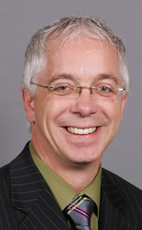
House of Commons photo

Crucial Fact

  • His favourite word was quebec.

Last in Parliament November 2006, as Bloc MP for Repentigny (Québec)

Won his last election, in 2006, with 62% of the vote.

Statements in the House

Supply November 21st, 1995

We heard the word "ridiculous".

But it is important to recognize that other countries are putting in place defence conversion policies while Canada is cutting conversion budgets.

I think this is a serious problem. We must stop treating this matter lightly and start asking serious questions.

Supply November 21st, 1995

I apologize, Mr. Speaker.

The Liberal Party wrote, "The end of the Cold War puts at risk tens of thousands of high-tech jobs". This does not come from us but from the red book. I say through you that I hope the hon.

member agrees. The Liberal Party also wrote that it would "introduce a defence conversion program to help industries in transition from high-tech military production to high-tech civilian production".

The purpose of the Bloc Quebecois's opposition motion is simply to remind the Liberal Party of its red book promises. We have never, ever said that we wanted other conflicts. This is totally unrealistic and does not make any sense.

Supply November 21st, 1995

Mr. Speaker, I feel like laughing. Where I come from, we say of a nice action or activity that it is a good show. I would say to the hon. member across the way that she is missing a good show. She has missed good, coherent speeches.

Most of all, I would like to remind her of her party's promises. You said, my dear colleague, "The defence industries today employ directly and indirectly over 100,000 Canadians". You wrote, "The end of the Cold War-

Supply November 21st, 1995

Mr. Speaker, I wish to make the House aware of the importance the Bloc Quebecois

attaches to defence conversion. This is the main reason why we selected it for our opposition day. It is important in Quebec and it is important in my region. I should point out that I have SNC Technologies in my riding, a munitions plant, and its employees are extremely worried about federal government inaction on defence conversion.

Before addressing the matter we are looking at today directly, I would like to take this opportunity to denounce the Canadian Armed Forces' lack of respect for francophones in its ranks. Last February 22, the Office of the Commissioner for Official Languages followed up on numerous complaints about the lack of compliance with the Official Languages Act in the Canadian Armed Forces. Its letter stated that there would be an investigation to compare the situation of francophones in Moosejaw and that of anglophones at Bagotville. The report was to be submitted within a few weeks of the February letter. Nearly a year later, the report is still secret, despite the Access to Information Act, probably because the conclusions do not put the government in a very good light.

All we are asking is for the investigation to be made public, first of all, and then for them to comply with their own legislation. Now, back to the key point of this debate, defence conversion; this must be looked at on the world scale, but also in Quebec, primarily the Montreal area, and in Canada. The situation is not a very comfortable one. With the end of the cold war, defence industries everywhere in the world are in a crisis situation. The market, estimated to be in excess of $450 billion, dropped 10 per cent between 1987 and 1994. This slump is far from over; according to the international experts, there might be another drop of some 25 per cent within the next few years, which is why it is important to have an eye to the future in this sector.

The result of this crisis in the industry has been major job losses world wide. For example, 700,000 jobs have been lost in the USA, and 600,000 in Europe. In Quebec and in Canada we are far from being protected from the inroads being made upon the defence industry world wide. In Quebec alone, sales figures in the defence sector dropped 48 per cent between 1987 and 1992. During that same period, lower defence sales resulted in the disappearance of 11,000 of the 57,000 jobs directly linked to defence.

As I have already stated, there is a company in my riding whose 500 employees are worried at the lack of action. Considering the situation in the defence industry, there are two other points that must be taken into consideration.

First, we must remember that jobs lost in the defence industry are jobs in a sector with a very high concentration of advanced technology. The jobs that disappear are high calibre, lucrative positions. In fact, salaries paid in the aerospace industry, which plays a major role in the defence industry, tend to be 24 per cent higher than the average salary in Canadian industry. Twenty-four per cent is a lot.

Second, we must consider the fact that these changes in the defence sector are particularly hard on Quebec, where a major part of Canada's defence industry is located. This is not partisan politics. This is the truth. Because of the way the industry is distributed within the province, these changes come down hard on the Montreal region which is the driving force of Quebec's economy.

In other words, a lack of federal programs to help the defence industry whether this crisis will be particularly damaging for Quebec and weaken the ability of Quebecers to make advanced technology one of the strengths of their economy.

I am referring here to sectors like telecommunications and the aerospace industry, where we have to do everything we can to promote development and provide a solid basis for competitive growth in the long term. If we want to build this solid basis for the future, it is important to help the defence industry negotiate the rough spots it is experiencing today. This can be done partly by helping the industry adjust to changing conditions, something the government has failed to do.

For instance, we could provide incentives for defence producers to develop civilian applications of their products.

Since the defence industry uses advanced technology which benefits the economy as a whole, it would make sense for the government to have programs that provide incentives for defence conversion, which is already the case in other countries.

In the United States, the Clinton plan provides between 4 and 6 billion dollars worth of funding for defence conversion. In Europe, largely thanks to the KONVER program, hundreds of millions of dollars are invested for this purpose.

And then Canada. Does this country have a program similar to the European and American programs that focus on defence conversion? Unfortunately, it does not.

The only program that comes close is DIPP, which has been around for several years, and it certainly does not focus exclusively on defence conversion.

Its purpose is also to support companies that work in the defence industry, especially in aerospace and avionics, and to facilitate and consolidate R&D activities in these companies. It also focuses on setting up networks of suppliers of derivatives and components for these sectors and promoting investment and exports in manufacturing sectors with a high added value.

The purpose of the program is to help defence industries remain competitive on world and Canadian markets. It provides companies in the defence sector with incentives to continue their activities. It is only in recent years that part-and it must be remembered that it is only a small part-of the budget for this program has been allocated to promoting defence conversion.

Here, we could perhaps point out that expenditures under the DIPP program have a major economic impact. Every dollar spent under the program is estimated to produce more than $40 worth of economic benefits. We must not forget that, through its strong participation and dynamic role in the defence industry, Quebec enjoys a significant amount of these benefits.

This therefore is the only federal program with a goal of defence conversion, even though it may be both limited and inadequate. While the program does not entirely serve the needs of conversion, it could at least serve as a basis for the work needed in this area. It is simply a basis requiring constant work, but at least it is something. Even the Liberals promised to face the challenge of defence conversion in their famous red book. They have forgotten in the meantime, as everyone will agree.

They acknowledged, and I quote: "The defence industries today employ directly and indirectly over 100,000 Canadians. The end of the Cold War puts at risk tens of thousands of high-tech jobs". They promised in the red book, and I quote once again: "A Liberal government will introduce a defence conversion program to help industries in transition from high-tech military production to high-tech civilian production".

This then was a promise to build on the existing program to help the sector through its difficult times. Where is it at today? Forgotten, gone, like most of the other promises the other party made.

Looking at the record to date, we see that the benefits derived from the defence industry are substantial for Quebecers and Canadians, but that the industry is facing a serious crisis. Some adjustments must be made. Conversion of a significant portion of the defence industry to civilian production would help us keep and develop high calibre jobs. Other countries have taken on this challenge, as I mentioned earlier.

In Canada however the federal government has not, truth be known, managed to respond coherently to the problem, despite empty promises-something that does not surprise us. The only reaction to the crisis in the defence industry up to now has been a few adjustments to an existing program and cuts to it, on top of everything else. And yet, the Liberals had promised much more to help the industry survive this crisis.

Despite the logic of providing more active support for defence conversion, the Liberal government has not kept its promises. The DIPP budget is in free fall. It reached its peak in 1989-90 at over $300 million. In 1994-95, the figure was less than $144 million. New cuts are expected for 1995-96. The DIPP will then amount to only $102 million, a 66 per cent reduction over six years, at a time when business is facing a serious crisis.

These cuts will only continue, and the 1997-98 budget should drop to only $24 million. In fact, the program no longer accepts any new projects, and the government is honouring only the commitments it has already undertaken. This is a funny way for the government to keep its promise to facilitate defence conversion, do you not agree?

At a time when the industry needs it more than ever, the government is drastically reducing its participation. Its budget cuts are placing an enormous burden on Quebec. While Quebec businesses received $168 million in 1989-90, this amount dropped to $80 million in 1992-93. This is quite disturbing for the people who work in this sector in Quebec and in the Montreal region.

In conclusion, I think that so far the federal Liberal government has behaved inappropriately and irresponsibly by promising assistance while at the same time cutting back on the defence conversion program. This is a Machiavellian way of looking at things and avoiding the problems by shoving them aside to make them disappear. The time has come to initiate an honest program to face the real, global crisis everyone recognizes. The government must act now.

Amateur Sport November 6th, 1995

Mr. Speaker, my question is for the Minister of Canadian Heritage.

In about 40 per cent of international competitive sports, national coaching certification training programs are given in English only. It is obvious that, in amateur sports, there is discrimination against francophones even in elite coaching training.

How does the minister explain that a mere 14 per cent of all Canadian coaches trained for international competition are from Quebec and that coaching training courses for 40 per cent of competitive sports, including biathlon, hot dog skiing and synchronized swimming, are offered exclusively in English?

Referendum Campaign October 25th, 1995

Mr. Speaker, in response to Liza Frulla, who, last Monday, called for the federal government's withdrawal from the area of culture, how can the Minister of Labour answer that a mere administrative agreement could be enough to solve the problem, and will she dare give the same answer to stakeholders in the cultural industry?

Referendum Campaign October 25th, 1995

Mr. Speaker, my question is for the Minister of Labour.

In his speech yesterday, the Prime Minister indicated that he still favoured administrative agreements as a way to meet Quebec's demand that the federal government withdraw from Quebec's areas of jurisdiction.

Can the Minister of Labour tell us how Quebecers can trust the Prime Minister when he proposes administrative agreements, since the only time he proposed such an agreement-it was, may I remind you, in the area of manpower-, the minister, in solidarity with her former boss, Daniel Johnson, rejected it, calling it a third-rate agreement?

Free Trade October 24th, 1995

Mr. Speaker, Claude Cheysson, former French minister of foreign affairs and former commissioner of the European Community confirmed yesterday that the European Union could sign a free trade agreement with a sovereign Quebec. Mr. Cheysson thus recognized Quebec's special position between North America and Europe.

Free trade agreements will soon be signed between the European Union and Mexico and Tunisia. The idea of strengthening Quebec's position as a special European partner in North America is particularly attractive.

So, as Quebec enjoys special ties with its North American and Latin American partners, could it be that Canada alone has yet to comprehend the virtues of partnership? The Government of Canada has been trying unsuccessfully for some time now to sell the idea of

a free trade agreement between NAFTA and the European Union. Perhaps a sovereign Quebec will succeed where Canada has failed.

Quebec-Canada Economic Union October 4th, 1995

Mr. Speaker, the leaders of the federalist side would have Quebecers believe that English Canada could manage without a partnership agreement with a sovereign Quebec.

The economic reality is that Quebec is the second-ranking partner of English Canada, far ahead of Japan and Germany.

The economic reality is that Quebecers purchase $420 million worth of fish and other food products from the Atlantic provinces every year. That there are $850 million worth of oil and natural gas

sold to Quebec by Alberta. There is Bay Street, the financial heart of Toronto, which would lose $2.8 billion in insurance and financial services business. And there are the $1.3 billion worth of car and truck purchases from the Ontario automobile industry by Quebec.

Yet they are trying to make us believe that a partnership is not in the interests of Quebec and the rest of Canada. Really, now.

Electoral Boundaries Readjustmentact, 1995 June 20th, 1995

Mr. Speaker, I am pleased to speak on Bill C-69, an act to provide for the establishment of electoral boundaries commissions and the readjustment of electoral boundaries.

To start off, I would like to say that we proposed an amendment to improve Bill C-69. As we were denied this amendment, which was defeated in the House, we cannot support this bill.

It was essential for us to ensure proportional representation for Quebec in the unlikely event of other elections here in the federal system involving Quebec. We think it would be very surprising, but, if it did happen, we had to guarantee that Quebec had at least 25 per cent representation. We were denied our amendment; it was defeated democratically in the House and, for this reason, essentially, we cannot support this bill.

I must also point out the importance of the readjustment commissions, the commissions redefining electoral boundaries. It should be said that there are some obvious points here. There are ridings, like my own, with 110,000 constituents; there are other ridings with 43,000 constituents. Representation is therefore not proportional. In some regions, ridings are huge, and the member of Parliament, even with the best of intentions, is unable to serve the entire population.

Therefore the changes to the electoral maps planned for every five years with the census and the readjustment are fundamental and vital. In any decision to readjust boundaries, the primary criterion should be proportional representation. Before continuing, I would like to point out that it is unlikely that we will be involved in any more elections in Ottawa, but I would still like to speak to Bill C-69 because it directly affects my riding.

The federal riding of Terrebonne would be split in two on the new electoral maps. This is fine. As I said earlier, having 110,000 constituents can be a bit difficult, even though things are going very well right now. But it is a bit much as far as proportional representation is concerned, and they want to split the riding in two, to create the ridings of Repentigny and Blainville-Terrebonne.

This split will be the focus of my speech to the House. Briefly, the riding of Terrebonne, as it now stands, the riding I represent, has 110,000 voters, as I said earlier, and 160,000 inhabitants. It is the most densely populated riding in Quebec, and if memory serves, the sixth most densely populated in Canada. We therefore agree on the need to readjust the riding's boundaries.

I would like to show in this House that it is in the interest of the two groups of people concerned to examine the proposed ridings of Blainville-Terrebonne and Repentigny. I believe that a simple mathematical calculation was performed; 75 members divided by the number of people. As I will point out, there are elementary rules to follow. But these rules have not been followed by the electoral boundaries commissions.

To do so, the commissions should go by the rules of geographical size and population density. In my riding in Lanaudière, the population increased 25 per cent in ten years. This was the most significant demographic "boom" in Quebec. So population density, community of interest, cultural identity and the region's historic background-I believe the last two, cultural identity and historical background of the region should be included as criteria, but these are eliminated from the outset, and you will see why.

After analysing the two proposed electoral districts, it is clear that some of these principles were not considered at all by the commission, as I said earlier, I am referring to community of interest and historical background of the region.

I started with the first riding the bill proposed, the riding of Blainville-Terrebonne. In its proposal, the commission, which visited my riding, suggested putting the following towns: Blainville, Bois-des-Filion, Lorraine, Rosemère, Sainte-Anne-des-Plaines and Terrebonne together in the riding of Blainville-Terrebonne.

Although the first five towns met all the criteria, Terrebonne, the most densely populated town in the proposed riding, would be the big loser. In fact, Terrebonne had a population of 39,678 at the last census. These residents have no geographical, economic or cultural affinity with the other towns in the proposed riding.

They do not have the same administrative regions, MRCs, school boards, economic development corporations, employment centres, Quebec manpower development corporations or CLSCs, but the commission still wanted to put them into one riding, grafting together bits and pieces that have nothing in common, and they think this will be a riding that makes sense. However, it makes no sense at all to uproot entire communities.

At a time when we are all working hard to eliminate costly duplication and overlap, we think this should be an opportunity to reinforce communities of interest instead of dividing them.

Considering that the riding of Terrebonne has existed since the Constitution Act, 1867-I have already said this here, but I want to repeat it in reference to the current bill-considering that the commissions are probably going to circulate again, I would like to ask the federal electoral boundaries commission to reconsider the proposal regarding Blainville-Terrebonne, and to decide to leave the riding as Terrebonne.

It meets the first criterion, which is historical development. Under this criterion, the towns of Lachenaie, Mascouche, Terrebonne and La Plaine could be grouped together to form the new riding of Terrebonne.

According to the decennial census of 1991, the population of this new riding would be approximately 91,156, which is within 1 per cent, or 800 persons, of the electoral quota set for Quebec, which is 91,946.

In addition, in the next briefs to be presented in the next hearings, the commission and Parliament will have to take into consideration the fact that the four towns mentioned earlier are already considered to form one entity for the purposes of the administrative region of Lanaudière, the RCM of Les Moulins, the des Manoirs school board, la Société de développement économique des Moulins, the Terrebonne Canada Employment Centre at Lachenaie, la Société québécoise de développement de la main-d'oeuvre and the Lamazer local community health centre.

Therefore, I believe that I have clearly demonstrated that creating the riding of Blainville-Terrebonne would be totally irresponsible and irrational. It is our duty to respect communities of interest, economic communities, historical development and thus to maintain the riding of Terrebonne with the new towns as I just explained.

Regarding Repentigny, we were pleased to see that the previous law created this riding. As I said earlier, with 110,000 voters, there is no reason for us to oppose the boundary as it stands.

In fact, the creation of Repentigny corrects a historical oversight. On April 16, 1647, Pierre Le Gardeur de Repentigny was granted the seigniory of Repentigny. We can only praise this acknowledgement of history which is one of the criteria in the bill before us.

The commission aims to group the towns of Charlemagne, Lachenaie, Mascouche, Repentigny and the part of the RCM of Les Moulins which is included in the parish of La Plaine in this new riding.

In fact the cities of Charlemagne and Repentigny, on the one hand, and Lachenaie, La Plaine and Mascouche, on the other, have different RCMs, school boards, economic development corporations, manpower development corporations and so on.

We can see the aim is to combine two ridings into one, regardless of the economic, social and cultural realities of this area. Here again, administrative overlap and duplication have not been corrected.

In the light of the above, we are asking the federal Electoral Boundaries Commission for Quebec to review its proposal as follows.

The proposed electoral district would still be called Repentigny. It would include the cities of Charlemagne, L'Assomption, L'Épiphanie, Le Gardeur, Repentigny and part of the regional county municipality of l'Assomption included in the parishes of l'Épiphanie, Saint-Gérard-de-Magella and Saint-Sulpice.

According to the 1991 decennial census, the population of the riding proposed, which we propose to improve, is 91,537, here again, almost exactly the electoral quota established for Quebec, which is, and I repeat, 91,946. Not even a difference of 300 people. It is therefore realistic.

In the new riding, under one administrative region, that of Lanaudière; there would be one regional county municipality; one school board, the Le Gardeur school board; a single economic development corporation; a single employment centre, the one in Repentigny; and a single Quebec manpower development corporation.

In short, the two ridings we are proposing: Terrebonne, in keeping with historical changes, and Repentigny, also in keeping with these changes, are entirely in accordance with the principles established by this same commission.

In the light of these facts, we are asking that, with Bill C-69, there be a little flexibility when the commissions resume their hearings in the regions. We therefore ask the federal Electoral Boundaries Commission for Quebec to review its proposal, which, we hope, is not cast in stone, and to understand the simple, rational and fundamental arguments here for the greater well-being of the people concerned by this readjustment. That is, of course, in the unlikely event these people will require representation in another federal election.