Mr. Speaker, does the minister not think that such comments by the Prime Minister remove all credibility from Canada's efforts at negotiation?

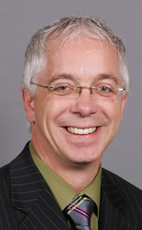 House of Commons photo
Won his last election, in 2006, with 62% of the vote.
Cuba March 5th, 1996
Mr. Speaker, does the minister not think that such comments by the Prime Minister remove all credibility from Canada's efforts at negotiation?
Cuba March 5th, 1996
Mr. Speaker, the Minister for International Trade met yesterday in Washington with his American counterpart to discuss the measures the United States intend to take against countries trading with Cuba. There is every indication that Washington wants to maintain a hard line policy.
The Prime Minister said yesterday in Grenada that, in all probability, the United States are preparing to pass such measures because this is a presidential election year. Does the minister not think that such defeatist remarks by the Prime Minister, far from helping Canada's case, are hurting it?
Tobacco Industry December 13th, 1995
Mr. Speaker, when she tabled her master plan to reduce tobacco use in Canada, the Minister of Health indicated that broad consultations would be taking place with a view to introducing legislation in the spring.
Unfortunately, before tabling her plan, the minister did not see fit to initiate serious consultations with the tobacco industry on her government's plans to severely regulate its activities.
First of all, the minister would not discuss the code of ethics to be adopted by the manufacturers or the thrust of her master plan.
She missed a great opportunity to make her intentions perfectly clear to the industry, thus avoiding another court challenge on her upcoming legislation. If that were to happen, Canada would once more find itself without a strategy to reduce tobacco use.
In the meantime, following the Supreme Court's decision, the tobacco industry would resume actively promoting its products through advertising. What a mess.
Amateur Hockey December 8th, 1995
Mr. Speaker, in recent weeks, an unacceptable situation has arisen in Quebec's amateur hockey. The Canadian Hockey Association is pressuring the Quebec Ice Hockey Federation to join its insurance program. The association even tried to force Quebec teams to pay an unjustified surcharge to participate in interprovincial and international tournaments.
In spite of pleas made to the government, asking it to help find a solution to the problem, Quebec hockey groups had to go to the
provincial superior court and get an injunction order prohibiting, until December 12, the Canadian Hockey Association from harassing Quebec teams. I ask the Minister of Canadian Heritage, who is responsible for amateur sport, to contact CHA officials, so that they come to their senses and stop harassing Quebec hockey officials.
Recognition Of Quebec As A Distinct Society December 6th, 1995
Mr. Speaker, I, like my colleagues in the Bloc Quebecois, am pleased to rise in the House today to speak on the motion to recognize the distinct nature of Quebec society.
Before speaking on the motion, as such, I would like to refer to a short passage from the Practical Guide to Private Members' Business , which defines a motion. It says that the effect desired is the first consideration in deciding between a bill and a motion, that in passing a motion-as is the case here- stating a resolution, the House expresses a wish without committing the government to a particular measure or direction.
A wish is expressed, which does not commit the government to a particular measure or direction. It is important to remember that this is what the motion is directed at. The guide goes on to say that, on the other hand, a bill passed by Parliament may have major implications for both the government and the public.
But there is no cause for anxiety. This is not a bill, it is a motion, that is, a wish that does not commit the government to a particular measure or direction, in other words, it does not amount to much.
I would also point out that, in this House, a motion was passed last December 13, which reads as follows: "That, in the opinion of this House, the government should officially recognize the historical contribution of the patriotes of Lower Canada and the Reformers of Upper Canada to the establishment of a system of responsible democratic government".
This motion was passed on December 13. What action has been taken to implement this motion since? None, none whatsoever, because it was idle talk that did not commit the government to anything.
Let me remind you that a motion recognizing hockey as our national winter sport and lacrosse as our national summer sport was also passed. What action has been taken since? The Canadian lacrosse team's budget was eliminated. Completely. What good is a motion? It does not mean a thing.
Besides being meaningless, the motion is contradictory to begin with, because it reads, and I quote:
That-the House recognize that Quebec's distinct society includes its French-speaking majority, unique culture and civil law tradition;
"Unique culture". Just this afternoon, my hon. colleague from Rimouski-Témiscouata asked the Primer Minister the following question:
Mr. Speaker, my question is for the Prime Minister. Yesterday, government members of the heritage committee maintained that there was no such thing as a Quebec culture-
Now this motion says that we in Quebec have a unique culture. Unique means that it is exclusive to Quebec, if I am not mistaken.
Yet government members maintained that there was no Quebec culture, only one great big Canadian culture. It seems to me that their position flies in the face of the motion these same members are about to vote on.
And what was the Prime Minister's answer?
Mr. Speaker, there is a French culture in Canada, and it is a Canadian culture.
There is only one culture in Canada: the Canadian culture. That is what the Prime Minister said. On the other hand, the motion tabled by the Prime Minister himself, seconded by his Deputy Prime Minister, recognizes that there is a unique culture in Quebec. It reads:
That-the House encourage all components of the legislative and executive branches of government to take note-
-it does not say much, "to take note"-
-of this recognition and be guided in their conduct accordingly.
What did the Prime Minister do this afternoon? Just the opposite. The opposite of what? The opposite of what a meaningless motion says to do. Is there any doubt about that? I will let you be the judge of that, Mr. Speaker.
Yet, during the referendum campaign, the Primer Minister repeated time and time again that he would positively not address constitutional issues, but deal with the real problems instead, namely job creation and deficit reduction. How did we end up debating this motion then? Because they were afraid. They looked at the polls and realized that they were losing ground. Faced with rising support for the yes side in opinion polls toward the end of the campaign and with the possibility of losing the referendum, the Prime Minister suddenly changed his mind. He set up a smoke-and-mirrors operation aimed at convincing the people of Quebec that the federal government was committed to making major changes to the current federal system after a hypothetical no.
The fact that this strategy was improvised from beginning to end was, of course, reflected in the Canadian Prime Minister's ambiguous and meaningless comments in the last days of the referendum campaign. On October 24 in Verdun, he said, and I quote: "Quebecers want Quebec to be recognized within Canada as a distinct society by virtue of its language, culture and institutions. I have said it before and I say it again, I agree". Yet, he tells us today that there is only one culture in Canada, although his motion says that Quebec has a distinct culture. No matter, he has a right to be mixed up.
The Liberal government also felt pressured to deliver on its vague promises to change the federal system following the razor-thin victory of the no side on October 30.
To do so, it set up two phoney committees. One of these committees was chaired by the Minister of Intergovernmental Affairs; its mission was to save Canada. What a nifty little mission.
On November 29, even before the committee tabled its findings, the Prime Minister hastily announced three initiatives aimed at satisfying the desire for change expressed by the vast majority of Quebecers.
As far as recognition of Quebec as a distinct society is concerned, however, these efforts are not very impressive. But, before going any further, allow me to read the motion:
Whereas the people of Quebec have expressed the desire for recognition of Quebec's distinct society;
(1) the House recognize that Quebec is a distinct society within Canada;
(2) the House recognize that Quebec's distinct society includes its French-speaking majority, unique culture and civil law tradition;
Perhaps my French is not so good, but to me "culture- unique" means a culture that is different from others.
(3) the House undertake to be guided by this reality;
(4) the House encourage all components of the legislative and executive branches of government to take note of this recognition and be guided in their conduct accordingly.
In other words, this is just the opposite of what was done this afternoon.
Upon reading the motion, we realize that it is merely a recognition of Quebec society as it is now. It simply reflects a logical conclusion.
Nowhere in this text is there any mention of additional powers being given to Quebec. Even the minister told us that it does not provide powers to Quebec. He is an honest man.
This motion is meaningless. It is merely a symbolic recognition of what we already know, namely that we are different from the rest of Canada. Even the Prime Minister has said so.
The fact is that the recognition of Quebec's distinct nature, as currently proposed by the Liberal government, is light years away from what was proposed in the past.
Indeed, during the 1986-87 federal-provincial negotiations to make Quebec sign, with honour and enthusiasm, the Constitutional Act of 1982, the Liberal Party of Quebec made a demand, as part of its June 1985-86 political agenda. This is for the Quebec Liberals who hold a Liberal party membership: "The Liberal government is asking that a statement be included, in a preamble to the new Constitution, to explicitly recognize Quebec as a distinct society and as a cornerstone for the French element of the Canadian duality".
That was not written by nasty separatists in their political agenda, but by the Liberal Party of Quebec.
These proposals from the Liberal Party of Quebec led to the Meech Lake accord. Although the concept of distinct society in that accord was not worth much, at least it was entrenched in the Canadian Constitution. Moreover, the distinct society clause was interpretative. Therefore, the provisions of the Canadian Constitution had to be interpreted based, among other things, on that clause. Consequently, today's motion on the concept of distinct society is very far from what was agreed to in the Meech Lake accord. There was a minimum of interpretative powers. Today, there are none.
There is nothing of the like being proposed today, besides which the government side is deluding itself into believing that Quebecers will smilingly accept such a ridiculous proposition and undertaking-and I am weighing my words carefully with that choice of adjective.
Where were the people in the Liberal government when the people of Quebec came close to saying yes to sovereignty on October 30, at 49.4 per cent? Do the Prime Minister and his cronies really believe that the people of Quebec will settle for that stuff and nonsense when they came within a hair's breadth of acquiring a country with total control over all of its powers? No. The federal government needs to stop fooling itself and face up to reality.
Quebec is not inhabited by a distinct society, but by a people, the people of Quebec. The men and women of Quebec already know that, and this is why they do not recognize themselves in the meaningless concept of a distinct society. If there is one lesson to be learned from the October 30 referendum, it is that the people of Quebec are on their way to sovereignty.
Manganese Based Fuel Additives Act November 27th, 1995
Madam Speaker, the Bloc Quebecois has decided to propose an amendment to Bill C-94 at third reading, because we know that the American agency EPA will table a report on the issue shortly. As my colleague of the Reform Party said earlier, we believe that it is important for us to also look at studies that will be published at the international level, because our friends opposite enjoy saying in committee that the environment knows no boundaries. This is why I move the following amendment:
That the motion be amended by deleting all the words after the word "That" and substituting the following:
"Bill C-94, An Act to regulate interprovincial trade in and the importation for commercial purposes of certain manganese-based substances, be not now read a third time but that it be read a third time this day six months hence."
Official Languages November 27th, 1995
Mr. Speaker, I have never heard of legislation being open to negotiation in this House before.
Here is my supplementary question: How can the minister explain that, this year, for the first time, Football Canada's report was published in English only, if not by the fact that francophones are the first ones to bear the brunt of budget cuts?
Official Languages November 27th, 1995
Mr. Speaker, my question is for the heritage minister.
In response to a question put to him last June about the fact that the Canadian sports guide was published in English only, the heritage minister promised to have the Official Languages Act enforced in organizations that his department awards funding to. I wanted to remind him of that promise.
How can the minister explain that several sports associations that his department is responsible for, such as Badminton Canada, Water Ski Canada and a dozen other associations, are still publishing their annual reports in English only?
Supply November 21st, 1995
Mr. Speaker, the member for Ottawa West has been accusing us for a while now of not knowing our own program, of not being familiar with the issues. We are not, however, speaking only of the aerospace industry, but rather of defence conversion in our opposition motion. A while ago, I asked a question about DIPP budgets and she replied-this is not really an accusation-that she did not have all the figures.
I would simply remind her that, as the result of our efforts, the budget has been cut 66 per cent over the past two years, a two thirds reduction. Moreover, we plan to bring it down from $220 million to $24 million for 1997-98. So, I am reminding her of the figures. At the same time, the program set out in the Liberal red book indicated that investments in defence conversion would be a priority.
Mr. Speaker, does the member not see a dichotomy between the reality of short-term abolition of DIPP and the red book promise to invest in defence conversion? I am not speaking of Montreal aerospace companies, but of a defence conversion program in conjunction with a promise about the defence industry and a reality.
Supply November 21st, 1995
Mr. Speaker, I wish to thank the hon. member for Ottawa West for being so enthusiastic in showing how dynamic Quebec aerospace industries are, and for being so accurate in reading the directory of aerospace industries located in the Montreal region. I do not think the hon. member missed a lot of them, he inventory is excellent.
However, I want to ask her two very simple questions. There is a federal defence conversion program called DIPP. I would like to know the budget of that program and whether the Liberal government intends to increase or reduce that budget in the coming years.