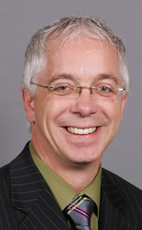
House of Commons photo

Crucial Fact

  • His favourite word was quebec.

Last in Parliament November 2006, as Bloc MP for Repentigny (Québec)

Won his last election, in 2006, with 62% of the vote.

Statements in the House

Department Of Canadian Heritage Act December 14th, 1994

Mr. Speaker, I am pleased to rise in this House to speak on Bill C-53. Before getting to my opening remarks, I would like to start by giving a definition of bilingualism. This is my own personal definition but one that I believe is shared by many Quebecers. This is for the hon. member for Carleton-Gloucester who talked about bilingualism and its importance. He has used this term over and over.

I think that, for a Quebecer, bilingualism simply means that a French-speaking Quebecer learns English. We are not so sure that it works both ways. As far as we are concerned, for us, it means learning English, and for the English, being able to understand us. There are of course exceptions, colleagues whom

I wish to congratulate, in this House, on our committee and around us.

The importance of the multicultural dimension of Canadian unity has been mentioned. Not so long ago, we had the opportunity to travel to western Canada with the environment committee. Much to my surprise, be it in Winnipeg, Edmonton-and I call this to the attention of the hon. member for St. Boniface, champion of the French fact-or Vancouver, we were unable to find French-language newspapers in the hotel, airport or convenience store. Nowhere in Edmonton, Winnipeg and Vancouver was I able to buy Le Devoir or La Presse . But you could get USA Today and magazines from New York City. There were all sorts of magazines and newspapers but none in French. And we are told that the French fact is very well championed just about everywhere. I have my doubts about that.

The amendment to clause 4, presented by my colleague from Rimouski-Témiscouata, would simply recognize Quebec's identity in Bill C-53. It is an essential clause. It is indeed essential to recognize that Canada was built by two founding peoples, a fact that this bill denies. That is why we cannot support it. These two founding peoples are the francophones and anglophones of this country.

I do not think that a single Liberal member would knowingly contest the fact that Canada was built by two founding peoples. This is what the Minister of Canadian Heritage is simply denying with this bill. That is why we are opposed to it.

I therefore urge the minister to recognize the two founding nations and to accept every amendment proposed by the hon. member for Rimouski-Témiscouata, which recognizes Quebec's identity, so that every motion should include the word "Quebec" or "the identity of Quebec". Otherwise, we cannot approve Bill C-53, as it denies an obvious reality in this country.

If I may, I would like to read from the report of a Canadian royal commission that was written a number of years ago. This is a rather long excerpt, but I will tell you afterwards when it was written and by which royal commission, and you will see that the problem goes back a long way.

Here is the excerpt. The dominant majority in politics-like the federal government and the anglophones-often takes its advantages for granted and does not appreciate the disadvantages suffered by the minority, especially when this minority enjoys or appears to enjoy some degree of cultural freedom. However, the minority, as long as it regards its collective life as an entity, may want control over it and look beyond cultural freedom. It then questions its political status. It feels that its future and cultural development are somewhat precarious and perhaps limited in a political environment dominated by the other group forming the majority. As a result, it leans towards greater constitutional autonomy. Ideally, the minority wants this autonomy for the whole community but, when this objective cannot be reached, it may focus its efforts on a narrower political stage where it would be in the majority.

We think about sovereignty. It is personal. This excerpt is from the 1967 Laurendeau-Dunton report on bilingualism and biculturalism.

The recognition of the French fact, of francophone minority rights goes back to at least 1967. One francophone and one anglophone on the same royal commission signed this report recognizing minority rights. It is therefore imperative to recognize these rights.

According to the brief submitted by the Société Saint-Jean-Baptiste, it is important to see how this conclusion has evolved over the years, how political parties have learned to live with the findings of the Royal Commission on Bilingualism and Biculturalism. I am talking about biculturalism and not multiculturalism.

Twenty-five years later, in 1991, another look at this issue of culture and the French fact in Quebec and Canada led to the following conclusion: The two levels of government also compete on the last element of the analysis, culture, resulting in overspending, conflict and inefficiency.

Petitions December 14th, 1994

Our whip taught us well Mr. Speaker, and we respect the rules on tabling documents in this House.

The students also told us that every year, on this planet earth, countless numbers of women die giving birth to children. The government undertook to reduce the number of such mortalities.

The government also undertook to help children in war-torn countries, to help children who wanted a normal education, and to respect the work done by children.

For all these promises made by the government, I present this petition, signed by 1,200 students of the École polyvalente Paul-Arseneau.

Petitions December 14th, 1994

It has been accepted and approved.

Petitions December 14th, 1994

Mr. Speaker, it is my pleasure to present this petition signed by 1,200 students of a secondary school in my riding. It asks one thing only: that the government keep its promise. And I am keeping my promise to the students of this school to present their petition in the House and to read it.

I will be brief. These students tell us that every day on earth 40,000 children die of starvation and illness, and that at the world summit for children the leaders of this country promised to reduce the number of children who leave this earth prematurely. These students also ask the government-

Department Of The Environment December 14th, 1994

Mr. Speaker, my question is for the Minister of the Environment. In his recent report, the Auditor General mentions that after spending $26.6 million, the federal government has still not solved an issue related to unproductive rent payments, this after 20 years. Those payments concern a Vancouver lot rented by the federal government, and more specifically by the Department of Environment, where an environmental centre was to be built. However, the project was abandoned in 1976.

Can the minister tell us what action plan her department has to solve this issue, since this useless lot costs taxpayers $4.4 million a year?

Canadian Environmental Assessment Act December 12th, 1994

Mr. Speaker, I thank the hon. member for Beauport-Montmorency-Orléans. I tried to land on my feet, but I am not in total agreement with him. Granted, the environment minister did decide quickly that something had to be done. Except that her decision was that something should be done in five, ten or fifteen years-we shall see.

She was quick to say something should be done, but she will not move as quickly to get things done. We should be able to agree on that. Is the Irving Whale involved in all this? Yes, obviously. In other words, the only thing the minister has done so far is to acknowledge that there is a problem with the Irving Whale . We could congratulate her on that, but I think just about anybody could recognize that problem.

She told us she will probably refloat the barge, and that she will probably do it very soon. In Liberal terminology, "very soon" means we will have to wait for quite a while. Are we justified in asking questions about the refloating of the Irving Whale ? Yes. At this very moment, as my colleague from Laurentides told us, there are oil leaks in that area.

Recently, dead ducks have been reported in that area. They have been killed by oil leaking from the Irving Whale . There is also the seal issue which my colleague from Beauport-Montmorency-Orléans just mentioned, and many more environmental problems that have a terrible impact. Every day that goes by has catastrophic consequences in that area, and if one decision should be made quickly, it is to solve the problem immediately.

Canadian Environmental Assessment Act December 12th, 1994

Mr. Speaker, first of all I would like to thank my colleague for her very pertinent remarks concerning Bill C-56. As she said in her speech and as I said in mine, the House is now aware of the reasons why we do not support this bill. I think that the arguments she so eloquently put forward and the ones I tried to present to the House myself explain why we have to oppose this bill.

We agree that the federal government used to be able to intervene and conduct an environmental assessment on federally owned land in an area under provincial jurisdiction. For example, right now, in my riding, the Department of National Defence is clearing an army mine field. It laid the mines in the first place. In this instance, we cannot ask Quebec to allocate funds to clean up a mess for which the Department of National Defence is responsible.

We are asking the federal government to honour its commitments on federally owned land. But we are being told in this bill that the federal government will be able to assess projects if it made any kind of investment, issued a licence, or had anything at all to do with them. In other words, the federal government will be able to subject any projects proposed by a province to an environmental assessment. We believe that this bill will lead to countless legal disputes and that is why we cannot support it.

I thank the member for Laurentides for her comments which are in total agreement with what I said earlier.

Canadian Environmental Assessment Act December 12th, 1994

Mr. Speaker, excuse my being out of breath, but as my colleague pointed out, there are times when one is even more in a rush than normally. I want to thank you for having the patience to wait for me. I really wanted to speak on Bill C-56. That is why I asked my colleagues to give me a hand and let you know that I was coming.

However, before I start talking about Bill C-56, in this festive season, I would like to say a few words to the people in the beautiful riding of Terrebonne. As previously mentioned in this House, the riding of Terrebonne is the most beautiful one after your own, dear colleagues. I would like to wish my constituents a very happy holiday season. I also would like to wish all the members of the great Bloc Quebecois family in the riding of Terrebonne a very merry Christmas and a happy New Year. I want to tell them that, in the coming year, we will have to work very hard, and that I look forward to working with them.

I now want to address Bill C-56, an act to amend the Canadian Environmental Assessment Act. It should first be pointed out that the Canadian Council of Ministers of the Environment meets regularly to harmonize, as much as possible, the various environment acts which cause problems between the federal government and the provinces.

While the provincial ministers are trying to agree on how to improve federal-provincial relations on the environment, the federal minister tells them: "You may pursue your useless talks on the harmonizing the environmental assessment process, but as for me, I will proclaim the CEEA which will immediately be amended by Bill C-56 and, in so doing, I will agree to federal interference in this area, which will be legitimized as soon as the bill is passed".

But the minister tells them: "Go on, continue your discussions between provinces, while I put forward the so-called flexible federalism". The subject of flexible federalism was raised last Thursday, and my colleague from Laurier-Sainte-Marie gave us a definition of flexible federalism: it is a federal system in which the federal government encroaches on the provinces and the provinces give in. Bill C-56 is a case in point.

This short bill is designed to amend Bill C-13 with just four clauses, but these clauses show the federal government's intention to interfere in environmental assessment.

Logically, the federal government should limit itself to environmental assessments of projects for which it is the main developer, projects carried out on crown lands or Indian lands that require its specific authorization or to which it contributes so much that the very project depends on it. That is not the case with Bill C-56.

With Bill C-13 as amended by Bill C-56, the federal government is moving in the opposite direction. It gives itself the authority to make assessments in just about any circumstance, based on the various criteria prescribed in the legislation. This bill, if adopted, that is if Bill C-56 is allowed to amend Bill C-13, will result in legal controversy, federal-provincial conflict, again, immeasurable cost due to overlap, endless delays for the proponents. For developers, it will mean loss of contracts, loss of projects, loss of economic benefits.

Finally, the most deplorable effect this bill will have is inadequate environmental protection, because of the stubbornness of governments-need I remind you-as it is the duty of each to protect its own jurisdiction. Imposing federal jurisdiction on the provinces like that is not the way to go. The biggest loser in all this will be the environment, the very thing we were supposed to be protecting. The primary objective of the legislation is nullified by this legislation, this amended legislation. How great.

I am certainly not saying that it would be easy to determine which level of government should have jurisdiction on the environment. The constitutional division of environmental law-making powers is complex; the Constitution allocates certain responsibilities to the provinces and others to the federal government.

The Canadian Constitution does not give jurisdiction over the environment to the federal government or the provinces. When legislative powers were divided in 1867, the people and Parliament knew very little about the problems of pollution and environmental degradation. We must understand that the Fathers of Confederation could not include in the Constitution matters which were not then of public interest. That is partly why this sector is not among the various responsibilities assigned to the two levels of government under sections 91 and 92 of the 1867 Constitution Act.

While provincial environment ministers are trying to come to an agreement because the Constitution is far from clear on who is responsible for what in this area, the minister jumps into the fray saying, "Get out of my way. I am the boss in this matter".

Unfortunately for her, the official opposition is standing guard and will not remain silent on a bill like C-56, which will undermine the environmental assessment powers of Quebec and the other provinces by complementing C-13. It must be pointed out that Quebec has its own environmental assessment law, the Environment Quality Act. This law was even called one of the best in the world and one of the best assessment procedures.

With over 20 years of experience in environmental assessment, Quebec is way ahead. Why set this aside? Why reject this out of hand? Bill C-56 calls into question expertise that was acquired two decades ago.

On many occasions, the federal government has shown its interest in the environment. It has put forward principles like sustainable development, the fact that the environment knows no boundaries, and the national interest. On environmental issues, we have also been told about peace, order and good government, which are found in section 91. In short, a whole slew of arguments that we consider indefensible a priori. We have evidence to the contrary.

Bill C-13, as amended by Bill C-56, is a real legal hornets' nest. As you know, the great majority of legal challenges in this field end up in the Supreme Court, which means long delays, and except for lawyers, no one wins in these sterile conflicts. Here we might recall the dilemma opposing Hydro Québec and the Canadian government. I think it is worth giving an example to show that it is not easy to meddle so obviously in another's environmental jurisdiction.

Yes, the dispute arises from the Canadian Environmental Protection Act and not Bill C-13, but the example could very well apply to Bill C-13. The second part concerning toxics is at issue but I am sure that the ruling enlightens us on the wrong direction taken in Bill C-56. Let me quote you part of the sentence handed down by the Quebec Court and upheld by the Quebec Superior Court:

"Giving the federal government jurisdiction over the environment would allow it to infringe on provincial fields of jurisdiction. I repeat here those listed by the applicant: Section 92, subsection 5, public lands belonging to the province; section 92, subsection 8, municipal institutions; subsection 10, local works and undertakings; subsection 13, property and civil rights; and, finally, subsection 16, matters of a merely local nature".

These are some of the provisions which made these two authorities come to the following conclusion: "I have already said that, in my opinion, this section cannot fall under the general power of the federal Parliament to make laws for peace, order and good government. I am also of the opinion that this section cannot fall under the power to legislate criminal law. I therefore declare this section-of the Canadian Environmental

Protection Act-to be ultra vires". That section of the act relating to PCBs and deemed to be ultra vires can have a bearing on the whole underlying philosophy of the Canadian Environmental Protection Act.

The government, which is not even waiting for the impending conclusion of this judgment, now wants to impose an amendment which will also be challenged. Who is the government trying to please, if not lawyers? We wonder.

A court has doubts about the federal authority. The government ignores the decision and continues to interfere even more, probably in the hope of having its other environmental act challenged all the way to the Supreme Court of Canada and see that tribunal conclude that it is ultra vires .

Why is the government so stubborn? It cannot even fulfill its current commitments, yet it keeps asking for more. As you know, in spite of the conventions and treaties signed, the Great Lakes and the St. Lawrence River are more polluted than ever before. In spite of the billions of dollars spent, as mentioned in the newspapers last week, acid rain keeps poisoning our forests and lakes. In spite of the treaty signed in Rio, Canada has not reached its objective of reducing greenhouse gases. And the federal government still wants to interfere in a field which falls under provincial jurisdiction. We must wonder why the federal government wants to interfere in areas under provincial jurisdiction when it cannot even adequately carry out its own obligations. Tell me why.

After all, Canadians and Quebecers will have to foot the bill for this. Some would argue that the environment knows no boundary, and it is true. We are reminded of that so often that we have to wonder why broader international treaties are not signed. Yes, we agree that the government has the right to sign such agreements, but when it does, it cannot even honour them.

In 1992, the federal government became involved in promoting sustainable development, but did not meet its objectives. This example and all the others I have already given show why, with our expertise is Quebec, with a bill like Bill 26 passed by the Ontario legislature to protect its environmental rights, with the environmental agreements reached with Alberta and with all the various agreements, we just have to reject Bill C-56 that would amend Bill C-13 and create grey areas in interpreting the law. Before passing any laws that would raise doubts, we must determine who has jurisdiction in this area. I think the minister should listen to what the Canadian Council of Ministers of the Environment has to say.

I urge the House to examine, reconsider and reject Bill C-56.

Supply December 8th, 1994

Madam Speaker, first of all, I would like to know, even though we cannot put a question to the previous speaker rather than to the hon. member for Calgary West, first, what is the national debt per capita, and second, what percentage of that debt is in foreign hands? He will surely have an opportunity to answer those questions when he speaks next.

Instead, I will direct my question to the hon. member for Calgary West, whom I congratulate for his French and for his relatively good understanding of the position of Quebec up till now. For my part, I do understand his position. He speaks clearly.

However, when the Liberal members or the Reform members talk about the legitimacy of the process initiated, I would tell you that in a democratic system, everyone can legitimately consult everyone else and have his say. Our draft bill will only be accepted once a referendum, where everybody in Quebec will have the opportunity to vote for or against it, has been held.

As far as legitimacy is concerned, I would like to remind my hon. colleague of a few processes that we have witnessed in this House and that were not exactly models of legitimacy. When the current Prime Minister of Canada was Minister of Justice and was taking an active part in the unilateral patriation of the Constitution, he said, and I quote from Le Droit of November 2, 1981: ``The intent of my government is to move ahead with the patriation of the Constitution; and even if there is no agreement with the provinces, we will do it''. Even without an agreement with the provinces: talk about a model of democracy!

Moreover, I recall that the Supreme Court had ruled that, all in all, this was legal but unconstitutional. So, I would like to ask the hon. member for Calgary West what he really thinks about it. Does he really believe it is undemocratic, in a so-called democratic system, to consult people about a social vision? I remind him that the majority of the members from Quebec in the House of Commons are sovereignists and the majority of members in the Quebec National Assembly are sovereignists, and people know it.

Supply December 8th, 1994

Madam Speaker, I would have a question to ask the hon. member on the subject of democracy. I would like to know if he can comment on this quote from page 181 of the book Straight from the Heart : ``The voice of Chief Justice Bora Laskin wasn't the only thing that wasn't clear; the majority judgment itself seemed rather ambiguous. It stated that the unilateral action of the federal government was legal but offensive to the traditional convention of getting provincial consent for constitutional amendments.'' Did my hon. colleague participate in that action?