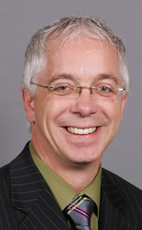
House of Commons photo

Crucial Fact

  • His favourite word was quebec.

Last in Parliament November 2006, as Bloc MP for Repentigny (Québec)

Won his last election, in 2006, with 62% of the vote.

Statements in the House

Supply December 8th, 1994

Madam Speaker, I am very pleased to have a few moments to elaborate on the comments made by my colleague from the government party.

I also want to thank my party for letting me speak on what I see as a fundamental issue and I want to remind my colleagues that this issue is the one and only reason all of us, in the Bloc Quebecois, have entered public life.

So, today's debate is extremely significant, even though the time at our disposal is limited. In the little time I have, I want to invite the people in my riding of Terrebonne, the people in the Lanaudière region, to take part in the consultation process. Contrary to what we were told earlier, the people in favour of our project are invited to participate in order to examine in depth our position and to show their support. Those who are against are also invited.

Finally, I want to ask my colleague a question related to what his leader said in 1990, during a brunch where 800 Liberals were gathered. His leader said that the Liberal Party of Canada would propose a new social contract and a major constitutional reform. He made that statement on October 28, 1990. Where do things stand now?

Supply December 8th, 1994

Madam Speaker, how much time do I have left?

Canadian Environmental Assessment Act December 5th, 1994

Madam Speaker, I rise to further explain why I will have the pleasure to support the sub-amendment presented by my colleague from Laurentides.

To clarify where we are coming from with this sub-amendment to Motion No. 4 presented by the NDP member, I will say that the only thing we agree with is that we would be ready to support the motion presented by the member for Battlefords-Meadow Lake. Therefore, we would be pleased to support it. However, to be consistent with the positions we have taken since the opening of this Parliament, we cannot accept that non-elected individuals might take the place, even occasionally, of elected representatives.

We must point out that the Senate is composed of appointed members who are, as my colleague so skilfully demonstrated, appointed in a partisan way; they are government cronies. These appointees, who cost taxpayers $53 million a year, and who are supposed to be wise, have shown that this is seldom the case.

Therefore, according to the 1848 principle of responsible government which I explained earlier, decisions made here by democratically elected representatives of the people should only and always be discussed in this House. I should point out, for the benefit of all those present, that each one of them represents a federal riding, but that they also represent their provincial legislature, and that there is only one House in each province because their provincial legislature recognizes the authority of democratically elected representatives.

What we are opposing mainly is the fact that non-elected individuals could make decisions. We must therefore support the amendment to the amendment submitted by my colleague from Laurentides and make sure that we remove from the motion of our NDP colleague anything that could be interpreted as meaning that both Houses must be involved in the decision-making. Democratic decisions are made here, in this House, and anything not democratic, like the present proposal, must be rejected.

Canadian Environmental Assessment Act December 5th, 1994

Madam Speaker, I am pleased to speak on the amendments to Bill C-56 proposed by NDP and Reform members.

My comments will be similar to those made by my colleague for Laurentides, because, for different reasons, three of the motions cannot be approved by our party.

The first motion proposed by the hon. member for The Battlefords-Meadow Lake raises problems, as it says this:

"projects likely to cause- public concern are publicly reviewed through a process of independent decision making".

The process of independent decision making causes problems, because it remains undefined. It is said that an independent process should give some directions, but the process itself is not defined.

As far as environmental assessment is concerned, I wish to analyze some aspects, some government structures, mostly at the federal level, where these assessments are made. One must remember that each department, before implementing a project, must do an assessment demonstrating that it is not harmful to the environment.

Moreover, the Federal Environmental Assessment Review Office, FEARO, is about to be replaced by the Canadian Environmental Assessment Agency.

The bill provides for a mediator who will review, hold hearings, carry out consultations-an activity our Liberal friends are particularly fond of-and this mediator will make decisions as part of the environmental assessment process.

Such processes also exist at the provincial level, as my colleague from Laurentides pointed out earlier. In Quebec, the BAPE, or Bureau d'audiences publiques sur l'environnement (office of public hearings on the environment) conducts an environmental assessment which, by the way, is very serious and highly respected. My hon. colleague, who was Minister of the Environment, could attest to this.

The bill also provides for something that no one has objected to, a very good idea: environmental groups, which are concerned with the environment but, unlike industry groups, may not be able to afford to appear before committees and panels to express their views, would receive government funding to come and share their views with various committees. I think that this provision, and particularly the government funding granted to environmental groups-it is important to mention this because these groups will finally be given a chance to be heard-will facilitate public participation in the various environmental assessment processes.

I think that adding to the four or five existing environmental assessment organizations or agencies a fifth or sixth one, which would be this independent umbrella organization at the federal level, is going too far. It is difficult enough getting along as it is. As my colleague said earlier, they are pulling in opposite directions, so that putting the icing on the cake would not necessarily make sense.

As I said in my preamble, how does our colleague from The Battleford-Meadow Lake define "independent organization"? That is very important because we can move in different directions with that.

At this time, Madam Speaker, I would like to give you another reason why we are opposed to Bill C-56. We see here that Clause 4( d ) of Bill C-13 would allow the public to participate in the environmental assessment process. Bill C-56 also provides for the compulsory creation of a participant funding program, as I said earlier. So we see that the public is really involved in this.

As for Motion No. 2 providing that the Governor in Council may substitute his own decisions for those of the mediator, we find it somewhat unparliamentary and undemocratic, since we were elected to the House of Commons by the people. We have had responsible government since 1848 and we are here to make it work.

So the Cabinet could be asked to reject out of hand the work done by our environmental assessment agencies and impose its own decisions when the public interest is at stake. I submit to you, Madam Speaker, that this is not quite acceptable in a democratic society.

With respect to Motion No. 3 proposed by our Reform colleague from Comox-Alberni, we have a slight problem, as we have with three of the motions, in that simply adding by order in council would not amend the bill sufficiently for us to support Motion No. 3.

Decisions are made by the Governor in Council but it remains to be seen whether the government has the will to act on the environment; we seriously doubt it. That is why I support my colleague from Laurentides in opposing the three motions proposed to us.

Social Program Reform December 5th, 1994

Mr. Speaker, yesterday, in Montreal, 200 students and unemployed young people came to tell the Minister for Human Resources Development how deeply disappointed they were by the social program reform the Liberal government is trying to impose on them.

These young people, full of energy and eager to work, denounced the cynicism and lack of action of the minister who claims that he is powerless to stem the rising unemployment rate.

These young people strongly criticized the reform which is trying to save money at their expense, going ahead without the provinces' consent, and turns a deaf ear to Quebec's demand to take over manpower training.

These young people refuse to have imposed on them a reform which endangers their future and cuts social benefits hard-won by previous generations. The results of the public consultation are loud and clear: the proposed reform is unacceptable and young people reject it.

World Trade Organization Agreement Implementation Act November 24th, 1994

I told you earlier that I would quote some of the 24 promises made in New York about respecting children's rights in the world. I have only three to quote so that you can understand why international conventions should have priority over wording that says "under 16 years". I shall read you commitment 18 made by Canada and about a hundred other countries that signed this international agreement. Article 18 says that children's welfare requires political action at the highest level. I think that means us here. We are determined to take such action. However, it does not say when. But there was no political will to act on it.

Commitment 19 says that this declaration is a solemn commitment to give high priority to children's rights, survival, protection and development. This would also ensure the welfare of all societies. I repeat, it mentions a solemn commitment to give high priority, but it does not say when. It still has not happened today.

Commitment 20 is divided into several points. I will tell you about part of the seventh one, which refers to helping child refugees establish new roots in life. States would also strive to ensure the social protection of children who work and promise to abolish illegal child labour. Efforts would be made to prevent children from falling prey to the scourge of illicit drugs. This part also attaches the greatest importance to children's rights.

Where my text would amend article 38 of the Child Labour Convention is in item 1. You do not have to look very far in the Convention to find where it states that State Parties shall adopt a national policy to effectively abolish child labour and to progressively raise the minimum age for admissions to employment or work at a level that would allow teenagers to reach their full physical and mental potential. Yes, children can work, but only in conditions where they will have hope and be able to physically and mentally develop. They should never be exploited.

Earlier this week, we had some good news. We learned of the creation of the International Children Tribunal, and one of the two co-founders of this Tribunal said that she saw last summer a movie where children in chains were producing goods. We saw an excerpt of this movie on the news when the creation of the Tribunal was announced. We saw children in chains working to produce luxurious goods currently in use in Canada and the United States. So, we have to ask ourselves: Can our supposedly developed society allow countries to exploit children and make them work in awful conditions to produce goods we will use?

So, I support this bill, with a minor change to the motion, because we should keep our words and fulfil our commitments.

World Trade Organization Agreement Implementation Act November 24th, 1994

So I was saying-Someone whispered that not just the previous amendment was out of date, but I have respect for our traditions.

World Trade Organization Agreement Implementation Act November 24th, 1994

Mr. Speaker, this is the first time that I have seen such a thing and I am somewhat surprised, I admit. I shall try to continue my speech without laughing too much about what just happened.

World Trade Organization Agreement Implementation Act November 24th, 1994

Mr. Speaker, as my hon. colleague pointed out, it is indeed in the best tradition of goodwill displayed on Thursdays, and I thank my colleague from the NDP for his support and good work ensuring this change could be made.

First, we are opposed to the original motion to amend that refers to restricting work done by children under the age of 16. The reason being that it could be somewhat prejudicial to certain persons. There are Liberal members who have told me: "This is great, but if little boy or little girl work with me on the farm, that does not necessarily constitute exploitation of child labour". If a paperboy or girl or anyone else has a craft, business or family activity, it is not necessarily exploitation.

One of the reasons for changing the text before us is that we understand that some children may want to gain work experience in extremely favourable conditions or students may wish to work in the field, so to speak, to increase their chances of

finding a better job later in their lives. But to restrict any work done or the importation of any components made by children under the age of 16 might, for one thing, make it obviously difficult to enforce the legislation, as well as be prejudicial to children who want to learn, who are simply interested in experiment with a new job.

I also move this amendment in a somewhat special context. As you know, National Child Day was celebrated last week. I was invited by a high school in my riding to attend a demonstration to remind international leaders of the commitments they made in writing only four years ago in New York at the UN international convention on children's rights.

They told me about some of the promises that were made. They quoted seven of the 24 promises. I will tell you about some of them in a moment. None of the promises-which dealt with child malnutrition, exploitation and conscription-even came close to being kept. None of the almost 150 countries, including Canada, that signed these promises showed the will and rigour to implement them.

The students at Paul-Arseneau high school who invited me asked me to mention it in this House. Since I was waiting for the opportunity-I also have a petition on this subject I should table in this House before long-with today's proposed amendment to this bill, I, as a member of Parliament, become the representative of these 1,200 students who have asked me and other parliamentarians who sign papers and make commitments to honour them. These promises were made four years ago.

I will repeat to you some of what a 12- or 13-year-old student told me: "Everyone knows that people sometimes forget things. It happens to us when we are taking exams. It can also happen to our government leaders. All of us here today-I remind you that there were 1,200 of them-want to help them remember. That is why we all signed a giant petition to remind the Prime Minister of Canada of the government's promises at the World Summit for Children that was held at the United Nations Headquarters in New York four years ago. All promises made should be kept. People should keep their word." And I think we are here to lead by example.

World Trade Organization Agreement Implementation Act November 24th, 1994

That is correct, Mr. Speaker.