
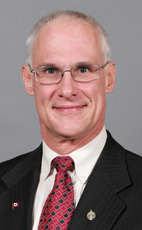
House of Commons photo

Crucial Fact

  • His favourite word was section.

Last in Parliament September 2008, as Liberal MP for Scarborough Southwest (Ontario)

Won his last election, in 2006, with 48% of the vote.

Statements in the House

Modernization Of Benefits And Obligations Act February 21st, 2000

Mr. Speaker, in the 10 minutes I am allotted I begin my remarks by acknowledging and thanking my government, the House leader and in particular the chief government whip for permitting me the opportunity to speak today. It is well known to them at least that I do not support the legislation as written and I am glad to have the opportunity to explain why.

I recognize that in the House most if not all members of parliament including myself have made up their minds. Most if not all the media has made up its mind on the issue and the courts appear to be making up their minds, so my remarks are addressed to my constituents.

I intend to reproduce these remarks in my spring householder. I want my constituents to know that I stand here today to represent their views as they have communicated them directly to me over the 11 years I have been a member of parliament.

I also speak today to those ordinary Canadians who may be listening and who have not yet made up their minds. I ask them to continue to listen to the debate carefully and objectively. I hope to some degree that I am speaking to future generations who may review these debates for historical or other reasons.

I cannot support the bill as written and therefore I cannot support it in principle. I will be moving amendments at report stage. If they do not pass I cannot support the bill at report stage or at third reading.

Why not? When I was discussing this issue with my colleagues, in particular with cabinet colleagues, I asked for three things before I could consider extending benefits beyond the benefits currently granted by the House. First, I asked for a definition of marriage to be enshrined in statute so as to protect it from judicial attack. I asked to extend the benefits based not on sexuality and sexual behaviour but on economic dependency. I also asked that there be full and complete debate in parliament including not invoking time allocation or closure.

There is no definition of marriage in Bill C-23. There is no extension of benefits based on economic dependency and there is a stifling of debate by invoking time allocation.

In my view the bill is fatally flawed for the following reasons. It uses the term conjugal to include same sex relationships. This is, quite simply, incorrect. The ordinary meaning of the word conjugal in the English language is as follows: “Of marriage; the right of sexual intercourse with a spouse; of the mutual relation of husband and wife”. To the question “why the word conjugal has been used to describe same sex couples” the justice department answers that the term conjugal has a meaning in law that is different from that in dictionaries. This also is simply incorrect.

What is the legal meaning of conjugal? It is:

Of or belonging to marriage or the married state; suitable or appropriate to the married state or to married persons; matrimonial; connubial.

The source of that definition is Black's Law Dictionary. As anyone who is listening will recognize, it has the same meaning as the definition in the English dictionary.

The justice department goes on to say that the term conjugal has been used for 40 years to refer to common law relationships. This is only half true. It has always, until very recently, referred solely to heterosexual partners in a common law marriage.

The meaning is now being expanded, first by activist judges such as those in the Court of Appeal of Ontario in the case of Rosenberg and in the Supreme Court of Canada in M v H, completely ignoring the contrary view stated by the very same Supreme Court of Canada in Egan and Nesbit. Therefore in my judgment and in my analysis there is a hidden agenda, namely to allow these same activist judges to eventually declare the current prohibition of marriages between same sex people to be unconstitutional.

On June 8, 1999, we passed a resolution in the House supported by the vast majority of my Liberal colleagues. I will only quote part of it, that parliament will take all necessary steps to preserve this definition. What definition? The definition of marriage.

I suggest this is a perfect opportunity to do what parliament has already voted on, that is to preserve the definition of marriage. How could it be done? Very simply by taking this omnibus bill which deals with 68 other statutes, adding the Marriage Act and including in the definition of marriage which the House agreed to in June 1999. According to the Minister of Justice there is no need to do this. If there is no need to do this then there is no harm in doing it, so why not put it in? On June 8, 1999, the Minister of Justice said in her speech:

The definition of marriage, which has been consistently applied in Canada comes from an 1866 British case which holds that marriage is “the union of one man and one woman to the exclusion of all others”. That case and that definition are considered clear law by ordinary Canadians, by academics and by the courts.

That is simply not correct. She goes on to say that the Ontario Court, General Division, recently upheld in Layland and Beaulne the definition of marriage. That was a majority decision of the court. If the definition is as clear in law as the justice minister says, why was it not a unanimous decision of the Ontario court? In fact it was not. It was, as she states, a majority decision, a majority of two to one. Why? It was because one of the judges said that it was perfectly acceptable to have marriage between same sex partners.

If the law is as clear as the justice minister says, why was that decision two to one? Why were there academics who supported that position in the Ontario court if, as the justice minister says, all academics in Canada agree with that definition? In fact this is not the case and the definition of marriage is being challenged on a daily basis.

Why not put it in this statute to stifle any further question and to ensure that the will of the House as stated on June 8, 1999, is dealt with? It is because there is a hidden agenda to permit the courts to attack it.

I see I have one minute left. That does not give me nearly enough opportunity to discuss the other points, but I do want to mention the questionable poll the government is using. I say questionable because it is only mentioning parts of it. I have the poll here. Let me read the final question that was put forward.

It has been suggested that benefits and obligations should not depend on relationships like spouses but on any relationship of economic dependency where people are living together, such as elderly siblings living together or a parent and adult child living together, et cetera. Do you agree or disagree with this view?

Seventy-one per cent of Canadians agreed that benefits should be given on the basis of economic dependency in the government's own poll, not on the basis of whom a person is having sex with.

I say on behalf of my constituents, 86% of whom have clearly told me that they dispute and do not agree with the Supreme Court of Canada decision in M v H, that we should protect the definition of marriage. If we are to extend benefits, let us extend them to everyone in a position of economic dependency and not on the basis of what they do in the bedroom.

An Act To Give Effect To The Requirement For Clarity As Set Out In The Opinion Of The Supreme Court Of Canada In The Quebec Secession Reference December 14th, 1999

Mr. Speaker, the hon. member is an experienced orator and debater. I take it he can confirm that the position of his entire party, the Conservative Party of Canada, is that a 50% plus one vote of those who vote will dismantle the country. If that is the case, how is it that we cannot change our own constitution on 50% plus one? Why is it that we need to have a much greater and clearer majority to change our constitution than Mr. Clark appears to want to have to permit the breakup of the country?

I ask the member, who is also a barrister and solicitor, if we are to take it that Mr. Clark disagrees with the Supreme Court of Canada that a clear majority is not required and that 50% plus one is all it takes to destroy Canada.

Divorce Act December 10th, 1999

Mr. Speaker, I will do as you suggest, of course. Just give me that ordering five beers signal, as my friend said earlier, and then a countdown on one so I know where I am going.

Unfortunately I am one of the statistics that my hon. colleague has talked about. I am separated from my wife and have been for over two years. There are no divorce proceedings instituted between us, so this bill would not help us in any way because this bill pertains to the Divorce Act.

This is one of the points I want to make. While lauding my friend from Mississauga South and all the efforts he has made with respect to the issues he is talking about, one of the problems with jurisdiction and the fact that the federal government has jurisdiction over divorce but not over family law per se is that by the time people come to use the Divorce Act, in many circumstances sadly it is already too late.

The hon. member exempts, for example, mental and physical cruelty from his bill. If there are grounds, for example, of adultery or some other matrimonial offence, people are so angry at that point they are not thinking about reconciliation. A one year separation is now grounds for divorce but when I was practising it was three years. By then in many instances it is too late.

The other thing I would like to mention very briefly about the reconciliation issue is that when the hon. member for Mississauga South was speaking, he was talking about this being for the benefit of children. It is absolutely critical that that principle be recognized, that it is for the benefit of the children.

In his bill the member talks about the marriage counsellor visits “with a view to assisting them to achieve a reconciliation”. I want to draw to the attention of the hon. member that there is in fact no mention of children in his bill. Perhaps it should read “assisting them to achieve a reconciliation and/or to facilitate the lives of the children with respect to the unfortunate break up of the marriage”. I draw that to the hon. member's attention because I know that is his primary concern.

Divorce Act December 10th, 1999

Mr. Speaker, I am pleased to contribute to the consideration of Bill C-235 today. I take perhaps a different and more personal perspective on this matter.

I should begin my remarks by saying that prior to becoming a member of parliament I was a lawyer. The bulk of my practice was civil litigation. A portion of that civil litigation practice pertained to matrimonial law. Within that matrimonial law sphere, I did my share of divorces. It was early in my practice and early in the experience of the Divorce Act newly passed. There were certain obligations placed on lawyers at that time and they are still in the act.

One of the members opposite characterized the duties of the lawyer as perfunctory. When I was practising law, I considered those duties to be anything but perfunctory. I thought they were very important.

It was my obligation as an officer of the court to bring to the attention of my client, who was either responding to a matrimonial situation or initiating it, that reconciliation counselling was available. I had to ask if the client had considered reconciliation counselling and more to the point, to provide the names of reconciliation counsellors, the names of arbitrators and that sort of thing in order to keep the peace within the breaking up family.

That is what I did—

Petitions December 2nd, 1999

Mr. Speaker, I have a petition signed by approximately 200 people, mainly from my constituency of Scarborough Southwest.

Their plea is specific. They petition the Government of Canada to take the steps necessary to enact into law significant increases in the maximum allowable sentences which may be imposed upon persons convicted of cruelty to animals. I note that we have acted on that.

Criminal Code November 17th, 1999

moved for leave to introduce Bill C-320, an act to amend the Criminal Code (offence committed outside Canada).

Mr. Speaker, currently section 6.2 of the criminal code specifies that persons are not to be convicted of offences committed outside of Canada. There are a few exceptions, such as war crimes, hostage-taking and the like.

My bill would amend section 7 to provide that everyone who commits an act outside Canada that if committed in Canada would constitute an offence under the criminal code, shall be deemed to have committed the act in Canada if he or she is a Canadian citizen, a permanent resident or present in Canada after the commission of the act.

The tragic inspiration for the bill was the true case of a husband and wife vacationing on a Caribbean island where the husband assaulted the wife. They were both Canadians living in Canada. They returned to Canada and the husband was not brought to justice for the violent act against his wife because it occurred outside Canada.

(Motions deemed adopted, bill read the first time and printed)

Food And Drugs Act November 17th, 1999

moved for leave to introduce Bill C-319, an act to amend the Food and Drugs Act (nutrition information on foods).

Mr. Speaker, my bill requires that all packaged foods, bulk foods and fruits and vegetables sold at retail to have to indicate the amount of certain nutrients that are in them, in particular calories, fats, transfats, cholesterol and the like.

The purpose for this is that there is currently no law requiring this information to be given to consumers and without a law manufacturers and packagers have been slow to educate consumers about their products. Consumers armed with this knowledge of the nutritional value of the foods they consume can make far more educated choices, helping them to improve their diets, their health and helping them to reduce serious illness.

(Motions deemed adopted, bill read the first time and printed)

Supply June 8th, 1999

Madam Speaker, despite the hon. member's previous comment which of course was unnecessary, I do want to compliment him for his passion on this issue. I know that he has very serious concerns in this matter.

I want to compliment him in particular because he has been consistent throughout his entire career here in the House of Commons in his position that this is the place to decide these issues. He has consistently indicated that it is the House of Commons that is to decide these issues, not the courts of Canada. I want to applaud him for that because he has been very consistent on it and I agree with him completely on that issue.

I want to ask him very clearly because he did not give an answer to the hon. member for Calgary Southeast. The official government position is that the term marriage is defined as the union of one man and one woman to the exclusion of all others. I would say that his speech was the perfect reason that we have to vote on this motion this evening.

I ask him very clearly, if the government's position is that the definition of marriage is clear in law, does he accept that law?

Supply June 8th, 1999

Madam Speaker, I am informed there are so many people on this side of the House who wish to speak that I will not have an opportunity to deliver a full speech. However, I will take the opportunity to ask a question or make a comment in respect of the very important debate we are having today.

I unequivocally congratulate the hon. member for bringing forward the motion. I agree with everything the previous speaker just said. It is absolutely critical that the House speak to this issue.

I have a couple of questions for the hon. member as I have heard a few incorrect statements made in the House. Would the hon. member agree there is no statute with respect to marriage that deals with the capacity to marry?

Would he agree that the only statute the Parliament of Canada has is chapter M-2 of the Revised Statutes of Canada which contains three sections and is called the Marriage Act? None of those three sections deal with the fundamental issue that a marriage can only be between a male and a female and only of a single male and a single female.

Would he agree with me that no statute in fact deals with this, that it is judge-made law, and that the problem is that if it is judge-made law judges can change it?

I have a second question about whether he would agree, for those who have been bandying about supreme court cases and in particular the case of M. v H., that the majority in this case said the following:

We emphasize that the definition of “spouse” found in s. 1(1) of the FLA, and which applies to other parts of the FLA, includes only married persons and is not at issue in this appeal.

In other words, M. v H does not deal with the issue of marriage and should not be used to cloud this debate. Would the hon. member agree with these two statements?

Public Sector Pension Investment Board Act May 11th, 1999

Mr. Speaker, I have four amendments in this grouping. I appreciate the opportunity to have 10 minutes to explain to the House some of the concerns I have with respect to the sections I wish to speak on.

I want to echo a number of the comments of the speaker before me. I commend him for some of the motions he brought forward, in particular Motion No. 23.

Motion No. 23 will bring clause 25 at page 51 back to the way it was. In other words it will be a return to status quo. That being the case I say outright that I will be supporting the motion. I agree that the matter has proceeded in undue haste and I think the motion is appropriate.

My motion, as I will explain in a moment, is a compromise to the motion put forward by the member for Calgary Centre on the chance that the House chooses to reject that motion and perhaps chooses to consider in some way my compromise. I will explain that.

I am concerned about clause 75 found at page 51 of the bill. I want to read it into the record. It refers to section 25 of the act to be amended. I pity the people watching on television who are trying to follow the clauses. However I hope to explain to the House my main concern. It reads:

(4) For the purposes of this Part, when a person establishes that he or she was cohabiting in a relationship of a conjugal nature with the contributor for at least one year immediately before the death of the contributor, the person is considered to be the survivor of the contributor.

As a lawyer I know that lawyers do not use language indiscriminately. They use language very carefully. I disagree with the hon. member for Calgary Centre who thinks that this section was drafted in haste and drafted poorly.

My view is that it was drafted very carefully and very insidiously by the justice department to continue its objective, that is its drive eventually down the road to force Canadians to accept same sex marriages and to change the law to require same sex marriages.

This is a very significant step down the road. Why? Let us look at the word conjugal. It has an ordinary English dictionary meaning. If we are speaking the English language as we do as one of the official languages in the House, we have to look at the ordinary meaning of the word conjugal. It is very simple. By the way I have checked it in French. It has the same meaning in French as it has in English:

Conjugal, of marriage; the right of sexual intercourse with a spouse; of the mutual relation of husband and wife.

That is its definition in the Oxford English Dictionary .

This is the section used by the government to provide for same sex benefits. Yet the word conjugal is known in the English language as pertaining to marriage and pertaining to the right of sexual intercourse with a spouse. Therefore it is an oxymoron to say that it deals with same sex couples because that is not a husband and a wife and it is not the sexual intercourse between spouses. Yet the word is used. It can only be used as the first step toward trying to ensure that the federal law is changed to permit same sex people to marry, which is federal jurisdiction.

What about the legal definition? Is there a difference? As it happens there is no difference, but I went to a very well known source, Black's Law Dictionary which deals with definitions of the terms and phrases of American and English jurisprudence, ancient and modern.

The definition of the word conjugal in Black's Law Dictionary reads as follows:

Of or belonging to marriage or the married state; suitable or appropriate to the married state or to married persons; matrimonial; connubial.

Then it provides legal citations for that definition. What does that mean? It means that both the ordinary English Oxford Dictionary definition and the legal definition of conjugal mean of marriage. It means relations between a husband and wife.

Why are the lawyers in the justice department using a word with such a clear English and legal meaning to justify the extension of same sex benefits to homosexual couples? There can be only one reason. That is to further the agenda and to push us down the road to the recognition of same sex marriages.

The allegation made by my own party is that we are simply keeping federal pensions in line with court decisions. I have three things to say to that. That is bunk. That is baloney. That is balderdash.

All we have to do is look at the Supreme Court of Canada decision in Egan and Nesbit which the government has ignored purposefully and which the Ontario Court of Appeal in Rosenberg grossly ignored and in my opinion improperly ignored since it was a higher court. Egan and Nesbit was a case in which the court was called upon to decide whether or not same sex partners could get old age security benefits. That is right on point with same sex survivors benefits here.

What was the decision of that court? It could not have been closer, which is rather interesting. It was a 5:4 split decision. Five of the nine judges were of the view that the definition of spouse in the Old Age Security Act contravened section 15(1). Four of the judges felt that it was perfectly acceptable. One of the five who felt that it contravened was prepared to use section 1 to permit the contravention. Why? Because, he said, the “government must be accorded some flexibility in extending social benefits and does not have to be proactive in recognizing new social relationships”.

Couple that with the majority decision, that is to say the decision of four of the nine judges. There were no other groupings of judges in the Supreme Court of Canada in that case where four of the nine were agreed. They said:

Marriage has from time immemorial been firmly grounded in our legal tradition, one that is itself a reflection of longstanding philosophical and religious traditions. But its ultimate raison d'être transcends all of these and is firmly anchored in the biological and social realities that heterosexual couples have the unique ability to procreate, that most children are the product of these relationships, and that they are generally cared for and nurtured by those who live in that relationship. In this sense, marriage is by nature heterosexual. It would be possible to legally define marriage to include homosexual couples, but this would not change the biological and social realities that underlie the traditional marriage.

They went on to say:

The singling out of legally married and common law couples as the recipients of benefits necessarily excludes all sorts of other couples living together, whatever reasons these other couples may have for doing so and whatever their sexual orientation. What Parliament clearly had in mind was to accord support to married couples who were aged and elderly, for the advancement of public policy central to society—

The advancement of public policy central to society is to sustain the traditional definition of marriage, and this will erode it.

On Egan and Nesbit the Supreme Court of Canada has spoken. Activist judges in lower courts did not like the decision so Rosenberg in Ontario chose to ignore it and went right ahead and decided their own way, ignoring a higher court.

The government examined the Rosenberg decision, realized that it was more in thinking with what it wanted to do with its agenda and with the agenda of the justice department and chose not to appeal it, thereby legitimizing what I would argue is a questionable decision.

I urge members of the House to consider rejecting the paragraph as it now is for no other reason than the legally improper use of the word conjugal. It will open up a Pandora's box of nightmares.