
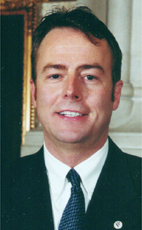
House of Commons photo

Crucial Fact

  • His favourite word was quebec.

Last in Parliament May 2004, as Bloc MP for Berthier—Montcalm (Québec)

Won his last election, in 2000, with 57% of the vote.

Statements in the House

Lobbyists Registration Act April 25th, 1995

Mr. Speaker, faced with a block of 22 motions like the one before the House today, I find it rather difficult to comment on every single one. What we have is two or three substantial motions, around which other motions have been grouped to provide more transparency, plus additional elements to achieve what Parliament has set out to do with Bill C-43.

To appreciate these amendments, including Motion No. 2, I think some background information might be useful to see what led Parliament to make this statement on influence peddling and lobbying. The Parliament of Canada has examined this question twice before. We had the Cooper committee's report in 1986 and recently, in 1993, we had the report from the Holtmann committee.

These committees looked into exactly the same aspects of lobbying as the present committee did today, in 1995. It is interesting to note that the Holtmann report published a series of recommendations, the first few being the most significant. These recommendations said, more or less, that for legislation like the bill before the House today to be truly effective, it would be necessary to remove all distinctions between lobbyists.

As you know, in the existing legislation, there are three types of lobbyists: the so-called Tier I and Tier II and a third group. There are in-house lobbyists, professional lobbyists and the others, organizations that lobby the government. The Holtmann committee concluded that lobbying was lobbying.

Whether people want to influence the government to obtain a contract, lower the rates in certain regulations, get a permit or obtain government assistance for their organization, this is all lobbying. People try to influence the government for their own purposes, for the benefit of the company for which they work or for the benefit of an association or whatever. In its first three or four recommendations, the Holtmann report said that distinctions between lobbyists should be eliminated.

I am sure you will remember this, Mr. Speaker. If I am not mistaken, the Liberals were to implement the Holtmann report from A to Z-this was a campaign promise made by the Liberals, by people acting in good faith, people who knew what they were doing in the enthusiasm of the moment-which means

that indirectly, and without exactly saying so, they made a commitment to eliminate all distinctions between lobbyists.

In committee, however, when I started to realize that Canadians had been fooled once again, I was very disappointed. I heard members who had been part of the committee that produced the Holtmann report say the exact opposite of what they signed when they tabled the report, with respect to these distinctions, for instance. There are a lot of other examples, particularly with regard to categories, which was the important element of the Holtmann report. It was not just anyone who was opposed. It was the people, who, today, hold fairly important positions in the government and who could influence it and talk it into meeting its campaign commitments.

But no. Throughout the whole time we heard witnesses in committee, some witnesses were in favour of eliminating categories, others were less so. The closer we got to the category of lobbyists capable of influencing government, in the back rooms of power, the greater the likelihood of their not really favouring the elimination of categories.

On the whole, however, the witnesses were in favour of greater transparency. We were sort of the guinea pigs in a new approach to examining bills and we were given a little more freedom. We were part of a pilot project, in a way, considering this bill under a new set of rules. We therefore did not adopt the principle of the bill at second reading, and, accordingly, we were able to broaden Bill C-43 from what the witnesses said and from the input of each of the parties. Members' work had to be given greater consideration, etc. It was all very fine.

Therefore, through a procedural swap and an exchange between members of the opposition and members of the government, we negotiated and we discussed, and I was ready to make a concession on the categories, so there would be only two instead of three. My first thought was to have a single category. However, it is better to bend a bit to achieve part of the desired objective than to risk missing it completely. So, I was ready to bend and to recommend to the members of the Bloc Quebecois that they support an amendment that would reduce the three categories to two. There would then be the category of in-house lobbyists (corporate) and professionals and the category of in-house lobbyists (organizations). All lobbyists would then be in two categories.

Before Christmas, this was accepted by just about everyone around the table. After Christmas, well, I do not know who had been making telephone calls, or what lobby had exerted influence or what, but everything was off. The amendments proposed to the committee were rejected by the government. Today, with Motion No. 2, the government could rectify the situation. Motion No. 2 now before us this morning is a carbon copy, or just about, of what I presented in committee in order to eliminate categories of lobbyists and have only one.

I do not imagine that anyone here has anything against lobbying per se. It does not matter whether organizations are non-profit or profit making, if they lobby in an attempt to influence the government, they have to abide by the rules.

To get approval for a single tier of lobbyists for all organizations, including community agencies, that is the purpose of clause 4(2) of Bill C-43, which I discussed earlier with respect to government initiative, which would eliminate people who might not agree to being recognized as lobbyists on the same terms as professional lobbyists. However, the government accepted the first amendment but did not accept what would have been consequential on the amendment, which was to have a single tier of lobbyists.

I have a few examples that will show why it is important-and when I say lobby, I mean lobby-to make C-43 a bill that has clout, that has teeth, as they say. There were organizations like MATRAC, for instance. I do not know if you remember this, Mr. Speaker, but when cigarette smuggling was going on in January and February 1994, there was an organization called MATRAC, a non-profit organization that sought to have taxes lowered. I have no objection to that. We in the official opposition were in favour of reducing these taxes. However, MATRAC initially gave the impression of being a non-profit organization. In other words, it worked for the benefit of its members and did not enjoy any immediate benefit.

It could be called a non-profit organization, which would come under the third heading in the bill before the House today. However, if we look a little closer at MATRAC, we realize that it was 100 per cent financed by the cigarette manufacturers in order to get taxes down. This is a clear instance of trying to influence the government on an important matter, tax revenues. Why have a separate tier for such a group? I am of the opinion that the act should deal with that by allowing a single tier of lobbyists. But no. I believe we must conclude that lobbyists on Parliament Hill have manged to influence the government with respect to a bill that was supposed to limit their influence. That is the obvious conclusion.

They made certain commitments with respect to the tier system before the election. Now they are in government, they can implement what they promised to do, but they are not doing it. In addition, that would explain why we could create just one category to make the process more transparent and to give everybody in this country the impression that they are all being treated equally. But no, the government did not do this. The lobbyists got involved, phone calls were made, and the Liberals buckled. They buckled like the Conservatives did and like others before them have done since Confederation. And they will keep on buckling until they are doubled over. I cannot wait to see the day that happens in the House. I mean I will no longer be in the House when that day comes, but will watch the spectacle from the outside.

One motion in this set of motions is extremely important, and that is Motion No. 7 regarding political affiliation. This is another amendment I proposed to the committee, and it would make it easier for taxpayers to identify which lobbyists are politically affiliated with the government or with any other party. For example, I helped organize party X's election victory. I would have to mention in my return that I contributed to the election campaign and that I was the political organizer of Mr. X or Ms. Y. I think that is what transparency is all about. What does the government have against making the process more transparent? I do not know. But if they were not against the idea, they would have included it in Bill C-43 and they did not.

I will conclude my remarks, for I see that my time is up. This is yet another good example of this government's double talk: one tune before the election, another after. Once again, taxpayers will have to foot the bill for this, and they still will not know why Bill C-43 was introduced, which was to make the process more transparent in order to obtain answers to our questions.

This has some implications for the Pearson issue. With Bill C-43, we will still be in the dark and will not know any more than what the newspapers have already disclosed regarding the matter. And that is deplorable.

Lobbyists Registration Act April 25th, 1995

Mr. Speaker, like my two colleagues who spoke before me, I will make a brief comment on the work done by committee members who considered this bill. I sat on the committee myself and attended most of its meetings. I followed proceedings very closely and listened to many witnesses. I can tell you that I am a little disappointed in the very partisan work done by government members.

The attendance record of the government members was not as good as that of the representatives of the Bloc Quebecois and the Reform Party, so that it was extremely difficult to agree and achieve one of the objectives, namely to reassert the value of the work done by ordinary members of Parliament through exchanges between government and opposition members.

When people opposite us keep changing from one meeting to the next, it is very difficult to resume a discussion or complete the arguments introduced one or two days before the last meeting. Yes, there were good exchanges at the committee level.

There is, however, room for improvement with respect to the attendance record of government members and how they could follow up the work done in committee.

With regard to the objective sought by Bill C-43, I think that no one in this House can be against it. True, taxpayers and constituents from across the country have lost some confidence in the government for several reasons. One only has to look to the past to find many reasons to lose one's confidence in the government. Bill C-43 is designed to ensure a certain level of openness, to show everyone what the power brokers in Ottawa are really doing behind the scenes.

In any case, the objective of Bill C-43 was to make all lobbyists-or influence peddlers as some people call them-accountable, to make their work on Parliament Hill more transparent, to show the people that, in the end, the government was justified in doing business with a given individual, in changing the regulations, in drafting a bill or anything else.

This goal is commendable and the opposition agrees with it. The reason we agreed to work with the government was to achieve greater transparency. However, the bill we are debating, Bill C-43, is very disappointing in that it did not achieve this goal. Today, I am doing the same thing I did at the committee stage, when I suggested a number of amendments to promote more openness and bring about the desired transparency. It is one thing to have a goal, but efforts must be made to achieve it.

I suggested a number of approaches-twenty or so-at committee level, but this government, government members who, by the way, had not even heard the evidence, attended our meetings and heard witnesses request specific measures, rejected every one of the amendments proposed by the Bloc Quebecois. They voted them down. Today, the government is given another opportunity to improve this bill through a series of amendments. We have 33 motions before us and I think that some of them would greatly help improve transparency, as Bill C-43 seeks to do.

I urge the government to give serious consideration to these motions, to review the goals it set in its famous red book during the election campaign and then to look at Bill C-43 in order to determine whether or not these goals were met. I am convinced that it will come to the conclusion that, indeed, they were not. Now, the opposition is offering to help the government achieve a goal it has set for itself during the last election campaign.

I must say however that Motion No. 1 may not be going in the direction that I just mentioned. Let me explain. I agree with the government that Motion No. 1 should not be passed.

We must set Motion No. 1 in context and see what changes it introduces. It amends clause 2 of the bill, that is to say section 2 of the present act, under definitions. It also affects subsection 4(2) of the act, under application, which specifies to whom the act applies and particularly to whom it does not apply, because I think arrangements have to be made so that citizens can contact the government. I think that honest citizens who are looking for information, want to express their views before our committees and act openly and publicly should not be restricted in their right to contact the government to make representations.

In fact, two exceptions to subsection 4(2) are already contemplated. The first exception concerns those who make representations before a Senate, a House of Commons or a joint committee. Several pieces of legislation are reviewed in committee, and it only makes sense that those who submit briefs and come to tell the committee what they think of a bill should not have to register. That exception is already included.

The second exception deals with the case of a taxpayer who phones a public servant to obtain an interpretation regarding existing legislation. Again, it goes without saying that the person should not have to register, nor state his reason for contacting the government, since it is normal to communicate with public servants to obtain details regarding legislation.

This amendment to Bill C-43, which the Reform Party wants to eliminate through its motion, would affect all those contacted by the government. During the review conducted by the committee, I referred to these situations as "government initiatives". Before awarding a contract or considering a specific measure, the government, for a number of reasons, usually contacts some organizations to get their opinion. It approaches various groups and asks them: "Do you have a problem with this legislation? Would you be in favour of improving it in this fashion? Would you be opposed to such a measure? What do you think?"

If an exception is not provided regarding clause 4(2) of this bill, people will stop providing such answers to the government. The witnesses heard by the committee clearly said that, if they have to comply with the provisions of Bill C-43, they, as officials representing mostly non-profit community organizations, will definitely stop providing opinions to the government and help it make choices. These people added that they would certainly not pay to reply to a government's request.

So, that amendment, which is just about the only one accepted by the government, should not be set aside right away. It should be reviewed, and I ask the Reform Party to really consider the purpose of this amendment, which is the only one which was accepted by the government following the review of this bill by the committee.

The amendment is very simple.

The bottom line is that any oral or written submission made to a public office holder by an individual on behalf of any person or organization will be exempt if it is in direct reply to a written request from a public office holder for advice or comment in respect of the specified provisions. Other clauses are also quoted to specify who the clause will apply to.

The wording of the clause now before us guarantees that the fears the Reform member just expressed will not be substantiated, that there will be no bending of the rules or attempts to get around the law, because everything will be done in writing. And I think that, under the Access to Information Act, we as taxpayers can obtain copies of this information. Therefore, we can check the public servant's request and the organization's reply because they will be in writing. This applies to a direct, written reply to a request.

Bill C-43 and the amendment proposed this morning, which the Reform Party does not support, would not exempt the information in cases where, following analysis or research, it was discovered that the public servant asked the organization whether it would support such and such legislation and it is obvious from the organization's reply that it would only support the government's proposal in exchange for such and such a contract or an amendment to such and such other regulation. Therefore, the organization in question would have to meet the requirements of Bill C-43.

Motion No. 1, as it is written, quite simply moves that the entire amendment or the content of clause 4(2) of Bill C-43 be removed, and I cannot support such a motion. This and all of the reasons stated above is why the Bloc Quebecois, the official opposition, will vote against Motion No. 1.

Canadian Security Intelligence Service April 24th, 1995

Mr. Speaker, how can the Solicitor General abdicate his responsibilities with regard to Grant Bristow's role as a CSIS source, when a report by the review committee considers that Mr. Bristow exceeded the mandate of a CSIS source.

Why is the Solicitor General making such an effort to hide Grant Bristow?

Canadian Security Intelligence Service April 24th, 1995

Mr. Speaker, my question is for the Solicitor General.

Last September, Michel Robert, spokesperson for the Security Intelligence Review Committee told the Sub-committee on National Security that he did not know what had become of Grant Bristow. The Toronto Star has uncovered him in Edmonton, complete with a new identity, a new house, two cars and an income of $3,000 a month, compliments of the Government of Canada and Canadian taxpayers.

Before providing Mr. Bristow with a new identity and sending him into hiding once again, would the Solicitor General acknowledge that Mr. Bristow must appear before the Sub-committee on National Security in order to fully clarify his role in the racist group Heritage Front and his infiltration into the entourage of the leader of the Reform Party.

Electoral Boundaries Readjustment Act, 1995 April 24th, 1995

Mr. Speaker, I will try to answer this question without commenting-I think there is a rule about this-on how Liberal members from Quebec voted.

However, as I said in my speech, if a member from from Quebec who was elected by Quebecers is truly here to defend their interests, that member cannot do otherwise but vote in favour of this motion which would guarantee 25 per cent of the seats. We did not ask for the moon. We did not ask for exceptional powers. We wanted this bill to recognize the fact that Quebec was one of the two founding peoples. It was that simple. It was easy to do. They could have put it in the bill.

I think the Liberals from Quebec understand this. They could have put it in the bill if they had done some lobbying, something Liberals are very good at. The members from Quebec could have lobbied their own caucus and their own ministers to include in this bill a clause mandating a group of parliamentarians to find a way to let Quebec have 25 per cent of the seats as requested by us, the Bloc Quebecois and by all Quebecers. But they did not. I think the answer to the question from the hon. member for Québec-Est is clear. I think the interests of Quebec demanded it and that they failed to act accordingly.

Electoral Boundaries Readjustment Act, 1995 April 24th, 1995

Mr. Speaker, it is an honour for me to speak again at the third reading stage of this bill on behalf of the official opposition, the Bloc Quebecois, the sovereignist party in Ottawa, on an issue as important as the act to provide for the establishment of electoral boundaries commissions and the readjustment of electoral boundaries.

I would like to explain in very simple terms to the people listening to us that this bill establishes regulations for future federal elections.

At first sight, this bill might seem of little interest to Bloc members. English Canada provinces could settle the matter among themselves since, when the next federal election is held, Quebec will probably be a sovereign country.

However, in October 1993, I was elected-I reiterate this fact because I know that my colleagues across the way like to hear it-first, to look after Quebecers' interests and, second, to promote sovereignty in Ottawa, as I often do.

However, in fulfilling the mandate of looking after Quebecers' interests, Bloc members must be vigilant. It is because of this vigilance that we are denouncing this bill, which goes against Quebecers' interests.

The process that led to the drafting of Bill C-69 went through Bill C-18, which was tabled in this House over a year ago. Bill C-18 suspended the electoral boundaries readjustment process then in progress for 24 months before a new debate on redistribution could start.

Unfortunately, the Reform Party objected to that bill and its proposed 24-month suspension. Nevertheless, the House, as we know, passed Bill C-18.

However, when the bill went to the other House, the hon. senators did the job that Reformers had initiated in this place. The other House included in Bill C-18 an amendment providing that a new bill must be tabled by June 1995 at the latest, or else the old legislation and the commissions suspended by Bill C-18 would be reinstated.

The bill before us has two objectives, the official objective and the unofficial one, which is just as important if not more so: to reduce as much as possible Quebec's political weight in this House.

Of course the strategy has changed. Since Lord Durham tabled his report, English Canada, the federalists have taken a different approach. The approach may be a more subtle one, but the ultimate goal has remained unchanged: the assimilation of Quebecers.

How can this be achieved? By failing to recognize Quebec, the people of Quebec, as a founding nation, by not recognizing its distinctiveness, by quashing their every demand and legislating to reduce the political weight of Quebecers in Ottawa by increasing the number of members from outside Quebec, members who will vote against Quebec and put Quebec in its place at the first opportunity.

But history has taught us that one does not have to come from outside Quebec to vote with the English Canada majority and against Quebec in particular. We need not think back very far indeed to realize that. I can see it happen regularly since coming to this place. I saw it again with my own two eyes during the vote at report stage, when Liberal members from Quebec ignored Quebecers' wishes and defeated a motion presented by the Bloc Quebecois to ensure that a minimum of 25 per cent of seats in the House of Commons go to Quebec.

Yet, this was a very simple motion and it read as follows: "Notwithstanding the foregoing, when by application of this subsection the number of members to be assigned to the Province of Quebec is less than 25 per cent of the total number of members in the House of Commons, the Chief Electoral Officer shall assign at least 25 per cent of the total number to the Province of Quebec".

Quebec's influence on decisions made in this House will not start to decline in 100 years, but immediately. In the next federal election, Quebec will no longer have the same decision-making influence, it will be smaller. The figures speak for themselves. Our numbers will be reduced, falling below the 25 per cent level of representation we have always had in this House. Never in the history of Quebec have members from Quebec opposed a motion to protect Quebec's legitimate rights, to protect its political weight within the Canadian federation.

What are we, members from Quebec, here for? What have we been elected to do? Every member from Quebec in this House, regardless of political affiliation-whether red, blue, yellow, whatever-was elected by Quebecers to look after Quebec's interests. This motion to ensure a 25 per cent minimum was designed to protect Quebec's interests and that is why we presented it.

We and all these other members have the duty to protect among other things Quebec's political and decision-making influence. The federal government ignored Quebec in this bill. The same way, Quebec will ignore Canada before long. When I see the government and the third party, the Reform Party, hand in hand, joining forces against Quebec, I know it is high time that we pack up and leave.

The Bloc motion would have guaranteed one quarter of the seats to one of the two founding nations of Canada, while also complying with the traditional and legitimate requests of Quebecers to preserve minimum political leverage within the Canadian federation. The attitude of the Liberal members is hypocritical. Barely three years ago, these same Liberals defended Quebec's right to 25 per cent of the seats in the House of Commons. Back then, they formed the opposition. It is strange how time changes things sometimes.

Given that attitude, many of the positive aspects of this legislation are eliminated. Members worked hard to come up with a bill designed to improve the whole redistribution process. However, their efforts were vain, since the government ignored some very important recommendations.

Had some specific provisions been included in it, this legislation could have sent an ultimate message to Quebecers. Instead, the government preferred to team up with the Reform Party to once again put Quebec in a vulnerable position. Nevertheless, as I said earlier, there are some positive aspects to this legislation and I will list a few.

For example, after a decennial census, the changes to the electoral map will be followed by a readjustment five years later, so as to avoid drastic changes in the electoral districts. This is a good change which fulfils a need.

The population of each electoral district will be allowed to vary by more or less 25 per cent from the electoral quota for the province. This is a minimum which, I think, had to be included in the bill.

Provincial commissions will have to hold public hearings before starting their work. Again, this is in response to a legitimate request made by constituents from every riding.

In determining electoral district boundaries, the provincial commissions will have to consider the community of interest, the size of each district, as well as foreseeable geographic changes. In a riding such as Berthier-Montcalm, which I have the honour to represent, the need for such criteria is obvious. Otherwise, we end up with ridings of 50, 52 or 60 municipalities. There has to be at least a certain sense of belonging and the bill ensures that this is the case.

Provincial commissions will have to submit three draft maps and hold new hearings if necessary. Again, this is very good.

As the hon. member for Kamouraska-Rivière-du-Loup mentioned, something had to be done. I am referring to the member's comments because he put the finger on an extremely important aspect of the issue. He said the following: "It seems to me that it is not simply a question of ensuring adequate mathematical representation but of ensuring adequate representation". These are two very different matters. Equity cannot be measured mathematically. If it could, we would fix the problem

on our calculators and save a lot of money. But when a riding is as small as six blocks of Toronto, Montreal or Vancouver versus 55 or 60 municipalities, like my riding, Berthier-Montcalm, should other criteria not be taken into consideration to ensure that the citizens of these ridings are as well represented in Parliament as those of urban downtown ridings in big cities?

The suggested changes addressed this issue, but, as I said earlier, the snub on Quebec that this bill contains is totally unacceptable. In fact, and I will close on this note, Bill C-69 gives no mandate in this area and it could easily have given one to some parliamentary committee. I think that it is not the means to resolve the problem of Quebec's dwindling representation in the House of Commons that is lacking.

Worse yet, Bill C-69 gives no guarantee that the continual reduction in the number of members in this House from Quebec will be halted. On the contrary, the bill maintains the formula set out in section 51 of the British North America Act, which results in a weakening of Quebec's influence within federal institutions.

You will understand that, as long as the people of Quebec have not made a decision on their future, which will certainly be in favour of sovereignty, it is very important that Quebec maintains adequate representation within federal institutions.

I disagree with some of the comments which the Reform member made and I think that, given that we are here to defend the interests of Quebec, we are here to play to win from within the system and we will do everything possible to guarantee Quebec minimum representation, and demanding 25 per cent is a way of guaranteeing Quebec a minimum impact on decisions made in this House.

We are not demanding this because they say we are going to lose the referendum, on the contrary, we are going to win it. However, I think that, at the very least, a member who represents the interests of Quebec had an obligation to present this motion, to guarantee Quebecers the 25 per cent we have always had since Confederation and which we will lose in the next election because of a Liberal government that failed to make any provisions for this in the bill.

All Quebecers, whether or not they agree on sovereignty, agree that Quebec should at least keep 25 per cent. And since everyone likes Quebecers or at least that is what they say, we should be able to get unanimous consent in this House.

I want to ask the Liberal members from Quebec and the government to rescind the previous vote so that we can have a bill that reflects the unanimous demands of Quebecers, including Quebec federalists with their stuffed beaver policy, as some radio commentators refer to Daniel Johnson's policy.

Even Liberal members from Quebec-and I see some members across the way who were in the National Assembly before and are very much aware of Daniel Johnson's political allegiance-even Mr. Johnson said yes, Quebec should have at least 25 per cent. I think Quebecers are unanimous on this.

I am sure there is some formula we could use in this House to rescind the vote at the report stage and include the motion presented by the Bloc Quebecois. I think that, all things considered, after everything we read in the papers and all the pressure on the Liberals across the way in connection with the Bloc's motion, which was entirely legitimate, I am sure there is some way to rescind this vote and guarantee 25 per cent of the seats for Quebecers.

Electoral Boundaries Readjustment Act, 1995 April 24th, 1995

Mr. Speaker, I listened in particular to the last part of the MP's speech. He knows his Canadian history. He knows the recent history of Quebec since Charlottetown and Meech. English Canada has said no to Quebec several times.

Does he not think that the people of Quebec, one of Canada's founding peoples, have a legitimate claim to this 25 per cent guarantee? I think that Quebec's request is quite modest. There is almost unanimous support for it, and I fail to understand why the hon. member from western Canada wants to completely ignore, under false pretexts, Quebec's legitimate request. I sincerely hope that he will explain the reason why.

Social Services March 31st, 1995

Mr. Speaker, I understand clearly that national standards are here to stay.

But given the government's policy regarding transfer payments, which will ensure that Ottawa will dictate these national standards and will reduce the provinces to mere administrative branches, are we to take this as another example of the flexible federalism so touted by the Liberals?

Social Services March 31st, 1995

Mr. Speaker, I would like to point out to the minister that he is adding conditions. This having been said, how can the minister justify that the provinces, to whom the Constitution grants exclusive jurisdiction over social assistance and education, will only play a consultative role regarding the determination of the new national standards?

Social Services March 31st, 1995

Mr. Speaker, my question is for the Minister of Intergovernmental Affairs.

At a time when the federal government is bragging about the new freedoms it is giving the provinces in the areas of social assistance and post-secondary education, Ottawa is getting ready to impose new national standards in these areas of provincial jurisdiction, actually restricting the freedom of the provinces and of Quebec.

How can the minister reconcile the statements he made yesterday that the 1995 budget in no way shows any readiness on the part of the federal government to impose more national standards on the provinces, when legislative measures introduced since blatantly encroach on the powers of the provinces and of Quebec in areas which fall exclusively under their jurisdiction?