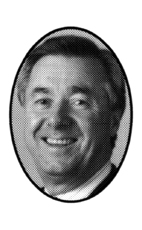
House of Commons photo

Crucial Fact

  • His favourite word was made.

Last in Parliament April 1997, as Liberal MP for Acadie—Bathurst (New Brunswick)

Won his last election, in 1993, with 66% of the vote.

Statements in the House

Student Loans And Scholarships June 13th, 1996

Mr. Speaker, we are neither intending nor in a position to force any province to change its policy on student loans.

However, I think that the vast majority of young people, in Quebec and elsewhere in Canada, would like the opportunity to study in the institution of their choice. This has been an honourable tradition in Canada for a very long time.

The only thing I can say to him is I have suggested and continue to hope that, in Quebec as elsewhere in Canada, men and women wanting to pursue their studies may do so with as much freedom as possible.

Kenworth Plant June 12th, 1996

Mr. Speaker, we are aware of course of the needs of these individuals and of their families. We have been following the situation closely. If we had accepted the fact that the plant had closed and that there was no possibility of starting it up again, I think that would not have been well received by most stakeholders.

Today, however, as I said in my reply to the hon. member's question, we are accepting our responsibilities in this situation, because we recognize, as does the union, the company, and especially the workers, that the end has now come. We are going to do everything we can to try to help these employees, who have been going through some very rough times for quite a while now. We will do everything we can to try to help them as quickly as possible.

Kenworth Plant June 12th, 1996

Mr. Speaker, the PACCAR issue is obviously a very difficult situation for workers and their families. I think we shared the hope of the hon. member and of many colleagues in this House that, perhaps, with the help of the Government of Quebec and the participation of the Government of Canada, together with employees and company directors, we could find a solution.

It is true that the closure was announced, but there was also a strike. In addition, there was also this hope that the industry could be started up again.

I can tell the hon. member today that it is with great regret that we see that it is finally true that PACCAR, as we knew it, is closed. As I said, it is a source of great regret, because we had always hoped that the industry could be started up again. Just today, in

fact, we have finally decided to accept the fact that the industry has closed its doors and that these people will be eligible for unemployment insurance benefits.

Day Care Services June 11th, 1996

Mr. Speaker, if the Government of Quebec and other governments change their minds and decide to participate in a national day care program, we are naturally quite prepared to sit down and negotiate with them.

In this particular instance, that is certainly not the case. If it is only a matter of transferring funds with no strings attached, then they will have to speak to someone other than me, because I am not in the habit of sending money anywhere without making sure the interests of Canadian taxpayers are protected.

Day Care Services June 11th, 1996

Mr. Speaker, the proposal put forward by the Government of Canada before last Christmas regarding child care is well known. It was indicated at the time that funds were available, should the provinces want to participate in a national child care program.

I do not wish to contradict Canadian Press, because it would be terrible to get into a debate with Canadian Press at this time about the content of the letters in question.

Not only did the provinces express reservations about a national program in their letters, some going as far as rejecting the idea, but we had the opportunity to meet all our colleagues from coast to coast and not one of them told us: "Yes, we have reached a consensus to go ahead with a national child care program".

That said, our position has always been that we can work in partnership with the provinces to find solutions to the real problems facing those who would like to see a day care system put in place to meet their needs.

First Ministers' Conference June 11th, 1996

Mr. Speaker, it is perfectly normal for the Government of Canada to want to maintain a presence in a many areas where the provinces may play a very important role.

To be sure, Canada is made up of provinces whose resources are quite different, and whose programs are not always similar. All we are saying is that we are there to represent the interests of all Canadians, including young Canadians. However, we want to recognize and respect the jurisdiction of the provinces in every case.

Seniors June 10th, 1996

Mr. Speaker, the hon. member has a unique way of looking at a situation that allows for the recovery of taxation from an individual with a certain level of income.

It is pretty hard to clawback middle income seniors and not affect people at the higher end of the scale. I am sure the hon. member in the wisdom he and his party exhibited over the weekend would find a way to achieve even that.

Seniors June 10th, 1996

Mr. Speaker, it is very unfortunate the hon. member is not paying attention to the process going on across the country. A group of people, including a member of Parliament who has been heading the hearings, has been meeting with provincial colleagues, with interveners and discussing the future of the Canada pension plan.

The hon. member suggested that somehow the government is looking at squeezing one group more than another. The whole idea of the Canada pension plan is that it works for everyone.

We know how the Reform Party would like to squeeze seniors. It would like to get rid of all pension plans and have people go to mandatory RRSPs. That would be the big squeeze.

Employment Insurance June 10th, 1996

Mr. Speaker, it is difficult to have it both ways. If the employment insurance fund is to be self-sustaining, which in fact it is, because when it falls into deficit the government is required to cover that deficit. The government and the taxpayers are repaid as the employment insurance fund recovers. That has been the case over the last year where the deficit was finally cleaned up and now we are moving to a surplus position.

Unfortunately, neither actuaries, governments, the private sector nor labour, for that matter, can predict exactly the requirements of the employment insurance fund. It depends on the situation that prevails in the economy at any given time.

The only thing we can do is try to be prudent. I understand the hon. member's point with respect to the surplus. We have to be careful not to let it increase beyond reasonable proportions.

As I indicated in my answer to his first question, I do not think the hon. member or anyone else would like to see us go back to a situation where in a recession, in addition to having a major drain on the employment insurance fund, the government would have to increase the premiums to try to reduce that deficit position.

It is always difficult to find a balance but as usual we will try to do the best we can.

Employment Insurance June 10th, 1996

Mr. Speaker, the Minister of Finance and myself have said on a number of occasions that we are aware that through a series of events we are now moving to a surplus position in the EI account.

My hon. friend would know that a year ago, two years ago, three years ago quite the opposite was the situation. The last thing that the hon. member would want is to have a repeat situation of when we were in a recession with very high levels of unemployment and we were then faced with increases in the rate for premiums.

We are trying to make sure that we can set a level for a surplus in the EI fund that is consistent with the historical trends in that fund. We will be paying close attention to it.

I am sure that we will be able to satisfy the hon. member's concern about making sure that we have a sufficient reserve in the fund but also be able to address the whole question of payroll taxes, including premiums for employment insurance.