
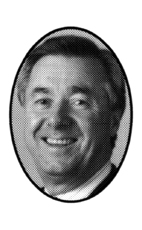
House of Commons photo

Crucial Fact

  • His favourite word was made.

Last in Parliament April 1997, as Liberal MP for Acadie—Bathurst (New Brunswick)

Won his last election, in 1993, with 66% of the vote.

Statements in the House

Employment Insurance June 5th, 1996

Mr. Speaker, I think we have to be very careful when we speak. Whether they are Canadians with disabilities or not, one has to recognize that Canada, as a federation, is very much a patchwork.

Provinces deliver the educational programs made available to Canadians whether they have disabilities or not. The same thing applies to health programs, rehabilitation programs and vocational training programs.

I understand and I hope that we will be able to find a mechanism, in co-operation and consultation with the disabled community, that will allow us to maintain that national visibility, and make sure that these problems are addressed.

The community affected by the changes taking place will also have to make its voice heard by the provincial premiers and their governments. It should not keep coming to the Government of Canada looking for leadership when the services are being delivered to a very large degree by the provinces, as has been the case in the past. We have to make sure we are all working co-operatively to try to find appropriate solutions for the disabled community, and for that matter for all Canadians who have needs in areas where services are delivered by the provinces.

Employment Insurance June 5th, 1996

Mr. Speaker, the hon. member will know I am appearing before the committee this afternoon which is charged by the House of Commons with matters relating to Canadians with disabilities.

With respect to the question of funding, as the hon. member knows, the Government of Canada in the speech from the throne and on a number of occasions has indicated its intention to withdraw from the area of manpower training.

One thing we will have to determine in our conversations with representatives of the disabled community is how we can achieve the objective demanded of us by the provinces to withdraw from labour training but still ensure persons with disabilities are taken care of, as well they should be and as I believe they should be.

When the hon. member asks me how I envision the responsibility of the Minister of Human Resources Development, it is our responsibility as a national government to make sure those individuals who need assistance, help and support receive it. In our negotiations with the provinces we will ensure that.

Manpower June 4th, 1996

Mr. Speaker, from the question put by the hon. member, we can see how complex this whole issue is. We will have to work together and co-operate to find ways not only to spend the money allocated for these programs but also to determine how we are going to go about it.

In the commitment made by the Prime Minister and the government and the proposal made to the provinces, our goal is to work in good faith to try and find ways to ensure that the money spent goes to help the clients, which is after all the whole purpose of this exercise.

Manpower June 4th, 1996

Mr. Speaker, when we address an issue as complex as the one the hon. member just raised, we realize that there will always be discussions about the money involved.

We can talk about the $2 billion announced when the proposal was made to the provinces, but there is also the $500 million paid to passive recipients of employment insurance.

There are also the programs financed by the consolidated fund. There is no doubt that in the weeks and months to come, if agreements are reached with the provinces, the negotiations over the money to be transferred will be quite tricky.

I believe that with some good will and transparency-because we will clearly indicate the money allocated to each program-not to mention that the provinces will insist upon it-we should be able to reach an agreement acceptable to all concerned.

Employment June 3rd, 1996

Mr. Speaker, I cannot tell you how disappointed I am that the usually clear thinking and very careful member would raise a question in the context in which he did. As usual, Canada finds itself reasonably well positioned in a very difficult matter.

The member referred to two countries: Germany and the United States. He is quite right. In the United States the unemployment rate is below that of Canada and in Germany the unemployment rate is considerably higher. The unemployment rate is significantly higher in Germany.

We try to balance between systems we see in operation in other parts of the world. The puzzlement the hon. member refers to was the puzzlement that faced all of the ministers who were present and who are grappling with the unemployment problem that ranges from 3 per cent, which is considered to be a problem in Japan, to the 5 or 6 per cent in the United States, to 9.6 per cent in Canada and to well into double digit unemployment in the nation the hon. member just referred to, Germany.

Employment Centres June 3rd, 1996

Mr. Speaker, one of the concepts we have found very attractive in the discussions we have had for months and even years is the single window concept, a way to work together in co-operation.

We do not intend to impose anything on the Government of Quebec regarding the way it would want to manage the aspects of the employment insurance program that would fall under its jurisdiction. However, I am also convinced that, in this same spirit of co-operation, the Quebec government would not want to impose anything on us with regard to our part of the program.

Employment Centres June 3rd, 1996

Mr. Speaker, there are always decisions that are difficult to make. As the member knows, the Canadian government still intends to pay employment insurance benefits to the beneficiaries of that program in the years to come.

However, we have also made a commitment in the budget and said repeatedly that we had to be efficient and try to do things in the most intelligent way possible. That is not easy. There are always people who are unhappy when we have to relocate offices or to downsize, but, in the end, the important thing is that we must be able to provide services to our clients in all the regions, and we are confident that it is always the case.

Manpower Training June 3rd, 1996

No, Mr. Speaker, but I can tell the House that, in many cases, the money will come from the employment insurance account. The consolidated fund is used to finance other programs. Also, many of the programs are implemented for a specific length of time, whether it is one, two or three years. That is certainly the case for some of the youth programs that, even before we released our proposal last week, had a deadline.

We will not change our minds at this point and say that we will extend them. If, for some reason, we have to transfer to the provinces some of the funds already provided for in the estimates or the budget, then we will certainly be ready to negotiate these payments.

Manpower Training June 3rd, 1996

Mr. Speaker, I do not want to guess as to what the outcome of all these negotiations will be. However, with regard to the Experience Canada program, we do have other partners, including some major stakeholders from the private sector.

For now, we expect to remain responsible for the management of these programs. As I told the Leader of the Opposition, if agreements are reached with some provinces that accept everything we have to offer at the negotiation table, we will, of course, respect those agreements.

I am convinced that, in some cases, in some provinces, for whatever reason, maybe because they do not have the network or the resources needed to deliver these programs, we will still want

the private sector or other organizations to get involved, including the Council for Canadian Unity.

I want to stress the fact that, for the provinces that have the capacity or the willingness to take on responsibility for the management of these kinds of programs, then, of course, the programs will be managed pursuant to the agreement reached during the bilateral negotiations.

Manpower Training June 3rd, 1996

Mr. Speaker, obviously, we want to continue to ensure that young people and others affected by the operations of my department will continue to receive the services they need during this transition period.

Obviously, for this year, at least in the next few months, we will have to continue to manage these programs. Clearly, however, we are prepared to put on the table all the items we proposed and were prepared to negotiate with the provinces, depending on the point in time negotiations are concluded and on the content of the agreements.