
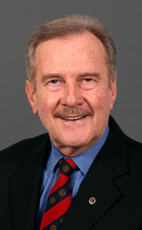
House of Commons photo

Crucial Fact

  • His favourite word was respect.

Last in Parliament March 2011, as Liberal MP for York South—Weston (Ontario)

Lost his last election, in 2011, with 33% of the vote.

Statements in the House

Committees of the House April 20th, 2007

Mr. Speaker, I remind those who have been following this debate what we are speaking to in order to draw the total context for the comments I will make.

We are talking about the Standing Order with respect to the committee's report on justice and human rights and a motion that came out of committee with respect to the contribution that ethnocultural communities can make to the prevention of crime and so on. It has been emphasized through this debate that crime is not relegated to the ethnocultural community. Crime is of concern to all communities across the country. The issue before us deals with finding the best ways to respond to crime.

There have been broad discussions on other days with respect to the criminal justice system. I will not speak on that side because the other side of the debate with respect to the prevention of crime deals with programs and targeted strategies. Nine times out of ten they are programs to support our educational systems, our boards of education, our policing agencies, our community-based organizations across the country.

I am sure the House appreciates the comments made by the parliamentary secretary. This broader issue of crime prevention is the subject of a round table, consisting of people from all walks of life and all cultural organizations. It crosses every particular part of our communities needs. Strategies and suggestions will be coming out of that round table.

I will emphasize from my perspective as a member for a constituency that is very needy. I do not know whether we can conclude that home ownership is an indicator of whether there is more crime or less crime, but it probably is one indicator with respect to poverty. I think we can all conclude that poverty is an important root cause of criminal activity, especially in young people. While my colleague has indicated that 85% of the people in his riding own their own homes, in my community of York South—Weston 31% of people own their homes. If this is an indicator of the distribution of wealth, we can see that both parts of the spectrum represented.

While that may be an indicator of poverty, in my particular area crime rates are below average, which means something must be happening to make people take some carriage in ownership of the issues that lead to criminal activity. We have very strong citizen involvement in community based organizations, and that is absolutely critical to the prevention side of dealing with the symptoms and the reality of crime in our communities.

I want to take this opportunity to outline three areas. I think common sense and practice have convinced us that these are the areas in which we can support police, community based organizations and educational institutions, all those who either in their jobs or as volunteers people want to be active in their communities. The areas are seasonal employment, apprenticeship-type training and sport. It seems an understatement to suggest that whatever strategy comes forward, those are fundamental areas in which we should invest.

I will speak to those, but I want to show, because of our corporate memory lapses and our fundamental loss in wisdom, how we probably do things inadvertently that undermine our capacity to respond.

I will talk about the apprenticeship training programs that had been worked out, and there was continuity from the last government to this government. However, I believe there was an oversight in the last budget and key programs were not supported. In the area of apprenticeship training in the trades, there is a crying need across the country for young people to be trained in the trades. Where there is youth at risk, they should be involved in pre-apprenticeship training.

In my area of York South—Weston in the greater Toronto area, and I know there are parallels in other provinces, the trade union councils and union members work together with the boards of education to develop pre-apprenticeship and apprenticeship training programs. To assist them, there was the apprenticeship infrastructure training program. This program allowed boards of education to invest in tools, supplies and equipment, which were in keeping with the changing technology in the trades, and to train young people, either in a pre-apprenticeship program or in an apprenticeship program, to engage and become part of the mainstream of life in our community.

Believe it or not, as obvious as it should be but as a surprise probably to members of the government, the apprenticeship trades infrastructure program was suspended. There no longer are those funds or investments going into partnership programs, which were serving very well both youth at risk and young people who wanted to engage in trades across the country.

When we talk about developing partnerships, we know how hard and long it takes to do that. Those programs in apprenticeship training were not carried by government. In this case they were carried with incentives provided by government, picked up by union members and labour within the trades and complemented by the space made available in the schools, particularly in my riding of York South—Weston.

It was a program that had the capacity to become very effective, and was very effective, to ensure that youth at risk did not fall through the cracks of the system and become those who would be exploited by gang activity or by those who would exploit them for nefarious purposes. I use that as one illustration.

The second is seasonal employment. All of us for years have been using the student and summer employment program. MPs were working with community based organizations, ensuring the mentoring was taking place in solidly managed volunteer organizations, which were deploying young people very effectively in working with youth. In my area the For Youth initiative was one example of that. It also worked with seniors and shut-ins who were virtually abandoned in their apartments and homes. That program was cut back. I use it as another illustration that inadvertently, possibly innocently, we lose one of the basic ingredients for mobilizing communities and dealing with young people who could be subject to exploitation by those who are involved in gang and criminal activities.

The final thing is sport. My friend from Prince Albert has introduced his bill, which was unanimously taken by the House.

I have a letter from members of my community, and I am sure this is typical across the country, who are volunteers working with young athletes. They point out that even when they get accreditation through sports organizations, they have to pay a fee through Athletics Canada when they want to participate in national and international competition. In many cases, those volunteer organizations have to try to raise that money so these young people can compete, either interprovincially or on behalf of their country

I think conventional wisdom tells us that there are three ways to meet the objectives of this motion to deal in an effective way with criminal activity: to invest in communities, to invest in volunteerism and to bring our communities together.

I hope all members of the House are conscious of how through these examples we can do better.

John Roberts April 20th, 2007

Mr. Speaker, I rise today to honour John Roberts, who lived the life of an academic, diplomat and member of Parliament. Mr. Roberts passed away last week at the age of 73.

Born in Hamilton and later a resident of Toronto, John Roberts had a passion for the arts and the environment and was truly ahead of his time. He was both elected and defeated in the ridings of York—Simcoe and St. Paul's on three separate occasions. Whether in victory or defeat, his approach toward a sustainable environment and his support for a vibrant cultural community was the bedrock of his every campaign.

During the repatriation of our Constitution, the hon. John Roberts was an irreplaceable colleague to Prime Minister Trudeau. He lobbied British parliamentarians on the idea of a Canadian constitution and briefed the prime minister on how it could be achieved. As minister of the environment, he successfully drew the Americans into the battle against acid rain.

I am sure that this House will join me in saluting a remarkable Canadian, a great parliamentarian and a man who led a truly extraordinary life. Our friend and colleague John Roberts was kind, and one of a kind. He will be greatly missed.

Canadian Cancer Society March 30th, 2007

Mr. Speaker, April 1 marks the beginning of two major annual fundraising campaigns for the Canadian Cancer Society: the Residential Campaign and Daffodil Month.

Volunteers across the country will be knocking on the doors of Canadians, inviting them to participate in the fight against cancer. An estimated 153,000 new cases of cancer and 70,000 deaths from cancer occurred in Canada during 2006.

On the basis of current incidence rates, 38% of Canadian women and 44% of men will develop cancer during their lifetimes. On the basis of current mortality rates, one out of every four Canadians will die from cancer. These figures are astonishing and should sound the alarm for Canadians to join the fight against this major killer.

Thanks to the generosity of donors and the work of volunteers like Linda Paternostro, Vince Lombardi and Rina Camarra in York Centre and York South—Weston, the Canadian Cancer Society is actively preventing cancer and working toward a cure.

With the help and generosity of Canadians, we can make cancer history.

Quarantine Act March 29th, 2007

Mr. Speaker, I am going to address the Quarantine Act within the context of both its urgency and its relevance in terms of the concerns of Canadians.

I do not see this as just a normal technical amendment. I think that Canadians view their members of this House as their last bastion of support when it comes to protecting them against the kinds of epidemics that are global in nature, pandemics that are possible at any time, and against the magnitude and enormity of the issue with respect to possible pandemics and how they would affect our society. I think it is important that from time to time we assure Canadians that we do not take this trust for granted.

To give this a little context, it has been my experience in the House that nothing is self-evident. I remember when, in the name of making our electoral system more accountable and more secure in terms of those who might abuse it, we had a huge debate here when amendments were made to that electoral system as to whether it was a right to privacy to have one's age kept secret. We spent many hours on that. That was in looking at our basic democratic process of a vote in making sure it was secure against those who would abuse the franchise. We spent hours on whether it was an invasion of privacy for age to be one of the necessary requirements in order to make the system secure.

I do not mean to digress, but that was an example of where we spent a great deal of time on what could have appeared to be a technicality. That was to protect the right to privacy of individual Canadians.

However, this particular amendment is much more than just elementary and technical in nature. What it does is that if there was not an accountable regime in place it could place at risk our whole concept of human rights, the rights under the charter. With respect to border security where challenges are made, there could be a period of time, whereby under the old Quarantine Act a great deal of harm may have been done while legal technicalities, not medical ones, were being used as the parameters for assessment. That might be critical in terms of the potential harm that might be done at a border crossing.

To give a little context for those who may be listening, the objective of the bill is to create at the border two new classes of inspection, so to speak, and two new classes of officials: environmental health officers and screening officers. These officials, along with quarantine officers, would make the decisions based on total information that is available to them as to whether someone should be detained and in fact put in quarantine because of a possible risk to society. That is a very incisive and deep intrusion into what we have been used to having in terms of the flexibility to move across borders and within the global community. It has become a more urgent matter to deal with.

The amendments that are being provided have a history. When the SARS epidemic occurred, the government of the day saw fit to bring together the best health specialists in the country. In 2003 we established the National Advisory Committee on SARS and Public Health. That was placed under chairmanship of an esteemed Canadian, Dr. David Naylor.

That particular committee made some recommendations. One of the fundamental ones is what provides the root of the government's amendments today, that is, to set in place these two classes of health officials and to work in close concert with provincial public health officials in order to tighten up the Quarantine Act and in order to take immediate action and not get embedded in technical, legal and more immigration related issues.

It is hard to believe that back in 2003 Dr. Naylor and his associates and colleagues were reviewing an act that had not had any substantive amendment since 1872 or 1873. I am sure that Canadians are going to be extremely surprised with respect to that, especially if they draw the broad context of how much medical challenges have changed from 1873 to 2007 and the experiences we have had with respect to pandemics.

If this were characterized in terrorist terms, and we indeed have been more shocked in terms of our susceptibility to acts of bacteriological terrorism and so on, if that were the issue, there would not be anybody who would apologize for standing up in this House and talking about that particular threat and having a substantive debate on the views that would be put forward by this government or any other government. All parties would be interested in that.

This is another aspect of what could constitute not terrorism but an international and global threat, whereby we have to bring our institutions up to date and have the capacity to respond to a very wide variety of threats. My colleague has expanded the debate to some extent. I do understand the concerns that he has raised and I do not think this debate is finished. There will be many other opportunities to expand the nature of the Quarantine Act in keeping with what Canadians' expectations are of us.

I would also just like to mention that I heard one of the speakers suggesting that to some extent we are violating provincial authority and so on. Canada, the federal government, has absolute responsibility at borders. We have heard a great deal of debate with respect to new security measures that our American friends are bringing in, but I have to say that here in the province of Ontario there is a major initiative to update our public health card to include a picture and the necessary information in keeping with the complexity of health care, health related issues and so on.

Therefore, it should not be any surprise that, while this matter of provincial jurisdiction and public health is important to keep in mind, it is important to strengthen the bridge of federal cooperation with provincial public health authorities in terms of the whole matter of quarantine.

That is important, because it would seem to me that in the regime that clicks in at the border when there is a detention because of issues related to health risk, provincial authorities are going to be extremely important in the health care system in terms of the follow-up that takes place with respect to those who are coming from other countries who may be returning to Canada, those people who have visited other countries and who may have been exposed to a health related risk. It is the total health care system, not just the federal Quarantine Act, that is being integrated by this amendment to the Quarantine Act.

I would like to close by saying that Canadians expect us, as a matter of accountability and responsibility, to make sure that there is no part of health care or the international regime that is loose and open, and that it is totally tight and coordinated with respect to global threats that may come as a result of health implications.

I think the government should be congratulated for bringing Bill C-42 forward, because it maintains the continuity that was established by a previous government, and this is not a partisan issue. Every single Canadian would agree that it is in our higher interest, in the common interest and the public interest, that on matters of health we work closely together and make sure that Canadians can rest in the notion that we are doing the job they want us to do with respect to health and the possibility of pandemics in this country.

Louis-René Beaudoin March 27th, 2007

Mr. Speaker, 2007 marks 50 years since the culmination of the historic and raucous pipeline debate in this very House, a debate that was presided over by Speaker Louis-René Beaudoin. The House was so moved by debate that it witnessed members pouring into the aisle and saw one hon. member climb the Speaker's dais while shaking his fist at Speaker Beaudoin.

As Speaker Beaudoin carried out his difficult duties with grace and aplomb, he was assailed by all sides of the House. When he made an unpopular ruling, the harassment from all sides was so great that he tabled his resignation. Prime Minister Louis St. Laurent, respecting him so, refused to accept it.

Even though his reputation was seriously affected, he won re-election. After his political career ended, he was unable to find fulfilling work. He drifted from job to job and eventually died unheralded at the age of 57.

On reflection of Louis-René Beaudoin's distinguished career, we should all strive for more civility in our debates and a higher degree of respect for each other. We should always remember those like Louis-René Beaudoin who have stood before us in the House and have so ably served Canada.

The Budget March 20th, 2007

Mr. Speaker, I want to ask my colleague a question. For all the years that I have been in the House, he takes the opportunity to go to a recurrent theme, which is employment insurance. In his particular area, I know, micro business and the opportunity for seasonal employees to start their own businesses is a very attractive inducement.

There is nothing as a strategy, which would look at areas like his constituency, his region and his province, that is an inducement to workers to work through co-ops or the tax system, and they are continuously taxed at a higher level with respect to employment insurance. I wonder if he would like to expand on that, because there is a huge absence in this budget of anything that would come close to meeting the needs of workers in his particular area.

The Budget March 20th, 2007

Mr. Speaker, I know this House and myself personally hold the member in very high regard. His explanation with respect to the fiscal deficit is probably one of the most logical and circumspect ones that I have heard. However, there is one area that bothers me in terms of this budget and it has more to do with the spirit with respect to the relationship to cities and municipalities.

A partnership was developing with the federal government based on the recognition that the very objectives that the member outlined, in terms of cities and communities, could be best met by working in partnership with those levels of government. The treasurer had indicated that it was time for each level of government to look after their own knitting.

Does the member agree with that particular perspective and does that mean that those partnerships that evolved in a non-partisan way are being abandoned and that we will not be able to get on with governance within this federal system that will serve the interests of communities across the country, in particular with respect to the social and infrastructure objectives that the member has outlined?

Canada Pension Plan March 19th, 2007

Mr. Speaker, I know that members of the House who have listened to my colleague have huge respect for his knowledge with respect to the guaranteed income supplement and those situations that seniors find themselves facing. I would like to take advantage of his knowledge and have him answer a question that has been asked in my office many times this week.

While keeping in mind those aberrations that occur under the Canada Health Act, how is it that in the province of Ontario there is what amounts to a tax on the health care premium? I know seniors who are much below the poverty line and they are being pressed because their taxable income finds that they actually must pay on their health care premium in the province of Ontario. How can that happen under the Canada Health Act?

Business of Supply March 1st, 2007

Mr. Speaker, my question for the minister is similar to the one I asked the Bloc.

The intent of the motion is to make sure there is an equitable distribution of value added coming out of the contract. I think we all agree that right across the country there can be a tremendous impact on small and medium size businesses, on their operations and creating jobs and employment activity. It is really important that those percentages to which the member alluded are implemented through the contract.

What checks and balances are there to follow up in an auditing fashion to make sure that the government's intent for procurement is equally distributed according to those percentages that the government intends to see implemented? Could the minister give us a sense of what the follow-up will be to make sure there is value added equitably right across the country, especially to small and medium business?

Business of Supply March 1st, 2007

Mr. Speaker, I am sure the House is very aware how important it is for there to be economic value added that is equitably distributed, especially when there are procurement contracts in the magnitude of the contract with Boeing that has been alluded to in the House today.

The member talked about the maximum economic benefits and the difficulty in applying an equitable formula across the country. He cited Ontario where one firm, Magellan in Mississauga, is a prime beneficiary of this contract.

The legislative amendment the member has proposed does not really come to grips with the very difficult issue of what constitutes equity, what is the formula with respect to equity. I am sure that the people who work at the plant in Mississauga would feel that the small portion that the plant is getting is part of that equitable return that they have a right to expect.

I would ask the member how the legislation could be amended further to be more specific with respect to how to apply this concept of equity with respect to maximum economic benefits such that all taxpayers get a fair shake on these kinds of government contracts?