Madam Speaker, the member is being hypocritical, which is so typical of that member, and that word is not unparliamentary.

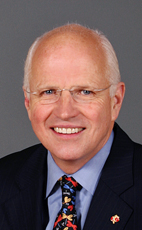 House of Commons photo
Won his last election, in 2008, with 58% of the vote.
Committees of the House November 3rd, 2004
Madam Speaker, the member is being hypocritical, which is so typical of that member, and that word is not unparliamentary.
Committees of the House November 3rd, 2004
Madam Speaker, please remind me what word I used that was unparliamentary. I do not recall using any language that was unparliamentary.
Committees of the House November 3rd, 2004
Madam Speaker, I rise on a point of order. It is not very often that I come to the defence of the NDP, but that was absolutely unparliamentary coming from that member, the biggest hypocrite of all on the Liberal side of the House on this issue. He should sit down in his place and behave himself.
Committees of the House November 3rd, 2004
Madam Speaker, what a bunch of hypocrites to pretend that they want to deal with the hepatitis C issue. The minister stood in this place last night and said that he wanted some closure to this issue by doing the right thing.
I want the member for Winnipeg North to comment on how hypocritical the government and Liberals members are to pretend they want to do something and then at the end of the day do absolutely nothing.
Committees of the House November 3rd, 2004
Mr. Speaker, the minister is very clever in his use of words. I guess that is the basis of my argument.
Only Liberals could applaud a statement like that. I said he was clever in his use of words and his use of language. The truth of the matter is the file has always been in the hands of the government. The government is the one that set the parameters of the program when it set up an artificial date to compensate victims from 1986-1990. That was deliberate on the part of the government.
The government chose to pick those dates and when it did that, it flew in the face of Justice Krever who said that all victims, regardless of when they contracted hepatitis C, should be compensated. The government knew that the $1.2 billion it set aside would never be used. In fact the legal, actuarial and administration fees have outstripped payment to the victims. Only a Liberal could agree to a program like that.
We are talking about fairness to all victims. For the minister to stand in his place and say that it is no longer in the hands of the government, it never left the hands of the government. It is in the driver's seat. That is why it was elected to form the government. Canadians had some level of confidence that it would do the right thing, but it has failed on this test time and again.
The minister was not in the House. He preceded you and I, Mr. Speaker. He took a little vacation and came back. He missed the intensity of the debate in the House in 1998, when the government had a chance to do the right thing. We brought in a motion to do exactly that, to compensate all victims. Guess what happened? The Liberal government, of which he is now a part, voted down compensation for all victims.
You will remember, Mr. Speaker, because you have a great memory for this place and I give you full credit. I always enjoy it when you are in the chair because you take such an interest in debates like this. The history of this place will show that Liberal members stood in their places and voted against that compensation package with tears in the their eyes. That is correct. In fact the Minister of Public Safety today is one of those members who stood in her place and was forced by the Prime Minister of Canada to vote down a compensation package for all victims. What does that tell us about the sincerity of the government to do the right thing?
Why does it not put its good will to the test. Why does it not come back to the House and have that same vote. Last night we had a take note debate. Where else in Canada would one have a take note debate? We come in and politely discussed something. However, all Liberal members should get up and be forced to vote on this issue, whether they agree to compensate all the victims or continue to carry on the way they have.
To add insult to injury there is almost as much money in the fund today as there was the day that the funding was announced. There is a reason for that. I remember Allan Rock at the time stood in his place and said that the government could not compensate them all simply because there were too many and that the government did not have the money to do it. That was his argument.
There are fewer victims than the government imagined there were at the time. On this side of the House, we were telling the government there were way fewer victims and that the money it had put aside would compensate all the victims. It chose not to compensate all victims.
I guess the question is why did the government do it, knowing full well there was more money in the fund to do it then? There is still the same amount of money in the fund. Why not compensate all the victims? This issue is still in the hands of the government. Why does the government not bring this to a vote in the House of Commons and have members stand in their place and make a decision, yes or no, to compensate all victims?
Assistance to Hepatitis C Victims November 2nd, 2004
Madam Chair, I would bet the member has a financial background, because those numbers are almost unbelievable, but they are true.
One of the interesting areas that we got into on this side of the House in questioning the government was the legal fees. In the first year of the fund, the legal fees actually surpassed the payout from the fund to the victims. That went on for a number of months.
It is just an example of how things can go horribly wrong when they are not clearly thought out. I believe that most of those fees could have been avoided if the government had done the right thing and simply moved on with compensating all victims. Anyway, that just shows us how outrageous a mistake in government can become if there is no one there to basically rein it in and take control of it.
That is what we are suggesting the government should do now. It should get on with compensating the victims and minimize those expenses. Those dollars should actually be going to the victims, not to the actuaries, not to the managers of the fund and not to the lawyers.
Assistance to Hepatitis C Victims November 2nd, 2004
Madam Chair, the member does make a good point. It is more than just compensation for victims, because the government did respond and the previous government responded as well, knowing full well there was a problem with the blood system. I think we should acknowledge that. It is a good point.
There is another point I want to emphasize, and I wanted to do this in my initial talk. What we often forget in this place is that former members who have left to go on with their lives are not here to take part in the debate, obviously. There is a former member I want to recognize, Grant Hill, who was the former health critic for our party and the party that preceded that and so on. He did a really good job on that. I might also talk of the member for Hochelaga. There is also the member for Winnipeg North. I want to say her name, but I cannot, however, I do not want the clerks or the people recording the debate to confuse the member with another member.
The health critics in this place worked together. It was just one of those magic moments in the House where opposition parties got together. It is something members on the other side cannot enjoy, because obviously it is a different set of circumstances altogether.
I would be remiss in not thanking Mr. Grant Hill, who is not here tonight, for the work he did on that. I can personally thank the members who are still here. Most of them are still in their respective critic roles or have moved on to another critic role, but they are members of the House. We have had frank and open discussions with members of the Liberal Party of Canada who are no longer here who had grave concerns about how this whole thing has unfolded as well.
Anyway, we do have the opportunity to move on and we are hoping that the government will. I accept the very generous remarks of the member. The fact is that sometimes all the good that we do gets lost in the bigger issue, but the bigger issue here obviously is an important one, compensation for all victims. Again, let us do the right thing.
Assistance to Hepatitis C Victims November 2nd, 2004
Madam Chair, I want to start out with a few facts on hepatitis C. They are very basic, but they describe what the affliction is and how many people are afflicted and some of the details we sometimes gloss over, assuming that everyone back home understands exactly what we are talking about.
Hepatitis C is a potentially fatal liver disease caused by a blood-borne virus. At present there is no vaccine against hepatitis C, nor is there a cure for the disease. I think that is important to emphasize, that there is no cure for hepatitis C.
In the 1980s and 1990s, thousands of Canadians contracted hepatitis C through tainted blood. One of the points I want to emphasize is that they contracted hepatitis C through tainted blood through no fault of their own. That is what I have to emphasize: through no fault of their own.
After Justice Krever did his inquiry, which was about a four-year inquiry into the tainted blood scandal and Canada's blood system, Justice Horace Krever recommended financial compensation for all victims of tainted blood. This is what Justice Krever said, and I am quoting from his report: “Compensating some needy sufferers and not others cannot, in my opinion, be justified.”
That is what this debate is all about tonight. The government had the opportunity back then to do the right thing, and they chose not to.
I want to emphasize the artificial dates the government put on their compensation package. The government said it would compensate some and not others. This is almost unbelievable, but this is what the Liberal government did at the time. They chose to compensate only those who contracted hepatitis C between 1986 and 1990.
If we think about those dates, as I know many members in this House and some people in the gallery are tonight, they really do not mean a lot, do they, unless a person happened to be one of those victims that fall outside of that artificial date line put on by the Government of Canada.
If we are talking 1986 to 1990, there were people who contracted hepatitis C on say December 31, 1985, and they were left outside the package. One day later--and this is an awful word to use and probably not the appropriate word--if you were fortunate enough to have contracted the disease one day later, on January 1, 1986, you would have been compensated. Fortunate is not the word, but I guess fortunate would be the word in terms of compensation.
So from the very get-go, there was something wrong with that formula. It would be between 1986 and 1990. Then if you had contracted hepatitis C on January 1, 1991, one day past the deadline, you were out of luck. What kind of a program and what kind of a compensation plan is that?
That is what Krever recommended in his report. After a four-year intensive study from coast to coast, speaking to all the experts, he is saying that compensating some and not all would be the wrong thing to do. Yet that is exactly what the government did do.
The member for Burlington talks about if we knew then what we know now we could have maybe done something different. Those are the questions that we asked on this side of the House at that time, with facts to back up our position. The hepatitis C people, Mike McCarthy and others--and there is a long list of them who came to the House to meet with us and with government officials as well--pointed out that those numbers the government is using in terms of those who were affected are completely wrong.
They are saying that the money they put aside for the victims would be enough to compensate all victims. We knew that then. We know it now. The government knew it then. Yet they chose not to do it.
I guess the question would be why? This was a pretty heated debate, and there are a few of us in the Chamber tonight who were here at the time. It's not as if we're the only ones who care. I do not want to be portrayed as the only member or the only party, because I think everyone in the House genuinely agreed that something fair had to be done. Why the government took that particular position we will never know. Maybe part of it was old fashioned political stubbornness: you make a decision and stick with it and damn the torpedos.
Anyway, I was the first member of Parliament in the House of Commons to bring this up in question period, after Krever released his report. I remember the day Krever released his report going over and doing a thing on the other side of the street at the National Press Club and so on. We quickly arrived at the conclusion that the government was wrong and that Krever was right and that all victims should have been compensated. It is not about who was first on board and who was second and who was third, but basically the opposition in the House of Commons drove that issue hard, day in and day out, here on the floor of the House.
I will read the motion that came to the floor of the House back on April 28, 1998. The opposition motion was defeated in the House by a vote of 155 to 40. The opposition motion read as follows:
That this House urges the government to act on the recommendation of Justice Horace Krever to compensate all victims who contracted Hepatitis C from tainted blood.
That was the motion, and the government voted it down. There is no question, sitting where we sit over here and watching government members, there were an awful lot, despite what the member for Burlington says, who really were not comfortable in voting against that motion.
At the time, the government did a full-court press to get all the government members here. I happened to be in Europe with the Minister of International Trade and the minister for international financial institutions, who is now the Minister of International Trade, and the call came in to get on the Challenger jet to come back for that vote, which we did. I can remember that night so plainly, because we got into Ottawa about 3:30 or 4 o'clock in the afternoon and came into the Chamber for the vote. Our meetings in Europe had not concluded because they were world trade meetings and very important to Canada. The opposition were taking a role in them as well. We came in and voted and got back on the plane and went back to Europe. That is how determined the government was to win that vote.
The now Minister of State for Public Health for the Government of Canada had one of the most difficult decisions of her life. She was one of those in the Liberal Party at the time, a backbencher at the time, who publicly wept because she was forced by the Prime Minister of Canada to vote against that package. That is not just a story that we are making up as we go along; it actually happened.
There are other members from over there as well. I am sure there are cabinet members. There are at least two cabinet members present tonight, one of whom was elected at the time. I am sure she had a lot of difficulty with that as well. It was a tough decision.
What we were saying was we knew the numbers. The hepatitis C people were dead on in terms of how many people were out there, how many people would have to be compensated, and how much it would cost the Government of Canada.
What we are saying is that the Government of Canada now has a surplus in the fund, not to mention the surplus that the Government of Canada enjoys today, which I will give them full credit for, of $9 billion. I see a few smiles coming across the aisle when I point that out, and rightfully so.
The fact of the matter is that the fund now has almost as much money in it as when it began, simply because there has been no payout from the fund in the numbers that the government suggested there would be. At the time and in this place, some government members were actually saying there could be 60,000 victims.
The number I guess that most of the experts fell down on was around 20,000 victims in the 1986 to 1990 group. We know now that there were only 5,000 victims in that category from 1986 to 1990 and there are around 6,000 victims in the pre-1986, post-1990 group.
There are more than enough funds available to do the job. We encourage the government to move on and forget about the mistakes of the past. On this side of the House, we are more than willing to let bygones be bygones. Let us just do the right thing. We on this side of the House want to do the right thing. We have been saying that now for the last number of years, so let us get on with the job and compensate all victims of hepatitis C.
Assistance to Hepatitis C Victims November 2nd, 2004
Madam Chair, I listened very carefully to the member for Burlington and agreed with much of what she had to say but I took exception when she pointed very directly at Conservatives and said that we were exercising a monopoly on compassion. If the member had been listening carefully, and I think the record will show this, none of that took place on this side of the House this evening, whether from a Bloc member, an NDP member or Conservative member. I think we have taken the high ground on this issue.
I can remember the votes that were taken in the House when members were forced by the government of the day to stand up and vote against compensating all victims. I know it was a tough vote for members on that side. As the House knows, I was here in the House at the time and some of the members broke down in tears during the vote. There were press reports on all of that. There was a lot of anguish on that side of the House and a lot of friction I suppose within the party at that particular time. We all understand that. However for the member to portray us as trying to point to the government as the bad guys and us as the good guys, that just did not happen on this side of the House.
One of the things that we do in opposition is we hold governments accountable. That is what we have to do in this place in question period and in normal debate. However in a take note debate like this, which is what it is, a debate, it is usually quite civil and the member for Burlington is usually quite civil. However I think she stepped over the line tonight in terms of sensitivity on the issue as it relates to the opposition. That is the point I wish to make.
Assistance to Hepatitis C Victims November 2nd, 2004
Madam Chair, I just want to make a comment on the member's remarks. The decision by the government of the day was a political one. The right thing to have done at that time was to follow Justice Krever's report and compensate all victims. A strategic decision was made on behalf of government to only compensate some victims. I would like to member to comment on that. That decision lays squarely at the doorstep of the government of the day.
The member is absolutely correct. Successive Liberal governments have had an opportunity over the years to reverse that decision. The actuarial report did not simply appear on the horizon. We knew about the numbers then. In fact I was health critic for my party at the time and I suggested then that the actuarial numbers were wrong. The number of victims was grossly overestimated. The government could have funded all the victims, as Justice Krever suggested, but it made a political decision not to do that.
Could the member to comment on that issue.