
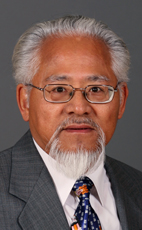
House of Commons photo

Crucial Fact

  • His favourite word was immigration.

Last in Parliament September 2010, as Conservative MP for Dauphin—Swan River—Marquette (Manitoba)

Won his last election, in 2008, with 61% of the vote.

Statements in the House

Supply October 23rd, 2001

Mr. Speaker, I am pleased to rise as coalition immigration critic to take part in the debate on the supply day motion put forth by the Canadian Alliance.

Since September 11 the world certainly has changed and national security is on everyone's mind. We are all aware of the threats to our freedom by terrorist organizations of the world. At the same time Canada must be cognizant that Canada is a land of immigrants.

If we look at our history, Canada was built by immigrants. At this time we must not be pointing figures at legitimate refugees and immigrants, including myself who immigrated to this country before the events of September 11.

The coalition's position is that Canada needs to keep its door open to genuine immigrants and refugees. Our present and future standard of living depends on immigration. We attract the best in the world and we must continue to do so.

Despite the current fear of terrorism we must not repeat the dark side of Canada's history. Let us take a reality check. Over 99% of the annual movement of up to 40 million people between the United States and Canada is by legal people. The vast majority of those who come into Canada use the legal means. In fact terrorists can enter this country as visitors, students, refugees or legitimate immigrants. We need to tighten up our front end screening to detect those who would wish to do us harm.

As coalition critic my job is to point out the holes in the system. Let me take time to respond to the specifics of the supply day motion. This motion is much like an omnibus bill. It covers too much. In principle the coalition supports the motion, but we have concerns about the way it was put together.

Let me address some of our concerns. In the preamble the continental perimeter denotes a North American border, not a Canadian one. While the notion of a secure North American border is a good one, Canada cannot be expected to look after American borders. Nor can Americans be expected to look after Canadian borders. Agreements can and should be made on who looks after what and what jurisdiction we can share and co-operate on.

A continental perimeter does not by default ensure the safety of Canada's borders. Improved staffing levels, better training and better enforcement of existing laws will.

Under the Criminal Code of Canada a Canada customs officer has the authority to be a peace officer already by definition. In fact the criminal code states:

(d) an officer or a person having the powers of a customs or excise officer when performing any duty in the administration of the Customs Act or Excise Act.

According to the 1992 Immigration Act, section 113 states:

Duties of Peace Officers to execute orders--Every peace officer and every person in immediate charge or control of an immigration station shall, when so directed by the Deputy Minister, an adjudicator, a senior immigration officer or an immigration officer, receive and execute any written warrant or order issued or made under this Act or the regulations for the arrest, detention or removal from Canada of any persons.

We agree that immigration officers and customs officers should receive better training in identifying suspicious persons. There seems to be an attempt to arm immigration and customs officers with sidearms. While customs officers at borders should have sidearms, immigration officers at ports of entry should not.

If immigration officers simply use the enforcement tools at their disposal they have every ability to detain and even refuse entry to anyone who is thought to be a risk to the country.

I will comment on part (b) of the motion. This is a clear indication of seeking a sidearm for a border official. We do not disagree with this. However this would in fact make customs officers at the borders police officers. This would eliminate a number of positions across Canada in favour police enforcement.

We already have such a situation with park wardens who have effectively been replaced by RCMP because the wardens wanted sidearms.

We agree with part (c) of the motion. All asylum claimants should be held until their identities can be discovered and they are determined not to be a risk to Canadians. Proper security and health checks should be done to ensure the safety of citizens welcoming newcomers.

We agree with part (d). The safe third country concept has been used in immigration legislation since 1992. While the term and definition have been used to keep refugees and asylum claimants who have already been recognized as convention refugees from other countries from applying for refugee status here, there is no such thing as a list of safe third countries from which we might accept refugees or deport refugees to await identity discovery.

In 1999 a Sri Lankan national was refused refugee status as the claimant was found to already have refugee status in Germany. In 1998 a Liberian citizen was refused conventional refugee status since the person already had such status in Sierra Leone.

It is the broader sense of the legislation that is not being applied. A list of countries from which asylum seekers could come to claim such status or be detained while waiting for the outcome of such an application has never been compiled. It is believed that the reason for this is largely due to a lack of agreement on who decides which nations are considered to be safe. The safe third country concept does not guarantee the detection and apprehension of potential terrorists.

The auditor general made some very enlightening discoveries in his December 1997 report on the Immigration Refugee Board. Since 1993 over 99% of all claims were judged to be eligible by CIC officials. The claimants were then given the necessary documentation for filing a claim with the IRB and allowed to enter Canada.

Today there is still a 30,000 case backlog. With the passing of Bill C-11 all claims in the system that are not finalized will be nullified. All other claims will have to be started over again regardless of the stage of review. That will only create more backlog.

It was noted that over 90% of those denied refugee status remain in Canada, according to the auditor general. These problems have not gone away. They pose a real risk to Canada's security. The government has to account for how the IRB operates, recognizing and acknowledging that the IRB is a patronage vehicle.

I have tried over the last year to convince the immigration minister to set up front end screening of refugee claimants. I will close by making a few more comments on front end screening. I have indicated that the RCMP, CSIS and CIC need more staff.

No one can board a domestic or international flight without identification and in some cases travel documents. The fact that people arrive in Canada without such documentation should be grounds for immediate detention. The minister alluded to over 8,000 persons who were detained for an average of 16 days in the year 2000. What she forgot to say was that she personally okayed 3,989 otherwise inadmissible individuals, most hardened criminals, entering and remaining in Canada for a period of time.

The 3,989 people were obviously security risks to Canada since without a permit from the minister they could not have entered Canada. With no entry or exit data kept on persons coming and leaving Canada, it is impossible to tell whether those who are ordered out actually leave.

Supply October 23rd, 2001

Mr. Speaker, do the 3,989 persons okayed by the minister pose a security risk to Canada?

Supply October 23rd, 2001

I will, Mr. Speaker. In the year 2000 the minister personally okayed 3,989 otherwise inadmissible individuals. This certainly--

Supply October 23rd, 2001

Mr. Speaker, I listened attentively to the member for Waterloo--Wellington. Unfortunately the government seems to know how to do the talking but there are very little results from the way it walks the talk.

The minister indicated this morning that the current legislation allows for removal and deportation. Unfortunately that is rarely exercised. Over the last months we have heard the immigration minister repeatedly tell Canadians how important it was that Bill C-11 be passed.

I was glad to hear that the member for Waterloo--Wellington gave us some numbers in terms of people entering Canada who were detained due to fraud or improper identification. In fact in the year 2000--

Customs Act October 19th, 2001

Mr. Speaker, I am pleased to speak on behalf of the coalition and take part in the debate on Bill S-23, an act to amend the Customs Act and to make related amendments to other acts.

Let me begin by reiterating how important trade is to Canada. We are historically a trading nation, going back to the beaver pelt. Without the free movement of goods and services between our borders, our standard of living would certainly be threatened. September 11 has changed how our economy is operating, including the movement of goods and services between our two borders.

There is no doubt the goal of the legislation is reasonable. However September 11 changed all the parameters on how we treat our borders. Provincial leaders are currently calling for perimeter security. Canadian ministers are travelling to Washington weekly to discuss trade and border issues with our counterparts.

Bill S-23 was drafted long before the September 11 event. The bill needs major changes in light of the present day discussions. The coalition believes the bill needs to go back to the drawing board or be scrapped all together. There is no doubt some of the amendments do have merit.

The coalition certainly understands how important trade is with up to a billion dollars a day going back and forth across our borders.

In a time of crisis our governments must work together to ensure that the flow of business services is not interrupted. Both countries benefit from this free flow of goods and services.

At this time I would like to quote from a trade quarterly report written by the Canada-U.S. Interparliamentary Group. On the topic of border crossings it does an excellent job in summarizing the problems. The report begins by saying:

One need look no further then the border to see the problems we are facing with a continental economy. While there are 116 border crossings between the United States and Canada that handle commercial traffic, almost 76% of commercial traffic uses only 9 crossings. Much of the infrastructure is obsolete, even at those crossings that were recently upgraded. Physical infrastructure appears to be only part of the problem, as some suggest that our borders are enforcing a 19th century attitude in a 21st century global economy.

I presume that is why the bill has been tabled. The report goes on to say:

NAFTA and the Shared Border Accord were supposed to facilitate border crossing between Canada and the U.S., although anecdotal evidence from those involved in cross-border activities suggest that crossing the border has actually gotten more difficult over the past five years, rather than easier.

Many propose a completely open border between Canada and the U.S., à la those European Community countries that signed onto the Schengen Agreement. These individuals point out that if Europeans, who were fighting each other as recently as 55 years ago, can open their borders to each other, then surely Americans and Canadians, who have not fired at each other in anger for almost 200 years, could do likewise.

There are others in both countries who believe that our border is already too open and would like to see more restraints put on border travel. In the U.S., Canadians are only temporarily exempted from the provisions of Section 110 of the Illegal Immigration Reform and Immigrant Responsibility Act, which requires all foreigners to be documented in and out of the country. If Section 110 were ever enforced, the consequences for those industries that rely on cross-border commerce, like the auto industry, would be devastating.

Proponents for stricter border control in Canada argue that without the border, Canada would be inundated with American fugitives, firearms and drugs. Those in the United States claim a tight border is required to keep out illegal immigrants, terrorists and drugs. While there is some validity to these claims, in reality over 99% of people crossing the border do not pose any security threat.

An official with the United States Immigration and Naturalization Service (USINS) pointed out that with the approximate 30 million crossings at the various Niagara Falls-Buffalo border points, only 10,000 Canadians were deemed ineligible for entry into the U.S. However, 9,500 of these individuals qualified for a waiver to regain the eligibility.

The Canada-United States border does provide an effective tool for law enforcement agencies on both sides of the border. The border provides these agencies with greater latitude to question and search individuals than is permitted elsewhere in either country. The challenge is to utilize these powers only with that small percentage of traffic that poses a threat. We need to balance legitimate security concerns with traffic management. The current process is adding millions, if not billions, of dollars to the cost of cross border business.

The Canadian Trucking Alliance has calculated that for every minute that all trucks are held at the border, an additional $8 million is added to the direct cost of cross-border shipping. With an average delay of twenty minutes for trucks at the border, that means an additional $160 million has been added to shipping costs.

Both the American and Canadian governments have tried a number of experimental projects to reduce the time spent at the border. There is general agreement that there should be a minimal amount of paperwork done at the border, but there are concerns about the accuracy of the information currently being forwarded electronically. This is one area where the use of Intelligent Transportation Systems (ITS) is the answer to many of the problems, but it must be shown to be beneficial to all parties involved.

With regards to the movement of people, pilot programs where individuals are pre-screened have had some success. These programs provide border authorities with more information about the individuals than they would otherwise obtain through the usual primary interview at the border. However, the success of these programs has been generally limited to those locations where the pre-screened individual benefits from a dedicated commuter lane that significantly reduces the crossing time.

In closing, we understand that trade is very important to the health of both countries. We believe that there is merit to some of the amendments, but we would like to see the bill go back to the drawing board in light of the events that occurred on September 11.

International Actions Against Terrorism October 15th, 2001

Mr. Chairman, I am pleased to rise this evening on behalf of the coalition as well as the people of Dauphin--Swan River to take part in this debate.

This is the time for supporting all of our men and women in uniform and their families, our armed forces, our law enforcement and security agencies like the RCMP and CSIS. This battle is fought internationally and on the home front.

I would like to talk about the issues of home front security. As the critic for the PC/DR coalition on citizenship and immigration I would like to preface my statements with these comments. Canada is a land of immigrants. Canada was built by immigrants. Canada's future will be dependent on our immigration policies of today as well as tomorrow. I believe that we need to continue an open door policy to immigration welcoming both the fortunate and the unfortunate to our country.

Screening at the front door only makes the country more secure. I have suggested this to the minister over the last year. What a reverse on her part when she just recently agreed to finance screening proposals.

In our debate about terrorists we all need to separate the legal immigrants and refugees whom this country needs, from the illegal asylum seekers whom we do not need. It takes years to process the applications of legal immigrants or refugees, unlike asylum seekers who are really queue jumpers. This is very unfair. As an immigrant myself, I believe these illegal and fraudulent asylum seekers give all legal immigrants in the country a bad name. This is the time to separate the two issues, otherwise as we have seen, there will be potential backlash. There is no doubt Canada cannot tolerate new racism. Let us learn from the lessons of our history.

This week is citizenship week. The theme is “Canada, we all belong”. How appropriate. Canadians need to come together as one family as we celebrate our multicultural makeup. We also need to plug the holes in our immigration system if our country is to be secure from terrorism.

Let me make a few comments on the new maple leaf card the immigration minister proposed. The new maple leaf card will replace the IMM 1000, the current document which permanent residents carry as identification. The IMM 1000 is a paper document and is susceptible to duplication.

The maple leaf card is said to be tamper resistant and contains information as to the identity of the person and other vital information. It will also have a photo of the person it belongs to on it. This is a good move. The card has been in the works for more than 10 years. Opposition parties have asked for it to be approved, which it was last year, but it was put on hold due to lack of funds to implement it. This card is for permanent residents. I need to say that again. This card is for permanent residents, not refugee claimants and asylum seekers. This card will be for use similar to the green card issued to permanent residents of the United States.

My question for the minister is, how will this new card help screen out the potential terrorists and asylum seekers?

Let me make some comments about the front end screening of refugee claimants. Both CSIS and the RCMP have repeatedly told the Minister of Citizenship and Immigration that this type of screening is impossible without adequate staff and international co-operation. All the high tech machinery in the world will not be able to screen a refugee claimant who does not have any identification on their person when they come to Canada. That is precisely the point. The people who apply for refugee status are usually the ones who have no identification on them. For some reason they seem to be able to get on an aircraft at the point of departure with identification but by the time they reach Canada their identification has somehow disappeared.

CIC has the capacity now to screen individuals as they come into Canada but do not employ it. Immigration officials at the point of entry decide if individuals are eligible to apply for refugee status, then refer those who qualify to the Immigration and Refugee Board. According to a 1997 auditor general's report, more than 99% of those who apply are deemed eligible.

Hours after the air strikes began in Afghanistan, 50 people arrived in Toronto claiming to be refugees. Some were alleged to be Afghani and Pakistani nationals, according to the media reports quoting immigration official sources. Some did not have any identification yet were all deemed eligible to apply for refugee status and released into Canada. The fact that they did not have IDs should have been enough reason to detain these individuals until their identity could be discovered.

Recently a Pakistani national arrived in B.C. with an obviously doctored passport and travel documents. This is a breach of Canadian law. However, this person was deemed eligible and released into Canada on a refugee claim. No one can board an international flight without identification and in some cases, travel documents. The fact that people continue to arrive in Canada without such documentation should be grounds for immediate detention.

Canada should be seeking to remove those individuals from recognized UN refugee camps rather than taking those who show up at our doors. The average legitimate refugee cannot afford the cost of travelling to Canada. Canada has a proud tradition of taking in those in need of help and we should continue to do so.

I would like to make some comments about targeting security risks through detention. In 2000-01 some 8,790 persons were detained for an average of 16 days under the Immigration Act as their identity was in question upon entry. In 2000 the minister personally approved 3,989 otherwise inadmissible individuals, most hardened criminals, to enter and remain in Canada for a period of time. These 3,989 people were obvious security risks to Canada as without a permit from the minister they could not enter Canada. With no entry or exit data kept on persons coming to or leaving Canada, it is impossible to tell if those who are ordered out actually leave.

In terms of increasing removals, the current Immigration Act allows for removal or deportation from Canada. As I said, without entry or exit data it is impossible for CIC or anyone else to know precisely how many persons are in Canada illegally. In fact, it was estimated that about 200,000 foreign nationals are in this country.

The minister made note of more than 8,600 persons deported from Canada in 2000. What she did not say is that there are more than 15,000 unaccounted for deportees and her department has no idea where these people are. In fact, today the department indicated that there are warrants written for 27,000 foreign nationals who should not even be here. Removal or deportation would be much easier if there were better systems for tracking the whereabouts of individuals claiming refugee status or those seeking permanent residency. In other words, the home front certainly needs a lot of work and improvement.

I would like to make a couple of other comments about the government's reluctance to use sky marshals. There is no guarantee that all ground inspections will prevent terrorists from boarding our airlines. There are two provisions the government must consider if the travelling public, including politicians, are to feel secure in the air. One is to secure the cockpit area with bulletproof doors and the other is to have undercover air marshals on board. Certainly we could use the $850 million the government spent on the long gun registration scheme, which is an utter failure, to pay for this implementation.

In closing, fighting terrorism begins at home. We must plug all the holes. We need to secure our borders, welcome those who around the world are seeking a better life and keep away those who wish to do us harm.

Citizenship Week October 15th, 2001

Mr. Speaker, I am pleased to rise today to acknowledge that October 15 through October 21 is Citizenship Week in Canada. The theme this year is “Canada: We All Belong”.

This year the theme has particular importance. The terrorist attacks on the United States on September 11 has brought with them a fear for those of Arab descent. I was shocked and dismayed to read of a 15 year old boy in Ottawa who was severely beaten shortly after the attack, simply because he was Arab.

I heard the stories of Muslim women who were fearful of leaving their homes and letting their children play in their own yards because they had been harassed.

Canada is a tolerant nation and tolerance of all races needs to be maintained and promoted at every turn. I hope people throughout Canada will take the time during Citizenship Week to get to know their neighbours' cultures and customs. Knowledge is a great tool in dispelling the fears of what we know little about.

Supply September 25th, 2001

Mr. Speaker, today's debate goes beyond the motion put forth by the Bloc Quebecois. It is about the very essence of why we are in the House from all parts of the country. We are here to debate and to vote on issues. That is what the House is all about.

In times of crisis like the events of the last couple of weeks Canadians are looking to the government for leadership. Canadians want their representatives to debate, to vote and to support the government on issues that would make us feel more secure. Take note debates are really an excuse for not having real debates in the House.

The government has a majority. What harm would debating and voting on issues in the House have on the government?

Citizenship and Immigration September 25th, 2001

Mr. Speaker, yesterday the Prime Minister said that his government would not be diverted from its overall plan to focus on health care, education and water safety. Even in light of the recent events in the United States, as immigration was not part of the original overall focus of the government, what exactly is the Minister of Citizenship and Immigration doing to get her portfolio on the focus table?

Supply September 25th, 2001

Mr. Speaker, I listened intently to the speech of my hon. colleague across. The events of last week did two things to the people of Canada. First, it brought us all together in support of our neighbour's initiatives to the south. Second, it raised the issue of tolerance. Canadians have known for at least a century that this country is made up of immigrants and the one thing we do not want to do is repeat the mistakes of the past. Therefore, I, like all members of the House, promote tolerance at a time like this.

I would like to make some comments on the hon. member's comments on immigration. The House knows that I have raised immigration issues over this past year, certainly on issues of screening. Even if Bill C-11 was passed this very day, including what the government had said it would do to improve the situation, I believe there would be no improvement. Unless there is a will to put the time and effort into ensuring that we have the relevant data to properly screen the people coming into this country, we will keep making the same kinds of mistakes we are making today.

Even without the bill in place, there could be a rule that government put more money toward hiring more people. I am told that many of our overseas offices do not communicate with each other. In fact, in Canada our own departments do not communicate with each other. That has to change. CSIS, RCMP, other security agencies and national defence have to work together. Does my hon. colleague see screening as the focal issue when it comes to the security of this country?