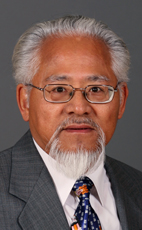
House of Commons photo

Crucial Fact

  • His favourite word was immigration.

Last in Parliament September 2010, as Conservative MP for Dauphin—Swan River—Marquette (Manitoba)

Won his last election, in 2008, with 61% of the vote.

Statements in the House

Immigration June 5th, 2001

Mr. Speaker, a British citizen who had come to Canada to visit a friend was not expecting the welcome she got. According to news reports, Ms. Akintade was questioned for 10 hours, handcuffed and detained by immigration officials overnight. She was also refused access to the British consulate, all because an immigration officer said she did not sound British. He did not believe her British passport was genuine.

How does the minister of immigration explain the pitiful performance of this departmental official?

Immigration And Refugee Protection Act May 30th, 2001

Mr. Speaker, it gives me great pleasure to rise to debate Bill C-11 at the report stage. Let me begin by complimenting the members of the committee for doing a great job during the public hearings. We heard from over 150 witnesses. We travelled from Vancouver to Montreal and received excellent presentations from a very broad spectrum of witnesses.

When we came back to the House and the committee met, we spent three long days going over the amendments. I must say that it was an atmosphere of co-operation on all sides of the House. Government members as well as opposition members worked on this bill. That is about the amount of positive input that I will make today.

Unfortunately the good work of the committee through the hearing process is not reflected in the bill.

It is so unfortunate that House committees spend so much time and effort on the road at the expense of taxpayers and then find that other than a few cosmetic changes to the bill, the bill has basically remained intact.

I must say at this point that these are the kinds of public responses that we received from the 150 plus witnesses who represented various organizations throughout the country. Witnesses stated that they felt the language of the bill placed undue emphasis on enforcement and criminality, as opposed to language that highlights the waffly nature of Canada's immigration and refugee program. That is very true.

The irony is in the amendment put forth in this first group of amendments. The minister wants to amend clause 3 by replacing lines 1 to 7 with:

(i) to promote international justice and security by fostering respect for human rights and by denying access to Canadian territory to persons who are criminals or security risks; and

We certainly agree with that. In fact we know that is what needs to be done. The minister could do the same thing without the legislation. She could do it by putting more people in the field and putting in a good front end screening vehicle so that we keep out criminals.

The minister always talks about closing the back door. Maybe the government needs to close the front door a little so that we let in people who we think will become positive contributors to the country. The irony is that the system creates its own problems.

This is a good time to reflect on the Sklarzyk case that happened during the past couple of weeks. The Sklarzyk family had its visitor visa extended three times. That makes absolutely no sense. If Canada did not want the family here in the first place back in 1994, it makes sense that the family should have been told to leave and go home.

Why did the government extend the visa? At that time two of the children had been born in Poland. By extending the visitor visa three times the government was extending a sign of welcome. It makes absolutely no sense. The government creates a lot of these problems. After the family had two children here and had been here from 1994 to 2001, close to seven years, the government asked the family to leave.

Through the public hearings we have heard many witnesses say they were stateless. In other words, they had no status. Some have been in Canada upwards of 10 to 15 years. They came here as refugees. They have had children here. Their children are in school and they still have no status.

One of the points raised continuously throughout the hearings was the whole issue of permanent residence. People who have permanent resident status are referred to in the bill as foreign nationals. Many witnesses who came before the committee were offended by that approach. It is unwelcoming and un-Canadian. We should not be doing it.

I will tell the House what the changes were to the definition section. Under interpretation a foreign national will be changed to mean:

—a person who is not a Canadian citizen or a permanent resident, and includes a stateless person.

The irony is that throughout the bill permanent resident and foreign national are printed side by side. This is worse than leaving it the way it was. I cannot understand it.

One amendment that members of the opposition all agreed with was that changes needed to be made and in a positive manner. They should be made in a manner that deals with different classes. A member on the government bench indicated that if a person lands in Canada we should perhaps give him or her landed status as in the old days. However that has not happened in the bill.

Another concern raised was the whole issue that this was framework legislation. As framework legislation much of the authority to carry out immigration and refugee objectives would be found in the regulations. The regulations would therefore be substantial and would contain much of the detail regarding implementation of the act. Many witnesses supported the idea of all new regulations being reviewed by the House of Commons Standing Committee on Citizenship and Immigration.

Even government members agreed. They agreed that the regulations should come before the standing committee and be reviewed. I compliment the chairman of the committee for the good work he did throughout the hearing process. He stated that the committee should be scrutinizing the regulations.

What do we see in the new bill? We see nothing, absolutely nothing in terms of the amendments. I think many members of the opposition were led down the garden path with the clause by clause exercise we went through.

Ten minutes does not give anyone a lot of time to deal with the complexity of the bill. I will close by again noting that a number of witnesses suggested creating and including in the bill a mechanism whereby members of the general public could submit complaints about any aspect of the new legislation. Several witnesses suggested creating an ombudsman to organize and centralize submissions and report regularly to CIC and to parliament.

I did that very task. The Canadian Alliance put together an amendment to allow the minister to create an ombudsman vehicle for people with complaints. We need oversight for the department and I look forward to speaking to the second group of amendments.

Immigration May 29th, 2001

Mr. Speaker, this past Saturday a family was torn apart and said its tearful goodbyes as the department of immigration deported Pawel Sklarzyk's family back to Poland.

It has caused me to wonder why, if the family was so undesirable in the first place, the immigration department extended a visitor visa three times before deciding the family had been here long enough. That took 11 years.

I do not understand the Minister of Immigration's reasoning for deporting Pawel and Beata Sklarzyk and their two Polish born sons. Their two Canadian born children stayed behind with their grandparents.

I hope now that the minister has split up this family she feels better knowing that her department works so well that it sent away a good, hardworking family, yet keeps hardened criminals, such as Gaetano Amodeo, wanted for murder in Europe; Lai Chanxing, wanted for a multibillion dollar smuggling scam in China; and accused Philippine assassin, Rodolfo Pacificador, within our borders.

Immigration May 17th, 2001

Mr. Speaker, how about the 15,000 that cannot be found in the country? The immigration department has decided to deport the Sklarzyk family as a result of an administrative error, but the minister has claimed she cannot deport an assassin due to administrative problems. Where is the logic and compassion?

Will the minister try to defend her system, which would allow a family who has behaved in an exemplary fashion to be deported but cannot remove an accused murderer after 14 years?

Immigration May 17th, 2001

Mr. Speaker, the minister of immigration has said that the Sklarzyk family are queue jumpers, but the fact is that the family has been ordered deported due to a technical error. Meanwhile a suspected assassin, Rudy Pacificador, has been allowed to stay in the country for 14 years and still has not been deported.

Where are the fairness and compassion in her system when it allows a suspected assassin to be treated better than a family who has behaved in an exemplary fashion?

Immigration May 16th, 2001

Mr. Speaker, these people came from Poland in 1994 initially on a refugee claim on humanitarian and compassionate grounds. Two of their four children are Canadian born. There is no record of any illegal activity. Mr. Sklarzyk has even started a small company in Canada.

I find it impossible to believe that the minister is less intent on deporting criminals than innocent families. Is the Sklarzyk family not the kind of people we want to bring into Canada?

Immigration May 16th, 2001

Mr. Speaker, the Department of Citizenship and Immigration seems intent on deporting a family of six back to Poland.

Mr. Sklarzyk filled out all the correct paperwork in his family's bid for refugee status and even paid what he thought was the full fee for entering Canada. In fact he actually underpaid his fee by $50.

Two months ago the department of immigration notified them that they were being deported. I would like to ask the minister of immigration why Mr. Sklarzyk and his family are being deported.

Supply May 8th, 2001

Mr. Speaker, I thank the member for Elk Island for his question. The issue with both water and sewage facilities is money. Application of the act falls under provincial jurisdiction. Most provinces have their own water acts. However the cost of facilities is out of reach for municipalities which do not have the resources.

If we deem water and sewage an essential health and safety issue we should treat it no differently than public health. The responsibility therefore lies with the federal government. Municipalities do not have the tax base. We cannot expect communities to boil their water for decades if they cannot come up with the money for infrastructure.

Supply May 8th, 2001

Mr. Speaker, I thank the member for his question. I lived in a community that had a boil water order for two years and could not imagine what it is like to have a boil water order for six years.

There is a lack of commitment on the part of the government. If the government sees a problem it must deal with it and not make excuses. People on reserves need to be treated no differently than people off reserves. Until the government takes its responsibilities seriously nothing will change.

In terms of the whole country it is the same thing. If the government understands the need for potable water and good sewage facilities across the nation it must change its current position and approach. It needs to take action, not put money into fancy programs for political purposes. If the government understands the importance of the issue it must do the work that is asked of it.

That can only be demonstrated through action. The government must make long term commitments. It must have plans in place. It must sit and talk to people to find out what their needs are. The government has sole responsibility for Indian reserves and it has no excuse for not dealing with problems that affect them.

Supply May 8th, 2001

Mr. Speaker, I am pleased to rise today to take part in the debate on water.

Let me begin by commending the member for Fundy—Royal on his motion. I believe it is long overdue. Unfortunately, it takes a tragedy to bring attention to this most basic of human needs. I find it almost unbelievable that after the tragic experience in Walkerton, we are now experiencing the same kind of problems in North Battleford. What we see demonstrates that we require more leadership, certainly on the part of government.

I would like to take us back to pre-Walkerton history. As the former mayor of Dauphin, I had to live through the same kind of experience, so I will speak from my experience as a municipal leader who had to shepherd a community through an outbreak in giardia back in 1995.

If we look at the records in 1993, Milwaukee, Wisconsin had a cryptosporidium outbreak which took many lives. We called it legionnaires' disease. Then on we go to Waterloo. An hon. member across the floor mentioned this morning the problems that Waterloo had with cryptosporidium and giardia around the mid-1990s. In Kelowna there was an outbreak in 1996 of cryptosporidium.

This is not new. We have known about the problem for at least a decade. What has the government done about it? Not an awful lot. It has pointed the finger at the provinces because it is a provincial jurisdiction, but it needs to show more leadership. Canadians expect their health to be protected. Consumption of potable water is part of that health and safety need.

Our water systems and water treatment plants, for those communities that have them, go back to the 1950s vintage. That was when most of them were built. There are a lot of communities that do not have water treatment systems. They rely on surface water or well water. In fact inclusive in the topic of debate today, we really should be looking at the whole issue of sewage treatment because sewage facilities built back in the 1950s and the early 1960s are all falling apart today. In other words, they will and have become a problem to the environment just as much as to potable water.

In 1995 a boil water order was issued for Dauphin, which is where I come from. At that time I was the mayor. Obviously when people cannot drink the water what can they do? Little does one realize that without water there is not a lot one can do. However when people have to boil the water to use it, it creates a lot of difficulties.

Imagine a community being under threat of not having potable water for a period of almost two years. That is why I believe there needs to be an emergency funding provision put in place by the federal government for communities, such as North Battleford, that need it. In essence, one of the key responsibilities for the federal government is to provide tax dollars to build these facilities.

Building water treatment facilities are not ordinary mundane activities at the municipal level. It takes huge amounts of dollars. In the case of Dauphin, Manitoba, we were very fortunate, through the PFRA and through the co-operation of a fellow by the name of Erminio Calagary, we managed to get the support of the federal government, the provincial government and the municipal government to put the dollars together and built a brand new water treatment plant. It amounted to something like $9 million.

That $9 million to a community of about 10,000 people is a huge tax load. It is easy for the federal government to say that it will throw some money here and there through its infrastructure program and hopefully then tripartite agreements will get some money to build water treatment plants or sewage plants.

I was very deeply involved with the 1993 infrastructure program. That money was distributed on a per capita basis, which did not account to very much especially when we knew the cost of water treatment facilities. The federal government has to ante up. After all that the money does belong to the people.

I agree with the FCM, the Federation of Canadian Municipalities, and its lobby to ensure that fresh or potable water is always available to all communities. There are over 4,000 municipalities. The FCM resolution number 26, which was adopted in the year 2000, states:

—reaffirm its commitment to the protection of public health in all aspects of the provision of water for human consumption, including the protection of drinking water or drinking water sources.

Further to this statement, perhaps it is time the federal Liberal government recognize and acknowledge the legitimacy of the municipalities of this country.

I still remember in 1996 listening to the Prime Minister in Calgary. He stated that the municipalities played a huge role in this country, that they were very important, that they were the first level of government and that they were closest to the people. I am still waiting for the Prime Minister of the day to recognize the legitimacy of the municipalities. Until that happens, the municipalities will always be bantered about between the provinces and the federal government.

As we know, the provinces always say the municipalities are the children of the provinces and that the federal government has no business dealing with them. It is long overdue, when it comes to health care and water issues, that the municipalities be at the table. It is no different than if the topic of discussion was roads.

Therefore, water is essential and it impacts all of us. It is time the federal government recognized that water should be treated the same way blood is treated. When we get a transfusion most of us think the blood is safe. Likewise, when we pick up a glass of water we should not question the safety of that glass of water. As we know, that is not the case at this point in time.

I would like to talk about the lack of support for potable water development for aboriginal reservations. In my riding I have 13 reservations and I know that they are in dire need of infrastructure development. In fact, when will the federal government move on this? Hopefully it will not wait for someone to lose their life before it makes some concerted effort to deal with the deplorable conditions of drinking water on many of the reserves.

I have many Metis communities in my riding. Health Canada has to put its foot down and be more assertive in making sure that funds go to water and sewage infrastructure development in those communities, rather than just handing the money over to the Metis provincial organizations and letting them give out the money. In many cases basic issues like water and sewage are left out altogether.

We need specific programs for water and sewage. The government should avoid the word infrastructure. In the last round of debate the definition of the term was wide open and infrastructure dollars were used in many areas. A government that wants to lead and be accountable should set up water and sewage programs. If we do not do it at this point it will be the tip of the iceberg in terms of the problems that confront Canadians.