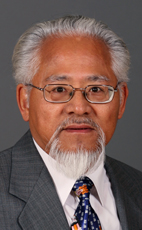
House of Commons photo

Crucial Fact

  • His favourite word was immigration.

Last in Parliament September 2010, as Conservative MP for Dauphin—Swan River—Marquette (Manitoba)

Won his last election, in 2008, with 61% of the vote.

Statements in the House

Immigration September 20th, 2001

Mr. Speaker, Lucy Lu has been hiding in a basement of a church in Kingston since last November fearing deportation by the Minister of Citizenship and Immigration. To date the minister has refused to even hear what Ms. Lu has to say in her defence.

Lucy Lu is not asking for anything that is impossible of the Minister of Citizenship and Immigration. She is seeking a stay of deportation on humanitarian and compassionate grounds with full community support.

Terrorist Ahmed Ressam was ordered out of the country and no one even bothered to look for him for two years. Lucy Lu is in plain sight and she cannot get anyone from the Department of Citizenship and Immigration to even call her. Just how big a threat could Lucy Lu be to the Canadian public?

Terrorism September 18th, 2001

Mr. Speaker, Canada is well known for housing terrorist groups such as Hezbollah, Hamas, the IRA and the Tamil tigers. Now that we have all witnessed the devastation created by the terrorist act in the United States, will the government finally move to have all terrorist activities in Canada halted and try these terrorists and their sympathizers in Canadian courts?

Immigration And Refugee Protection Act June 13th, 2001

Mr. Speaker, the irony of the hearings was that the majority, probably over 90%, of the more than 150 stakeholders were in opposition to the bill. Obviously there is something wrong with the bill.

It is impossible to travel throughout the country and spend two weeks in Ottawa listening to Canadians voice their opinions of the bill. Over 200 amendments were put in the committee on a clause by clause basis and the majority, again I would say over 90%, were rejected. Some of them were very rational and reasonable. The government accepted a few, but not a lot was done with them.

I will illustrate that the one area which needed to be clarified was the whole issue of foreign nationals and permanent residents. The member on the government side suggested we should perhaps go back to the old business of landed immigrant status. If people land they are landed and have status. That is a very rational approach. I wish the government had listened to its own member.

Unfortunately permanent residents still risk losing their status when they leave the country. Because permanent resident and foreign national intermingle at times, the government made it worse. It put the words permanent resident alongside the words foreign national throughout the bill. The government could have done a lot of things to improve the bill but did not.

Immigration And Refugee Protection Act June 13th, 2001

Mr. Speaker, to make things very clear, the Canadian Alliance is pro-immigration. We promise to welcome new Canadians and at the same time keep out the criminals. The Canadian Alliance immigration policy states:

Canada is a nation of immigrants. We have always been enriched by new arrivals to our shores. A Canadian Alliance government will maintain the current level of immigration. We will make it easier for immigrants who possess advanced skills and training to enter Canada, and will make the family reunification process truly responsive.

Immigration And Refugee Protection Act June 13th, 2001

Mr. Speaker, first let me thank the member for Fundy—Royal for being very unselfish in sharing his time with me today.

I am very honoured to take part in the third reading of Bill C-11, the new immigration act. I have said to the House before that as a third generation immigrant to this country, I am very privileged to be here, and that includes the 44 other members in the House who are also Canadians by choice. I believe we are all very thankful that this country has taken us in.

Unfortunately we still have a long way to go. A new immigration bill is long overdue. The bill is called an act respecting immigration to Canada and the granting of refugee protection to persons who are displaced, persecuted or in danger. Unfortunately the contents of the bill do not reflect the title.

Also at this time I want to thank my deputy critic, the member for Blackstrap, for her due diligence and hard work as we travelled throughout the country seeking public information.

I also want to thank the members of the Standing Committee on Citizenship and Immigration, members from all sides of the House, for their tremendous co-operative spirit, which was demonstrated throughout all stages of Bill C-11. There is no doubt that we as a committee wanted what was best for this country in our attempt to write the immigration laws for the next decade.

I want to thank the capable chairman of the committee, the member for London North Centre, for his relatively non-partisan approach. I believe he has not forgotten that he, like I, immigrated to this country in the 1950s as a young child.

Also at this time I need to thank the clerks and the parliamentary support staff for all the hard work they displayed in keeping us organized and moving.

We have heard from all sides of the House about how important immigration is and how immigration built this country. Immigrants have been coming to Canada since the 1500s and they have shaped this country. Canadians from all walks of life can relate in some manner to the immigrants who came to Canada seeking a better life.

The manner in which Canada welcomed these newcomers was not always friendly. In my brief intervention here I would like to quote from a book called Whence They Came: Deportation from Canada , written by Barbara Roberts. The foreword was written by Irving Abella in 1988 and I believe this is a good time to reflect on our history of immigration in Canada. Mr. Abella states:

Canada is a peculiar nation. Peopled by immigrants, it is a country, paradoxically, which hates immigration. Every single public opinion survey over the past fifty years indicates that most Canadians—including by the way, most immigrants themselves—do not want any substantial increase in the number of people admitted to this country. This attitude may surprise Canadians, but historically it should not.

It is one of our great national myths that Canada has a long history of welcoming refugees and dissidents, of always being in the forefront in accepting the world's oppressed and dispossessed, of being receptive and hospitable to wave after waves of immigrants.

We Canadians like to think that racism and bigotry are European or American in origin and play little part in our history, tradition or psyche. We see ours as a country of vast open spaces and limitless potential which has always been open and available to the proverbial huddled masses yearning to be free.

Yet as the recent history in Canadian literature has shown, the Canadian record is one of which we ought not be proud. Our treatment of our native people as well as our abysmal history in admitting blacks, Chinese, Japanese, Indians, and during the 1930s and 1940s Jews, should lay to rest the myth of our liberalism and enlightenment on matters of race and immigration.

Let us face facts For most of our history Canadian immigration laws were racist and exclusionary. We knew precisely what kind of people we wanted, and how to keep out those we didn't. Until the 1960s our immigration policies divided the world into two - the “preferred” races who were always welcome in Canada and the “non-preferred” who rarely were. The former were of British and European stock; the latter included almost everybody else.

The central problem of Canadian immigration policy is that for most of our history we did not have one. Since 1867 the country has had precisely four immigration acts. Nor has there ever been in Canada—neither now nor in the past—any clearly articulated national consensus about what immigration should be or what it would be. Except for one constant—its discriminatory aspects—our policies have had little consistency.

Even today when we look at 1% as the target, we still do not know why we use that as a target.

The integrity of Canada's immigration system is determined by processes that are used to determine who would be allowed to immigrate to Canada and under what conditions they would be allowed to reside in the country. It is essential that the checks and balances be in place to ensure that decisions are just, because no system can ever be perfect.

Enforcement of immigration laws can and does have severe consequences. It causes a separation of parents from children, spouses from one another and individuals from a country that was their home. To ensure that Canada has a balanced immigration system, Canadians need a process that is responsible, compassionate, equitable and fair.

Bill C-11 fails to preserve the process that is necessary for ensuring reliable and just decision making for immigrants and refugees to this country. The bill strips away the progress that Canada has made in creating review processes that help bring balance to our national immigration policy. Some of these come down to seemingly simple procedural issues but are critical for the administration of a fair and just immigration system.

The Canadian Alliance cannot support Bill C-11. It just goes against the values of being Canadian. I thank the member for Fundy—Royal for sharing his time with me.

Health June 12th, 2001

Mr. Speaker, conservative estimates state that the annual cost of caring for a Canadian HIV patient is about $200,000. There were some 200 HIV positive immigrants allowed into Canada last year. That is $40 million a year.

How does the minister of immigration expect the already overburdened health system to cope?

Health June 12th, 2001

Mr. Speaker, less than nine months ago the health minister advised the department of immigration to screen all potential immigrants for HIV and hepatitis B. As of today that advice was rescinded and the Department of Health is now recommending that Canada admit HIV positive immigrants.

I would like to ask a question of the Minister of Health. Why the flip-flop? Are we putting the health of all Canadians at risk?

Sir John A. Macdonald Day And The Sir Wilfrid Laurier Day Act June 7th, 2001

Madam Speaker, the question I asked of the Minister for Citizenship and Immigration was about why Canada continues to harbour the criminal elements of the world.

Canadians have read in the newspapers throughout these last few years about the illegal criminals entering the country. Canadians are asking why are we allowing these criminals to enter the country?

Canadians have also heard names like Gaetano Amodeo and Lai Changxing. In fact they have become household names in the country over the last few years. We have put a lot of effort into protecting these criminals who enter the country. While we do this, we put other Canadian citizens at risk. We put Canadian visitors at risk. An example is the Sklarzyk family who was recently deported back to Poland. Who is looking after their rights? Who is looking after the rights of Serge Kisluk? This gentleman passed away just recently.

I would like to quote Marsha Skrypuch from a newspaper article. She is a children's author and met Kisluk while researching a novel about a girl whose grandfather was accused of war crimes. She said that she was appalled at the process that had been used to condemn Mr. Kisluk. She stated:

These are 50-year-old cases, and evidence won't hold up in a criminal court, so they use the immigration rules instead. The reality is that there just isn't enough evidence. Innocent people get hurt. You end up with a bunch of little old men trying to defend themselves against the state.

Who is defending his rights? Who is defending the rights of people like Oberlander and Odynsky? How many criminals are there in Canada? I do not think anyone knows. What we do know is that there are at least 15,000 warrants out for people who are in the country who should not be here. They should have left a long time ago.

We are letting too many criminals through the front door. Why? Because the front door is wide open. The Canadian Alliance has said for a long time that there should be necessary screens put in place to screen out the undesirables so they do not enter the country. Certainly with technology that should not be an impossible task. In fact the standing committee recommended that in its last report to the minister.

In closing, I would say that Canadians support an open immigration policy but not at the expense of national security. The minister, as the auditor general has said in his report, can improve the system without Bill C-11. In fact Bill C-11 would do very little. It would basically penalize the legal migrants and refugees to this country. So instead of just talking about doing the job, I would only hope that the immigration minister would walk the talk.

Food And Drugs Act June 6th, 2001

Mr. Speaker, let me begin by complimenting the parliamentary secretary on his commitment to the work of the Standing Committee on Citizenship and Immigration and the co-operative spirit he always offers in the committee.

I reiterate the question I asked of the minister during question period regarding what he had said publicly in the newspapers:

—the minister of has said that the Sklarzyk family are queue jumpers, but the fact is that the family has been ordered deported due to a technical error. Meanwhile a suspected assassin, Rudy Pacificador, has been allowed to stay in the country for 14 years and still has not been deported.

Where are the fairness and compassion in her system when it allows a suspected assassin to be treated better than a family who has behaved in an exemplary fashion?

The bad news is that the family was deported back to Poland a couple of weekends ago. My role tonight is not to be their legal advocate. My role is to raise questions about the system and why the system operates the way it does.

First, why do we protect criminals over lawful citizens even though they do not have status as permanent residents but are certainly visitors to this country? Second, why is it that we create these problems for ourselves?

Let us examine the Sklarzyk case. They came here in 1994 with two children who had been born in Poland. The irony is that they came under a visitor's visa, but the fact is their visitor's visa was renewed three times. One would think this would give the Sklarzyks the wrong message about staying around here. After three renewals they disappeared. Ironically they disappeared to start a business and raise another family. They had two more children in this country.

After seven years all of a sudden the government takes an interest in thinking that they should be removed. For what cause? Was it because they were $50 short on their application fee? Their lawyer says they actually paid the application fee twice.

Meanwhile 15,000 people have written warrants for their deportation and we cannot even find them because we do not know where they are. However we knew where the poor Sklarzyk family was. They were in a business and raising their family like other immigrants who have come here for centuries.

Why do we pick on people like the Sklarzyks? Certainly they are a good example of the error we made in encouraging them to stay here. At the same time it shows that this county is not compassionate.

My question for the parliamentary secretary is this: why do we do what we do? It is a poor example to the world when Canada is supposed to be seen as a country that shows compassion.

Immigration June 5th, 2001

Mr. Speaker, how would the minister feel if she was treated in the same manner overseas? What

What action does the minister intend to take to ensure that this kind of unjustified treatment is never repeated? Does the minister intend to apologize to this British woman?