Go outside and say it.

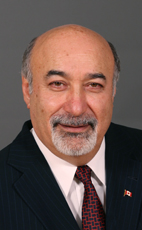 House of Commons photo
Lost his last election, in 2011, with 32% of the vote.
Business of Supply May 10th, 2007
Go outside and say it.
Employment Insurance Act May 9th, 2007
Mr. Speaker, on behalf of the Liberal Party, I take this opportunity to speak to Bill C-357. The bill proposes some changes to the Employment Insurance Act as it relates to the setting of the premiums charged to employers and employees.
First, employment insurance is a very important program, a program that plays, in my view and I am sure in the view of all members in this honourable House, a very vital role in assisting workers in Canada when they find themselves either unemployed or underemployed. It is a program that supports workers while going from job A to job B.
Allow me to provide a little history to the employment insurance program for the benefit of all Canadians.
In 1934 the Government of Canada established a program that would provide Canadians with a partial income if they found themselves out of work. The Great Depression, as we all know, resulted in millions of Canadians losing their jobs and going through some very difficult times. As a result, the government took action to provide some income security.
The Employment and Social Insurance Act of 1935 paid minimum weekly wages based on earnings to certain unemployed people. It was in 1940 that Parliament passed the Unemployment Insurance Act, during a period when income security was not an issue. For example, we will recall that the war created well over a million jobs in our country at that time.
The program back then was meant to support, on a short term basis, individuals who were in between jobs and was primarily targeted the so-called blue workers. Since that period, employment insurance has become one of the major foundations of Canada's social safety net.
Two major changes occurred in the system, once in 1971 and again in the mid 1990s. In 1971 the program became more universal, with a wide range of occupations falling under its legislative scope. For example, further maternity, sickness and retirement benefits were added to the program. Premiums were reduced and benefits were increased. Prerequisite qualifiers were also raised, while benefit levels were to some degree restrained. At that time, the government placed restrictions on benefits for workers who had quit or had been fired. They were deemed ineligible, except for certain exceptions.
During 1971, the government shifted employment services and benefit costs from its consolidated revenue fund to what was then called the UI account. Although there were some efforts to make further changes to the act during the 1970s and 1980s, it was not until the 1990s that major reform to the act took place.
For example, in 1996 unemployment insurance became known as employment insurance or EI, “employment” meaning let us move forward to get people back into the workforce. Of course there were major changes in eligibility, including an “intensity rule” that reduced benefits for repeat claimants, and adjustments to that clause were made in 2001.
I know, Mr. Speaker, you were here at that time. When I was first elected in 1993, the government inherited a very difficult situation of high unemployment. I am sure you recall that it was close to 12%. EI premiums had been rising consistently. I remember at that time it was pegged at $3.05 per $100. Our country was described as unofficially bankrupt, so we had very little manoeuvring ability.
Later on as the economy got better, as we had eliminated the deficit much faster than we anticipated, economic growth occurred, employment started to unfold and more revenue started coming in because people were working as opposed to us paying out. We were able to look at adjustments as we removed that intensity rule in 2001.
I believe those changes were necessary at the time because of the difficulties that the country had. One was the $48 billion deficit and a $600 billion plus debt that we incurred, inherited from the Mulroney government, the Conservatives.
Earlier today the member for Burlington said that the government was listening to the people. He said, “a government that listens to them”. I think he said that about three times. I always get shivers the moment that someone says to me more than once, “Trust me, trust me”. I do not trust that person. Therefore, when the member for Burlington said on a several of occasions “a government that listens”, it just confirms that it has not listened. Income trusts is one example that I will use.
A short while ago Bill C-269 was before the House, on which we voted, to make some changes to help seasonal workers and to increase benefits in general. We supported that bill, as amended, at committee. I believe that in the current situation we can afford to take a look at EI in general and to see how we can better support all workers.
The comments we are hearing from our constituents, especially our seniors, our veterans and workers in general are as follows. If today our country has been blessed with such high surpluses, close to $14 billion, thanks to the good work that the previous Liberal governments did, it is today that we can take that extra step. It is not a risk. It is today that we have these surpluses and we can look at adjusting these programs.
We have workers in the Maritimes, in the north, in the mining industry who unfortunately and for whatever reasons do not have an opportunity, as some would say in downtown Toronto, to have steady employment throughout the year. This is where these programs must exercise some flexibility. I believe these are the times, when the economy is good, when there are surpluses, we can do that.
As often is the case with members from the Bloc, and I say this respectfully, they always attempt to maintain some kind of feigning sense of relevancy to the House by introducing certain private members' initiatives so they can send them in their householders to their constituents and say, “This is how relevant we are”. That is great. I cannot negatively comment on that. That is their privilege, but it is unfortunate because constituents depend on hearing from their members of Parliament a certain message that has relevancy. In a case like this, they are getting someone's goat going. They are getting them excited, and it is unfortunate.
Let me just point out why I made that statement. The member will know that what he seeks to accomplish already exists, thanks to the efforts and the hard work of the former Liberal finance minister, the member for Wascana, and the former Liberal minister of human resources, the member for Newmarket—Aurora. These changes were made.
What we did was formalize the EI rate setting process with an external process run by a chief actuary, something the member for Burlington said “We are going to do as a government”. We have already done it, as a Liberal government.
The member for Burlington should, as should all members, read up on what has been done before they stand up, for the benefit of all Canadians. It is up to the chief actuary to analyze the labour trends, the employment levels, the expected payments to be made and make recommendations to Parliament as to the setting of the EI rate. It is set in such a way which we put in place that it becomes revenue neutral, if I may describe it as such.
Let me repeat again for the benefit of the member for Burlington and all other members, that the EI--
Business of Supply May 8th, 2007
Mr. Speaker, I have a very simple question for the parliamentary secretary.
Today we are talking about outrageous prices and the fact that the oil and gas companies are gouging and ripping off Canadians. Given that during the most recent campaign the new Conservative Party promised to uphold the Kelowna accord, the Atlantic accord, the income trust file and the Canada Ontario infrastructure deal, all of which it reneged on, I have one simple question.
The Conservatives also made a commitment during the campaign that if gasoline prices went out of control, they would eliminate the GST on anything above 85¢ per litre.
Could the Conservatives at least hold to that promise simply because today gasoline prices have risen an average of 40¢ per litre since the new government took over, which is $1.60 per gallon, gouging beyond words? These oil and gas companies, in my view and on behalf of my constituents, are not acting as good corporate citizens, unfortunately, but that is a different story.
Would the Conservatives at least keep one of the promises they made during the campaign which is that no GST would be charged on gas above 85¢ per litre? Will they at least keep that one promise?
Criminal Code May 3rd, 2007
Mr. Speaker, I agree with the closing remarks of the Minister of Citizenship and Immigration that it is time. However, I want to make a comment and ask her a question.
I listened very carefully to her constructive comments with respect to the percentages and what has gone on with our young men and women. However, I have more of a concern with respect to predators who come in from other parts of the world to jeopardize the well-being of our youth.
As much as the age of protection can be increased through legislation, which is something we must do and, God willing, do as quickly as possible as the minister outlined, my concern is with the other stakeholders in this. As legislators, we can make all the laws in the world. My concern is that when we catch one of these perpetrators, how will the legislation be enforced?
This is the frustration coming from my constituency of Scarborough Centre. We make laws, but once we get the perpetrators into the courts, can we find people who will make judgments and have the willpower to impose sentences that will allow a message to be sent out to cause others to reconsider?
I am concerned also with 8 and 10 year olds. Would there not be some onus put on the parents? I have grandchildren, for example, and I will monitor what they do as 8 or 10 year olds when using the Internet. Does the minister have any ideas how we can address that as well?
Business of Supply April 19th, 2007
Mr. Speaker, that is a very good question.
Without repeating it, the motion very clearly specifies that we do support our troops. It is not a question of not supporting them. It is a question of clarity in terms of our disengagement from that mission, nothing more, nothing less. We support our military. We want to make sure our military has the right equipment. We are just asking for clarity in terms of exit time.
In terms of development, we all agree. It is not just Canada that is in Afghanistan. Before Canada went in to take its share of the burden, there were other players. Surely NATO does not work with overnight decisions. It knew after 2007 who was going in. There was a plan. We simply allowed it to extend that by extending our mission to 2009. If there is no planning right now as to what it is going to do post-2009, then NATO has a problem.
Business of Supply April 19th, 2007
Mr. Speaker, we are not attacking the government on mismanagement or anything. The government is giving ambiguous responses in terms of the commitment we made until 2009. Different signals are being sent to the country as a whole as to whether we are going to be there or not beyond 2009.
We simply want to know if the government is going to keep that commitment, or if it is going to extend it beyond 2009. We do not want the government to give us only another six hours of debate. We do not want the government to put us under the gun. We do not want the government portraying all parties, the Liberals, the NDP and the Bloc, as being unpatriotic and supposedly not supporting our military just because we ask tough questions. That is really what we are asking.
The Liberal government of the day made a commitment because we are international participants in these initiatives, as we were in the former Yugoslavia conflict. We had an international obligation to participate. We made that commitment under the three D policy, defence, development and diplomacy, until 2007.
The then prime minister, the member for LaSalle—Émard, made a commitment on television that after the Gomery report we would have an election within 30 days. The New Democratic Party chose to renege on it, overthrow the government, and thus gave the Conservative Party the opportunity to do what it wished, and it extended the mission.
Business of Supply April 19th, 2007
Mr. Speaker, let me say how pleased I am to have this opportunity to discuss this Liberal motion. It gives us an opportunity to talk about some concrete facts, not the way they have been distorted over the past several months or year and even today.
Mr. Speaker, I will be sharing my time with my colleague from Sydney—Victoria.
Of the five points in the motion brought forward by the member for Bourassa, the defence critic, there are two points I will focus on. I wish to read them both, so that members and Canadians from coast to coast to coast can appreciate what I am about to say. The first is:
(1) whereas all Members of this House, whatever their disagreements may be about the mission in Afghanistan, support the courageous men and women of the Canadian Forces;
The other is:
(3) whereas it is incumbent upon Canada to provide adequate notice to the other members of the North Atlantic Treaty Organization (NATO) of our intentions beyond that date;
On the first point, there is no question that each and every member in this honourable chamber and each and every Canadian support our military, not only our men and women who serve in missions abroad, for example in Afghanistan or other missions that they are engaged in today, but the men and women who do very important work here in Canada as well.
When a member from whichever party asks a question, whether it be in committee or in this honourable House or outside, that any member would have the audacity to take the position that the member asking the question does not support our military is shameful and uncalled for. I would go as far as to say it is unpatriotic. We are asking them to make sure that in whatever is being undertaken, whether it is procurement of equipment, whether it is upholding our three D policy of defence, development and diplomacy, we are indeed doing the right thing.
I sit on the defence committee. The committee invites various representatives to brief us on an ongoing basis to keep us up to date on what is happening, to make sure that the policy the government has laid out is being carried out.
I would say to each and every member that even during question period when questions are asked, and I have heard it from my constituents and from Canadians in general, it is not wise to put up what have been described as Bush tactics. President Bush got away with it for six or seven years by using those tactics, but thank God the American people finally woke up and realized that that was not going to play out any more.
Nevertheless, on the second point in terms of our NATO commitment to Afghanistan, today the leader of the Liberal Party put it in perspective when he talked about clarity, and who better to talk about clarity than the person who brought clarity to this country and peace and harmony through his legislation. Today what he is asking and what I am asking and what I think the member for Bourassa is asking for is clarity.
It has been frustrating to ask questions over and over again of the new Conservative government, the Prime Minister and the Minister of National Defence. The rebuttals have been so ambiguous that we are being asked by our constituents to get a straight answer.
For example, recently the Minister of National Defence was on Question Period on television. When he was asked a question, he talked about 2010. The military experts who have come before our committee know better than we do, and they have said repeatedly that this is not a four, five, seven or 10 year mission. This mission is going to be anywhere between 20 years to 25 years. Nobody is questioning that.
Let me go back to May 2006. Today Canadians are asking what the compelling reason was to bring forward and debate for six hours a motion to extend the mission for an additional two years when the mission as we will recall had just commenced. We were two months into that mission. It is the same as someone who buys a car, drives it for a month, and before it is even broken in, says that he is going to trade it in because it is no good when he has not even put 500 kilometres on it yet.
The mission started. We had not even arrived there. We had not even set up yet and all of a sudden for no apparent reason, and we have not been told the reason to this very day, there was a proposal in the House to extend the mission for an additional two years. Fine, but I have a problem with that.
The minister and the committee went to Slovenia to the NATO meeting. The minister went there and literally begged the NATO partners and all the allies to lift the so-called caveats. This is what is most upsetting because we committed our men and women to an extension to 2009 without setting the terms of engagement before that commitment. It was a bad deal. Had we known then what the terms of engagement were, who knows, maybe we would have committed our men and women for the additional two years, but there were no terms.
After we made the commitment, all of a sudden we discovered there were these so-called caveats where other nations that are involved cannot move their troops. They say that the Canadians can take care of the hot spots, no problem. When we ask them for support they say, “There are these caveats. We cannot really go down. We cannot really participate”.
Earlier today the parliamentary secretary referred to conflicts in the past. The Conservative whip talked about the second world war and how we all engaged in the second world war. My father did as well. Many members' fathers and mothers participated in those major conflicts, but they engaged in those conflicts together. It was one collective effort. They did not stand up and say, “I am going to go fight over here”, or “I am going to stay over there”. That was not the strategy then. This is very upsetting to me.
On the other hand, the Prime Minister today in question period referred to it in answer to a question. He said that the people of Afghanistan want us to be there. Of course they want us to be there. In Cyprus they want us to be there. In Bosnia-Herzegovina they want us to be there. In Kosovo they want us to be there. In Darfur they want us to be there. They want Canadians to be in every trouble spot because we have an excellent reputation. But we cannot be everywhere. They also want the international community to do its fair share.
The Prime Minister said in answer to another question, “NATO is not asking us for a decision today”. That is a very good answer. NATO did not ask for a decision in May 2006. The big question Canadians have is who put that initiative forward. We are ordering equipment today for our military, tanks and helicopters for example, that are not to be delivered until 2009-10. Canadians are asking for clarity.
On the development side people have come before our committee. Today people talked about young men and women going to school. When I hear that it pleases me very much. We also heard President Karzai in an interview with Peter Mansbridge on television during his visit say in his own words that this year 200,000 fewer students are attending school. That is not coming from any politician. That is coming right from President Karzai.
Development is not really where it should be. We must shut down that poppy growing area. We also found out in committee that President Karzai has apparently been negotiating with the Taliban. The Conservative Party says, “We are not going to deal with these terrorists. We are not going to deal with the Taliban”. President Karzai is dealing with them at the cost of Canadian blood, and I do not accept that. We have to get that straight.
The Taliban has new equipment, ground to air missiles, we have been told in committee. Where is the Taliban finding the funds to buy this equipment? I believe that if we cut the head, the body will fall. We have to cut off the Taliban's ability to secure funds because it is through these funds that they are buying the equipment that is killing our men and women. We have to concentrate on that.
Business of Supply April 19th, 2007
Mr. Speaker, I too want to pay my condolences to the families and friends of yet another lost Canadian soldier.
After listening very carefully to that speaker, I would suggest to him that he read the points that this motion is based on. He was totally off in a different direction by talking about the second world war. Let us put everything into perspective.
As the Leader of the Opposition and as the defence critic clearly pointed out earlier today, this is an international mission. Canada committed to a certain timeframe. Unfortunately, the Conservative government prematurely committed to extend it without any conditions. I want the member to answer to those so-called caveats. The government is stuck with this without being able to take off these so-called caveats.
If we are in this mission together like we were during the second world war that he referred to, we should engage collectively. Other nations do not want to get involved. They say they suckered the Canadians to be there because we committed without putting in the terms of engagement first.
How does the member answer to his people and to the military? It is shameful to say that we do not support our military because we want to debate this motion.
Budget Implementation Act, 2007 April 16th, 2007
Mr. Speaker, the member for Argenteuil—Papineau—Mirabel said that he wanted Quebec to get its fair share. I think that is a very wonderful statement that he made.
My question is predicated by his statement. If he believes in that, does he not believe then that the rest of Canada, other Canadians living in Newfoundland and Labrador, for example, other Canadians living in Ontario, and other Canadians living in Saskatchewan should be treated fairly?
What I am referring to are the commitments that were made to my province of Ontario under the Canada-Ontario infrastructure program of $6.9 billion. Ontario got $1.4 billion. He said that Quebec asked for $3.9 billion and received $3.1 billion.
What happened to the Atlantic accord? What happened to the Kelowna accord? Does the member not believe that Canadians, wherever they live, whether in the beautiful province of Quebec, Ontario or Newfoundland should be treated fairly?
This budget, as we heard earlier heard from the member from Newfoundland and Labrador, was not fair to all Canadians. Does he believe in fairness right across the country? That is my question.
Budget Implementation Act, 2007 April 16th, 2007
Mr. Speaker, I am sure those comments from the member for Peterborough are going to cost a few votes for his colleagues from Newfoundland and Labrador and Nova Scotia.
I listened very carefully to the member for Bonavista—Gander—Grand Falls—Windsor as he eloquently presented the statistics. He knows very well that when the Liberal government brought forward the Atlantic accord, the then opposition Conservative Party voted against it. Why did Premier Danny Williams not stand up and speak then? He knew he had an accord. How did he sell it to the voters of that region to vote against the Liberal government which said that it believed in fairness? Now the premier is saying that the Conservatives cannot be trusted and that they lied. What happened? Could the member elaborate? My constituents in Scarborough Centre are very confused and upset.
I am glad that he mentioned that Alberta and the provinces should have the right to build on their resources and build their economies. The Atlantic region should also have the opportunity to prosper and provide for its people, seniors and youth especially. Could the member elaborate on that for me?