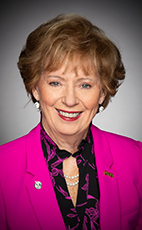
House of Commons photo

Track Judy

Your Say

Elsewhere

Crucial Fact

  • Her favourite word is together.

Liberal MP for Humber River—Black Creek (Ontario)

Won her last election, in 2025, with 56% of the vote.

Statements in the House

Maulana Naseem Mahdi Sahid June 1st, 2022

Mr. Speaker, it is with a heavy heart that I rise today in memory of a great man, Maulana Naseem Mahdi Sahid, a dear friend of mine for over 30 years. He left this world last week.

Naseem was a loyal and trusting friend that I, my husband Sam and the rest of our family are honoured to have known. He was born in Pakistan, arriving in Canada in May of 1985 as head of the Canada Jamaat, and served as well in many other countries.

I first met him in Toronto, where he was already a well-respecting and loving mubaligh. He impacted thousands of families and left quite the footprint through things such as the Baitul Islam Mosque, Peace Village and the Ahmadiyya Abode of Peace. He was a champion of interfaith harmony.

Naseem believed that at the core of everything was love and peace and that by working together we could achieve this for the world. He did not believe in just co-existing; he believed in existing as one. I will never forget the work he has done, the love he has shown and the many things he has done for all of us as Canadians.

Naseem's legacy of love and community remains, and I thank him for sharing it with me and every other person who was blessed enough to have encountered him. Rest in peace, dear friend, until we meet again.

Committees of the House May 30th, 2022

Mr. Speaker, I have the honour to present, in both official languages, the first report of the Standing Committee on International Trade, entitled “Main Estimates 2022-23: Vote 1 under Canadian Commercial Corporation, Vote 1 under Invest in Canada Hub”.

Canada-Ukraine Parliamentary Program May 11th, 2022

Mr. Speaker, I am happy to rise in the House today to welcome the Canada-Ukraine parliamentary program class of 2022 as it begins its first full week here in Ottawa.

This program began in 1991 under the authority of the then Speaker of the House, John Allen Fraser, and happened every year until 2020, when it was put on hold due to COVID‑19.

This year, we welcome back the program with the largest number ever having participated, and for the first time they are all women. All 40 interns will be working in the offices of MPs from different parties until the House rises for the summer, and will have the opportunity to learn more about Canadian government and parliamentary procedure.

This program began in the same year the Ukraine parliament adopted its declaration of independence, and has produced over 1,000 alumni, including current Ukrainian cabinet ministers. It is fitting that the program is returning this year, even though the road has been far more difficult. This is why I invite all members of the House, and their staff, to join us tonight at the Metropolitain in support of these resilient young women who continue to work for a democratic and free Ukraine.

The Budget April 26th, 2022

Madam Speaker, I can say that over the last last two and a half years that we have been dealing with the pandemic, nothing has made me more proud of our government than the amount of help that we put out there for people who were losing their jobs or did not have jobs to go to any longer. With the monthly support they received and the help that we gave to businesses, the job numbers are now back up to pre-1974 levels, and a lot of that is because this government handled the pandemic and those challenges the correct way.

The Budget April 26th, 2022

Madam Speaker, the member for Windsor West and I have been working together for I do not know how many years now. We very often have similar thoughts. I would be very interested to see what is in the bill. To find the opportunity to dedicate land as a national park is a wonderful idea. I look forward to seeing what is in the bill my hon. colleague has brought forward and to hopefully support it with him.

The Budget April 26th, 2022

Madam Speaker, I do not want to be too blunt about it, but the reality is that the federal government passes millions and millions of dollars down to the provinces for health care and so on, but the provinces' priorities are not always the same priorities that we at the federal level maybe think they should be.

On the issue of dental care, many of the provinces probably would have never got around to doing it because it is all about decisions. I am glad that we are supporting something this important. We were headed in that direction, and I suspect in the next election we would have been covering off dental care, but we were able to move forward sooner and it is that much better.

The Budget April 26th, 2022

Madam Speaker, I am pleased to see you in the chair and pleased to be back in the House. I hope everybody had a restful period of time and we are all back here now.

As I rise in the House today to speak to this year’s budget, I will be sharing my time with the member for Mississauga—Streetsville, a wonderful new member of Parliament we have here who is doing great things and who is great to work with.

Several weeks ago, when it was announced that our Liberal government had made a supply agreement deal with the New Democratic Party, I was concerned about that, and I made that known. I am a firm believer in helping and supporting not just Canadians, but those all over the world as we continue, but I am also, like many of my colleagues, a very strong believer in fiscal responsibility. With our country still in an unknown due to COVID, a war on Ukraine, and any other potential things that could come our way, I was unsettled about how we could meet those needs and still remain financially responsible as a government.

I have to congratulate my hon. colleague, the Minister of Finance, as I no longer have those concerns because she struck the perfect chord in this budget. My concerns about the arrangements that we had made on the supply deal and the impact it was going to have on the direction of our government were very much unfounded, because we were able to produce a budget that, yes, delivered on things that mattered to other people but, importantly, we were fiscally responsible, and I was very pleased with all of that.

Before I speak further on the budget, I want to mention page 101, which says, “Protecting Our Freshwater”. It might sound like an odd thing to be concerned about as a Toronto member, but we have to be concerned about our lakes. It is an ongoing subject that I have been involved with for some time when it comes to the invasion of sea lamprey in our lakes and the agreements that we had between Canada and the U.S. We were not paying our share to ensure that the invasive sea lamprey were not allowed to continue to cause the kind of damage that they do in the Great Lakes.

I have been lobbying on that issue with my former staff member Greg McClinchey and others. With the help of the member for Niagara Centre and his continued persistence, it is in the budget, with significant funds that will truly be our support in dealing with invasive species like that. I want to congratulate Mr. McClinchey and the member for Niagara Centre for pushing it over the line. I am glad it is done. It does not matter who gets the credit if it gets done, and it is going to make a difference in the Great Lakes and our cities.

The other issue that matters a lot to the residents of Humber River—Black Creek is that all of the provinces have finally signed an agreement for affordable day care, something with which I go back to the previous prime minister Martin, trying to get child care then. That was at least 12 years ago. Well, we finally got it over the finish line and we have agreements with all of the provinces and the territories for an early learning and child care infrastructure fund in the budget. It is going to make a huge difference in the lives of residents in Humber River—Black Creek. Many of the parents in Ontario will be able to save an average of $6,000 per year per child by the end of 2022.

What I see as most important for the residents of Humber River—Black Creek is the fact that many of the families have had to have one member of the partnership stay home, and I know that these women, many of them, wanted the opportunity to go to work. They could not find child care that was affordable. Well, now they will have child care that is affordable. They will be able to go back to school. They will be able to pursue a career. It will make a huge difference in their lives. Otherwise, they had to wait until their children were significantly grown up in order to be able to actually get on to work.

When we look at seniors in poverty, which is an issue we have talked a lot about over the many years I have been here, every year we manage to reduce the number of seniors in poverty. However, if we turn around and make sure, and this is what we are doing with child care, that we provide women and men the opportunity to work, because their children are going to be in a safe day care, an affordable day care opportunity, they can go to work and contribute to their pensions from early on, not having to wait until their children are completely grown up and out of the house before they can go to work. The cost of child care has been exorbitant and parents were simply having to make a choice. They could earn money, but they would pay it all out in child care, so it just did not make any sense for them to go forward. The more Canadians are working, the better our economy will be.

Since our government took power in 2015, we have brought forward six other budgets. Many of them have included great things that have helped the residents of Humber River—Black Creek, such as the Canada child benefit. We should not forget all the families that are benefiting throughout this country. We have helped 435,000 families out of poverty since 2015 and continue to provide almost $7,000 per child to families this year. We are increasing the minimum wage. We have also increased the amounts for the GIS and the old age security pension, things that matter to many people.

We have made investments in workers. As a result of the pandemic, we realized just how important it is to have paid sick days. We can keep our head in the sand all we want, but the reality is that if people are sick and have to pay rent and put food on the table, they are going to go to work, sick or not, and that is very unfortunate. Having 10 paid days of sick leave for federal and private sector employees will make a difference in the lives of many Canadians as we move forward.

We are increasing climate action incentive payments. Most families in my riding are going to receive over $800. I am certainly talking to them about paying attention to how they file their income tax, because there is almost $800 coming back as a result of the carbon tax that they continue to hear people criticize. It is putting money back into the pockets of many people.

I talk a lot about how important it is to use a budget to be fiscally responsible, but also to give people a hand up as we move forward, and dental health is one that we as a party and certainly I have talked about many times. I talk to people in my riding who are having a tough time and cannot get a job. They have missing teeth, and even when they try to pull themselves together to present themselves for a job, clearly they do not present themselves well because they do not have the money to have proper dental health care. We, as Liberals, have talked about it, and I think this agreement we have is a major boost. Yes, it is going to cost a lot of money, but if it makes people's mental health and physical health better as a result of having proper dental care, I think it makes a huge difference. We are phasing it in, again, in a fiscally responsible way. I think those things are very important as we move forward.

On housing, I cannot tell members how happy I am to see the amount of money going into housing, and how well we are doing with that. It is a huge subject. If people do not have a place to live or a roof over their head, it does not matter what else we do for them; that is what they need, so investing in affordable housing and making it all move forward is an extremely important thing. I am thrilled to see the amount of money that is going into housing. Co-op housing in particular is something that I have a real interest in. I would like to see a lot more of that built throughout the country, especially in Humber River—Black Creek, for the residents there.

Madam Speaker, I can see that my time is up. Thank you very much for the opportunity. I think it is a great budget, and I am very proud to stand and support it.

Petitions March 31st, 2022

Mr. Speaker, I am pleased to present a petition, as my colleague did previously, on the issue of the terrible war that is happening in Ukraine.

This petition was signed by thousands of Canadians and recognizes that the Russian Federation has launched an unprovoked war against the people of Ukraine and that the Russian Federation has committed multiple war crimes against the people of Ukraine. The Russian invasion has triggered a human rights, humanitarian and displacement crisis, the worst such catastrophe in recent European history. As of March 10, 2022, the World Health Organization estimates that at least 18 hospitals have been attacked by Russian forces since the beginning of the invasion.

Given the fact that the Canada is home to 1.4 million citizens of Ukrainian descent and has a deep and unflinching commitment to the people of Ukraine, 80% of Canadians support or could accept the government's decision to allow Ukrainians to stay in Canada permanently.

Committees of the House March 31st, 2022

Mr. Speaker, pursuant to Standing Order 107(3), I have the honour to present, in both official languages, the second report of the liaison committee, entitled “Committee Activities and Expenditures: April 1, 2021 - December 31, 2021”.

This report highlights the work and accomplishments of each committee, as well as detailing the budgets that fund the activities approved by the committee members.

Retirement Income March 29th, 2022

Mr. Speaker, I am really pleased to stand and speak to the motion put forward by the hon. member for Etobicoke North.

I listened to the previous speaker's comments about her mom being in a retirement home and the added expenses and so on. The whole core of the motion my colleague put forward is to talk about RRIFs and the fact that when someone is 71 years of age, they have to start taking out the money that they put away for years. That takes a lot of the money. People are living longer, and they are being forced to start taking money out at 71 years old, which often puts them in a higher tax bracket. By the time they are in their mid-80s, they often do not have any funds left. They were forced to take all of their savings when they did not even need it, and then they were taxed on it.

As we promote RRIFs and RSPs and all these programs that we bring in, we have to pay attention to what happens when people get to be 71 and are forced to start taking money out of their RRSPs at a much higher tax rate. If a senior ends up in a retirement home or another centre when they are in their mid-80s, they have limited funds. How long is their money meant to last?

The whole intent of the motion that my colleague has put forward is to focus on the issue of RRIFs and to get the government of the day to change the current system and allow people to hold on to their RRSPs until 75 or 80 or whatever the magic number is. People are living much longer, so they need to hold on to their money and not end up having to give it back to the taxman.

Back in the days of the Harper government in 2010, I was the critic for seniors. We did a study and a white paper on the whole issue of what we needed to be doing for seniors. It was a variety of things. One of them was of course to change the RRIFs. That was in 2010. We were talking about the very issue that my colleague has on the table now, to change the RRIFs so we would not have to start pulling out all of our savings at 71 years of age.

I would fully expect that everybody in the House would support something that makes sense and would end up helping seniors, because I know we all have the same feelings for seniors and we want to make sure we are helping them as much as we can. After this motion is passed, I would hope that within the 12-month period of time, the government would come back with a recommendation specifically saying that it is going to change the 71 years of age requirement to a minimum of 75 years of age to help the very seniors we are talking about.

In this motion from my colleague, we are not talking about the OAS and the GIS and the seniors at that level. This is specific to the RRIF program. The withdrawal rules are outdated and antiquated, and as much as we have made a lot of changes and helped seniors a lot throughout the pandemic and so on, ultimately we have to change some parts of the tax system that penalize people.

We do have a Minister of Seniors in the government now. We had a minister of seniors previously. Ms. Schulte was the first minister of seniors, and she spent an enormous amount of time and effort on behalf of all of seniors in Canada to bring forth a variety of changes. Whether we are talking about the OAS or the GIS, there were changes and constant discussions on how we could make the lives of our seniors that much better.

Loud voices need to be happening. This motion gives us a chance to continue that discussion, but it has to be focused on the RRIFs. We need the tax changes to happen. The majority of Canadians are going to live long past the retirement age of 65. We know that. I believe the median age is already 84 or 85.

I go to a lot of birthdays now for people who are 102 and 103. By the time they get there, they do not have anything left because they have taken the money out of their home and used it all. Retirement homes and nursing homes are quite expensive. The seniors who are calling us and talking to us want us to make sure that, if they are prepared to save their money and they have it, we should let them keep it and not force them into withdrawals so they end up not having the money to pay the bill at the retirement home. Then their children end up having to contribute more than what is necessarily the purpose for them to do.

If we can stay focused on what the motion is about, we can have a discussion at committee so that we start talking about what tax changes can be made to help the very people that each and every one of us cares about in the House. The criticism is that it will be another study. However, it will be a study focused specifically on RRIFs, and it will give us a chance to have a bigger conversation about what happens when people are 65, 70 and 75. If they have savings, are they forced to take it out? Yes, currently they are forced to take it out and they end up having to give probably a good third of that back to the tax man.

I am proud to be part of the government, but I am not proud to be under a government that is taking seniors' money and making them have to pay taxes on it. They worked all their lives to save that money. They should be allowed to take it out as they need it, not be forced to do so at any particular age. I want a complete abolition of having an age when we have to start withdrawing our RRSPs and the rest of it. The goal for me in supporting the motion is to see that it gets eliminated completely. If seniors have $100,000 in bank, let them draw it out as they need it as they get older, especially given the fact that people are living to 101 and 102 years old.

That is the focus that I see in this motion. It is to keep these kinds of discussions going so that we all work together to get this change to happen. It will take all of us working together and pushing the government of the day to make this happen. In 12 months, there will be a report, whether we agree with it or not. If we do not agree with it, then it is up to us to change it.

This is an opportunity for us all to make a difference here in the House on this motion, and I hope that everybody will support it. I know my colleague puts it forward with the utmost sincerity because she has seen it herself and wants to make sure that we make the changes that are going to help. Many of those changes could end up helping many of us in the House today.