
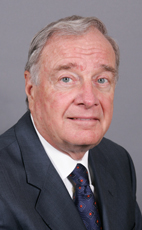
House of Commons photo

Crucial Fact

  • His favourite word was tax.

Last in Parliament September 2008, as Liberal MP for LaSalle—Émard (Québec)

Won his last election, in 2006, with 48% of the vote.

Statements in the House

Taxation December 13th, 1996

Mr. Speaker, the context in which the Prime Minister made his statements is very clear and a matter of record. They make it clear that the government was unable to give up the $15 billion to $18 billion of revenue.

The fundamental issue is the nature of the public debate within this House. Somebody, for whom I have an enormous amount of respect, once told me that when one enters politics and it comes down to the basic decision of what is good for the country, if there is any difference between that and what is politically right then integrity is doing what is good for the country.

My colleagues of cabinet who are here and indeed those who are in caucus know full well that at the very first cabinet meeting we had, the first thing the Prime Minister said to all of us was that in any individual instance if a choice has to be made between what is politically right and what is right for the country we will choose what is right for the country in every single instance. In cabinet, the Prime Minister has chosen to do the right thing. I will tell members right now that he is a man of great-

Taxation December 13th, 1996

Mr. Speaker, as are most other industrial countries, Canada is going through fundamental economic change as a result of the technological evolution. As a result of the interdependence of global trade, as a country we are doing very well.

The House of Commons ought to be debating the fundamental issues of the day, yet what do we hear day after day? Reform Party members stand up, totally disconnected from the reality of the Canadian people and engage in personal attacks. They attack minister after minister, member after member, because they are unable to deal with the issues that concern Canadians.

Canadians want to talk about unemployment and how they can get back to work. What Canadians want to talk about is the preservation of their social programs. When will the Reform Party wake up and smell the roses and understand that Canadians want the House to deal with their problems?

Taxation December 13th, 1996

Mr. Speaker, I think the Canadian people would like to know this. Members of the Reform Party were part of the finance committee that went across the country. They said they supported the harmonized tax. In fact Reform members said they would go beyond the harmonized tax and would tax food and drugs. We said we would not do that.

How can the Reform Party stand up in the House and criticize the harmonized sales tax when it is part and parcel of its policies?

Taxation December 13th, 1996

Mr. Speaker, every time I heard the Prime Minister deal with the question of the

GST, he put it within the context of a government that was unable to give up $15 billion in revenue.

The Prime Minister made it very clear it was crucial to sit down with the provinces and come up with a simplified system that would work. What the Prime Minister said was what this government did.

It put in place a House of Commons finance committee that went across the country for two and one-half years. It looked at 20 alternatives. At the end of the piece those who were creating jobs, the small and medium size business community, said to us: "We would like to see a harmonized tax. We want to see one tax auditor, one set of tax forms".

This government wants to create jobs, unlike the myth on the other side. Basically that is what the small and medium sized business community did and gave us a tax system that is going to work.

Goods And Services Tax December 13th, 1996

Mr. Speaker, I have already responded to the hon. member's question, and I have already responded to Mr. Landry: we have offered compensation to the provinces which sustained losses. Quebec did not. Ontario will not. The same goes for Alberta and British Columbia.

I do not think the hon. member would want me to offer compensation to provinces which did not sustain a loss. That would make no sense.

Goods And Services Tax December 13th, 1996

Mr. Speaker, the hon. member is well aware that, when fundamental changes occur in a province or in a region of the country, it is the responsibility, the duty, of the federal government to help that province or region to adjust. We have, moreover, done just that on many occasions for Quebec. We have done so on many occasions for the western provinces.

We made an offer to the provinces which would have sustained a loss of revenue as a result of harmonization. We offered to help those provinces. The ones eligible were the Atlantic provinces, Manitoba and Saskatchewan. The provinces which were not eligible under the criteria were Ontario, Quebec, Alberta and British Columbia. The three Atlantic provinces accepted the offer.

Goods And Services Tax December 13th, 1996

Mr. Speaker, I repeat.

Here in this House-and the Prime Minister happened to be here- I was speaking for the government. When a minister speaks in the House, he does so for the government. I gave the circumstances, and I made the statement.

Once again, I think that we should look at what the Prime Minister said during the election campaign, even in the interview cited by the member. The Prime Minister said, in English:

We will look at other alternatives. All sorts of systems are being proposed. We wanted to take the time to sit down with the provinces. That is what we did. We wanted to listen to business people. That is what we did. We wanted to listen to citizens. That is what the Prime Minister said and that is what we did.

That is what we did. The House finance committee took two and a half years to look at 20 options. In the end, they heard from small and medium size businesses, those that create the most jobs, and we did what they wanted to do, which was to institute a process for creating a harmonized tax, which is much simpler and more effective when it comes to job creation.

Goods And Services Tax December 13th, 1996

Mr. Speaker, the member is well aware that, when I made the statement here in the House, I did so for the government.

Goods And Services Tax December 13th, 1996

Mr. Speaker, I believe the member is quoting from an interview given by the Prime Minister on CFRB on August 26. I would like to put the quotation in context by giving it in its entirety.

"Yes, I will abolish it, but I need the money. It is taking $15 billion and I will have to collect another $15 billion. So you go and sit down in a very civilized way and say to the provinces that the poor small businesses have items with federal tax, other items with provincial tax, or both, or sometimes none. So we have to clean up that mess and produce $15 billion".

I think the member should at least be honest enough to quote the Prime Minister in context.

Taxation December 12th, 1996

Mr. Speaker, virtually every time a member of the Reform Party stands to ask a question, the member contradicts their party's established position.

The Prime Minister yesterday and today read from the Reform Party's report on the GST its unequivocal support for harmonization. He has read its unequivocal support for tax in pricing. Yet day after day members of the Reform Party stand and contradict it.

There is another question the Prime Minister might ask them. Members of the Reform Party stand and say that they would like to see tax cuts. Perhaps the members of the Reform Party would then tell us why is it in their report on the GST that they advocated the base be broadened to tax food and drug products?