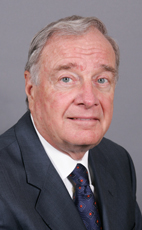
House of Commons photo

Crucial Fact

  • His favourite word was tax.

Last in Parliament September 2008, as Liberal MP for LaSalle—Émard (Québec)

Won his last election, in 2006, with 48% of the vote.

Statements in the House

Poverty December 12th, 1996

I have before me the figures for average family incomes in Canada. In 1989, the average annual family income was $58,000. In 1993, when we came to office after three years of Conservative government, the annual income had dropped from $58,000 to $54,000. Today, it is going back up, at $55,000.

Poverty December 12th, 1996

Unfortunately, Mr. Speaker, the Leader of the Opposition has got the numbers wrong. Since the beginning of the year, even thouh there has been a loss of around 45,000 jobs in the public sector, over 200,000 new jobs were created in the private sector in Canada.

Furthermore, in the preamble to his first question, the Leader of the Opposition spoke about family income. I would like to tell him that the truth of the matter is that family income has gone up since we came to office in 1993. Before then, family income had dropped dramatically during the recession between 1989 and 1991. But since we have come to office, not only have we halted this decline, but we have seen family income start to climb.

Taxation December 11th, 1996

Canadians are entitled to know what the real tax agenda of the Reform Party is.

Taxation December 11th, 1996

Mr. Speaker, the Canadian people are entitled to know what the agenda of the Reform Party is. Reform stands up in this House and talks about taxes, what it would do with taxes and about what the government does. I think the Canadian people would be very interested in

knowing what the hon. member himself, as he sets out the Reform Party program on the Internet, says about what we have done.

The Reform Party has criticized the government for eliminating the tax advantages for family trusts. The Reform Party has criticized the government for taking measures to combat the underground economy. Reform would let tax cheats off the hook and would call it tax breaks.

The Reform Party has criticized the government for the elimination of the preferential rate for large corporations. Reform does not believe that we should help small businesses.

Unemployment December 10th, 1996

Mr. Speaker, we as a government did not adopt the scorched earth policy of either the Reform Party or the Conservative Party in our approach to the deficit. We simply wanted to deal with the question of growth in the economy and the consequent employment that would flow therefrom.

As a result we have put enormous amounts of money into technology partnerships, as stated by my colleague the Minister of Industry. As my colleague the Minister of Human Resources Development has said, we have put enormous sums of money into youth employment. The Prime Minister's Team Canada approach has paid tremendous dividends to the country.

The hon. member may have learned something from that report, but because of the devastating effects of unemployment the government has taken the decisive action it has taken. As a result we will continue to do so.

The hon. member talked about having stakeholder meetings. We have done that with the business community. We have done that with the Canadian Labour Congress. We have done that with virtually every stakeholder. We will continue to meet with Canadians to create employment in Canada.

Canadian Economy December 9th, 1996

Mr. Speaker, perhaps I could provide some figures to help the hon. member.

The annual rate of 3.3 per cent in the third quarter is the highest rate since the end of 1994. Since we came to power, three quarters of a million new jobs have been created in this country.

Interest rates are at their lowest level in 40 years. Inflation is low. Manpower productivity is rising. Our competitive position, compared with the United States, is the best it has been in 46 years.

Let us take a look at what kind of shape the country was in three years ago when we took office. There were 39 tax increases and we have not increased personal taxes once. The debate is now how to lower them. We have become the major exporting country in the world-

Unemployment December 9th, 1996

Talking about partnerships, Mr. Speaker, if the hon. member wants to take a look at what the government has introduced, whether it is technology partnerships by the minister of energy; Team Canada which has become one of the most important innovations in international trade around the world and is in fact a partnership with the federal government, the provincial governments and the private sector; or the multitude of youth programs introduced by the minister of HRD, he would see before him a government committed to partnership. It is the reason the private sector created over three-quarters of a million jobs.

In terms of Saskatchewan we are delighted to see the tremendous number of new jobs created, with retail sales going up as a result of the agricultural boom occurring in western Canada. I would certainly thank the senior minister from Saskatchewan, the minister of agriculture, for what is going on in Saskatchewan.

Transfers To Provinces December 9th, 1996

Mr. Speaker, first of all, as regards equalization transfers, Quebec comes out the winner. As for subsidies to industry for job creation like those to the aeronautical and pharmaceutical industries, Quebec comes out the winner.

I think it is very important that we not allow any region of the country to attack any other. The member is absolutely right. When the federal government transfers money to the provinces it does so to protect the basic social programs. If those are visible like child care, like the working income supplement and the protection of medicare then this government will keep on doing it.

Transfers To Provinces December 9th, 1996

Mr. Speaker, as regards transfers to the provinces, the key objective is to help the most disadvantaged members of our society, those who are in need, and to do so in partnership with provincial governments. This is why we gave two years notice before making the cuts. This is also the reason cuts to the provinces are less than the cuts at our end, these cuts represent less than 3 per cent of their revenues. Yes, we have made cuts, but in manageable amounts.

Transfers To Provinces December 9th, 1996

Mr. Speaker, between 1993-94 and 1998-99, direct government spending will decrease by over 12 per cent. As for provincial transfer payments, the reduction will be less than 8 per cent.

At the same time, it must be pointed out that when provincial transfer payments were reduced, the reduction was less than 3 per cent of provincial revenues. This is a completely acceptable cost. Not only that, but when one looks at the cuts provincial governments have made in payments to their municipalities, we have cut much less.

That having been said, let us look at what was done in the last budget. Not only did we set an $11 billion ceiling-not a ceiling, a floor-to protect provinces, we included a formula that will see transfer payments increase after 1998.