
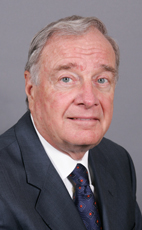
House of Commons photo

Crucial Fact

  • His favourite word was tax.

Last in Parliament September 2008, as Liberal MP for LaSalle—Émard (Québec)

Won his last election, in 2006, with 48% of the vote.

Statements in the House

Transfers To Provinces December 9th, 1996

Mr. Speaker, for one thing, when we made cuts, they were much deeper in our own case, in order to reduce direct federal government spending.

Moreover, it is very clear that, when the time came to make cuts, we could not ignore the fact that 20 to 25 per cent of our spending was in the form of transfer payments to the provinces. At the same time, as the Prime Minister has just said, we did not touch equalization payments. Furthermore, I can tell you that equalization payments alone amount to $3.9 billion dollars, or 45 per cent of the total, for Quebec.

That being said, when we look at measures to help the most disadvantaged members of society, to help children living in poverty, to help students, a question comes to mind: Why did the Bloc Quebecois vote against all these measures?

Finance December 9th, 1996

moved:

That the House take note of the fifth report of the Standing Committee on Finance presented to the House on Thursday, December 5, 1996.

Taxation December 6th, 1996

Mr. Speaker, the hon. member has the flu, so I also understand this is sometimes hard to follow.

The member just explained the exact situation. The tax is determined when the emigrant leaves the country. The capital gain taxable in Canada is the difference between the purchase price and the value when the emigrant leaves the country. The gain is realized when the item in question is sold, which is the same as when this happens in the country.

Taxation December 6th, 1996

Mr. Speaker, a capital gain is realized when the item in question is sold. That having been said, since we have the right to tax residents, we want to ensure that someone who is a resident and who becomes a non-resident pays us the tax when it is due. The tax is determined when the emigrant leaves the country.

If the emigrant did not sell the item, this is treated the same way as if someone had something to sell in the country, that is, when it is sold, the tax is payable, except that it is determined when the emigrant leaves the country. That is where we ask for the security.

Taxation December 6th, 1996

Mr. Speaker, that is not what the Reform Party is suggesting.

The Reform Party has said that its very first act will be to cut $3.5 billion in welfare payments. At the same time Reform has said that none of its positive programs will come in for years after it has in fact devastated the social fabric. That is the basis of the Reform program.

In last year's budget the government doubled the working income supplement. That helps poor Canadians. In last year's budget the Minister of Justice and myself announced a tremendously reformed set of social programs for families with a custodial parent who is having difficulty.

If we look at the caregivers credit and every single measure of our budget, they were all directed to helping low income Canadians. The only question that comes up is: Why did the Reform Party vote against every one of them?

Taxation December 6th, 1996

Mr. Speaker, it is incumbent upon the Reform Party to put the full impact of its program before the Canadian people and before the House.

While Reform advocates a tax cut, that tax cut will only come well down the peace and substantially two to three years after the Reform Party has in fact cut the Canadian health and social transfer, cut equalization payments, after it has cut the basic social programs upon which those very Canadians rely. It is simply not reasonable or an accurate representation of the facts for the Reform to stand in the House and talk about a tax cut when what they would do would be to impose an unbearable financial burden upon low income Canadians.

Employment December 6th, 1996

Mr. Speaker, unfortunately again the hon. member's facts are wrong. If we look at the 200,000 jobs that have been created this year, the vast majority are full time, permanent jobs.

Most economists, for instance Rosenberg from Nesbitt Burns has said that as a result of the low interest rate policies of this

government, over $5 billion of new purchasing power has been put into the pockets of Canadians. If the hon. member refuses to fully read reports of outside advisers, perhaps he might look at what his own party has said.

In its 1995 taxpayers budget, the Reform Party advocated a slash and burn course and then went on to say: "Under the Reform's taxpayer budget the short term employment impact of spending and deficit reduction is negative but manageable". What is manageable: the loss of 30,000 jobs, the loss of 50,000 jobs, the loss of 100,000 jobs? That is what Reform has advocated. We are creating jobs.

Employment December 6th, 1996

Mr. Speaker, it is pretty clear that the hon. member opposite has not had the opportunity to read the full CGA report which he has just cited.

Reform members say that they want a faster deficit reduction. They are advocating slash and burn policies. In the CGA report the accountants have suggested slower deficit reduction than what we are engaging in. Furthermore, if I might quote from the CGA report: "To give credit where credit is due, two years ago we could not have even considered entering into this debate on a tax reduction". What the CGA is saying is that it is the policies not of the Reform Party but of the Liberal government that are giving us the success in cleaning up the balance sheet and allowing us to have the debate which we are now engaged in.

Employment December 6th, 1996

Mr. Speaker, over the course of the last year, over 200,000 new jobs have been created in the private sector. Quite clearly one should look at the tendency over a longer period of time. There were 7,000 new jobs created as was announced by Statistics Canada this morning.

It is the overall job creation that is by far most important. When we look at the G-7 countries, outside of the United States, Canada this year and last year has created more jobs than any other G-7 country. This is as a result of the economic climate created by this government and the desire and the ambitions of Canadians for which we should all be proud.

Status Of Women December 6th, 1996

Mr. Speaker, it is exactly the other way around. For instance, and I am following up on what my colleague said, the new old age benefit announced in the last budget is intended to deal with the concerns raised in the report.

Seventy-five per cent of elderly persons will benefit under the new system. Benefits will be the same or exceed those now received by the elderly. We announced an increase for those receiving the annual $120 supplement, because we too are concerned about the problem of violence against women, especially older women.