
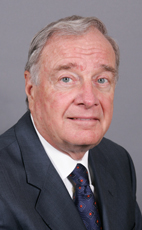
House of Commons photo

Crucial Fact

  • His favourite word was tax.

Last in Parliament September 2008, as Liberal MP for LaSalle—Émard (Québec)

Won his last election, in 2006, with 48% of the vote.

Statements in the House

Taxation December 3rd, 1996

Mr. Speaker, the Reform Party owes it to Canadians to put the true facts forward on what its plan is.

If those low income Canadians lived in one of the seven provinces receiving equalization, they would not get the same level of public services to which they are entitled now as a result of what Reform has said. If somebody in a family happened to get sick and the province in which they lived had to absorb a $4 billion cut to the Canadian health and social transfer that the Reform Party has advocated, they would be in deep difficulty.

If that family required the Canadian pension plan or help in old age it would not get it because what the Reform Party has put in front of the Canadian people is a pension plan for upper income Canadians and would deprive lower income Canadians.

It is time Reform laid the facts on the table about what it is suggesting.

Taxation December 3rd, 1996

Mr. Speaker, if the hon. member will look at the vast range of measures which the government has brought in-the working income supplement, help for poor families, help for caregivers-she will see that we have done exactly that.

If she will also look at her own numbers, she will find that those low income families for whom she is now saying she would provide relief will receive a minuscule amount of relief compared to the amount of relief the Reform Party is prepared to offer upper income Canadians.

By cutting health care and by cutting equalization she is probably taking money away from low income Canadians to give it to their rich friends. That is simply not on.

Canadian Airlines December 3rd, 1996

Mr. Speaker, that is not what I said yesterday. I said that the offer to be made by the Minister of Transport is based on a precedent dating from the early 1990s and that the government has the key elements of the offer. In due course, when the Minister of Transport is ready, the government will announce the details.

Taxation December 3rd, 1996

Mr. Speaker, the Bloc Quebecois critic is wrong.

As soon as taxes are due they have to be paid. If they are not paid, interest will be charged. In the situation described by the hon. member, if a tax is not due, no payment is required. Payment is only required when taxes are due.

Taxation December 3rd, 1996

On deferred taxes? Is that it?

Mr. Speaker, the hon. member knows perfectly well, and if he does not, he can ask any accountant in his party, that deferred taxes are not taxes due. Taxes are due in cases where companies make a profit. If they make a profit, they will pay taxes immediately. Unfortunately, the hon. member is wrong once again.

Taxation December 3rd, 1996

Mr. Speaker, we closed the loophole with the ways and means motion. That is very clear.

Now, if the hon. Leader of the Opposition thinks the tax experts in the private sector are going to give up trying, he has another think coming. We know very well that they will keep trying it on for size, that is how our system operates. But, I tell you, the loophole has been plugged. They will keep on trying, and we will keep on plugging the holes. That is how our system operates.

Income Tax Act December 2nd, 1996

moved for leave to introduce Bill C-69, an act to amend Income Tax Act, the Income Tax Application Rules, the Bankruptcy and Insolvency Act, the Canada Pension Plan, the Children's Special Allowances

Act, the Cultural Property Export and Import Act, the Customs Act, the Employment Insurance Act, the Excise Tax Act, the Old Age Security Act, the Tax Court of Canada Act, the Tax Rebate Discounting Act, the Unemployment Insurance Act, the Western Grain Transition Payments Act and certain Acts related to the Income Tax Act.

(Motions deemed adopted, bill read the first time and printed.)

Canada Savings Bonds December 2nd, 1996

Mr. Speaker, I would be delighted to. As the hon. member knows, this is the first year of the new government retail debt agency, Canada Investment and Savings. In this, the first year, I am delighted to say that 1996 Canada savings bonds sales have totalled $5.7 billion, an increase of 24 per cent over last year.

After redemptions the sales were 38 per cent higher than last year. This reflects partially certainly the innovative 10 year guaranteed minimum pricing structure that is so well suited to Canadians.

For those who might not have had a chance to buy Canada savings bonds and who would like to, the government will be introducing a new retirement savings product to be launched in February in time for the RRSP season.

I would like to thank all participating employers for their efforts and all Canadians who bought Canada savings bonds.

Taxation December 2nd, 1996

Mr. Speaker, could the members of the Reform Party explain why it is that in this House they voted against the doubling of the working income supplement? Can they explain why in this House they voted against broadening eligibility for the child care expense deduction, why they voted against extending the age limit for children? Can they explain why they voted against enriching the tax credit for infirm children? Can they explain why they voted against improving the child support amendments brought in by the Minister of Justice and by this government?

Can the Reform Party explain why it is since it has taken office it has voted against every single piece of progressive legislation brought forth in this House?

Taxation December 2nd, 1996

Mr. Speaker, it should be made very clear lest the Reform Party members are trying to convey another impression, that their budget would deal a devastating blow to the working poor.

The Reform Party would cut welfare. Reform members have said themselves that they would cut welfare substantially. They have said that they would cut equalization payments. Does that mean that the working poor in Atlantic Canada, Saskatchewan and Manitoba are not entitled to a fair shake? They would cut health care upon which the working poor are so dependent.

What we have essentially said is that we will provide directed programs to help the working poor. As the Minister of Human Resources Development has said, in the last budget we doubled the working income supplement from $500 to $1,000. That is money in their hands which is what the working poor require.