
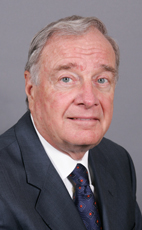
House of Commons photo

Crucial Fact

  • His favourite word was tax.

Last in Parliament September 2008, as Liberal MP for LaSalle—Émard (Québec)

Won his last election, in 2006, with 48% of the vote.

Statements in the House

Canada Pension Plan November 25th, 1996

Mr. Speaker, as the hon. member knows, when the finance ministers met there was, by and large, a consensus for the necessity of having a fuller funded plan and that, in fact, the moneys should be invested at arm's length from governments by an independent investment group.

To the extent that deals with the member's question, I believe there is consensus across the country on that particular issue. Hopefully we will be able to move to consensus right across the board because I believe that all members of the House would agree that the Canada pension plan is indeed an essential pillar of the Canadian retirement system. I would suggest that all provincial governments, as well as the federal government, deal with this as quickly as possible.

Taxation November 25th, 1996

Mr. Speaker, I would simply ask the hon. member to go back to the byelection which took place in Labrador when the Reform Party was prepared to stand up and speak for Atlantic Canada. Now all of a sudden, having lost that byelection as well as every other election in Atlantic Canada, Reform members are taking out their vengeance on Atlantic Canadians, saying "we will not allow you to have a lower tax rate, we will not allow you to have lower consumer costs, we will not allow you to break away from a cycle of dependence, toward independence".

The hon. member asks when was the last time we had unanimity in this country. I will tell him. It was when Canadians from coast to coast to coast said "the Reform Party has had it; it is going down the drain". They do not want to have anything more to do with those vicious policies it stands for.

Taxation November 25th, 1996

Mr. Speaker, the hidden agenda of the Reform Party is very clear. It comes out in its body language, it comes out in the words it uses.

The hon. member uses the words hush money. Any time money is transferred to Atlantic Canada it is hush money. It was not hush money when Ontario received stabilization payments from the federal government. It was not hush money when western Canadian grain farmers were given the support for agricultural payments. It was not hush money for the Reform Party when the Alberta tar sands were given a very important deal that would create jobs there.

But transfer a penny to Atlantic Canada and it is hush money and the reason is the Reform Party refuses to take a pan-Canadian view of this country. The Reform Party refuses to understand that the regions of this country support one another.

The problem that exists here is that the Reform Party simply has given up on Atlantic Canada while the Liberal Party has not. We believe in Atlantic Canada.

Taxation November 25th, 1996

Mr. Speaker, in terms of the Greenberg stores, the fact of the matter is the stores, indeed all retailers in Atlantic Canada, will gain as much if not more as a result of the introduction of input tax credits than any other cost.

At the same time, the minister of finance in New Brunswick stated very clearly that he is prepared to sit down with any of the retailers in New Brunswick, as indeed are the other ministers of finance, to make sure tax inclusive pricing is introduced in a way that will not cause hardship but that will in fact give consumers what they want.

The issue nonetheless that remains in this House is why the Reform Party has supported in House of Commons committee and in fact in its own official program, all 18 versions of its own official program, tax harmonization. Why is it prepared to support it in principle but when Atlantic Canada wants to do it in order to

make its small and medium size business more competitive, to give it an opportunity to get a leg up, the Reform Party in an act of blind attack against Atlantic Canada refuses to accept that very good measure?

Tobacco November 22nd, 1996

Mr. Speaker, it is really unfortunate that the Reform Party and this member in particular, for whom I have some respect, is incapable of dealing with an issue of major importance to Canadians and give it the seriousness that it requires.

The hon. member knows full well that at the time the tobacco taxes were lowered, the Prime Minister, the then Minister of Health and myself said that we were going to monitor the situation closely with the provinces; that it was our intention to see the taxes rise as soon as it could be done and to the extent that it could be done without triggering further contraband; and that we would be guided in those discussions between the provinces and ourselves and in our discussions with the Solicitor General of Canada and the Mounties.

The member knows that full well. That is the government's intention. It has been stated on a number of occasions. The member also knows that the Minister of Health and the parliamentary secretary have again confirmed that the government is prepared to come forth with its package, which it will do.

The hon. member continues to stand up in this House and ask questions when the Minister of Health has stated very clearly that he will do it in his own good time. He knows the government will make an announcement when it is ready to make an announcement. It makes no sense for the hon. member to take the time of this House instead of debating the issue as fundamentally and seriously as it should be treated.

Income Tax November 21st, 1996

Mr. Speaker, I thank the hon. member for his work on the public accounts committee in this area. He is well aware that, since forming the government, we have worked with the Minister of National Revenue to eliminate abuse of the tax system.

We have made changes to the system that are very effective in eliminating loopholes. This week, for example, we announced, among other things, that tax shelters related to corporate funding would be limited.

Should you be interested, I can provide you with a list of tax benefits that were eliminated, such as the elimination of the $100,000 capital gains exemption and the imposition of a minimum tax on all deductions used as tax shelters. It goes on for three pages.

Taxation November 21st, 1996

Mr. Speaker, I will sit down, but it really is a tremendous deal for Atlantic Canada.

Taxation November 21st, 1996

Mr. Speaker, I would suggest that my friend is in the process of engaging in a little historic revisionism of what the Reform Party's position has been on this issue.

The Reform Party has supported harmonization publicly, not necessarily in the House, and it has also supported tax inclusive pricing. I congratulate the Reform Party for that. It is unfortunate that it now, for political purposes, chooses to forget its original position.

The hon. member knows full well that this will lead to a substantial reduction in costs for retailers. There will be a substantial reduction in costs for consumers.

For the sake of discussion, take a look at Newfoundland, where the reduction is between 4 per cent and 5 per cent. In Nova Scotia and New Brunswick it is between a 3 per cent and a 4 per cent reduction on the vast majority of goods, all of those which were previously covered by the GST. In fact, this is very good for the consumer.

Taxation November 21st, 1996

Mr. Speaker, as the hon. member knows, the vast majority of retailers have already incurred the costs of transition. That occurred some time ago when the previous government brought in the GST. Therefore, the costs of transition are quite within the bounds of acceptability.

The ministers of finance of the three Atlantic provinces have agreed to meet with all of the retailers-in fact, that is happening at this very moment-to work out any difficulties which any retailer may have. The provincial governments and the federal government have said to those retailers that we would be quite flexible in making sure that the transition costs are manageable.

Now that those retailers can take the input tax credits there has been a substantial reduction in their costs which we expect will be passed on to the consumer.

Capital Gains November 21st, 1996

Mr. Speaker, the member does not seem to understand that we have an equity problem in Canada. We are having difficulties in Canada compared to other countries. Our SMEs, our Canadian companies, are having trouble raising money to establish an equity base they can use for lending, investing and creating jobs.

There are exemptions for political reasons, for creating jobs or investing in the future. This is what we are talking about. It is part of a sound system. We can change it, but if we do, there will be repercussions elsewhere.

Furthermore, there are many incentives in Quebec, and at the summit the government decided to keep them for exactly the same reason: to create jobs and stimulate economic growth.