
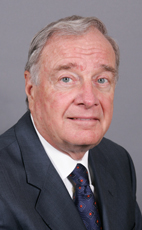
House of Commons photo

Crucial Fact

  • His favourite word was tax.

Last in Parliament September 2008, as Liberal MP for LaSalle—Émard (Québec)

Won his last election, in 2006, with 48% of the vote.

Statements in the House

Capital Gains November 21st, 1996

Mr. Speaker, the answer to the question is exactly the same one I gave earlier. It is part of the refundable tax credit. Capital gains exemptions make it possible for our companies to raise capital and benefit Canadian shareholders. This is an advantage they have over a company that must borrow money and pay interest, for example, or an American company that must raise capital in the United States, but is looking for Canadian investors.

What we want to do is encourage investment in Canada. That is part of a sound system. If we make changes here, other changes will have to be made somewhere else. The fundamental question is how we are going to help Canadian companies increase their equity. That is part of the system.

Capital Gains November 21st, 1996

Yes, yes. Capital gains are used to raise money. Unfortunately, the hon. member does not understand. In fact, I can tell you that people with the FTQ solidarity funds said they agreed with this exemption because it helped them raise money.

Capital Gains November 21st, 1996

Mr. Speaker, once again, the hon. member is wrong. We have analyzed the situation. The vast majority of small companies in the high-tech sector, a very important industry in Quebec, have told us that to increase their equity, to raise capital, it was very important to have access to research and development credits.

Capital Gains November 21st, 1996

Mr. Speaker, as a member of the Standing Committee on Finance, the hon. member must be aware that this committee looked into the matter a few years ago, and at the time, the government made a survey of small businesses in Canada to find out whether the $500,000 exemption was helpful in creating jobs, or whether we should find another way.

All small business associations in Canada, including those in Quebec, and most small businesses that appeared before the

Standing Committee on Finance or met with government officials said that this exemption was crucial to maintain fairness, and is still crucial for creating jobs, and that is our position.

Tobacco November 21st, 1996

Mr. Speaker, the hon. member, as is his wont, is engaging in idle speculation. The government will make an announcement when there is an announcement to be made.

Native Peoples November 21st, 1996

Mr. Speaker, pardon me, but I have such faith in my colleague, and he is so familiar with the numbers, that my attention was elsewhere. As my colleague has just said, the report is very interesting. We intend to examine it more closely and I will discuss it with my colleague, the minister of Indian affairs.

Ways And Means November 20th, 1996

Mr. Speaker, pursuant to Standing Order 83(1), I wish to table a notice of a ways and means motion to amend the Income Tax Act, the Income Tax Application Rules, the Bankruptcy and Insolvency Act, the Canada Pension Plan, the Children's Special Allowances Act, the Cultural Property Export and Import Act, the Customs Act, the Employment Insurance Act, the Excise Tax Act, the Old Age Security Act, the Tax Court of Canada Act, the Tax Rebate Discounting Act, the Unemployment Insurance Act, the Western Grain Transition Payments Act, and certain acts related to the Income Tax Act.

I also table explanatory notes and ask that you designate an order of the day for the consideration of the motion.

Taxation November 20th, 1996

Mr. Speaker, let us be very clear. The Reform Party recommended harmonization. The Reform Party at the finance committee came out full score in favour of harmonization. Why is the hon. member standing up here now and arguing against harmonization? There can be only one reason. It is an abysmal lack of knowledge of Atlantic Canada. It is the fact that he does not understand the ability and the desire of Atlantic Canadians to take control of their own future. That is the problem.

The Reform Party supported harmonization but it is against it for Atlantic Canada. What are its real motives?

Taxation November 20th, 1996

Mr. Speaker, far from insisting, what we are doing is co-operating with the provincial governments of New Brunswick, Nova Scotia and Newfoundland whose major purpose is to make sure that employment is created in their own provinces. That is why the three premiers are going across Canada, across North America, explaining what has happened, the tremendous reduction in taxes for their small and medium size businesses.

That is not the issue. The real issue is why is this member of Parliament so against Atlantic Canada's benefiting itself? Why is this member of Parliament so against small and medium size businesses in Atlantic Canada being able to compete? What kind of vision does the Reform Party have when it cannot understand the legitimate ambitions and desires of an important part of the country?

Employment Insurance November 20th, 1996

Mr. Speaker, as the Minister of Human Resources Development just said-for the third time-we have reduced employment insurance premiums, after a decade of increases by the previous government.

To give you an idea of the philosophy behind this, I would like to quote the response of Quebec finance minister Bernard Landry to the same question. He said: "Pursuant to the commission's regulations, but also in response to repeated requests from several socioeconomic partners, the government plans to lower payroll taxes. We will do this, however, with the expectation that real job creation will ensue".

That is precisely why we have targeted small and medium size businesses, since they are responsible for the vast majority of new jobs created in Canada.