
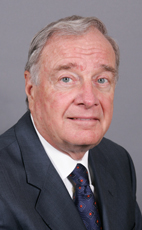
House of Commons photo

Crucial Fact

  • His favourite word was tax.

Last in Parliament September 2008, as Liberal MP for LaSalle—Émard (Québec)

Won his last election, in 2006, with 48% of the vote.

Statements in the House

Taxation November 18th, 1996

Mr. Speaker, as the hon. member ought to know, the fact is that we have told the retail council that we will sit down and work out any administrative glitches. In fact, we are in the process of doing that.

That again is not what the hon. member is really driving at. What he stood up and said was why should Atlantic Canada be able to benefit when the rest of the country does not in this particular deal. The fact is that Atlantic Canadians did not stand up and complain when the minister of energy dealt with the tarsands in Alberta. Atlantic Canada did not stand up and complain when Ontario was provided with stabilization payments.

What we are really dealing with here is a rump of a party that refuses to take a pan-Canadian view of what the nation is all about.

Taxation November 18th, 1996

Mr. Speaker, it is very clear that underlying the hon. member's question is a deep feeling of resentment that Atlantic Canada is getting its act together.

What is very clear is that the hon. member simply cannot stand to see those provincial governments on behalf of their populations in co-operation with the federal government providing a base for sound taxation and competitiveness of their small and medium size businesses.

I would have thought that the hon. member, in support of Atlantic Canadians, would have stood up here and congratulated those provincial governments because what they are doing is saying they do not want dependence. What they really want to do is to be able to govern for the benefit of their own populations.

The Economy November 18th, 1996

Mr. Speaker, it is quite the opposite. The Reform plan will not leave more money in the hands of average Canadians.

The Reform plan will take away their pensions, it will take away their health care, it will take away welfare benefits for those who are at the lowest end. The fact is that what the Reform Party will do will gut the Canadian dream for the vast majority of those who depend on government for help.

There is one other thing. The Reform Party ought to understand that what it is in fact advocating is a tax cut now and a massive tax increase for the next generation of Canadians. What it would do is impose on young Canadians a burden of deficit reduction, and we will not do that.

The Economy November 18th, 1996

Mr. Speaker, the fact is if the members of the Reform Party will take a look at what has happened over the course of the last three months in terms of the benefits of the reduction in interest rates, what they would see is that housing starts are up. They would see that the announcement came out today that manufacturing shipments are up. They would see that the basis of the economy is becoming stronger and stronger. And as a result of that, thousands of Canadians are going back to work and it is the families of those Canadians that are going to benefit.

Over 700,000 new jobs have been created by the private sector; 46,000 jobs were created last month alone by the private sector. The fact is these people who are going back to work will be able to provide for their families as a result of the economic conditions set in place by this government.

The members of the Reform Party, they who have no policy to increase employment, no economic philosophy designed to help the middle class in this country, should not stand up in the House and essentially say that we will live with the dual economy, that we will live with an economy that benefits the rich and ignores the poor.

Canadians will not put up with it and neither will we.

Child Care November 18th, 1996

Mr. Speaker, why does the hon. member not admit where she and her party are going to find the money to provide the tax cut for the rich? The first area in which they will find it is by abolishing the Canada pension plan which is very crucial for Canadian families. It is the principal source of support. Under the Reform Party the Canada pension plan will disappear.

The second thing they will do is eliminate equalization for a number of provinces. Is she saying that people who live in Saskatchewan or Nova Scotia do not have families and are not entitled to the same level of public services as Canadians in other provinces?

The Reform Party would eliminate the maternal benefits under the employment insurance program. Is the hon. member in the process of saying that people who are on employment insurance are not entitled to maternal benefits?

Let us understand that what the Reform Party is suggesting is that in fact those programs which go to help low income families, families on welfare and middle income families would be gutted and eviscerated by the Reform Party in order to take care of the richer people in this country. This government will never accept that.

Child Care November 18th, 1996

Mr. Speaker, if the hon. member cares to take a look at the existing provisions for married families, as my colleague has said, first of all in the last budget we doubled the working income supplement for families with four children by $1,000. At the same time the married credit exists which reduces income taxes by as much as $1,500 a year. There is a special supplement out of the child tax benefit for parents who care for preschool children at home.

The fact is if one takes a look at the vast range of policies introduced by this government and by previous Liberal governments, the hon. member will see that it is concern for children that has been upper most in the government's mind. If one would like to compare that to the vast majority of recommendations from the Reform Party, which would maintain the level of poverty as opposed to alleviating it, one would begin to understand that the line in the sand has been drawn and no amount of camouflage by the Reform Party will hide that.

Canada-United States Tax Convention November 8th, 1996

Mr. Speaker, I very much appreciate that there are members on all sides of this House who are very concerned by this matter. In fact, in the negotiations with the Americans the ability of the government to say that we speak with the virtual unanimity of this House gives us a very strong card to play.

The one thing I would not want to do is anything that would slow these negotiations down. Under those circumstances I think we are far better to continue with the course of action with which we are now engaged.

That being said, I very much appreciate the desire of members to participate and I am certainly prepared to sit down with them anytime and discuss the matter.

Canada-United States Tax Convention November 8th, 1996

Mr. Speaker, as the member knows, this problem has not arisen as a result of the Canada-United States tax convention, but as a result of action taken unilaterally by the American government. I think we all agree that we need to continue to put pressure on the Americans because some people have certainly been treated unfairly as a result of this action.

We are negotiating with the Americans. In fact, on election day, I discussed this issue with my American counterpart. I think the best thing is to pursue these negotiations. We are not making progress as fast as we would like, but we are indeed making progress.

Unemployment Rate November 8th, 1996

Mr. Speaker, clearly, we are all very concerned by the level of unemployment affecting our young people. As a matter of fact, it is a problem common to every country, including the United States where the job creation rate is rather impressive, I might add.

This is why, in the last budget, the Minister of Human Resources Development introduced a significant job creation program aimed at young people. We doubled the funds earmarked for the creation

of summer jobs for young people. We have on-the-job training programs, we have youth programs.

We have put in place a very strategic program to promote job creation for young people, and we will continue to do so.

Unemployment Rate November 8th, 1996

Mr. Speaker, the slight increase in the unemployment rate in October is due to the arrival of 58,000 more workers on the labour market, which shows an increase in their faith in the continuing economic recovery.

It should be pointed out that, in fact, that same month the private sector created 46,000 jobs, a rather significant number. Moreover, since the beginning of the year, nearly 200,000 new jobs have been created in the private sector certainly thanks to the climate of confidence due in part to the government's agenda.