
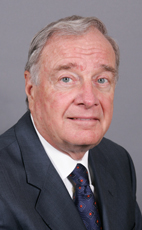
House of Commons photo

Crucial Fact

  • His favourite word was tax.

Last in Parliament September 2008, as Liberal MP for LaSalle—Émard (Québec)

Won his last election, in 2006, with 48% of the vote.

Statements in the House

Taxation November 20th, 1996

Mr. Speaker, perhaps the member of the Reform Party could explain, given her interest in child care, that when the government broadened the eligibility for the child care expense deduction and when we extended the age limit for children, why did Reform vote against it?

When the government increased the working income supplement for working families, why did Reform vote against it? When the government enriched the tax credit for infirm dependants, why did Reform vote against it? When the government improved child support awards, why did Reform vote against it? When the Minister of Justice brought in the new guidelines, why did Reform vote against it?

Why has Reform voted against every progressive piece of legislation brought by the government into the House to help Canadian families?

Taxation November 20th, 1996

Mr. Speaker, Reform will withdraw $4 billion from the Canadian health and social transfer. We will not. We will protect the Canada Health Act. We will protect health care in this country. Reform will not.

Reform will gut equalization payments to those provinces which require them. What Reform is saying, according to its philosophy, is that there are families in Newfoundland and Saskatchewan who are not worthy of receiving government help. We do not believe that is the fabric of this country. It is not the philosophy on which this country was built.

I have a list of measures that the government has brought in to help Canadian families, to help Canadian children. Reform voted against every single one of them. Stand up and defend your record, not what you do in the future, but what you have done in the past.

Taxation November 20th, 1996

Mr. Speaker, there are times when debate in this House takes on a form that does Canadians proud, particularly when we deal with issues in a fundamental and profound way.

No doubt the question of taxation, which is in constant evolution, is something that should not lend itself to partisan speeches, but should lend itself to real study.

Under those circumstances I did say to the Bloc Quebecois that their report which came out yesterday will make a valuable addition to the debate, as did a great number of the reports done by the Liberals in opposition help advance the yardstick.

All I would suggest to the Leader of the Opposition is that he ask his members to continue in the same vein, so that the debate can be responsible, can advance the yardstick and not simply play politics with a very important subject.

Taxation November 20th, 1996

Mr. Speaker, unfortunately the finance critic for the Bloc Quebecois is raising his voice; gone are the measured and professional tones of yesterday. In addition, he is also misrepresenting the report.

I can tell you that as far as the notion of deferred taxes is concerned, we have looked, and will continue to look, for loopholes.

I would just like to quote one other person with almost the same philosophy: "As for taxing corporations more directly, as recommended by the Bloc Quebecois's finance critic, this cuts their profits, reduces their interest in investing and results in fewer jobs. Furthermore, the higher Quebec's tax burden, the less foreign companies will be interested in investing in that province and creating jobs there". This statement was made by Bernard Landry, Quebec's finance minister. He is right, and the Bloc Quebecois's finance critic is wrong.

Taxation November 20th, 1996

Mr. Speaker, as regards deferred taxes, I think the Leader of the Opposition is going a bit beyond his report, which was more subtle. In the report, the Bloc acknowledged there were advantages to having taxes deferred. This is our position exactly.

On the other hand, this is why there is a tax on major corporations. We want to be sure they pay their fair share, and this is the case.

Taxation November 20th, 1996

Mr. Speaker, I received the report favourably first, because the reports of the Bloc Quebecois have changed in the past three years. Second, I must say the quality of the report is very similar to what the Liberal Party submitted on the environment, the economy and other areas when it was in opposition.

That said, the aim is to ensure that the basic impact of government spending, be it tax credits, tax exemptions or other incentives is to promote job creation. This has been our philosophy from the start. This is why we have eliminated a list of loopholes three pages long. These loopholes did not promote job creation. We are going to continue the job, I hope with the co-operation of the Bloc Quebecois.

Taxation November 20th, 1996

Mr. Speaker, the Bloc Quebecois tabled a sober report yesterday. I consider it a very professional one. I thank the Leader of the Opposition and the members here for their work.

There are many things in the report we agree with. They are either things we are looking at or things that we are in fact currently working on. There is certainly material for debate, and this is a good start.

To my understanding, in response to the Leader of the Opposition's specific question, it is not $3 billion that we can recover, if I understand the report correctly, but $3 billion that can be put into job creation, which is the very aim of the Mintz committee currently looking at the situation from the same point of view.

Taxation November 19th, 1996

Mr. Speaker, forgive me but this is my first question from this member. I am not quite sure how to handle it.

As was very clear in previous budgets the whole issue of parenting and children is of uppermost concern to the government. We have brought in a number of measures including the doubling of the working income supplement, broadening the eligibility for the child care expense deduction, and the extension of the age limit for children. We will continue in this vein.

Taxation November 19th, 1996

Just wave your arms and all things will be revealed unto you.

Mr. Speaker, let us talk about tax cuts. Let us talk about the reduction of $500 that somebody who is going to buy a $15,000 car will get this year compared to last year. Let us talk about the $3,000 reduction on a $100,000 mortgage for somebody who rolls their mortgage over today compared to a year ago. Let us talk about the reduction in the cost of refrigerators. Let us talk about the increase in disposable income that Canadians have as a result of this government's activities, this government's budget and this government's economic management.

Taxation November 19th, 1996

Mr. Speaker, between 1993 and 1997-98 the revenues will have increased by some $23 billion, $600 million of which is from excise tax increases. I would remind the hon. member there has been no increases in personal income taxes. Of that, $2.2 billion is from closing tax loopholes. Does the hon. member object to the closing of tax loopholes? Does he object to the fact that we have perhaps closed some of the loopholes used by his wealthy friends for the betterment of the average Canadian?

The vast majority of the increase, $17.1 billion of the increase, has arisen due to increased economic activity. The country is working and that is what it is all about.