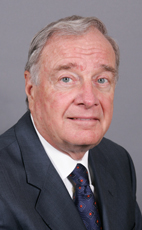
House of Commons photo

Crucial Fact

  • His favourite word was tax.

Last in Parliament September 2008, as Liberal MP for LaSalle—Émard (Québec)

Won his last election, in 2006, with 48% of the vote.

Statements in the House

The Economy October 30th, 1996

Mr. Speaker, the hon. member is not quoting the conference board correctly. What the conference board has said is that there is a lag time between interest rate cuts and job creation. It pointed to the tremendous interest rate cuts as having been one of the main reasons that there has been stronger job creation in Canada than in any other G-7 country outside of the United States.

What the hon. member ought to do is to look at the fundamental measures the government has taken in terms of job creation; our external trade and the fact that we have become one of the major exporting nations of the world; the Team Canada missions led by the Prime Minister which have led to contract after contract; the summer jobs from the Minister of Human Resources Development; the amount of money we have put into research and development; the amount of money we have put into trade financing; the support of small and medium size businesses. All of this is leading to a very, very healthy economy.

The Economy October 30th, 1996

Mr. Speaker, let us be very clear. What the Reform Party members are saying is that they will take $3.5 billion out of the Canadian health and social transfer and then they ask Canadians to trust them to put it back four years later. Four years, after how many hospitals would have been closed? Four years, after how many low income Canadians would have suffered? That is what the Reform Party has offered.

If we want to know what they really think, we could take a look at their first budget. Their first budget was a massive attack on health care. Their first budget said that we should have two-tier health care. Their first budget said that the principles of the Canada Health Act did not apply. Their first budget really gave what they really believe and that is an idealism that is not Canadian.

The Economy October 30th, 1996

Mr. Speaker, what the Reform Party is offering to do is to cut the Canadian health and social transfer by $3.5 billion. What the Reform Party is offering to do is to cut equalization payments for the seven provinces which require them without having the courage and the guts to stand up in the House and tell us what provinces they are going to do it to.

Will the Reform Party members from Saskatchewan stand up here and say that people in Saskatchewan are not entitled to the same level of public services as other Canadians? No, they will not do it. They are going to hide.

What the Reform Party has offered us is a massive attack on the middle class. What Reformers are offering to do is to pit region against region, Canadian against Canadian. They would destroy the Canadian dream. That is what they are offering us.

The Economy October 30th, 1996

Mr. Speaker, the facts of the matter are, since we have taken office, over 700,000 new jobs have been created by the private sector. Since we have taken office, the unemployment rate has dropped by a point and a half. Since we have taken office, Canada's current account surplus has been the highest that it has been since 1984. We have become one of the major exporting nations of the world. We have turned the economy around and it is felt from coast to coast to coast.

Taxation October 24th, 1996

Mr. Speaker, as far as the retail council is concerned, we have made it very clear that we are prepared to work with the retail council. We will sit with the council to make the transition as painless as possible. There is no doubt there are going to be changes. The government has said it will be very flexible in the administration of those changes.

As far as tax inclusive pricing is concerned, public polling has been done in the last while which shows overwhelmingly that Canadians want tax inclusive pricing. They do not want the sticker shock. They want to know what the final price is.

Why is it that the Reform Party, which claims to be a populace party, wants to take actions which are not in the best interests of Canadian consumers?

The hon. member for Beaver River wants to talk about reality checks. Let us look at reality checks. The day that the famous Reform Party program was revealed by the hon. member on the CBC what was basically said was that it was going to eliminate taxes for people making over $150,000 and the member was caught speechless. The provincial premiers said that it would devastate their cuts.

Taxation October 24th, 1996

Mr. Speaker, the hon. member is referring to a resolution that was passed at a party convention and is not referring to a commitment of the government.

There is no doubt that every single member in this House and every single member in the Liberal Party would like to eliminate the tax on books. The problem very clearly is that we also have to deal with a very difficult financial condition in this country and we are achieving a balance.

The balance is to promote literacy. The way in which we have decided to do it is to be selective. Yes, we are going to support those who are in the front line in the fight to promote literacy. We are going to eliminate the tax on books for schools, libraries, municipalities and charities. This is very important. If the hon. member does not understand how important it is that we take very scarce financial resources and promote literacy, then I wonder what in God's name he is doing in this House.

Taxation October 24th, 1996

Mr. Speaker, this is ridiculous. The hon. member for the opposition knows perfectly well that we eliminated all the tax benefits for family trusts. I have four pages of tax loopholes here, and I will read them to you. They are too long, and I cannot remember them all.

Eliminate capital gains tax exemptions of $100,000; eliminate tax benefits for limited recourse financing; tighten the rules for debt remission; eliminate the use of butterfly transactions, and I could go on. We have eliminated the loopholes. Thanks to this government, the tax system in Canada is fairer than it has ever been.

Taxation October 24th, 1996

Mr. Speaker, first of all, we have just set up the process for harmonizing sale taxes in this country. The Atlantic provinces were the first to get on board, after Quebec, because they know it is crucial to job creation.

In fact, I wish to congratulate the former Government of Quebec for having the courage to harmonize its sales tax, and I congratulate the Atlantic provinces, because they want to create jobs and know that by reducing their costs and becoming competitive, they will be able not only to compete with the other provinces but the United States as well. That is how we build a strong economy.

Taxation October 23rd, 1996

Mr. Speaker, I am pleased to announce that the Government of Canada has reached detailed agreements with the Governments of Nova Scotia, New Brunswick, Newfoundland and Labrador to implement a new harmonized sales tax system as of April 1, 1997. The detailed agreements are based on the principles outlined in the memorandum of understanding that was signed earlier this year.

Any successful negotiation requires goodwill and good faith by the parties involved. I would like to take this opportunity to thank the governments of the three provinces concerned and especially my counterparts in Nova Scotia, New Brunswick, Newfoundland and Labrador for the manner in which they and their officials handled the issues involved in these negotiations.

What helped all of us to conclude these negotiations successfully was that we shared a common objective: to give consumers and businesses a sales tax system that is simpler, more efficient and more equitable. It is a practical example of how the federal and provincial governments can collaborate to make our federal system work better.

For consumers, the new harmonized system will offer several important benefits. First, thanks to tax inclusive pricing, consumers will know the full price of their purchases before they get to the cash register. This is something Canadians have consistently insisted on in consultations about GST reform. At the same time, consumers will continue to know how much tax they are paying because receipts and invoices will show either the amount of tax paid or the rate at which tax has been charged.

Consumers will also benefit because sales tax rates will be substantially lower than at present in each of the participating provinces. In Newfoundland, sales tax rates will be almost five percentage points lower. In Nova Scotia and New Brunswick they will be almost four percentage points lower.

The harmonized sales tax will be good for businesses as well. They will have to deal with only one tax, not two. They will have to complete only one set of forms, not two. And, they will have to deal with only one tax administration, not two. The new system will be straightforward and simple. For example, there will be no separate requirement for businesses to register for the harmonized sales tax. Businesses that are registered for the GST will automatically be registered for the HST. Furthermore, registered businesses will continue to use the current GST return to calculate net tax remittances. When reporting tax collected and remitted, as well as claiming input tax credits, there will be no need for registered businesses to identify separately the federal and provincial components of the HST.

During our negotiations with the three Atlantic provinces, concerns were expressed about the taxation of books and its impact on literacy. We took those concerns seriously. They came from the Atlantic ministers themselves, but they were also expressed most articulately and most forcefully by a number of members of the federal Liberal caucus.

Members may recall that in our economic and fiscal update of October 9 we said that one of the key roles of government was to

help give Canadians the tools they need to take advantage of the new economy. In that context the question that we have to answer today is at a time of limited resources how can we best support efforts to promote literacy.

Our answer is to target assistance to educational institutions and organizations which play a direct role in the area of such concern to us. That is why I am tabling today a notice of ways and means motion that provides a 100 per cent rebate on all books purchased by public libraries, schools, universities, colleges, municipalities, certain charities and non-profit organizations and other frontline literacy groups.

This rebate is not an isolated gesture. We introduced several measures designed to support learning and education in our 1996 budget, an increase in the education tax credit and increases to the limits on the transfer of tuition and education credits and contributions to registered education savings plans.

The 100 per cent rebate that I am announcing today means that there will be no GST on all books purchased by educational institutions and learning organizations across Canada. It means no GST on all books distributed freely in primary schools, in secondary schools and other educational settings. It means tax relief on books not only for structured learning in our schools and colleges but for lifelong learning through public libraries and front line literacy groups. These measures are effective immediately and on a national basis.

We have also agreed to administer a point of sale rebate in the three harmonizing provinces which will eliminate the provincial component of the tax on books. In short, there will be absolutely no increase in the taxation of books as a result of harmonization. Indeed in many cases there will be a decrease.

In closing, we do not claim that today's measure answers all the challenges we face with respect to literacy in this country. However, by targeting assistance in this way we can get greater impact for every dollar we spend at a time of limited resources.

Obviously more needs to be done. My colleague, the minister responsible for literacy, is working hard to get groups right across the country to identify and to develop the best means for working on this problem. We will continue to work closely with her to ensure that progress is made.

More often than not, real and lasting progress in government occurs in measured steps. Today's announcement on a harmonized sales tax and the rebate on books is a real, constructive and a concrete step forward in the administration of sales taxes in the promotion of literacy in our country.

Ways And Means October 23rd, 1996

Mr. Speaker, pursuant to the provisions of Standing Order 83(1), I have the honour to lay upon the table a notice of ways and means motion to amend the Excise Tax Act as well as explanatory notes. I ask that an order of the day be designated for consideration of the motion.