
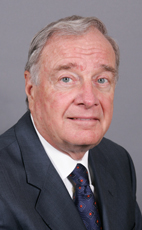
House of Commons photo

Crucial Fact

  • His favourite word was tax.

Last in Parliament September 2008, as Liberal MP for LaSalle—Émard (Québec)

Won his last election, in 2006, with 48% of the vote.

Statements in the House

Securities October 23rd, 1996

Mr. Speaker, first of all, the decision to designate Montreal and Vancouver as international banking centres has yet to be made. Second, in his speech yesterday, the Prime Minister listed a whole series of measures the federal government has adopted to help Montreal and Quebec, of which the announcement about Bombardier is but one example. In the private sector, the pharmaceutical and aeronautical industries do more research and development in Quebec than elsewhere because of the federal government's support for R and D.

As far as the securities commission is concerned, the federal government's position is very clear: if the other provinces want to, we are ready to co-operate with them. It is up to them. In fact, all those who favour this option do so because they want to protect Quebec's financial industry, because they are very much aware that Montreal is not in competition with Toronto, but with New York, London and Frankfurt. That is what we will protect.

Taxation October 21st, 1996

Mr. Speaker, the Minister of Finance has listened to the vast majority of economists in this country. They have said very clearly that a tax cut at this particular time would be inappropriate. They have said that a broad base tax cut at this time would not only be inappropriate but would undoubtedly lead to higher taxes later.

I simply ask Reformers to listen to what John McCallum of the Royal Bank said last week. He said that as a result of the actions of this government we are going to see a steadily declining debt to GDP ratio. We are going to give this country the possibility of having tax cuts which the Reform Party is unable to provide.

The vast majority of legitimate economists in this country have simply said that what the Reform Party is suggesting is the road to financial ruin and we will not accept it.

Employment Insurance October 21st, 1996

Mr. Speaker, when one looks at the Reform Party's suggestion, it would appear it is going to pay for its premium reduction by eliminating a great deal of the benefit that arises from the program.

These are the questions one should really address: Is it true that the Reform Party would eliminate sickness benefits? Is it true that the Reform Party would eliminate maternity benefits? Is it true that what the Reform Party would do with unemployment insurance is to put Canadians out on their own and effectively pay for that premium cut by cutting off those Canadians who are most in need of the help it provides?

Employment October 21st, 1996

Mr. Speaker, the Reform Party likes to think it has done something new. Essentially it is recommending that we rob the poor to pay the rich.

For anybody who wants to understand what the government has done, let me quote Carl Weinberg of High Frequency Economics, the American expert on what has happened in this country. He said that you can now price Canadian securities on the basis of domestic economic fundamentals rather than slavishly marking up U.S. yields. That is what happened. He said it is a whole new world.

He goes on to say that what is happening in Canada right now is one of the boldest experiments in macroeconomics that has ever been undertaken. It is a sea change in the way we will have to think about this country.

Employment October 21st, 1996

Mr. Speaker, let us understand what the Reform Party recommended in its document last week. In its $2,000 tax reduction, a one earner couple with two children and an income of $15,000 by its numbers would save $420.

The same one earner couple with two children and an income of $100,000 would save $3,200 a year and more that made a capital gain.

That is progressivity according to the Reform Party. This is a tax cut for the wealthiest Canadians and it is done in order to pay for the gutting of the basic social programs that protect the middle class in this country.

Employment October 21st, 1996

Mr. Speaker, given this new found interest in jobs perhaps I should remind the hon. member what his leader said in 1993. In Penticton, Reform leader Preston Manning said it would take up to three years before any job creation would occur under his party's economic plan.

In fact, he acknowledged that his zero in three plan could actually cost more jobs in the interim and then he went on when asked a further question he said: "What is the alternative?" The alternative was the government that was elected. It has seen the private sector create close to 700,000 new jobs. That is 700,000 more jobs than the Reform Party would have created.

Goods And Services Tax October 11th, 1996

Mr. Speaker, there is nobody who would like to see us take the tax off books more than I would. Perhaps there is one other person.

The hon. member will understand that a common base is very important in the application of a tax such as this because it enables us to have substantially lower administrative costs.

The hon. member also knows that there are exemptions on taxes such as this available to certain organizations. He also knows that the tax is not in fact the full 7 per cent, depending upon the institution that is buying the book. Certain institutions have reduced rates.

I understand the tenor of the member's question. I wish I could answer it more positively and perhaps if the country gets into better financial shape I will be able to.

Canada Savings Bonds October 11th, 1996

Mr. Speaker, as a matter of fact, and as the hon. member who has followed this full well knows what they can look forward to is a much improved financial instrument.

The Canada savings bond, as I am sure all members in this House know, and I am sure they are all buyers, is a very safe and secure investment for Canadians.

This year the government is pleased to announce under the new agency that we are introducing a 10-year guaranteed period for those Canadians who are holding a compound CSB. That is to say while the rate in the first year will be 3 per cent, it will rise at a minimum level each and every year to 8.75 per cent over the course of the next nine years.

This is very competitive. Considering that it is cashable at any time, I would recommend to all Canadians and to all members in this House that they rush out tomorrow and buy Canada savings bonds.

Goods And Services Tax October 11th, 1996

Mr. Speaker, as the hon. member knows full well, there are books and there are books. As the Minister of Industry has just said, is the member recommending that we basically take the tax off smut? Is it not worthwhile in this particular society to make sure that in fact we focus that money on learning materials? Is it not worthwhile that we enable the mothers the hon. member referred to, to be able to have decent care at home for their children so that they can go out and increase their capacity to learn?

This government essentially has a restricted budget as indeed the Reform Party I think understands. What we really want to do is to target those moneys where we are going to get the maximum impact. That is what we are in the process of doing.

Goods And Services Tax October 11th, 1996

Mr. Speaker, the hon. member will have noticed that in the discussions we are having with Atlantic Canada, the government has made it very clear that there need not be any increase in the tax on books.

What remains to be determined is what is the best way to promote literacy, what is the best way to promote greater education. If the hon. member will look at what we did in the last budget, the increase in the education credits, the increase in the credits available to allow single mothers to go back to school and take care of their children at the same time, she will notice that this government puts great store in increased education and literacy. What the government is really seeking is the best method to accomplish it with very scarce financial resources.