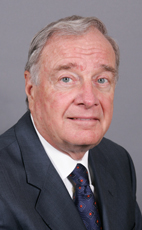
House of Commons photo

Crucial Fact

  • His favourite word was tax.

Last in Parliament September 2008, as Liberal MP for LaSalle—Émard (Québec)

Won his last election, in 2006, with 48% of the vote.

Statements in the House

The Economy October 10th, 1996

Mr. Speaker, in every one of our budgets we have brought forth tax relief for specific areas. In terms of unemployment insurance, we cut the costs over the last two years by $1.8 billion. We have provided tax credits for poor families with children. We have provided tax credits for people in school.

The leader of the Reform Party says that they ask the questions in this House. In terms of the basic question of what social programs would you gut to pay for your tax programs, the Canadian people will insist that you answer that question.

The Economy October 10th, 1996

Mr. Speaker, I would simply ask the leader of the Reform Party to hark back to Reform's first budget. When he does so, he will see that what Reform recommended in terms of health care, what it recommended in terms of transfers to the provinces, and what it recommended in terms of old age pensions was to simply kill the patient.

It really is the height of something that would be unparliamentary in terms of language for the Reform Party leader to stand up now and talk about what we would do. I would simply ask him to carry his thought one step further. The leader of the Reform Party has said that we should cut taxes. Fine. Let him now stand up and tell us where he would cut in our programs. What social programs would he cut in order to justify a cut in taxes?

The Economy October 10th, 1996

Mr. Speaker, on behalf of all of us in the House, I would first like to welcome the leader of the Reform Party to the debate.

The fact is that had the leader of the Reform Party been paying attention, he would have noticed that right from the beginning when we took office we had a two track approach on the whole question of cleaning up the balance sheet. The first was certainly to get Canadians back to work. As a result of that, the Prime Minister embarked on several trips abroad with Team Canada which brought a great number of new jobs to this country. He would have also noticed that we extended concessional financing. We have invested in R and D. Through the Department of Human Resources Development we put money into summer jobs for students and re-entry jobs for students.

The fact is, in addition to the substantial interest rate decreases which have occurred as a result of this government's action, 750,000 new private sector jobs have been created since we took office. That indeed is something for Canadians to be proud of.

The Deficit October 10th, 1996

Mr. Speaker, since coming to office, we have reduced the burden of unemployment insurance, now called employment insurance, by $1.8 billion. This is a huge amount and possibly also one of the reasons why job creation has taken off.

That said, there is no doubt that the employment situation across Canada is of concern to us, as it is to the Government of Quebec. We have great hopes that the summit scheduled for the end of the month will be a success.

We have a problem, and I do not mean only the federal and provincial governments. All industrialized states have this problem. We must look into it. I, too, am concerned.

The hon. member referred to the recession. Clearly, Canada has suffered greatly from the 1989-92 recession being so intense and so long. In fact, its impact is still being felt. It will have to be looked into. I welcome the hon. member's questions because I think we should work together. The issue was raised at the finance ministers' meeting. This is one of the reasons why the infrastructure program is being extended.

Having said that, I would like to ask the finance critic for the Bloc Quebecois, if you will allow it, Mr. Speaker-

The Deficit October 10th, 1996

Mr. Speaker, this was discussed yesterday. The government has put in place several measures that have had a very positive effect in terms of job creation, be it the funds allocated by the former Minister of Human Resources Development to create jobs, summer jobs for young people or funding for research and development or for foreign trade.

Also, it should be pointed out that the vast majority of economists in Canada agree that lower interest rates have had a huge positive impact on the private sector's capacity to create three quarters of a million new jobs in Canada since we came to office.

The Deficit October 10th, 1996

Unfortunately, Mr. Speaker, when the Leader of the Opposition starts talking about figures, he makes a few mistakes. It is quite clear that the federal government has borne the largest share of these cuts.

Let me give you an example. For 1994-97, although transfers to the provinces dropped by a total of $4.1 billion, we cut twice as much in our own operations, in other words, $8.3 billion.

Second, I think that as far as Quebec is concerned, it is quite clear that in 1996-97, transfer payments to Quebec will total $10.9 billion, more than for any other province. Quebec, which accounts for 25 per cent of the Canadian population, will receive 31 per cent of the transfer payments. Equalization payments alone will give Quebec $3.9 billion, which is 45 per cent of the total amount of equalization payments.

The Deficit October 10th, 1996

Mr. Speaker, it may well be that when the Bloc finance critics ask questions, the Leader of the Opposition is not always listening. I have often

quoted in the House the auditor general's report for 1986 in which he insisted that the government return what was known then as the unemployment insurance fund-now we say employment insurance-to the consolidated revenue fund. So this is not news.

Second, as far as Quebec is concerned, thanks to the drop in interest rates, Quebec got $625 million more over the past two years than it expected, and this year, I gave Bernard Landry $600 million more than Jean Campeau had counted on, so that adds up to $1.2 billion.

The Deficit October 10th, 1996

Mr. Speaker, first of all, transfers to the provinces represent between 20 and 25 per cent of our spending. Therefore it stands to reason that when we make cuts, we cannot cut 25 per cent just like that. We have to cut fairly across the board.

Now, we gave the provinces two years notice to give them time to adjust, while we made cuts immediately. I also want to say that the cuts we made in our operations were far more numerous than the cuts in provincial spending.

As far as the employment insurance fund is concerned, first of all, we must create a reserve to protect ourselves against a possible decline in the economy, and second, as the auditor general said in 1986, it is part of our consolidated revenue fund, so it is treated as such.

Child Poverty October 9th, 1996

Mr. Speaker, the hon. member's question strikes very much a resonant cord with the government. Indeed it is for that reason that over the course of the last 15 months we doubled the working income supplement for families with small children. The Minister of Justice brought in a comprehensive package dealing with guidelines on support payments for custodial parents.

There is no doubt that as a government we wish we could do a lot more and we intend to do so. The hon. member is quite right when he points out that while we are bettering the financial condition of the country we must also bear in mind the need to better the financial conditions of individual Canadians.

One of the greatest frustrations I think we have is the clean-up of the mess that somebody else created so that we can do precisely the job that the member wants us to do.

Employment Insurance October 9th, 1996

Mr. Speaker, the hon. member talks about helping young people. Let us look at the record.

The fact is when the previous Minister of Human Resources Development increased the amount of money to be made available for summer students, the Reform Party opposed it. When this government increased the tuition credits for students going to school, the Reform Party opposed it. When this government made more money available to caregivers so that they could go to school while their children were taken care of, the Reform Party opposed it.

The Reform Party has opposed every single measure brought before this House to help students, to help young Canadians. The fact is members of the Reform Party are disconnected from the reality of the Canadian public.