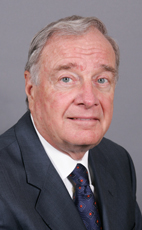
House of Commons photo

Crucial Fact

  • His favourite word was tax.

Last in Parliament September 2008, as Liberal MP for LaSalle—Émard (Québec)

Won his last election, in 2006, with 48% of the vote.

Statements in the House

Employment Insurance October 9th, 1996

Mr. Speaker, there is no doubt about the importance of reducing payroll taxes.

In the first year that we took office the UI premiums at that time were supposed to go to $3.30 but we did not allow that to happen. In fact under this administration they have gone down to $3.07, to $2.95 and to $2.90 last year. At the same time we have introduced a whole series of measures such that since we have taken office we have reduced the unemployment insurance burden on salaries by $1.8 billion, precisely to put people back to work.

Taxation October 9th, 1996

Mr. Speaker, again it is quite the opposite. We are not interfering with the question of choice. What we have is a system that provides considerable benefits where one of the two parents decides to stay at home for precisely the reasons which I think the member is trying to allude to.

If we immediately went to the kind of system that the member is talking about, the second spouse entering the workforce would immediately face crippling taxation. That makes no sense.

Another thing is a number of the European countries, in fact virtually all of the European countries on a family basis are now shifting to the same kind of taxation that we have in Canada, which is by far the best.

Taxation October 9th, 1996

Mr. Speaker, if the member cares to take a look at the Income Tax Act or at government policy he will find out that the situation is really quite different than the one which he has described.

As an example, within the existing system, to the benefit of married families, is the married credit which reduces income taxes by as much as $1,500 for a couple under the circumstances which the member has described.

At the same time there is a special supplement under the child tax benefit for parents who care for their preschool children at home. The child tax benefit is based on family income, so it automatically increases when a parent gives up a job to stay at home.

The fact is the tax system directly answers the member's question. He might do a bit of research before standing up so quickly.

Canada Pension Plan October 8th, 1996

Mr. Speaker, I think I can answer the question, but first I have to figure out what the question is.

The government made it possible for Canadian seniors and for a whole generation of young Canadians to know that the Canada pension plan, the OAS and the guaranteed income supplement would be there for them. We did not want to make the same mistake the previous generations of politicians did, which was simply to defer this problem until such time as the Canada pension plan got into such difficulty that there would be no other solution except the terrible one that is advocated by the members of the Reform Party.

In our budget we brought down a seniors benefit that will be as good if not better for 75 per cent of Canadians, better for nine out of ten women in the country, that will allow Canadians to hold their heads high as they recognize the-

Canada Pension Plan October 8th, 1996

Mr. Speaker, the government has not made a proposal along those lines. When the federal and provincial governments came together, both examined a series of options. This happens to be one of the options. It was set out in the consultation book that was signed on by all of the provinces unanimously.

That option was discussed. A number of individuals throughout the consultation process, in fact some in the hon. member's own province, subscribed to this as a thesis. However, no decision has been taken. What was agreed to by the finance ministers was that we would examine the situation, look at the total package and eventually come to a consensus.

The Budget October 3rd, 1996

Mr. Speaker, let it be very clear that what we have done is ensure that low income and middle income seniors will be protected. It is true that at the upper end certain seniors may receive less. That has been done in order to make the program sustainable and to make sure that low income seniors are taken care of.

However, I think a far more significant thing has been said here today in this House. A member of the third party has finally admitted that which all Canadians know: whether it is health policy, pension policy, or another way in which they approach society, theirs is a party of extremists. It is a party that refuses to take the middle course. It is a party that says extremism is a virtue.

Nowhere in this country will Canadians allow the forces of the far right to dominate.

The Budget October 3rd, 1996

Mr. Speaker, at the time the new seniors' benefit was set out it was made very clear that current seniors would be protected, that the new benefit plan would come into effect only in the year 2000 and at that point seniors would have the ability to choose which of the two plans was best for them.

There may well be changes in the tax act that are going to affect all Canadians. Those changes will occur. However, let us be very clear. The Prime Minister said that current seniors would be protected and current seniors have been protected.

It is very important that we listen to what the Prime Minister said because opposite him is the Reform Party which has made it very clear that it would eviscerate the Canada pension plan, the OAS and the GIS. That is why what the Prime Minister said is so important.

Monetary Policy October 3rd, 1996

Mr. Speaker, I thank the hon. member for his question because he raises a very important point. I can tell him that the 1 to 3 per cent range set by the government and the Bank of Canada remains our goal at this time.

Canada paid dearly, perhaps too dearly, in the fight against inflation in the early 1990s. Now that our inflation rate is very low, it is an asset we want to keep. Having said that, I think the range set jointly by the Bank of Canada and the government is appropriate for now.

Monetary Policy October 3rd, 1996

Mr. Speaker, we will certainly have talks with the Bank of Canada when the time comes. It would be premature at this stage to comment. I would, however, like to make a slight correction: the 1 to 3 per cent goal valid until 1998 was set by myself and the current Governor of the Bank of Canada when we came to office in 1993-94.

Tax Evasion October 3rd, 1996

Mr. Speaker, there is no scandal, The auditor general himself has said that there was no scandal of any kind, that the integrity of the public servants concerned was not in question.

The auditor general himself, whom the hon. member has quoted on numerous occasions, has said that there was no scandal.

It is quite important that we understand what has happened here. There was a law in place in 1991, of which certain taxpayers took advantage. The government decided there was a loophole in the law which should be closed.

We gave the matter to a parliamentary committee which made a series of recommendations. Within a month of those recommendations we stood up in this House of Commons and closed that loophole.

Let us understand what the opposition is asking. Because it refuses to deal with the substance of the issue, it wants to make a lot of unsubstantiated charges. Also, opposition members are asking us to act retroactively.

They are asking us to say to the world that Canada's laws do not stand, that we cannot count on them. They would destroy the economy of this country, and we will not do it.