
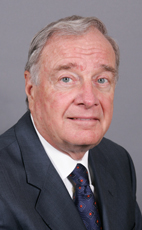
House of Commons photo

Crucial Fact

  • His favourite word was tax.

Last in Parliament September 2008, as Liberal MP for LaSalle—Émard (Québec)

Won his last election, in 2006, with 48% of the vote.

Statements in the House

Auditor General September 20th, 1996

Mr. Speaker, in the three years we have been in office we have closed more loopholes, more openings in the tax system than any previous government. As a result of our actions the tax act is more fair. Wealthy Canadians are paying far more taxes. I have three pages of measures which we have taken to deal with this.

This issue is not one that only applies to rich Canadians. It applies to Canadians of very ordinary circumstances who for one reason or another decide to leave the country, whether it is to retire in another country or return to the country of their birth. These people ought to be treated fairly. They ought to be treated in a way that does not deprive the state of taxation.

At the same time we have tax treaties with some 60 countries. We are operating in a way that the OECD has established. Our system is tighter than the vast majority of other countries. I am sure members opposite do not want us to act in a way that would be unfair to ordinary Canadians. That is why we asked the finance committee to look at the issue and they did. That is why we have said we are going to act quickly on their recommendations.

Auditor General September 20th, 1996

Mr. Speaker, there is no doubt that capital gains considerations may be a concern for wealthier families. But they can also be of concern to families with lower incomes.

I mentioned yesterday the case of the widow of an immigrant, who decides to go back home. If she happens to be a shareholder in a small private company, she too will be affected because, in every case, the question is: How do we deal with capital gains when an individual, any individual, leaves the country? It could be a retiree who moves to Florida, as many do. That is the question, a very serious question that must be considered thoroughly.

The hon. member raised the issue of loopholes. I have a list three pages long of loopholes that we have closed since taking office. The point of the matter is: how to ensure that the tax system is fair. That is our objective. I wish the opposition would at least contribute to the debate.

Auditor General September 20th, 1996

Mr. Speaker, this is ridiculous. The government asked the Standing Committee on Finance to consider the auditor general's report and to give us its opinion on the main point: How do we treat capital gains when an immigrant wants to leave the country?

The majority report was very thorough in the way it dealt with this point, and the government intends to take action. It is certainly not our policy to cover up the situation. We wanted to shed some light on the matter, and the majority report did so, and we intend to act.

Auditor General September 20th, 1996

Mr. Speaker, the auditor general's main point is that the problem today is how to treat capital gains when someone, an immigrant, a person, a trust, a company, or partnership wants to leave Canada.

That was the auditor general's main point, and the majority report endorsed it, saying that action must be taken. We agree, and we intend to take that action.

Auditor General September 20th, 1996

Mr. Speaker, the majority report is very favourable. Actually, there are plenty of very favourable comments on work done by the auditor general. I admit that they disagree with the auditor general on one particular point. However, a standing committee of our House has the right to criticize or to disagree with an employee of Parliament, whether, as

I said yesterday, he happens to be the Prime Minister, the Minister of Finance, the Governor of the Bank of Canada or the auditor general.

The hon. member asks me why we endorse the majority report. It is because the report endorses the vast majority of remarks and comments made by the auditor general. That is why.

Auditor General September 19th, 1996

Mr. Speaker, immediately upon taking office the government dealt with the question of family trusts. It took away all of the abusive tax advantages that accrued to family trusts. We did that immediately upon taking office.

That is not the issue in this case. What happened in 1991 brought up the issue of how we should treat property owned by somebody who is a resident of Canada who is leaving Canada, of how we should treat the property of an immigrant. It was not a family trust question. It was really a question that dealt with very wealthy Canadians but every bit as much could have dealt with a widow of an immigrant who was returning to her homeland and how she should deal with that property. That is the basic issue at stake here.

The auditor general made a series of recommendations and the majority report made a very important series of recommendations which the government intends to study very carefully.

Goods And Services Tax September 19th, 1996

Mr. Speaker, as I said yesterday, there has been no change in the GST on books and there has been no doubling.

At the same time I indicated very clearly in this House on numerous occasions that we are very open to the concept of examining the way in which books are taxed. However, we raised certain questions which the hon. member has not yet answered. In fact, is this the best use of $140 million or are there other ways in which one can support literacy?

We will continue in that vein. Our basic goal is certainly an improved workforce and more educated Canadians. I ask the hon. member, why is it that in the last budget we increased educational credits for students? We made it easier for students to go back to school and to afford it. We made education easier in the last budget and Reform voted against it.

[Translation]

Auditor General September 19th, 1996

Mr. Speaker, the hon. member earlier said that the committee had interfered in the work of the auditor general. That is obviously nonsense.

The committee, immediately on receipt of the report of the auditor general, convened, heard the auditor general, heard a number of experts on the issue and came out with a report that largely agreed with the auditor general on the steps that had to be taken. In fact we have now received the report and we are going to act on it as quickly as we possibly can.

It is really nonsensical for the member to say what he has said. What is even more nonsensical is for a member of the Reform Party to talk about somebody preferring the rich over the poor. This is the party which has consistently for three years stood up and said eviscerate the poor, get rid of them so that we can protect our friends. This is the party which has said let us get rid of old age pensions. This is the party which has said let us eliminate health care. This party which has tried to destroy the social fabric of this country, and he has the nerve to stand up here and say that. Mr. Speaker, I cannot believe my ears.

The Auditor General September 19th, 1996

Mr. Speaker, let the hon. member name these public servants. He is attacking the credibility of the public service. If he wishes to do that, then he should give names. Who is he attacking? If he has the courage to talk about substance, then he should read the majority report. We must deal with fundamental issues here. Why is the Bloc Quebecois afraid to tackle these issues, preferring to create a scandal on the grounds of lack of substance.

The Auditor General September 19th, 1996

Mr. Speaker, the majority report said that the advance ruling process must be protected. The auditor general said the same thing. Is the Bloc Quebecois for or against that?

The majority report says the credibility or the integrity of the public servants involved is not in any way at issue. Similarly, the auditor said he had no intention of attacking the credibility and the integrity of these public servants.

The Bloc Quebecois cries foul, but the auditor general does not agree. There is no scandal, as stated in the majority report.

Clearly, we must now follow up on the substance of the comments made by the auditor general, and the majority report agrees with that.