
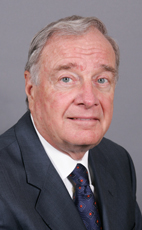
House of Commons photo

Crucial Fact

  • His favourite word was tax.

Last in Parliament September 2008, as Liberal MP for LaSalle—Émard (Québec)

Won his last election, in 2006, with 48% of the vote.

Statements in the House

Employment October 11th, 1996

Mr. Speaker, had the hon. member been there and had he listened, he would know what was said. When somebody buys a new car today it costs $500 less in interest. That puts money in his pocket. When he has to renew his mortgage it puts $3,000 more in his pocket. That helps the economy.

We keep going back to this new found interest of the Reform Party in job creation. On September 18, 1993 in Penticton, British Columbia the Reform Party leader said that it would take up to three years before any job creation would occur under his party's economic plan. He went on to say that his zero in three plan would actually cost more jobs in the interim.

If his plan had been followed there would be negative job creation in Canada. Under the Liberals there have been over 600,000 new jobs created. We are ahead of them by a lot.

Employment October 11th, 1996

Mr. Speaker, if the hon. member had been there, he would have noticed a very heavy emphasis being placed on the absolute necessity of focusing on job creation and on the re-establishment of a whole series of programs which the government has brought in on trade and youth employment, as the minister of human resources has just set out.

The basic difference that occurred at that meeting on Wednesday was that we said the deficit reduction was not as the Reform Party would postulate as an end in itself but it was simply a means to greater job creation and that the reduction in interest rates has led to more investment and will lead to more job creation.

The hon. member knows there is a lag time. A year ago interest rates were at 8.5 per cent and are now at 3.5 per cent. There is not an economist across the country who does not say that is the single most important foundation for future jobs.

Job Creation October 11th, 1996

Mr. Speaker, I have already indicated that it is certainly a priority for the government to reduce unemployment insurance premiums. Furthermore, we have suited action to word in the past. I must point out that, last year, the decrease in unemployment insurance contributions was, with one exception, the largest decrease since the creation of the unemployment insurance program: $1.8 million.

Second, I told the member that unemployment insurance is not the only drain on payrolls. There are also provincial deductions for health benefits and the CSST. With your permission, I would like to tell you, just to show that there is no magic solution, what the president of the Association des manufacturiers exportateurs du Québec had to say this morning. A survey of its members concerning the decrease in payroll taxes revealed that only 4 per cent of them replied that this measure will lead directly to the creation of jobs.

At the same time, Mr. Ponton said that lowering payroll taxes does not necessarily result in the creation of jobs. This is simply to say that there is no magic solution. Yes, premiums must be lowered, but there is no magic formula.

Job Creation October 11th, 1996

Mr. Speaker, there is no doubt that the figures we saw this morning are very disappointing. However, sight must not be lost of the fact that the monthly figures are very volatile. We saw this last June and we saw it again this morning. But we also saw that we created 82,000 jobs in Canada last month, twice the number of jobs that unfortunately disappeared today.

This indicates very clearly, and I am certain that the member across the way will agree with me, that this is a very complex problem. We can see this in the discussions at the Quebec summit. It is a problem that will only be solved by expanding our export markets, and providing better manpower training. There is no magic formula. We are working very hard on this. Furthermore, the trend this year is positive; to date, 55,000 new jobs have been created in the private sector.

Canada Pension Plan October 10th, 1996

Mr. Speaker, first it is by no means clear that the description of any government's position is as described by the member. However, I would tell him that all of the provinces have come together and quite clearly there is going to have to be a package. When the package is put together it will imply trade-offs and we will have to see.

I can also say that the federal government is going to have to come to a compromise with the provinces. The federal government cannot act alone in this particular instance. However, the hon. member ought to know, in instances where the federal government could act alone, which is in the creation of a new seniors benefit, we not only maintained but we enhanced indexation.

Income Taxes October 10th, 1996

Mr. Speaker, my answer to the question is the same as it was yesterday.

The Deficit October 10th, 1996

Mr. Speaker, the hon. member knows there is no fictitious accounting. Our books are certified by the auditor general. The auditor general goes through them and it is according to generally accepted accounting principles. I do not think that it behoves the hon. member to cast aspersions on the federal government's numbers because he knows the implications of what he is saying.

I would like to go to the member's question of transfers. We all have to understand something. When we cut, whether it is transfers, which we do not want to do, or in our own backyard, it impacts on the provinces. It really is slightly bogus to talk about cutting this way and cutting in our own backyard as if it does not cut the provinces.

If military spending is cut and a base is cut in a province it is a cut in that province. Is the hon. member saying that we should cut old age pensions? We will not do it. However, if we ever did, it would impact on welfare in the provinces. Is he saying we should cut R and D? If we did, it would affect the universities.

There is nothing the federal government does that does not impact on the country. That is why we will not cut old age pensions, why we will not cut research and development and why we will not savage this country.

The Deficit October 10th, 1996

Mr. Speaker, it was made very clear in the presentation yesterday that while we were very proud of having bettered our targets for the second year, and while I think all Canadians can take great pride in the control which we now have over the nation's finances, we made it very clear that victory was not yet won. The fight ahead of us is going to be very tough, and we are going to stick with it. I think the hon. member should understand, and I would hope that he would join with this side of the House and with all Canadians as we stick to what is going to be a very difficult fight.

I would also hope that perhaps he would get his numbers just a little more correct. The fact is that in the period 1994-95 to 1997-98 in terms of our own spending as opposed to transfers to provinces, we have cut by $8.3 billion, and total entitlements to the provinces have only been cut by $4.1 billion.

The Deficit October 10th, 1996

Mr. Speaker, first of all, if the hon. member looks at her figures, she will see that, according to Statistics Canada, Canadians did get poorer-she is right about that-but it happened before we came to office. Since we came to office, the situation has stabilized, which means we made significant progress. We would like to increase Canadians' income, but before we could do so, we had to stabilize it.

Second, yes, there will be a $5 billion surplus at the end of the year. This does not mean that the surplus will keep growing forever. But we do need a surplus to protect ourselves against a recession.

As I said earlier, according to the auditor general, this money is included in our figures. When we lower premiums as we did last year and as we intend to do this year and hope to do in the years to come, it certainly costs us money.

Having said that, I want to ask the hon. member, because I myself cannot ask my provincial counterpart, Mr. Landry: Will she ask Mr. Landry, will she thank Mr. Landry, who said yesterday-

The Deficit October 10th, 1996

Mr. Speaker, when we came to office, there was a $6 billion plus deficit in the unemployment insurance fund. We had to make it up and we did. This year, we have a $5 billion surplus.

According to Human Resources Development Canada's chief actuary, we need a surplus of $10 billion to $15 billion so the fund can sustain another economic downturn or recession. Second, it is clear that if we lower premiums, every five-cent reduction would cost us $350 million, and we would have to find this money somewhere else.

There is a question I sincerely want to ask the hon. member. There are several kinds of payroll taxes, not only employment insurance, but also taxes for health care, training, the CSST. If this is true, I hope the hon. member will also ask the provinces to lower their own payroll taxes.