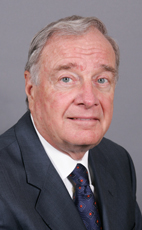
House of Commons photo

Crucial Fact

  • His favourite word was tax.

Last in Parliament September 2008, as Liberal MP for LaSalle—Émard (Québec)

Won his last election, in 2006, with 48% of the vote.

Statements in the House

The Deficit October 23rd, 1996

Mr. Speaker, as I have just said, the auditor general has given a very clear opinion on the government's financial statements. What he said was that because the agreement in principle, not the detailed agreement, had been signed, the amount should have been included in another year, but we wanted to be more cautious, because it is very important to establish the federal government's credibility on international markets. That is what we have done.

I repeat, the auditor general has given a very clear opinion about the federal government's books.

The Economy October 23rd, 1996

Mr. Speaker, I am sorry if my answer was a little too technical. Perhaps one of his colleagues might explain it to him.

Let it be very clear that at the time we took office there were a lot of doubts expressed as to the credibility of the government's financial projections.

It was very clear to us that if we were going to re-establish confidence in the management of the economy by the new government, it was important that we recognize liabilities when they occurred, that we be as prudent as possible and that we go the extra mile to do so.

That is what happened in this case. It may well be that the auditor general has said we have been excessively prudent but I can tell members that is not a bad accusation to carry in the international money markets.

The Economy October 23rd, 1996

Mr. Speaker, there are implications coming from members of the Reform Party that the auditor general did not express a completely clean opinion as to the books of the government. I repeat that the auditor general did. And the hon. member ought to have at least the decency to recognize this.

In terms of when a liability should be recognized, it is a generally accepted accounting principle, generally accepted in international commerce as well as domestic commerce, that a liability should be recognized when it is incurred. The liability was incurred in the year in which it was booked.

What the auditor general has said was that all the details of the agreement had not been fully worked out. If the hon. member would like to hang round the House for about 15 minutes at the end of question period, that particular question will be answered for him.

Goods And Services Tax October 23rd, 1996

Exactly. Accounting 101.

If we had done in the private sector what we did here it would be called accrual accounting, which is what most businesses happen to use.

The hon. minister has promised to give the member a lesson in accounting 101 anytime he would like to have it.

What we have done is recognize the liability at the time it was incurred. If what the hon. member wants to do is accuse the government of in fact having done better on the deficit this year than we announced, that is a lot better than what the previous government was accused of, which was to always understate the deficit.

The fact is we probably have the cleanest books of almost any government around.

Goods And Services Tax October 23rd, 1996

Mr. Speaker, if we had done in the private sector-

Goods And Services Tax October 23rd, 1996

Mr. Speaker, let us be very clear. Despite the obvious problems of the hon. member for Medicine Hat, the auditor general has expressed a clear, unambiguous approval of the government's books. There are no reservations. He has given us a clean opinion.

As a matter of fact we have never had a reservation on the books since we have taken office. The auditor general said that the government had acted in a way that was even more prudent than he would-I was about to use the word conservative, but I caught myself.

When we took office we found that the previous government had made a series of commitments that were not consolidated in the books. As a result the books did not provide a proper statement of the government's financial condition. We have made sure that any liability is recognized at the time it is incurred. That is proper accounting. That is what we have done.

The Economy October 23rd, 1996

Mr. Speaker, in our first budget we provided tax relief for Canadians. In our second budget we provided tax relief for Canadians and we will continue to do so.

The reductions in transfers to the provinces were less than 3 per cent of their revenues and they were substantially less than the reductions in transfers that were recommended by the Reform Party. The Reform Party essentially said it would gut those transfers. What we have done is a lot less.

Let us deal for a minute with this question of families. The Reform Party stands up and says it wants to protect the Canadian family. In those provinces where the Reform Party will gut equalization are there not Canadian families who depend on the public services that would be provided? Do Canadian families not depend on maternity, sickness benefits and unemployment insurance?

The Reform Party would eviscerate welfare payments. In the weird, narrow definition of the Reform Party, are there not Canadian families on welfare who require help? Is its vision of this country so narrow that it cannot understand the needs of ordinary Canadians?

The Economy October 23rd, 1996

Mr. Speaker, we are not against providing single mothers with help. If the Reform Party will look at the last budget it will see that we increased substantially the working income supplement for families with four children.

If it will take a look at what we have done in the case of education credits, if it will take a look at a whole series of measures which we have brought in, every single one is designed to help the poor, to help single mothers. The Reform Party voted against every single one of these.

I will tell the House what we are against. The hon. member talks about helping single mothers. We are against gutting welfare programs because that is what single mothers depend on and that is what Reform has used to pay for its tax cuts for the rich.

The Economy October 23rd, 1996

Mr. Speaker, as far as we are concerned, our record can speak for itself. In not one instance have we increased personal income taxes, having succeeded a government that had increased them 39 times.

In each of our budgets we have brought in selective tax cuts designed to help the poor, to help the disadvantaged, to help research and development and to help in the creation of jobs. If what the hon. member is saying is will we accept his thesis, his philosophy, that the kind of tax cuts that ought to be brought in are those tax cuts that will help the rich while gutting the programs and the poor, then we say no.

Securities October 23rd, 1996

Mr. Speaker, the hon. member is asking us to oppose the will of other provinces that want to protect Canada's financial industry. They are telling all the industries in Quebec that want to issue shares in Canada they will not be able to do so in the future because everything will be moved to New York.

They are saying that the people of Montreal and Quebec cannot compete with other countries, and I say to you that I am a proud Montrealer, that I am not afraid of anyone, that it is the hon. member who is afraid and he should admit it.