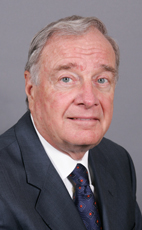
House of Commons photo

Crucial Fact

  • His favourite word was tax.

Last in Parliament September 2008, as Liberal MP for LaSalle—Émard (Québec)

Won his last election, in 2006, with 48% of the vote.

Statements in the House

Persons With Disabilities May 16th, 1996

Mr. Speaker, what we said in the budget was that we intended to set up a task force to look into this very relevant and important question. I congratulate the member for raising it.

It is certainly our intention, and we are now looking at parameters to ensure our study is properly targeted.

Goods And Services Tax May 15th, 1996

Mr. Speaker, we offered a compensation to all the provinces which, based on the formula, will lose money.

Quebec did not lose money this year and did not lose any the year it signed the agreement. It is exactly in the same position as Ontario, Alberta and British Columbia. We will compensate the provinces that lost money.

The compensation formula is a cost sharing formula that will only be in effect for a transition period of four years. Again, Quebec is in the same situation as Ontario, British Columbia and Alberta.

Goods And Services Tax May 15th, 1996

Mr. Speaker, there is a formula to compensate provinces that will lose more than 5 per cent of their sales tax revenues. This is not the case for Ontario, British Columbia, or Alberta. It is not currently the case for Quebec either, and it was not in 1990 when it signed the harmonization agreement.

The Economy May 14th, 1996

Mr. Speaker, at the time the citations the member sets forth were made, we were in opposition and Canadian interest rates were substantially higher than the interest rates in the United States.

Today as a result of the actions of this government, Canadian short term interest rates are substantially below U.S. interest rates. They are almost 400 bases points or four percentage points below those of a year ago.

Also, employment is on the increase as a result of the actions of this government. Unemployment has dropped down from 11.5 per cent to 9.4 per cent. In the last four months the country has created over 160,000 new jobs. That is a fundamental difference between today and then.

There is one other difference-

Taxation May 9th, 1996

Mr. Speaker, first, when we came to office, we took action. We eliminated more loopholes and flaws than the finance committee recommended. We went a lot further than asked by the Bloc Quebecois finance critic.

The Minister of National Revenue just hired more auditors, at a cost of $50 million. We allocated more money to her department precisely to eliminate these loopholes. The question is: Why is the Bloc Quebecois finance critic opposed to a public review in that sector? Is he afraid of transparency? Is he afraid of discussing these issues?

Taxation May 9th, 1996

Mr. Speaker, because the questions tend to repeat themselves, I will switch languages.

The fact is that we are dealing with a situation on which this government began to act immediately on taking office. If there is a problem, we basically recognized it. We referred it to the finance committee. A series of measures were taken to ensure that taxes were paid and that they were paid when due. At the same time, we supported the auditor general on this and on everything else.

Let us be very clear. The Minister of National Revenue has referred this matter to the public accounts committee. We in the Department of Finance have referred it to the finance committee. If there is a problem here arising out of events which took place in 1991 under the previous government, then let the facts be made clear in front of the finance committee.

Taxation May 9th, 1996

Mr. Speaker, I have just listed the measures we put in place on our arrival in office. It is very clear. One of the reasons we put this issue to the finance committee was our concern and our keen interest in seeing the whole matter examined.

Now the Leader of the Opposition is talking about officials. I remind him that we are talking about something that happened in 1991 under the previous government. In most cases, the officials who made the decisions are no longer in the same position today.

Taxation May 9th, 1996

Mr. Speaker, I think it is worth reading what we have done to set the record straight. At the start, we launched a three-pronged offensive to reduce the use of tax havens by Canadian firms and the outflow of money, what the Leader of the Opposition is referring to.

First, in the 1995 budget, we proposed substantial requirements with respect to statements on interests in foreign companies. Second, in the 1994 budget, changes were made to the Income Tax Act to prevent the transfer of profits realized in Canada to companies abroad located in tax havens.

Third, the government strengthened exclusionary efforts regarding foreign companies and specifically involving inter-segment sales by individuals.

Taxation May 9th, 1996

Mr. Speaker, we certainly said clearly when we came to office that there were weaknesses in the taxation system that needed to be corrected. We have supported the actions of the auditor general in this area and will continue to do so. This is in fact one reason why we asked the Standing Committee on Finance to look at all that, because it is vital it be done transparently.

That said, the moment we took office, we established specific measures to prevent the use of tax havens or foreign companies to get around the law.

Goods And Services Tax May 8th, 1996

Mr. Speaker, by equal treatment, is the member saying that the same taxation regime should be applied to the oil and gas industry in Alberta as is applied to the manufacturing industry in Ontario? Is the hon. member saying that Ontario should not have been given a billion dollars in stabilization payments in the 1990s? Is he saying the federal government should not have helped out with tax reform in 1972 to compensate for the revenues lost by provinces?

If that is what the hon. member is saying, then it is very clear that he does not understand the Canadian economy, what holds it together and what is going to make it grow.