
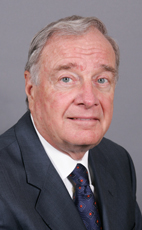
House of Commons photo

Crucial Fact

  • His favourite word was tax.

Last in Parliament September 2008, as Liberal MP for LaSalle—Émard (Québec)

Won his last election, in 2006, with 48% of the vote.

Statements in the House

Goods And Services Tax May 8th, 1996

Mr. Speaker, what the hon. member requires is a bit of a lesson in understanding the nature of the Canadian economy.

The Canadian economy is very different in Alberta than it is in Nova Scotia. It is very different in Ontario than it is in British Columbia. For instance, would the hon. member suggest that the oil and gas taxation policy be the same in Alberta as applies to the manufacturing industry in Ontario? Clearly not, because they are different circumstances.

We are dealing with deep structural change. It is the kind of structural change that let the Canadian government help the western grain farmers. At this time Atlantic Canada is going through a very positive set of changes and it is the responsibility of the Canadian government to enable and facilitate that change.

Taxation May 8th, 1996

Mr. Speaker, let me point out to the leader of the third party minus three that in the last budget, payroll taxes were cut by $1.2 billion.

Second, as a result of the deficit actions taken by this government and by the provincial governments, interest rates in this country are close to 4 percentage points lower than they were over a year ago. That is a substantial tax decrease for Canadians.

The question I would put to the leader of the Reform Party is this. If today he recommends that there be further decreases in unemployment insurance premiums, why did he not recommend that in his budget of a year ago but recommended instead that unemployment insurance premiums be kept at a very high level.

Taxation May 8th, 1996

Mr. Speaker, because the leader of the opposition party cannot find anything real to talk about, he continues to set up straw men. Let me take the hon. member's situation.

In order for the governments of Atlantic Canada, the Government of New Brunswick in this instance, to go through a period of profound structural change leading to very deep tax reform, the federal government embarked on a cost sharing proposal with Atlantic Canada.

Effectively that cost sharing proposal said that the provincial governments involved would pick up the first 5 per cent loss on their revenues and then there would be a sharing after that.

It was very clear that the provincial governments were going to have to make up their losses in two ways: through increased economic activity and the possibility of tax increases elsewhere. The hon. member has talked about the shift from consumers to business. What may well happen in some of the provinces is that they may well go back and take some of that tax savings from business in order to keep the consumer cost down.

The hon. member really ought to understand, first, what was done and, second, he ought to try not to contradict himself consistently every-

Taxation May 8th, 1996

Mr. Speaker, the hon. member asked this question yesterday and I answered it.

I said that there was a general understanding among all of the finance ministers that it would be counterproductive for one level of government to fill in tax room given by another. What we really wanted to do was to get the economy going.

He knows there is not a written agreement. I said that yesterday. I made it very clear the previous six times he asked the question. The matter was discussed among all of the finance ministers and that agreement exists. I repeat it here again in the House.

If the hon. member would like to ask me the question another 16 times I will give him the same answer.

Family Trusts May 8th, 1996

Mr. Speaker, the House should be aware of what the opposition is asking.

A situation had arisen under the previous government and in 1991 the auditor general reported on it. As in other instances, this government takes very seriously the reports of the auditor general. We have said we believe that the Canadian people are entitled to have all of the facts. We think this should be looked at openly in the finance committee.

What is the finance critic for the Bloc Quebecois saying? He is saying: Do it behind closed doors. Do not do it in front of us. Do not let the Canadian people have the facts. Do not sit there in open, public debate to take a look at it. What is the matter? Are you afraid of the truth?

Family Trusts May 8th, 1996

Mr. Speaker, it is a shame that, in a debate as important as this one, the opposition finance critic is unable to assume the same responsible tone as his leader.

Let me just repeat that, in our 1995 budget, we eliminated any possibility to use family trusts for tax purposes.

I would like the hon. member, who advocates transparency, to tell me this: Is he afraid to see the finance committee review this matter? I think the important thing is transparency in showing the responsibility borne by the department of revenue, the department of finance and the Government of Canada.

Family Trusts May 8th, 1996

Mr. Speaker, first of all, the minister said yesterday that she would refer the matter to the finance committee. The auditor general himself has admitted that this is a grey area, and one that is highly complex. Because we feel transparency is of the utmost importance, I believe an open discussion in the finance committee is the best way to discuss the matter and find a solution. I am sure that the Leader of the Opposition will accept this as a responsible reply.

Having said this, yes, the Leader of the Opposition is right in saying that the Bloc Quebecois were the ones to raise the matter of family trusts. That is, moreover, the reason we referred the matter of family trusts to the finance committee right at the start of our mandate. The Bloc Quebecois has continued to talk, while we have acted, doing away in our latest budget with any possibility of using family trusts as a means of evading taxes owed to the people of Canada.

Family Trusts May 8th, 1996

Mr. Speaker, we obviously have here a situation calling for very serious consideration. Indeed, I would say that the questions asked by the Leader of the Opposition in a very serious and responsible tone are to the point.

That said, the auditor general did not mention any pressure from finance officials. He said discussions took place, but there were no transcripts.

Let us be quite clear. Since coming to office, we have put in place many measures dealing specifically with family trusts. In fact, not only were measures dealing with family trusts introduced by our government in our February 1995 budget, but they went much further than recommended by the finance committee.

Family Trusts May 8th, 1996

Mr. Speaker, I believe that the Minister of National Revenue answered this question quite satisfactorily yesterday. This was something that happened under the previous government, in 1990-1991. Since taking power, we have put into place many measures to rectify this sort of situation.

That being said, as the minister announced yesterday, we, too, are concerned about statements such as this one, and she therefore thought it best, and I agree with her, that the matter be referred to the finance committee for thorough examination.

Gst May 7th, 1996

Mr. Speaker, when I hear the hon. member I think of the phrase there but for the grace of God goes God.

The hon. member ought to begin to understand that when we bring in a process of profound structural change it is the responsibility of the federal government to help the regions of the country adjust to that change.

This is what we did in 1972 with tax reform. It is what we did in western Canada when we helped the western grain farmer. It is the basis upon which the country has been built; the regions of the country help each other.

It may be very difficult for members of the Reform Party to understand but they should understand that they should be speaking for a united Canada, not a Canada that simply abandons-