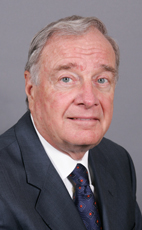
House of Commons photo

Crucial Fact

  • His favourite word was tax.

Last in Parliament September 2008, as Liberal MP for LaSalle—Émard (Québec)

Won his last election, in 2006, with 48% of the vote.

Statements in the House

Canada-U.S. Tax Treaty March 29th, 1996

Mr. Speaker, the hon. member knows that this is an American legislative issue that affects other countries as well as Canada. There seem to be exemptions, which is rather discriminatory, but Canada is not in a position to compensate Canadians who are taxed by other countries, whether that country be the U.S., Britain or France.

I am totally in agreement with the hon. member that this is unfair. We do not agree with the way the Americans are handling this, and I certainly intend to raise the issue directly with Mr. Rubin. I should add, moreover, that there have already been discussions between officials of our two departments.

Canada-U.S. Tax Treaty March 29th, 1996

Yes, Mr. Speaker, my next trip to Washington will be in two weeks, and it is on the agenda for the talks I shall be holding with the Secretary, Mr. Rubin.

Goods And Services Tax March 29th, 1996

Mr. Speaker, the Canadian Tax Foundation and most other commentators have indicated that the savings available to small and medium size business would be between $400 million and $700 million, and they may well be in excess of $1 billion. That is the kind of money that small business needs to create jobs and it is the kind of money that harmonization and the new tax would provide.

There is a reason the majority of Canadian exporters have called for a harmonized tax. They know it would put them in a more competitive position vis à vis the United States. That means jobs.

There is a reason the consumers have called for it. They understand the simplicity it would provide to small retailers. That means jobs. Virtually every economic group in the country has called for a single tax. They all recognize the benefits.

The hon. member is calling for ten different sales taxes plus the federal sales tax across the country. Immense complexity. We are the only country that does not have a single sales tax.

Why does the hon. member continue to try to take Canada backwards? Is that an essential part of Reform Party policy?

Goods And Services Tax March 29th, 1996

No, Mr. Speaker. The fact is that our proposal does exactly what we said in the red book. What the member has just called for, which is harmonization, is in fact what the member's party called for in the finance committee.

It is important to understand that the $3 billion the hon. member refers to, as far as the federal government is concerned, whatever would occur would be revenue neutral. If there would be a gain on one segment of the taxpaying public in Ontario, the Government of Ontario would certainly have the opportunity to use that funding either to reduce taxes or in fact to increase social services in the province of Ontario. It would have complete flexibility.

Therefore it is simply not true to say there would be a shift from one level of taxpayer to another. In fact, it would give the government the scope for far more fairness in Ontario, as was the conclusion of the Ontario fair tax commission over a year ago.

What we are looking at is a profound structural change in the tax system which would do a great deal of good for small business and the consumers of Ontario.

In terms of the opening statement of the hon. member, his reference to hell freezing over, that may be the case. It may well be that the hon. member and other governments have a better knowledge of that place than I have.

Poverty March 29th, 1996

Mr. Speaker, not only do I totally agree that we have to meet with these groups, but I have done it. I met with the antipoverty association before each budget. In preparation for the budget, I met with most social groups wishing to talk about the budget. The finance committee did the same, and we intend to keep on doing it.

On the other hand, as I know the member is well aware, all governments are faced with the same problem. We have debts, we have deficits, this is a burden we do not want to pass on to our young people. This is why, when we see in today's Le Devoir community groups comparing Bouchard to Harris, we understand that it is another provincial government faced with a problem.

I do not intend to criticize the Government of Quebec. Governments are trying to do their best, and so are we.

Poverty March 29th, 1996

Mr. Speaker, poverty levels in Quebec and also in the other Canadian provinces are a concern for all of us.

If there is a scourge we must deal with, it certainly is the poverty of children, of single mothers in our society.

This is one of the reasons why, in our past three budgets, we closed the majority of loopholes. What is left are incentives to help industry create jobs. One of the most important ones, for instance, is the taxation level which is much lower for small and medium size businesses than for major corporations.

The best way to help is first to give money directly to the poor, but also to create jobs, which has been the result of our past three budgets.

Privilege March 28th, 1996

Mr. Speaker, it has obviously occurred to a number of us during the course of debate when tempers fray or when emotions get away with us that we say certain things which are not true or which we regret. It has certainly happened to me.

Under those circumstances, when the error of the statement is pointed out, it is normal that one would stand and withdraw it. I would ask that the member for Medicine Hat to withdraw the statement he made in the preamble to his question. I can tell him that the statement is not true, is inaccurate and has no foundation in fact. I ask the hon. member to withdraw the statement.

Goods And Services Tax March 28th, 1996

Mr. Speaker, there is indeed a very important debate to have in the House as one proceeds on profound structural change. In the case of the GST, the government intends to engage in that structural change as it is engaged in structural change in other areas. There will be adjustment policies that may well be necessary to pay compensation.

I would be quite prepared to get into that debate with the members of the Reform Party, those who have indicated a capability to enter into that kind of thing.

I do not intend, however, to enter into that kind of debate with the hon. member. The allegation he made at the beginning is absolutely untrue. I will raise a question of privilege and ask him to stand and withdraw the comment.

Goods And Services Tax March 28th, 1996

It is worth a great deal more than that, Mr. Speaker.

Let me simply quote the Reform Party's most recent position on the GST: "We commend the government on its attempt to harmonize the tax with the provinces". At the same time, it acknowledged that it would be a very difficult political objective to achieve.

There is only one question. Why will you not help us if you think it is a good idea? Why do you stand up here day after day asking inane questions that have been answered 20 times? Is it that you cannot think of anything else to say?

Unemployment Insurance Fund March 27th, 1996

No, no, I meant to say the hon. member. It was a slip of the tongue, Mr. Speaker; I take it back.

This is a matter of accounting. In 1986, the auditor general insisted that the UI fund was part of the federal government's consolidated account. It is purely a matter of accounting. We are only following the auditor general's instructions. If the auditor general is prepared to instruct us otherwise, we are prepared to sit down with him. But this is all a matter of accounting. This is unfamiliar ground for an economist.