
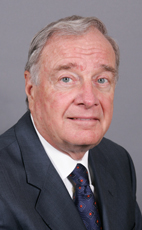
House of Commons photo

Crucial Fact

  • His favourite word was tax.

Last in Parliament September 2008, as Liberal MP for LaSalle—Émard (Québec)

Won his last election, in 2006, with 48% of the vote.

Statements in the House

The Budget March 7th, 1996

Mr. Speaker, what has happened with the new seniors' benefit is that we have installed complete indexation for protection from inflation, which the Reform Party did not have. We have increased the amount of money that will be going to poor seniors, which the Reform Party did not have.

Our plan is infinitely superior, not to the Reform Party plan, but by that put forward by the hon. member. The House should know that the hon. member put forward her plan and it contradicts completely the plan put forward by her party. However, I must say that it is a heck of a lot better than the one put forward by her party.

The Budget March 7th, 1996

Mr. Speaker, I am certainly aware not only of the Fonds de solidarité, but also of the new CSN fund. As a matter of fact, I congratulated its managers. I believe they are playing a very important role. I am convinced of that, and they know that the incentives now in place as the result of the budget will be sufficient to allow them not only to start up, but also to pursue their undertaking.

The issue is simply one of limited resources. If we want to fund, for instance, youth employment, and if we want to try something else to stimulate job creation, we have to proceed in a balanced way and with a much broader vision, and this is exactly what we are doing.

The Budget March 7th, 1996

Mr. Speaker, there is no doubt in my mind that these funds, which can be found across Canada, are meeting a very important need. As a Quebecer, I am very proud of the fact that, out of the $4 billion available from this source, $2 billion are available in Quebec.

This being said, now that these funds are well established, and since some of the money has not yet been invested, the vast majority of experts and provinces agree that these advantages should be reduced as they are very costly for taxpayers. This money could be used to stimulate job creation elsewhere, through a youth program, for instance.

The Budget March 7th, 1996

Mr. Speaker, I have great respect for the hon. member, but I suggest perhaps that a review of the numbers would demonstrate that there has not been a net loss of jobs. There has been a net creation of jobs and all of the numbers show that. That answers his question. The premise of his question being incorrect, therefore the question follows.

Since we took office there has been very large scale job creation. Almost 600,000 jobs have been created in the private sector since we took office. That is a very substantial record and we are very proud of it.

The Budget March 7th, 1996

Mr. Speaker, the jobs that I quoted were private sector jobs created. They came from Statistics Canada. The numbers that I quoted yesterday were right. There would be other numbers which would be the net numbers, which would be the private sector numbers less perhaps the public sector losses which have occurred. But the private sector numbers that I quoted yesterday were correct.

The Budget March 7th, 1996

Mr. Speaker, not in the least, in fact exactly the opposite is true. First, it is taken out of the taxation system for greater independence. Second, I am in the process of restoring total indexing, in other words in future our seniors will not lose money because of inflation. They have now been protected.

This is why the majority of comments from seniors' groups have been most favourable to this reform; they are well aware that it will not only sustain the system but will also be better for women and better for our seniors' dignity.

The Budget March 7th, 1996

Mr. Speaker, I trust that the hon. member is not recommending a system with two different sets of rules. The supplement is based on the couples' income, and so I think he will agree that it is absolutely fair for those who are better off, wealthier, who also deserve to receive their cheque on the same basis as the less advantaged. It is a question of fairness.

Second, nine women out of ten will get more money because of our reform. One of the main reasons behind this reform was precisely that, to be able to give more money to those who are the least well off, mainly women.

The Budget March 7th, 1996

Mr. Speaker, the description of the tax as given by the hon. member is quite accurate. Very rarely does he speak words so true, however it is too bad he had to quote me to do it.

The problem with the tax is that the previous government did not succeed in harmonizing. It imposed on consumers a multitude of taxes. It made the tax inefficient. The previous government did not provide it for small and medium size business. We are working on a substantial streamlining and we will succeed.

When I look at Canadian culture and the absolute necessity of giving this country cultural sovereignty, I can say there is nobody I would rather put my faith in than the Deputy Prime Minister.

The Budget March 7th, 1996

Mr. Speaker, I am not sure I understand why the member needs notes to read his question; he has asked it so many times.

If I could back to page 22 of the red book: "A Liberal government will replace the GST with a system that generates equivalent revenues, is fairer to consumers and to small business, minimizes disruption to small business and promotes federal-provincial fiscal co-operation and harmonization". If the member asks me the question three more times, I think I will know this by heart.

The Budget March 7th, 1996

Mr. Speaker, three members of the committee are scholars, including the chairperson. They have no bias regarding the issue. These are scholars who are able to look at both sides of the issue and also raise objections to what someone from Ernst & Young or another firm might say. If we are going to close loopholes, we might as well recruit those who know best how to find these loopholes.