
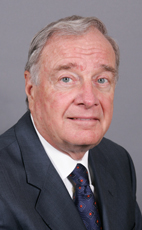
House of Commons photo

Crucial Fact

  • His favourite word was tax.

Last in Parliament September 2008, as Liberal MP for LaSalle—Émard (Québec)

Won his last election, in 2006, with 48% of the vote.

Statements in the House

Goods And Services Tax March 18th, 1996

Mr. Speaker, I answered this question in the House before but I am delighted to respond to this member, whose views are obviously considerably more enlightened than others of his party.

What we are doing is fulfilling the recommendations and the advice given by the Reform Party in the finance committee of the House when it dealt with the GST. It simply said we should replace it with a harmonized tax. It went on to say that will obviously require future negotiations with the provinces. The Reform Party was right.

The Budget March 18th, 1996

Mr. Speaker, let me simply give one example of a change we brought to the RRSP program. Prior to the last budget there was a restriction that people could go back only seven years in order to make maximum use of it.

We eliminated the seven years because we recognized that there are a lot of young families which are not able to take advantage of it because they were raising their children and which would be able to use that space later on when their children had left the nest. What we have done is open it up so that all Canadians can use the RRSP.

Once again the question is why does the Reform Party think the only purpose of the country and government is for the rich? We think it is for all Canadians.

The Budget March 18th, 1996

Mr. Speaker, the reason for taking the decision on deductibility was that what we were dealing with were charges that were utilized primarily, in fact overwhelmingly, by higher income Canadians. Also, these were fees were not available to lower income Canadians simply because of a lack of disposable income.

If I understand what the hon. member is recommending, there should be tax breaks available in practice for the well of that would not be available to the less well off. That is the reason they exist and that is the reason we will fight that kind of idea.

Canada Social Transfer March 18th, 1996

Mr. Speaker, first of all, as to the formula, at the end of the fifth year, transfers to the provinces will have increased from $25.1 billion to $27.4 billion-that is the total transfer to the provinces. Second, the transfers under equalization will increase for the provinces.

I am sure that the hon. member is not interested only in the Quebec situation, but Quebec will receive 31 per cent of transfers for 25 per cent of the population.

Canada Social Transfer March 18th, 1996

Mr. Speaker, it is precisely for the same reasons that the seven other provinces will receive more in equalization payments than the three provinces mentioned.

In other words, you have to consider the transfers as a whole. If you do that, you will see that Quebec will be doing very well.

Employment Insurance March 18th, 1996

Mr. Speaker, at the last revision, and of course a revision occurs every fall, the Minister of Human Resources Development announced a reduction in premiums. There was a savings passed on of $1.2 billion. The answer to the hon. member's question is: We have already done it.

Taxation March 18th, 1996

Mr. Speaker, any discussion concerning the taxation review will certainly be public, because the objective of that committee is really to prepare a background document that will be used for consultation, undoubtedly by parliamentarians, including members of the finance committee with his colleague.

Taxation March 18th, 1996

Mr. Speaker, I do not know if they made contributions as individuals, in partnership or if they are companies.

I am convinced that they likely made donations to other political parties at the same time.

Status Of Women March 11th, 1996

Mr. Speaker, 75 per cent of all Canadians will benefit from this reform. Seventy five per cent of all Canadian men and women, and women are the majority. In fact, women represent not only the majority of the population, but also the majority of seniors. Quite clearly, the vast majority of women with spouses will benefit from this program.

Status Of Women March 11th, 1996

Not at all, Mr. Speaker. As I have already stated in this House: nine women out of ten will benefit from this reform.

Take the poverty level for example; one absolutely aberrant consequence of the poverty that exists in certain parts of our country is the high percentage of women who are affected. That is why one of the goals of our reform was precisely to benefit these women. In fact, I think we have done a great job of ensuring that they will be better off.