
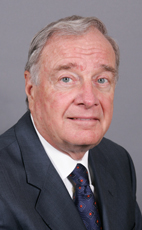
House of Commons photo

Crucial Fact

  • His favourite word was tax.

Last in Parliament September 2008, as Liberal MP for LaSalle—Émard (Québec)

Won his last election, in 2006, with 48% of the vote.

Statements in the House

Good And Services Tax March 11th, 1996

Mr. Speaker this tax has been recommended by the Canadian Tax Foundation. Tax simplification is vitally important to small and medium size business.

Can the hon. member tell me why the Canadian Federation of Independent Business recommends this tax? I will tell her. It wants to create jobs among its membership. Why does the Chamber of Commerce recommend this tax? It knows how good it will be for Canadians.

What is the matter with the member for Beaver River that she refuses to accept that Canadians want tax simplification and lower costs? Why does the Reform Party not wake up and smell the roses?

Good And Services Tax March 11th, 1996

Mr. Speaker, it would not add to the tax bill of Canadians. If a number of the provinces were to harmonize, it could well lead to a reduction in taxes. It would certainly lead to a reduction in the cost of administration which would be passed on to consumers.

The Reform Party is so desperate to seek issues. Nobody ever said that in the province of Alberta it would be imposed on Albertans. We now have virtual harmonization in Alberta because there is no tax.

For the hon. member for Beaver River to consistently raise straw people and say here is a problem when none exists, surely to heaven she can put her attention to the problems and the opportunities of the country rather than the figments of her own imagination.

Good And Services Tax March 11th, 1996

Mr. Speaker, I quote from the red book once again: "A Liberal government will replace the GST with a system that promotes federal-provincial fiscal co-operation and harmonization". Harmonization means harmonization means harmonization.

Business Tax System March 11th, 1996

Mr. Speaker, if one wants to examine social policy, one will ask those people who are experts in social policy. If one wants to examine environmental policy, one will ask those people who are experts in environmental policy. If one wants to close tax loopholes, who better to ask than those who know how to create them?

Surely the hon. member would not really want us to ask members of his party who have professed total ignorance of the Tax Act since they have been elected.

Business Tax System March 11th, 1996

First of all, Mr. Speaker, when the same question was asked of me last week by the same member, I told him that three committee members, including the chair, are academics with no connections with any corporations, or major multinationals.

Having said this, I am convinced that the hon. member will realize that, if what we want is to look at how to close up tax loopholes or the ways companies wrongly get around job creation or foreign investment requirements, it is worthwhile to consult precisely those who are knowledgeable about such loopholes, not people who know absolutely nothing about them.

Job Creation March 11th, 1996

Mr. Speaker, when we look the investments these funds make, we see that a fairly significant percentage is in debentures and has not gone directly to job creation, for the pure and simple reason-and they will tell you so-that there is a shortage of investments and it takes a bit of time. That is why I said there was enough at least for three years. There is nothing there to slow growth or job creation.

On the other hand, the measures we took with respect to these funds have been very well received throughout Canada, including in Quebec, because we recognize that these funds were established to help them get started, and, now that they are established, things are going quite well. I should add, as far as the 20 per cent is concerned, I have said in this House that it was not this government's intention to permit more than 20 per cent. But, it must be said that pension funds in Canada invest in companies that create jobs abroad.

I am sure the Leader of the Opposition would not want the Caisse de dépôt to stop investing in Canadian companies creating jobs abroad.

Job Creation March 11th, 1996

Mr. Speaker, I am satisfied the new CSN fund, which we, the government helped develop, will grow hugely.

Furthermore, as regards the RRSPs and foreign investment, it must be said that the aim of RRSPs is not only investment in Canada but also the protection and expansion of pension funds to protect Canadians' pension plans.

In addition, Canada, and the province of Quebec, I must add, are dependent on foreign capital. It is therefore not in our interest to limit Canadians' ability to invest abroad, on one level, because we want to encourage foreigners to come and invest here at the same time.

Job Creation March 11th, 1996

Mr. Speaker, there is no doubt as to the importance of these funds in creating jobs and there is no doubt as to the management capability of these funds.

That said, I have to point out that there is enough money in the funds for the next three years, that is, they have grown considerably, and the measures we have taken will not affect them. There is money available.

It was also agreed from the start that major incentives were needed to get these funds off the ground. Now that they are established, we think it important to lower the incentives in order to free the money for use elsewhere, specifically to create jobs for young people.

The Budget March 7th, 1996

Mr. Speaker, the hon. member's premise is simply wrong. The main thrust of the budget was job creation.

The hon. member will recognize that there is a clear link between deficit reduction, interest rate reduction and job creation. That is exactly what we are doing. We have seen interest rates come down. We have seen the spread between our interest rates and American interest rates virtually disappear.

The budget had a major youth program both for summer jobs and for first entry jobs which the Minister of Human Resources Development will be speaking to. It had a major focus on the development of the new technology and the newer economy which the Minister of Industry will be speaking to. It had a major focus on trade, the kinds of things that really create jobs. This was a jobs budget.

The Budget March 7th, 1996

Mr. Speaker, unfortunately the hon. member's facts are simply not correct.

Let us look at what we did in the RRSP area. Up until yesterday's budget young people who are raising families or paying for schools were not able to put enough money into RRSPs for their savings. That is why the average is about $2,500 to $3,000 per year.

There was a limit of seven years that they could go back, which meant that when these young people became my age and their families were gone they would not be able to go back and make up for the time lost. We have given them that capability. This is very important so that young people can save for their retirement.

Unfortunately, the hon. member's facts are wrong. On the other hand, I have to say that her motivation is right and she must be very lonely over there.